
Sax Rohmer (1883–1959)
Author of The Insidious Doctor Fu-Manchu
About the Author
Sax Rohmer was born in Birmingham, Warwickshire. At the age of 18, he adopted the name Sarsfield, the name of a famous Irish general admired by Rohmer's mother. He married Rose Elizabeth Knox in 1909 and, at his wife's insistence, began using the name Sax Rohmer for his fiction, eventually show more employing the pseudonym as his actual name. Rohmer was basically a self-taught scholar. He started writing as a journalist; his beat was the Limehouse underworld in London. Rohmer had a difficult time breaking into the professional fiction markets, but once he did, he became a household name for exotic adventure both in England and in America. Although his writing brought Rohmer success and money, he was never much of a businessman, and most of his wealth was squandered because of his extravagance and through financial mismanagement. Rohmer eventually moved to New York City. One of Rohmer's great intellectual interests was the occult and supernatural, and these elements frequently appeared as motifs in his fiction. His most famous creation was the evil oriental mastermind, Dr. Fu Manchu, first presented in the novel The Mystery of Fu Manchu in 1913 (later retitled The Insidious Dr. Fu Manchu for its American publication, also in 1913). Most espionage or adventure fiction exploits the social paranoias of its time, and Rohmer himself effectively tapped the Westerner's fear of the stereotyped "yellow peril" threat---the negatively perceived belief that Orientals will conquer the world. The Fu Manchu adventures were patterned, in part, after Arthur Conan Doyle's Sherlock Holmes stories. Rohmer's protagonists in these adventures, Sir Denis Nayland Smith and his companion Dr. Petrie, look very much like Doyle's Holmes and Watson, but, whereas Doyle centered his narratives on the heroes and specifically on the elaborate process of detection, Rohmer focused his attention on the villain and on slam-bang action. Fu Manchu was a master of both Western science and Eastern mysticism, and his efforts at world domination caused no end of problems for Smith and Petrie. In Fu Manchu, Rohmer had created the most famous villain in popular fiction (although Rohmer maintained that Fu Manchu was based on an actual Limehouse criminal). Despite Rohmer's use of outrageous racial stereotyping, many of his novels hold up well today and provide superior examples of how to create narrative pacing and suspense. (Bowker Author Biography) show less
Disambiguation Notice:
Rohmer was born Arthur Henry Ward. He later added Sarsfield to his name.
Series
Works by Sax Rohmer
The Hand of Fu Manchu, the Return of Dr. Fu Manchu, the Yellow Claw, Dope: 4 Complete Classics by Sax Rohmer (1983) 63 copies
Tales of East and West : Thirteen Little Masterpieces of Death and Fear and Terror (1932) 15 copies, 1 review
The Sax Rohmer Collection: 15 Novels and Short Stories in One Volume (Halcyon Classics) (2010) 13 copies, 1 review
Delphi Collected Works of Sax Rohmer US (Illustrated) (Delphi Series Seven Book 11) (2016) 10 copies
Dr. Fu Manchu Trilogy: The Insidious Dr. Fu Manchu, The Return of Dr. Fu Manchu & The Hand of Fu Manchu (2019) 9 copies
The Yellow Claw / The Golden Scorpion (Gaston Max Mysteries: Stark House Mystery Classics) (2015) 5 copies
The Zayat Kiss 2 copies
Lure of Souls 2 copies
La Colère de Fu-Manchu 1 copy
Omnibusbogen — Author — 1 copy
Guai all'infedele! Romanzo. 1 copy
Împăratul Americii 1 copy
Misteri Dr. Fu-Manchu 1 copy
Keltaiset varjot 1 copy
Bat Wing and Fire-Tongue 1 copy
Eldtungan 1 copy
Persident Fu Manchu 1 copy
Lord of the Jackals 1 copy
Brood of the Witch Queen and Other Stories by Sax Rohmer (Five thrilling novels in one volume!) (2009) 1 copy
Pomegranate Flower 1 copy
Harûn Pasha 1 copy
The Secret Of Ismail 1 copy
The Owl Hoots Twice 1 copy
The Eyes Of Fu Manchu 1 copy
Brother Wing Commanders 1 copy
For Love Of Mistress Mary 1 copy
Bazarada 1 copy
Egyptian Nights 1 copy
Det hemlighetsfulla Egypten 1 copy
Fu Manchus mask 1 copy
Five Pulps: A Sax Rohmer Supernatural Mystery Collection (Five thrilling novels in one volume!) (2011) 1 copy
The Turquoise Necklace 1 copy
The Master of Hollow Grange 1 copy
The Riddle of Ragstaff 1 copy
The Blue Monkey 1 copy
The Valley of the Just 1 copy
Kejsaren av Amerika 1 copy
Associated Works
Miraculous Mysteries: Locked Room Mysteries and Impossible Crimes (2017) — Contributor — 162 copies, 11 reviews
The Weiser Book of Occult Detectives: 13 Stories of Supernatural Sleuthing (2017) — Contributor — 26 copies, 1 review
Out of the Sand: Mummies, Pyramids, and Egyptology in Classic Science Fiction and Fantasy (2008) — Contributor; Contributor — 5 copies
Botanica Delira: More Stories of Strange, Undiscovered, and Murderous Vegetation (2010) — Contributor — 4 copies
Fantastiske fortellinger — Contributor — 3 copies
Cats of Shadow, Claws of Darkness: Stories of Were-Cats, Ghost Cats, and Other Supernatural Felines (2012) — Contributor — 2 copies
Invertebrata Enigmatica: Giant Spiders, Dangerous Insects, and Other Strange Invertebrates in Classic Science Fiction and Fantasy (2008) — Contributor — 2 copies
My Most Exciting Story: A Collection of Stories Chosen by Their Own Authors (1936) — Contributor — 1 copy
Tagged
Common Knowledge
- Canonical name
- Rohmer, Sax
- Legal name
- Ward, Arthur Henry (born)
Ward, Arthur Henry Sarsfield (adopted this name) - Other names
- Rohmer, Sax
Furey, Michael - Birthdate
- 1883-02-15
- Date of death
- 1959-06-01
- Gender
- male
- Occupations
- magazine writer
novelist
bank clerk
errand boy
journalist - Relationships
- Rohmer, Elizabeth Sax (wife)
- Short biography
- Sax Rohmer was born in Birmingham of Irish parents, William Ward and Margaret Mary (Furey) Ward. He received no formal schooling until he was nine or ten years old, but his father taught his son to read.
After finishing his schooling, Rohmer worked at numerous odd jobs. At the age of 20 he began his writing career with THE MYSTERIOUS MUMMY, which appeared in Pearson's Weekly in 1903. In 1909 he married Rose Elizabeth Knox, whose father had been a well-known comedian.
During the 1920s and 1930s, he was one of the most widely read magazine writers in the English language. After World War 2 the Rohmers moved to New York City, where he continued writing. - Nationality
- UK
- Birthplace
- Birmingham, Warwickshire, England, UK
- Places of residence
- New York, New York, USA
Greenwich, Connecticut, USA
White Plains, New York, USA - Place of death
- London, Middlesex, England, UK
- Burial location
- Kensal Green Catholic Cemetery, London, Middlesex, England, UK
- Map Location
- England, UK
- Disambiguation notice
- Rohmer was born Arthur Henry Ward. He later added Sarsfield to his name.
Members
Discussions
THE DEEP ONES: "Tchériapin" by Sax Rohmer in The Weird Tradition (February 2014)
Sax Rohmer in The Weird Tradition (June 2013)
Reviews
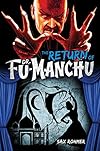
Read more out of academic interest than in expectation of enjoyment, which is just as well.
The racism is obviously horrible and extreme, and many more insightful reviewers than me have rightly pulled these books apart for it. But to add to the fire, it's worth noting that it's not even as if Sax Rohmer's prejudice is a deplorable trait of an otherwise good writer (in the strictly craftsman sense of the term); it would be nothing close to an excuse, but is at least a point that could be made show more to explain the continued interest in, say, Ian Fleming or Hergé.
Rohmer's plotting is weak to the point of absurdity (a castle falls down for no other reason than dramatic effect), his characters and incidents pale imitations of much better ones (Nayland Smith one of many Holmes imitators who stuffed magazine pages at the time), and the structure abysmal (these were first published as short stories and knitted together for collected publication, and it shows).
He's got a certain talent for capturing a scary mise en scène, and individual exciting incidents went on to inspire much better writers: Fleming among them, and Alan Moore has done some interesting stuff with Rohmer's characters. But there's no pretending these are timeless works that deserve to be remembered alongside Arthur Conan Doyle.
Poor in so many more ways on top of plain prejudice. show less
The racism is obviously horrible and extreme, and many more insightful reviewers than me have rightly pulled these books apart for it. But to add to the fire, it's worth noting that it's not even as if Sax Rohmer's prejudice is a deplorable trait of an otherwise good writer (in the strictly craftsman sense of the term); it would be nothing close to an excuse, but is at least a point that could be made show more to explain the continued interest in, say, Ian Fleming or Hergé.
Rohmer's plotting is weak to the point of absurdity (a castle falls down for no other reason than dramatic effect), his characters and incidents pale imitations of much better ones (Nayland Smith one of many Holmes imitators who stuffed magazine pages at the time), and the structure abysmal (these were first published as short stories and knitted together for collected publication, and it shows).
He's got a certain talent for capturing a scary mise en scène, and individual exciting incidents went on to inspire much better writers: Fleming among them, and Alan Moore has done some interesting stuff with Rohmer's characters. But there's no pretending these are timeless works that deserve to be remembered alongside Arthur Conan Doyle.
Poor in so many more ways on top of plain prejudice. show less

Arthur Sarsfield Ward – aka Sax Rohmer – is most famous for the insidious supercriminal Dr. Fu Manchu. He also created – originally for a BBC radio serial – the seductive supercriminal Sumuru. Fu Manchu and Sumuru have a lot in common; they are agents of a secret enterprise dedicated to controlling the world; they have a coterie of fanatically dedicated henchmen (and henchwomen, for Sumuru); they favor dealing with those out to hinder them by using exotic poisons; and they have show more doughty but not always terribly smart nemeses (Nayland Smith and Dr. Petrie for Fu Manchu; for Sumuru they change in each novel but it’s English agent Dr. Steel Maitland and American newspaper reporter Mike Donovan in this first one. The UK title is The Sins of Sumuru; the US title is Nude in Mink, which says something about what the publishers thought would sell in each country.).
The Rohmer’s use of a female villain is interesting – and perhaps characteristic of the 1950s when these were written. Fu Manchu invoked the “Yellow Peril” of the 1930s; Sumuru – presciently, perhaps – preys on male fear of liberated women. Seducing women – intellectually, not sexually – is Sumuru’s specialty (she seduces men in the old-fashioned way). Her secret society – The Order of Our Lady – is made up of female scientists, academics, and other accomplished women. And Sumuru’s women are always beautiful – the goal of the Order is to establish world peace by breeding a race of Platonic philosopher kings who will rule everybody else, and in order to do that Sumuru needs the most beautiful and the most intelligent couples.
This give Rohmer an opportunity to play on male fears. Sure Fu Manchu has his secret army of dacoits and hatchetmen, but they stand out; if you see somebody Oriental sneaking around the back garden it’s safe to assume it’s one of Fu Manchu’s guys. With Sumuru, on the other hand, every man’s girlfriend or wife might actually be an agent of The Order, pretending love but ready to poison his morning coffee the instant orders come through from Our Lady. Near the end of this book, one of the minor characters collapses in shock when he discovers his missing wife is actually a high official in The Order; and the square-jawed and manly Mike Donovan is aghast and conflicted to discover his love interest (the titular nude in mink, Claudette Dusquense) is devoted to Our Lady.
Nude in Mink / The Sins of Sumuru is pretty turgid and has a pacing that displays its origin in radio. But it’s fun in a guilt-inducing way. There are five novels in the series; some films were made featuring Sumuru but don’t seem to have much relation to the novels except using the character’s name. show less
The Rohmer’s use of a female villain is interesting – and perhaps characteristic of the 1950s when these were written. Fu Manchu invoked the “Yellow Peril” of the 1930s; Sumuru – presciently, perhaps – preys on male fear of liberated women. Seducing women – intellectually, not sexually – is Sumuru’s specialty (she seduces men in the old-fashioned way). Her secret society – The Order of Our Lady – is made up of female scientists, academics, and other accomplished women. And Sumuru’s women are always beautiful – the goal of the Order is to establish world peace by breeding a race of Platonic philosopher kings who will rule everybody else, and in order to do that Sumuru needs the most beautiful and the most intelligent couples.
This give Rohmer an opportunity to play on male fears. Sure Fu Manchu has his secret army of dacoits and hatchetmen, but they stand out; if you see somebody Oriental sneaking around the back garden it’s safe to assume it’s one of Fu Manchu’s guys. With Sumuru, on the other hand, every man’s girlfriend or wife might actually be an agent of The Order, pretending love but ready to poison his morning coffee the instant orders come through from Our Lady. Near the end of this book, one of the minor characters collapses in shock when he discovers his missing wife is actually a high official in The Order; and the square-jawed and manly Mike Donovan is aghast and conflicted to discover his love interest (the titular nude in mink, Claudette Dusquense) is devoted to Our Lady.
Nude in Mink / The Sins of Sumuru is pretty turgid and has a pacing that displays its origin in radio. But it’s fun in a guilt-inducing way. There are five novels in the series; some films were made featuring Sumuru but don’t seem to have much relation to the novels except using the character’s name. show less

To a student a literature, there are classics of older times for which allowances that must be made to understand the cultural in which they were written.
And then there's The Insidious Dr. Fu Manchu
The story is simple enough. Knock-off Sherlock Holmes (henceforth KOSH) returns from Asia, informing Knock-Off of Doctor Watson (henceforth KODW) of the threat of . . .
Well, he doesn't really say, honestly. KOSH just pulls KODW through an entire adventure, occasionally mentioning someone named Fu show more Manchu without explaining who that person is or what they want. Honestly, the book makes an equal amount of sense at this point if you replace every occurrence of "Fu Manchu" with "Mr. Potato Head."
Eventually, we learn that Fu Manchu is a nefarious Chinese covert agent, working for a secret Chinese council to further his country's interests. With his army of assassins, masters of strange science, and expertise in poisons, Fu Manchu plans to help China rise high on the global stage.
The underscores an important point. Fu Manchu is, by far, the most sympathetic, interesting, and likable character in this book. He's the Chinese James Bond or Nick Fury, committing plans with style and panache, often sparing his enemies' lives, and generally making me wish he'd murder the Baker Street knock-off duo.
Of course, the reader is supposed to find Fu Manchu horrifying because the Chinese people are, Sax Rohmer constantly reminds us, an evil subhuman race of unimaginable cruelty and inscrutable motives.
I've read Lovecraft and the Tarzan novels, and this is one of the most racist things I've ever read. Like, "describing Chinese people with terms like 'chattering' 'simian,' and 'yellow paws'" racist. KODW spends a good chunk of a chapter informing us of how the Chinese in Hawaii are buying scorpions to murder their infant girls with plausible deniability, remarking that only the Chinese have a character capable of producing a Fu Manchu.
Every Chinese person in the book is, obviously enough, an agent of Fu Manchu. Aside from the man himself, only one of them speaks; I didn't understand any his dialogue until I realized I had to read the l's as r's.
This is the core of the book, which never fails to remind us that the central conflict is White vs. Yellow. Other nonwhites don't come out so good either. Rohmer fills a mansion murder scheme with a surprising diversity, only to proceed to generate a singularity of stereotypes.
. . . and we come to the Egyptian love interest.
She's exotic, beautiful, courageous, and KODW apologizes to his reader at the disgust they must have for his attraction to her, as the very idea of a white man loving an Asian is, to him, stomach-turning. KOSH offers sound relationship advice. It's like Cyrano, only the best friend is suggesting the girl in question would quite like being dragged by her hair into a cellar and threatened with a whip. Because Asians.
She doesn't disabuse the notion, basically saying, "Lock me up, and I'll tell you everything! You wanna beat me?" The romantic dynamic between our protagonist and the femme fatale makes [book:Fifty Shades of Grey|10818853] look like a gender studies textbook.
So there's my conumdrum. There are thrills and mysteries in here that I really liked, escapades and traps, world-building and wonders, and they are awesome. When Fu Manchu needs to eliminate an enemy of Chinese ambition, they are dealt with in ways that perfectly blend pulp and mystery. I was cheering and the ingenuity of several, and there's a kidnapping attempt so brilliant that I want to throw it into my role-playing games.
And then there's Fu Manchu himself.
"Imagine a person, tall, lean and feline, high-shouldered, with a brow like Shakespeare and a face like Satan, a close-shaven skull, and long, magnetic eyes of the true cat-green."
So, surprisingly, no mustache. Like the Holmesian deerstalker, that was added in the films.
Fu Manchu is such a magnificent bastard, I can't help but love him. Once, our putative heroes stand on a dock, watching a ship sailing into the distance as a sign of their defeat in that particular case. KOSH immediately hears Fu's voice at his ear say, "Another victory for China, Mister Knock-off Sherlock Holmes!"
Did you catch that? The mastermind secret agent takes time out of his busy day to perform the 1904 espionage community equivalent of tea-bagging.
It is a thing of beauty to watch Fu Manchu in action. My favorite is from later in the book, where he lays down on a couch surrounded by trapdoors and either pretends or actually does smoke a bowl of opium, waiting for our heroes to rush him like racist Wile E. Coyotes.
All this joy is constantly punctuated by the narrator's reminder that Asians are subhuman.
In short, I hate the heroes and love the villain. So how do I grade this?
Well, I'm going to leave the racism on the table as something that bothers me. I've read a lot of fiction from that period as a longtime subscriber to the H.P.Lovecraft Literary Podcast, and few affected me like this. There's casual racism, there's heavy racism, and them there's this guy.
Sax Rohmer was pissed that he was banned in Nazi Germany, because he asserted his books were in no way ideologically opposed to Nazism. Screw that guy.
But the text does crackle at times. The deathtraps are awesome. Fu Manchu is amazing, strangely honorable, and endlessly creative.
So, here's how you can add two stars, making the review a total of four stars.
a) If I think of KODW as an unreliable narrator chronicling the battle between two equally imperial spies, it works.
b) If you picture the main characters as Inspector Clouseau-level bunglers, that's cool. They're the Colonel Klink of the pulp hero world.
c) If you can admit that a staggeringly racist author can, almost accidentally, create a rich character from the people that he despises.
After all, I truly love the character of Fu Manchu as he's presented here. I thought he was a fascinating badass when I first encountered him in Marvel Comics as the father of Shang Chi, the Master of Kung-Fu.
Dear merciful Glob, do I want that Shang-Chi: Master of Kung-Fu Omnibus Vol. 1.
I can probably read The Return of Fu Manchu, as long as Fu Manchu is suitably magnificent in how he foils our "heroes." Guess what Fu Manchu book I'm looking forward to reading more?
Ten Years Beyond Baker Street.
Yup, . I bet the actual Holmes will have a lot less cringe-worthy dialogue about Chinese cruelty. show less
And then there's The Insidious Dr. Fu Manchu
The story is simple enough. Knock-off Sherlock Holmes (henceforth KOSH) returns from Asia, informing Knock-Off of Doctor Watson (henceforth KODW) of the threat of . . .
Well, he doesn't really say, honestly. KOSH just pulls KODW through an entire adventure, occasionally mentioning someone named Fu show more Manchu without explaining who that person is or what they want. Honestly, the book makes an equal amount of sense at this point if you replace every occurrence of "Fu Manchu" with "Mr. Potato Head."
Eventually, we learn that Fu Manchu is a nefarious Chinese covert agent, working for a secret Chinese council to further his country's interests. With his army of assassins, masters of strange science, and expertise in poisons, Fu Manchu plans to help China rise high on the global stage.
The underscores an important point. Fu Manchu is, by far, the most sympathetic, interesting, and likable character in this book. He's the Chinese James Bond or Nick Fury, committing plans with style and panache, often sparing his enemies' lives, and generally making me wish he'd murder the Baker Street knock-off duo.
Of course, the reader is supposed to find Fu Manchu horrifying because the Chinese people are, Sax Rohmer constantly reminds us, an evil subhuman race of unimaginable cruelty and inscrutable motives.
I've read Lovecraft and the Tarzan novels, and this is one of the most racist things I've ever read. Like, "describing Chinese people with terms like 'chattering' 'simian,' and 'yellow paws'" racist. KODW spends a good chunk of a chapter informing us of how the Chinese in Hawaii are buying scorpions to murder their infant girls with plausible deniability, remarking that only the Chinese have a character capable of producing a Fu Manchu.
Every Chinese person in the book is, obviously enough, an agent of Fu Manchu. Aside from the man himself, only one of them speaks; I didn't understand any his dialogue until I realized I had to read the l's as r's.
This is the core of the book, which never fails to remind us that the central conflict is White vs. Yellow. Other nonwhites don't come out so good either. Rohmer fills a mansion murder scheme with a surprising diversity, only to proceed to generate a singularity of stereotypes.
. . . and we come to the Egyptian love interest.
She's exotic, beautiful, courageous, and KODW apologizes to his reader at the disgust they must have for his attraction to her, as the very idea of a white man loving an Asian is, to him, stomach-turning. KOSH offers sound relationship advice. It's like Cyrano, only the best friend is suggesting the girl in question would quite like being dragged by her hair into a cellar and threatened with a whip. Because Asians.
She doesn't disabuse the notion, basically saying, "Lock me up, and I'll tell you everything! You wanna beat me?" The romantic dynamic between our protagonist and the femme fatale makes [book:Fifty Shades of Grey|10818853] look like a gender studies textbook.
So there's my conumdrum. There are thrills and mysteries in here that I really liked, escapades and traps, world-building and wonders, and they are awesome. When Fu Manchu needs to eliminate an enemy of Chinese ambition, they are dealt with in ways that perfectly blend pulp and mystery. I was cheering and the ingenuity of several, and there's a kidnapping attempt so brilliant that I want to throw it into my role-playing games.
And then there's Fu Manchu himself.
"Imagine a person, tall, lean and feline, high-shouldered, with a brow like Shakespeare and a face like Satan, a close-shaven skull, and long, magnetic eyes of the true cat-green."
So, surprisingly, no mustache. Like the Holmesian deerstalker, that was added in the films.
Fu Manchu is such a magnificent bastard, I can't help but love him. Once, our putative heroes stand on a dock, watching a ship sailing into the distance as a sign of their defeat in that particular case. KOSH immediately hears Fu's voice at his ear say, "Another victory for China, Mister Knock-off Sherlock Holmes!"
Did you catch that? The mastermind secret agent takes time out of his busy day to perform the 1904 espionage community equivalent of tea-bagging.
It is a thing of beauty to watch Fu Manchu in action. My favorite is from later in the book, where he lays down on a couch surrounded by trapdoors and either pretends or actually does smoke a bowl of opium, waiting for our heroes to rush him like racist Wile E. Coyotes.
All this joy is constantly punctuated by the narrator's reminder that Asians are subhuman.
In short, I hate the heroes and love the villain. So how do I grade this?
Well, I'm going to leave the racism on the table as something that bothers me. I've read a lot of fiction from that period as a longtime subscriber to the H.P.Lovecraft Literary Podcast, and few affected me like this. There's casual racism, there's heavy racism, and them there's this guy.
Sax Rohmer was pissed that he was banned in Nazi Germany, because he asserted his books were in no way ideologically opposed to Nazism. Screw that guy.
But the text does crackle at times. The deathtraps are awesome. Fu Manchu is amazing, strangely honorable, and endlessly creative.
So, here's how you can add two stars, making the review a total of four stars.
a) If I think of KODW as an unreliable narrator chronicling the battle between two equally imperial spies, it works.
b) If you picture the main characters as Inspector Clouseau-level bunglers, that's cool. They're the Colonel Klink of the pulp hero world.
c) If you can admit that a staggeringly racist author can, almost accidentally, create a rich character from the people that he despises.
After all, I truly love the character of Fu Manchu as he's presented here. I thought he was a fascinating badass when I first encountered him in Marvel Comics as the father of Shang Chi, the Master of Kung-Fu.
Dear merciful Glob, do I want that Shang-Chi: Master of Kung-Fu Omnibus Vol. 1.
I can probably read The Return of Fu Manchu, as long as Fu Manchu is suitably magnificent in how he foils our "heroes." Guess what Fu Manchu book I'm looking forward to reading more?
Ten Years Beyond Baker Street.
Yup, . I bet the actual Holmes will have a lot less cringe-worthy dialogue about Chinese cruelty. show less
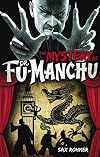
'The Insidious Dr. Fu Manchu' is the American title for 'The Mystery of Fu Manchu' (published in the UK in 1913) which, in turn, was the novelisation of a series of short stories by Sax Rohmer published in 1912.
It is an exercise in sustained hysteria which is only partly explained by the original short story magazine format with its requirement for cliff hangars and constant thrills. Yet it remains a classic as the quintessential expression of Edwardian imperial paranoia and self-image.
I show more reviewed Phil Baker's biography of Sax Rohmer at https://www.goodreads.com/review/show/1555777814 so there is no need to add to the analysis there. All we need to know here is that an early Fu Manchu novel should be on the reading list of any ironical post-modern Englishman.
Whatever you do, do not take this book too seriously. Just go with the maniacal flow and enjoy it. Be a bit steampunk and fantasise about living in a world where people like Nayland Smith and Dr. Petrie (the Holmes and Watson of the story) could exist and be taken seriously.
The evil villain Fu Manchu is truly evil but he is granted high intelligence and has the same cause as Captain Nemo, a loathing of British imperialism. There is an ambiguity in the tale as our heroes recognise that their Chinese antagonist is actually much brighter than they are.
In the end, Nayland Smith and Petrie win because they are dogged, persistent and stout-hearted and because they are lucky. After a while, we might even sympathise with Fu Manchu whose brilliant evil plans are constantly thwarted by an excitable mid-ranking official and an amateur.
My old Victorian-founded grammar school had a school song with the lines 'sentiment is more than skill'. The pragmatic anti-intellectualism, gamesmanship and moral self-righteousness of the English middle classes are well expressed in this tale of secret service defence of the imperial realm.
Later in the series, Fu Manchu becomes a little more human and less of a theatrical villain (one who is not merely inscrutable but genuinely gratuitously murderous and cruel) but, here, the best word for him comes from Victorian melodrama - daastardly.
The 'novel' is little more than a series of unusual crimes committed or threatened, solved or thwarted by our heroes, amidst much mystery and puzzlement. More often than not, we see a life-threatening event cunningly pre-planned by the evil doctor from which they bound free.
There is a sustained love interest in the beautiful Arab slave Karamaneh whose ambiguous charms express all the yearning of the English middle class male reader for the louche sexual pleasures of freedom from responsibility.
Pages could be written on the sexual aspects of the plot but suffice it to say that Petrie's love for this exotic woman (which she reciprocates) frequently results in the plans of the heroes coming to naught (largely to permit the next story in the series).
Petrie is the sort of man who would later be characterised as Colonel Blimp in Powell and Pressburger's 1943 film. Since Petrie (like Watson) tells the tale we can only surmise Nayland Smith's periodic despair at the plot-necessary stupidity of his dim but honourable amanuensis.
Still, they triumph in the end though not enough to stop 14 official (one posthumous) Rohmer outings for the villain, five or six authorised post-Rohmer continuations and at least five and probably many more appearances in the fiction of other writers.
The novel is like a time travel experience to another moral world, wholly incomparable to our own, and it is definitely not great literature but its verve and its essential simplicity as well as its almost ridiculous story line make it an enjoyable read from the age of Zane Grey and Edgar Rice Burroughs. show less
It is an exercise in sustained hysteria which is only partly explained by the original short story magazine format with its requirement for cliff hangars and constant thrills. Yet it remains a classic as the quintessential expression of Edwardian imperial paranoia and self-image.
I show more reviewed Phil Baker's biography of Sax Rohmer at https://www.goodreads.com/review/show/1555777814 so there is no need to add to the analysis there. All we need to know here is that an early Fu Manchu novel should be on the reading list of any ironical post-modern Englishman.
Whatever you do, do not take this book too seriously. Just go with the maniacal flow and enjoy it. Be a bit steampunk and fantasise about living in a world where people like Nayland Smith and Dr. Petrie (the Holmes and Watson of the story) could exist and be taken seriously.
The evil villain Fu Manchu is truly evil but he is granted high intelligence and has the same cause as Captain Nemo, a loathing of British imperialism. There is an ambiguity in the tale as our heroes recognise that their Chinese antagonist is actually much brighter than they are.
In the end, Nayland Smith and Petrie win because they are dogged, persistent and stout-hearted and because they are lucky. After a while, we might even sympathise with Fu Manchu whose brilliant evil plans are constantly thwarted by an excitable mid-ranking official and an amateur.
My old Victorian-founded grammar school had a school song with the lines 'sentiment is more than skill'. The pragmatic anti-intellectualism, gamesmanship and moral self-righteousness of the English middle classes are well expressed in this tale of secret service defence of the imperial realm.
Later in the series, Fu Manchu becomes a little more human and less of a theatrical villain (one who is not merely inscrutable but genuinely gratuitously murderous and cruel) but, here, the best word for him comes from Victorian melodrama - daastardly.
The 'novel' is little more than a series of unusual crimes committed or threatened, solved or thwarted by our heroes, amidst much mystery and puzzlement. More often than not, we see a life-threatening event cunningly pre-planned by the evil doctor from which they bound free.
There is a sustained love interest in the beautiful Arab slave Karamaneh whose ambiguous charms express all the yearning of the English middle class male reader for the louche sexual pleasures of freedom from responsibility.
Pages could be written on the sexual aspects of the plot but suffice it to say that Petrie's love for this exotic woman (which she reciprocates) frequently results in the plans of the heroes coming to naught (largely to permit the next story in the series).
Petrie is the sort of man who would later be characterised as Colonel Blimp in Powell and Pressburger's 1943 film. Since Petrie (like Watson) tells the tale we can only surmise Nayland Smith's periodic despair at the plot-necessary stupidity of his dim but honourable amanuensis.
Still, they triumph in the end though not enough to stop 14 official (one posthumous) Rohmer outings for the villain, five or six authorised post-Rohmer continuations and at least five and probably many more appearances in the fiction of other writers.
The novel is like a time travel experience to another moral world, wholly incomparable to our own, and it is definitely not great literature but its verve and its essential simplicity as well as its almost ridiculous story line make it an enjoyable read from the age of Zane Grey and Edgar Rice Burroughs. show less
Lists
Guilty Pleasures (1)
Awards


You May Also Like


Associated Authors
Statistics
- Works
- 188
- Also by
- 61
- Members
- 6,108
- Popularity
- #4,030
- Rating
- 3.5
- Reviews
- 88
- ISBNs
- 855
- Languages
- 11
- Favorited
- 20
