
Mike Mignola
Author of Hellboy: Seed of Destruction
About the Author
Series
Works by Mike Mignola
Hellboy Library Edition, Vol. 1: Seed of Destruction and Wake the Devil (2008) 477 copies, 11 reviews
Hellboy Library Edition, Vol. 2: The Chained Coffin and The Right Hand of Doom (2008) 320 copies, 4 reviews
Gotham by Gaslight: An Alternative History of the Batman [Original Release] (1989) — Illustrator — 217 copies, 6 reviews
Hellboy Library Edition, Vol. 6: The Storm and The Fury and The Bride of Hell (2013) 152 copies, 1 review
Hellboy Library Edition, Vol. 7: Hellboy in Hell: The Descent and The Death Card (2017) 120 copies, 1 review
Bram Stoker's Dracula [adapted - graphic novel by Roy Thomas & Mike Mignola] (1993) — Illustrations — 112 copies
Abe Sapien Volume 2: The Devil Does Not Jest and Other Stories (2012) — Author — 102 copies, 5 reviews
Doctor Strange & Doctor Doom: Triumph & Torment [Collection] (2013) — Illustrator — 66 copies, 2 reviews
Our Encounters with Evil: Adventures of Professor J.T. Meinhardt and His Assistant Mr. Knox (2019) 55 copies, 4 reviews
Lobster Johnson Volume 5: The Pirate's Ghost and Metal Monsters of Midtown (2017) — Author — 45 copies
Joe Golem: Occult Detective Volume 1 - The Rat Catcher and The Sunken Dead (2016) 42 copies, 2 reviews
Fafhrd and the Gray Mouser Book 2: The Circle Curse / The Howling Tower (1991) — Illustrator — 19 copies
HELLBOY EDICION INTEGRAL VOL.1: Semilla de destruccion & Despierta al demonio & El ataud encadenado & La mano derecha del destino / Hellboy Seed of ... & the Right Hand of Doom… (2011) 18 copies, 2 reviews
Fafhrd and the Gray Mouser Book 4: Lean Times in Lankhmar / When the Sea King's Away (1991) — Illustrator — 15 copies, 1 review
Koshchei the Deathless Omnibus 13 copies
Cosmic Odyssey Graphic Novel Comic / Book Two : Disaster (2) (1988) — Illustrator — 12 copies, 1 review
Fafhrd and the Gray Mouser Book 3: The Price of Pain Ease / Bazaar of the Bizarre (1991) — Illustrator — 11 copies
Hellboy: The Fortune Teller / Stranger Things: Deliver Me From Evil (Dark Horse FCBD 2024) 5 copies, 1 review
Giant Robot Hellboy #1 4 copies
Giant Robot Hellboy #2 4 copies
Giant Robot Hellboy #3 4 copies
Hellboy Premiere Edition #1 4 copies
Ghost/Hellboy #1 (of 2) 4 copies
From the Vault 2 4 copies
Hellboy Junior #1 — Author — 4 copies
Superman, Vol. 2 # 23 — Illustrator — 3 copies
Hellboy in Love: The Art of Fire #2 — Author — 3 copies
Hellboy in Love: The Art of Fire #1 — Author — 3 copies
The Nuckelavee 2 copies
Hellboy and the B.P.R.D. 1955-1957 2 copies
Panya: The Mummy's Curse #1 2 copies
Hellboy Convention Sketchbook 1 2 copies
Joe Golem: Occult Detective--The Drowning City #1 (Joe Golem: Occult Detective Vol. 2) (2018) 2 copies
Lobster Johnson Omnibus, Vol. 2 2 copies
Joe Golem: Occult Detective--The Drowning City #3 (Joe Golem: Occult Detective Vol. 2) (2018) 2 copies
Hellboy tom 8: Opowieści 2 copies
From the Vault 5 2 copies
Hellboy El tercer deseo & El asombroso cabeza de tornillo/ The Third Wish & The Amazing Screw Head (Spanish Edition) (2003) 2 copies
Dark Horse 20 years 2 copies
Fantastic Four Ashcan 1 copy
Abe Sapien 8: Pusté pobřeží 1 copy
Znany diabeł 1 copy
Abe Sapien 7 - Utajený oheň 1 copy
Obudzić diabła 1 copy
Hellboy a Ú.P.V.O. 4: 1955 1 copy
Hellboy Y La O.D.I.P. 1952 1 copy
Pan Higgins wraca do domu 1 copy
Opowieści niesamowite 1 copy
Lord Baltimore 05. L'Apôtre et la Sorcière — Author — 1 copy
Hellboy omnibus - volume 04 1 copy
Universo DC por Mike Mignola 1 copy
Batman - Sina Macabra # 01 1 copy
Abe Sapien: To the Last Man 1 copy
Hellboy: Box Full of Evil #3 1 copy
From The Vault 4 1 copy
Superman vol. 4 1 copy
Ted McKeever's Metropol #11 — Illustrator — 1 copy
Ted McKeever's Metropol #10 — Illustrator — 1 copy
Ted McKeever's Metropol #9 — Illustrator — 1 copy
Extrem, 4 1 copy
Godzilla Portfolio 2 — Illustrator — 1 copy
Some Drawings 1 copy
From the Vault 3 1 copy
Godzilla : Portfolio #2 1 copy
Joe Golem: Occult Detective--The Drowning City #2 (Joe Golem: Occult Detective Vol. 2) (2018) 1 copy
Piekło na Ziemi. 5 1 copy
Batman: Gotham Gaslight 1 copy
Marvel Fanfare #16 — Illustrator — 1 copy
Hellboy in Love #5 1 copy
Baltimore Omnibus, Vol. 1 1 copy
El asombroso Cabeza de Tornillo y otros objetos extraños (Edición del 20º aniversario) (2022) 1 copy
Young Hellboy: Assault on Castle Death (2022) #4 (of 4) [Cover B Variant Lissa Treiman] (2023) 1 copy
Baltimore Omnibus, Vol. 2 1 copy
Joe Golem #2 1 copy
Joe Golem #1 1 copy
Hellboy #31 1 copy
Hellboy: Darkness Falls #5 1 copy
B.P.R.D :Garden of Souls #1 1 copy
Comics Journal n.0 Edizione Italiana — Cover artist — 1 copy
Lexy presents Dark Horse #1 Codexarcana — Author; Cover artist — 1 copy
Hellboy: Colossus 1 copy
Koshchei: The Deathless #6 1 copy
Koshchei: The Deathless #5 1 copy
Koshchei: The Deathless #4 1 copy
Koshchei: The Deathless #3 1 copy
Panya: The Mummy's Curse #3 1 copy
Joe Golem #5 1 copy
The Amazing Screw-On Head #1 1 copy
Dark Horse Twenty Years 1 copy
Koshchei: The Deathless 1 copy
Associated Works
The Thackery T. Lambshead Cabinet of Curiosities: Exhibits, Oddities, Images, and Stories from Top Authors and Artists (2011) — Illustrator — 492 copies, 17 reviews
Nursery Rhyme Comics: 50 Timeless Rhymes from 50 Celebrated Cartoonists (2011) — Illustrator — 227 copies, 27 reviews
What the #@&% Is That?: The Saga Anthology of the Monstrous and the Macabre (2016) — Cover artist, some editions — 94 copies, 1 review
In the Mad Mountains: Stories Inspired by H. P. Lovecraft (2024) — Cover Art, some editions — 56 copies, 5 reviews
Minor Threats, Vol. 1: A Quick End To A Long Beginning (2023) — Illustrator, some editions — 27 copies, 2 reviews
Dark Horse Presents, Issue 151 [Vol 1] — Contributor — 6 copies
Hellboy II: The Golden Army: Original Motion Picture Soundtrack (2008) — Cover artist, some editions — 5 copies
X-Factor [1986] Annual #6 - Kings of Pain, Part 4: King of Pain (1991) — Cover artist, some editions — 3 copies
Dark Horse Presents [2014] #16 — Contributor — 3 copies
The Powerpuff Girls [2000] #25 — Illustrator — 2 copies
San Diego Comic Con Comics #2 — Contributor — 1 copy
The Transformers 60: Robot Buster! (Part 2: "Baptism of Fire!") (1986) — Illustrator — 1 copy, 1 review
Dark Horse Extra #16 — Contributor — 1 copy
Dark Horse Extra #19 — Contributor — 1 copy
Dark Horse Extra #18 — Contributor — 1 copy
Dark Horse Extra #17 — Contributor — 1 copy
Dark Horse Extra #15 — Contributor — 1 copy
Dark Horse Extra #14 — Contributor — 1 copy
The Transformers 62: Devastation Derby (Part 2: "Devastated!") (1986) — Illustrator — 1 copy, 1 review
The Transformers 64: Second Generation! (Part 2: "Electric Dreams!") (1986) — Illustrator — 1 copy, 1 review
The Transformers 65: Second Generation! (Part 3: "Return Bout!") (1986) — Illustrator — 1 copy, 1 review
Batman Black & White 3 — Cover artist — 1 copy
Tagged
Common Knowledge
- Legal name
- Mignola, Michael Joseph
- Birthdate
- 1960-09-16
- Gender
- male
- Education
- California College of the Arts
- Occupations
- comic book artist
writer - Awards and honors
- Best Writer/Artist Eisner Award, for Hellboy: Seed of Destruction (1995)
Best Graphic Album: Reprint Eisner Award, for Hellboy: Seed of Destruction (1995)
Best Writer/Artist Eisner Award, for Hellboy: Wake the Devil (1997)
Best Writer/Artist Eisner Award, for Hellboy: Almost Colossus, Hellboy Christmas Special and Hellboy Jr. Halloween Special (1998)
Best Finite Series/Limited Series Eisner Award, for Hellboy: Conqueror Worm (2002)
Best Humor Publication Eisner Award, for The Amazing Screw-On Head (2003) (show all 12)
Best Short Story Eisner Award, for "The Magician and the Snake" (2003)
Favourite Comics Writer/Artst Eagle Award (2004)
Best Comics-Related Book Eisner Award, for The Art of Hellboy (2004)
Favourite Comics Writer/Artst Eagle Award (2006)
Roll of Honour Eagle Award (2007)
Favourite Colour Comicbook - American Eagle Award, for Hellboy: Darkness Calls (2007) - Nationality
- USA
- Birthplace
- Berkeley, California, USA
- Associated Place (for map)
- California, USA
Members
Reviews
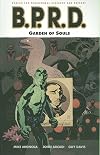
Mike Mignola is somehow able to tell a dark story with occult rituals and limb-severing violence but give it the innocent charm of a TinTin comic. He doesn't usually let us in to the minds of the primary characters in Garden of Souls, but he endears us to them by portraying with no grandiosity whatsoever - just a self-destructive dedication to ridding the world of evil. The story is well paced, and gave me the same quality of pleasure as watching an episode of a good television series.
If these short story collections are teaching me anything, it's that I find Hellboy comics a lot more interesting when dealing with an ongoing story, rather than a one off adventure.
Hellboy is such an interesting and complex character, the stories that are only a few pages long and consist of some sort of monster throwing him through a wall only for him to get up and KO the badie with one punch seem like such a waste.
Which is probably why Right Hand of Doom and Box Full of Evil are my show more favourite stories from this collection. Hellboy struggling with questions of who he is, how does he cope with having evil literally grafted to him, and what does it mean that he fights against monsters when he's a monster himself? Plus one of my favourite "snap out of it hero" lines of all time: "Well then, boy, it's not your name is it? Is it?" show less
Hellboy is such an interesting and complex character, the stories that are only a few pages long and consist of some sort of monster throwing him through a wall only for him to get up and KO the badie with one punch seem like such a waste.
Which is probably why Right Hand of Doom and Box Full of Evil are my show more favourite stories from this collection. Hellboy struggling with questions of who he is, how does he cope with having evil literally grafted to him, and what does it mean that he fights against monsters when he's a monster himself? Plus one of my favourite "snap out of it hero" lines of all time: "Well then, boy, it's not your name is it? Is it?" show less

When Grant Morrison wrote Arkham Asylum to blow Bat-minds in 1989, he infused Gotham City with actual occultism, but in terms of the Yog-Sothothery suggested by "Arkham," he didn't make any significant impositions. He certainly didn't go half as far as Mike Mignola and Richard Pace's Doom that Came to Gotham. The latter is part of the DC "Elseworlds" imprint, and it reminded me of Neil Gaiman's Marvel 1602 with the full transposition of a multi-superhero character matrix into another setting show more and time. For Doom that is the Lovecraftian 1920s. Originally a three-issue limited series, the breaks between issues have vanished in the trade edition that collects them into a single graphic novel.
Besides Batman, Alfred, and Bruce Wayne's wards (none of whom have Robin or Nightwing identities or powers), key characters include Oliver Queen (not quite Green Arrow), Barbara Gordon (not Batgirl, but certainly some sort of Oracle), Jason Blood (every bit the Demon), Harvey Dent (who doesn't start as Two-Face), Talia al Ghul, and Ras al Ghul (this world's version of Abdul Alhazred). Alternate, Cthulhvized versions of such Bat-villains as Mister Freeze and Poison Ivy are also clever and outre.
Nixey & Janke's internal art is suited to the mood of the story, but it pales against Mignola's covers. To fully enjoy this book requires appreciation of both the Lovecraft source material and the Batman franchise as it has evolved into the 21st century. Once those are granted, it is a fast, broody, macabre, and worthwhile read. show less
Besides Batman, Alfred, and Bruce Wayne's wards (none of whom have Robin or Nightwing identities or powers), key characters include Oliver Queen (not quite Green Arrow), Barbara Gordon (not Batgirl, but certainly some sort of Oracle), Jason Blood (every bit the Demon), Harvey Dent (who doesn't start as Two-Face), Talia al Ghul, and Ras al Ghul (this world's version of Abdul Alhazred). Alternate, Cthulhvized versions of such Bat-villains as Mister Freeze and Poison Ivy are also clever and outre.
Nixey & Janke's internal art is suited to the mood of the story, but it pales against Mignola's covers. To fully enjoy this book requires appreciation of both the Lovecraft source material and the Batman franchise as it has evolved into the 21st century. Once those are granted, it is a fast, broody, macabre, and worthwhile read. show less
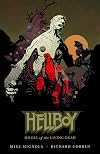
Drinking heavily in Mexico after losing his good friend (and local masked wrestler/luchador) to vampire infection Hellboy gets forced to fight the mysterious challenger. I say forced because Hellboy is clearly told that his rejection of the offer will have consequences.
And so the story begins. What I liked the most is dream-like quality of the story. Art is done by Richard Corben and when it comes to this part you either like Corben's art or you don't.
For me his style was exact match with show more the story atmosphere but some may be put off by his caricature-like drawings (I know I had issues while reading Corben's comic Den).
Being a homage to Universal's monster movie universe, story contains them all - vampires, Frankenstein-like scientist and his creation together with werewolf. Some have greater, some minor roles (vampire scene made me laugh out loud :)) but in overall all the villains have that B-horror movie feeling (and this is why Corben's art style is excellent here) and you just feel good when they get what they deserve (although for vampire I was expecting Leslie Nielsen to show up :)).
As for Hellboy, his path is not one of peace or tranquility no matter how hard he tries to blend in the human world.
In summary very interesting setup with different art approach than what you might be accustomed to. Recommended to all fans of Hellboy universe. show less
And so the story begins. What I liked the most is dream-like quality of the story. Art is done by Richard Corben and when it comes to this part you either like Corben's art or you don't.
For me his style was exact match with show more the story atmosphere but some may be put off by his caricature-like drawings (I know I had issues while reading Corben's comic Den).
Being a homage to Universal's monster movie universe, story contains them all - vampires, Frankenstein-like scientist and his creation together with werewolf. Some have greater, some minor roles (vampire scene made me laugh out loud :)) but in overall all the villains have that B-horror movie feeling (and this is why Corben's art style is excellent here) and you just feel good when they get what they deserve (although for vampire I was expecting Leslie Nielsen to show up :)).
As for Hellboy, his path is not one of peace or tranquility no matter how hard he tries to blend in the human world.
In summary very interesting setup with different art approach than what you might be accustomed to. Recommended to all fans of Hellboy universe. show less
Lists
Awards


You May Also Like


Associated Authors
Statistics
- Works
- 1,117
- Also by
- 112
- Members
- 34,350
- Popularity
- #552
- Rating
- 3.8
- Reviews
- 735
- ISBNs
- 1,101
- Languages
- 16
- Favorited
- 77


