
Anne Elizabeth Moore
Author of The Best American Comics 2006
About the Author
Works by Anne Elizabeth Moore
Unmarketable: Brandalism, Copyfighting, Mocketing, and the Erosion of Integrity (2007) 128 copies, 4 reviews
Hey Kidz! Buy This Book: A Radical Primer on Corporate and Governmental Propaganda and Artistic Activism for Short People (2004) 28 copies, 1 review
The Manifesti of Radical Literature 2 copies
Women's Comics Anthology 2 copies
Don't Do It 1 copy
Associated Works
BITCHfest: Ten Years of Cultural Criticism from the Pages of Bitch Magazine (2006) — Contributor — 719 copies, 10 reviews
Tagged
Common Knowledge
- Birthdate
- 1971
- Gender
- female
- Nationality
- USA
- Birthplace
- Winner, South Dakota, USA
- Map Location
- USA
Members
Reviews

Houses in Detroit were being given away to writers! I remember the articles in the Detroit Free Press. On the surface, Write a House sounded like a great idea. All those empty houses in the city, why not? “It’s like a writer-in-residence program…only in this case we’re actually giving the writer the residence, forever,” an article in Publisher’s Weekly noted. The writers were given two years rent-free then handed the deed. All they had to do was to “engage with the literary show more community of Detroit,” live in the house 75% of the time, and pay insurance and taxes.
For Anne Elizabeth Moore, it meant a place of her own where she could settle down after years of traveling across the world.
But the reality fell short of the ideal. Out of her experience arose a book about her experience winning a house, adapting to Banglatown, discovering Detroit’s ‘come back’ was more hype than truth, and how the city balances their budget by selling the homes of people who owed back taxes.
It is not a pretty story, and yet Moore’s stories spurred plenty of laughs and included some heart-warming scenes.
The memoir is episodic, but I liked the mix. Light hearted stories about her cats and the hospitality of her Bengali neighbors intersperse the more serious and disturbing narratives. My favorite scenes were Moore’s interactions with the girls who lived across the street. The girls gave her insight into their lives as Moore expanded their understanding of the world.
Home ownership is costly. Moore’s ‘free house’ put her nearly $30,000 in debt, and when she decided to sell discovered the name on the deed was not her own.
I had read others on the Detroit foreclosure crisis, how occupied homes are ceased for back taxes, sometimes over a few hundred dollars, then sold at auction, and then resold again. Everyone making a profit off of another’s catastrophe, forcing people out of their family homes….and homeless. “Michigan is one of only twelve states that allows counties to profit from the sale of property seized in tax foreclosures,” Moore states. And, Detroit has one of the highest property tax rates in America. Of course, the population decline and resulting empty lots means lower income from property taxes, and the city had to raise the funds somehow….hence, selling off seized properties for a profit. She shares the hard numbers: a $22.5 million budget shortfall in 2014 was offset by the seizure and sale of homes!
Moore discovered that her house had been illegally seized and sold for a profit.
Moore loved her neighbors, but she did not love Detroit. It is not a positive portrait of the city. One that is, in some ways, well deserved. show less
For Anne Elizabeth Moore, it meant a place of her own where she could settle down after years of traveling across the world.
But the reality fell short of the ideal. Out of her experience arose a book about her experience winning a house, adapting to Banglatown, discovering Detroit’s ‘come back’ was more hype than truth, and how the city balances their budget by selling the homes of people who owed back taxes.
It is not a pretty story, and yet Moore’s stories spurred plenty of laughs and included some heart-warming scenes.
The memoir is episodic, but I liked the mix. Light hearted stories about her cats and the hospitality of her Bengali neighbors intersperse the more serious and disturbing narratives. My favorite scenes were Moore’s interactions with the girls who lived across the street. The girls gave her insight into their lives as Moore expanded their understanding of the world.
Home ownership is costly. Moore’s ‘free house’ put her nearly $30,000 in debt, and when she decided to sell discovered the name on the deed was not her own.
I had read others on the Detroit foreclosure crisis, how occupied homes are ceased for back taxes, sometimes over a few hundred dollars, then sold at auction, and then resold again. Everyone making a profit off of another’s catastrophe, forcing people out of their family homes….and homeless. “Michigan is one of only twelve states that allows counties to profit from the sale of property seized in tax foreclosures,” Moore states. And, Detroit has one of the highest property tax rates in America. Of course, the population decline and resulting empty lots means lower income from property taxes, and the city had to raise the funds somehow….hence, selling off seized properties for a profit. She shares the hard numbers: a $22.5 million budget shortfall in 2014 was offset by the seizure and sale of homes!
Moore discovered that her house had been illegally seized and sold for a profit.
Moore loved her neighbors, but she did not love Detroit. It is not a positive portrait of the city. One that is, in some ways, well deserved. show less
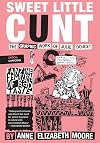
In Sweet Little Cunt: The Graphic Work of Julie Doucet, Anne Elizabeth Moore argues, “Doucet’s work, overall, is nothing but destabilizing. It throws readers for loops; it brought momentum and new creators to independent comics; it inspired one of today’s most important publishers to develop solo-authored lines and thus acted as a flagship for the black-and-white boom even as it cleared a path for the graphic novel boom a decade later; it changed our very presumptions about who can and show more will master the form of comics. It is not hyperbole to suggest that Julie Doucet’s comics changed history” (pg. 5). Discussing the significance of her study in the ever-growing field of comics studies, Moore writes, “That the conversation about comics remained so consistent for so long was a result of the presumption that the fairly small readership of the form was also homogeneous. The field of comics was imagined to be primarily straight, primarily white, primarily cis, and primarily male for the bulk of its history, largely based on the straight white cismen who felt most comfortable speaking up about the form. Attempts to point to a multiplicity of readerships, however, or acknowledge diverse and usually overlooked creators, ended up lost under the self-perpetuating logic of homogeneity” (pg. 9). Of the gendered nature of the comics industry and comics readership, Moore writes, “The tension between the narratives explored in [Doucet’s] work and what her most demanding readers wanted from it – and believed they got from it – defined Doucet’s career in comics, and contributed to its brevity” (pg. 12). Moore concludes, “My sense… based on analysis of the intersection of gender, race, and comics, is that specialization has done quite a bit to limit the variety of folks who feel they can participate in the industry” (pg. 21). To that end, Moore broadens her analysis to include a focus on French-Canadian culture, punk rock, feminist film, and more in addition to the usual comics theory.
Discussing the gendering of the comics industry in a conversation with Phoebe Gloeckner of Wimmen’s Comix, Moore writes, “Despite the ghettoization and frustration they raised, women-only anthologies were one of few options for female creators seeking to publish comics in the late 1980s in North America” (pg. 34). Doucet also explored her body through her comics, often in ways that male readers misinterpreted as objectification. According to Moore, “She uses bodily agency in a range of ways, from sexual to surgical, always tucked inside the joke: that she is also in control of the comic strip” (pg. 76). Moore sums up this aspect of Doucet’s work in a strip in which Doucet depicts herself washing her vagina, writing, “Doucet has created a world where you can and must choose between dishes, laundry, and rubbing your own cooter with suds. The last is obviously the way to go, in terms of personal fulfillment, and if her heterosexual cismale readers are enticed to watch and even cheer her on as she engages in a ritual of self-care, so be it” (pg. 96).
Examining the nature of the genre in which Doucet operated, Moore writes, “That ‘alt-comics’ was a descriptive term for a post-punk, post-underground comics visual style that included as referents graphic sex…, physical mutilation, drug use, incest, and inflammatory political epithets speaks volumes. Transgression was a cultural mode that deliberately aimed to cross boundaries established by corporate or mainstream cultural production, an attempt to lay a groundwork for social interactions unrecognizable to the elder generation’s Leave-it-to-Beaver mindset” (pg. 99). Turning to the way Doucet incorporated elements of popular or consumer culture, like Star Trek’s Kirk and Spock, Moore writes, “In fanzine culture, strips like this sere to carve out a creator’s stake in a certain realm of popular culture: I watch Star Trek, the creator is saying – something men tended to publicly proclaim more often at the time – and I, too, can make sci-fi. Female creators have a long history in sci-fi, of course, and an equally long history of being written out of it, which is partially how fanzines got their start in the first place” (pg. 150). The zines and underground comix offered a venue for women creators who faced exclusion from more established venues due to cultural misogyny.
Sweet Little Cunt closes with two interviews Moore conducted with Doucet in 2006 and 2017, engaging with Doucet’s life and legacy while giving insight into her beyond her work itself. Moore’s volume offers a valuable contribution to the growing field of comics scholarship, breaking down assumptions about creators, scholars, and theory while recovering the significance of a cartoonist who played a key role in the underground scene of the 1980s and 1990s while defying the boundaries outsiders attempted to impose upon her. All who presume to study comics and cartoon or sequential art must read this book to rethink their biases. show less
Discussing the gendering of the comics industry in a conversation with Phoebe Gloeckner of Wimmen’s Comix, Moore writes, “Despite the ghettoization and frustration they raised, women-only anthologies were one of few options for female creators seeking to publish comics in the late 1980s in North America” (pg. 34). Doucet also explored her body through her comics, often in ways that male readers misinterpreted as objectification. According to Moore, “She uses bodily agency in a range of ways, from sexual to surgical, always tucked inside the joke: that she is also in control of the comic strip” (pg. 76). Moore sums up this aspect of Doucet’s work in a strip in which Doucet depicts herself washing her vagina, writing, “Doucet has created a world where you can and must choose between dishes, laundry, and rubbing your own cooter with suds. The last is obviously the way to go, in terms of personal fulfillment, and if her heterosexual cismale readers are enticed to watch and even cheer her on as she engages in a ritual of self-care, so be it” (pg. 96).
Examining the nature of the genre in which Doucet operated, Moore writes, “That ‘alt-comics’ was a descriptive term for a post-punk, post-underground comics visual style that included as referents graphic sex…, physical mutilation, drug use, incest, and inflammatory political epithets speaks volumes. Transgression was a cultural mode that deliberately aimed to cross boundaries established by corporate or mainstream cultural production, an attempt to lay a groundwork for social interactions unrecognizable to the elder generation’s Leave-it-to-Beaver mindset” (pg. 99). Turning to the way Doucet incorporated elements of popular or consumer culture, like Star Trek’s Kirk and Spock, Moore writes, “In fanzine culture, strips like this sere to carve out a creator’s stake in a certain realm of popular culture: I watch Star Trek, the creator is saying – something men tended to publicly proclaim more often at the time – and I, too, can make sci-fi. Female creators have a long history in sci-fi, of course, and an equally long history of being written out of it, which is partially how fanzines got their start in the first place” (pg. 150). The zines and underground comix offered a venue for women creators who faced exclusion from more established venues due to cultural misogyny.
Sweet Little Cunt closes with two interviews Moore conducted with Doucet in 2006 and 2017, engaging with Doucet’s life and legacy while giving insight into her beyond her work itself. Moore’s volume offers a valuable contribution to the growing field of comics scholarship, breaking down assumptions about creators, scholars, and theory while recovering the significance of a cartoonist who played a key role in the underground scene of the 1980s and 1990s while defying the boundaries outsiders attempted to impose upon her. All who presume to study comics and cartoon or sequential art must read this book to rethink their biases. show less
 This review was written for LibraryThing Early Reviewers.
Disproving the adage to 'never look a gift horse in the mouth', Moore discovers that the free house in Detroit that she's offered comes with lots of issues, both with the house itself and because it's located in a dysfunctional city. The free house program was ostensibly to promote neighborhood revitalization by locating artists in Detroit neighborhoods and providing them with housing. Many of Moore's less happy discoveries about the program and her house seem to stem from her not reading show more the 'fine print' on the agreement (like many folks acquiring a house TBH!) and for her vignettes of sexist behavior which is apparently rampant among Detroiters--issues that no amount of organic gardening and upcycling can fix. Sprinkled into the litany of complaints are stories about Moore's Bangladeshi neighbors, including some quite charming young folks. Gentrifier offers a sketch of the challenges that America's cities stalled in post-industrial decline face and as an indictment of 'quick fix' measures to the housing crisis. show less
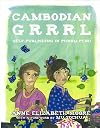
It looks cute, but it packs a punch.
------------------------------------
Disclaimer: I consider Anne Elizabeth Moore a friend and partner in crime. So my gloating about how awesome this book is should be taken with an industrial sized grain of salt. Or maybe not, because it is true.
The full title of the book is Cambodian Grrrl: Self Publishing in Phnom Penh. But this book is neither about Cambodia nor self-publishing. Rather it is about love.
Sure, Anne heads out to Cambodia and meets up with show more a gaggle of giggly Cambodian grrrls who live in the only dormitory for females in the country. Sure she teaches them how to make zines and express their thoughts and feelings. But the main theme is love. And me telling you that does not ruin the book. In fact it may make it even more awesome for you.
The most poignant part of the book is how powerful it is to teach young women to value their voice. Anne does it over and over, sometimes not even aware of the women she is teaching until a zine finds itself onto her bunk, as if some underground rebel newspaper. And in many ways, it is.
Anne writes in the same manner as she speaks. Direct and simple yet complex. She doesn't waste time with a lot of big academic speak, instead she paints complex thought exercises with every day words. I think this is why I love her so. There's no way you can miss when she throws down the gauntlet like when asks you to consider why those of us in the USA would be up in arms over Cambodians never being educated about the Khmer Rouge, but we barely bat an eye on the invisibleness of the plight of American Indians.
Somehow Anne is able to discuss issues of democracy, freedom of speech, the global garment market, slave labor, rape, mass murder and a litany of other tough subjects and leave me smiling. That left me with hope that all we really do need is love. And a sharpie. show less
------------------------------------
Disclaimer: I consider Anne Elizabeth Moore a friend and partner in crime. So my gloating about how awesome this book is should be taken with an industrial sized grain of salt. Or maybe not, because it is true.
The full title of the book is Cambodian Grrrl: Self Publishing in Phnom Penh. But this book is neither about Cambodia nor self-publishing. Rather it is about love.
Sure, Anne heads out to Cambodia and meets up with show more a gaggle of giggly Cambodian grrrls who live in the only dormitory for females in the country. Sure she teaches them how to make zines and express their thoughts and feelings. But the main theme is love. And me telling you that does not ruin the book. In fact it may make it even more awesome for you.
The most poignant part of the book is how powerful it is to teach young women to value their voice. Anne does it over and over, sometimes not even aware of the women she is teaching until a zine finds itself onto her bunk, as if some underground rebel newspaper. And in many ways, it is.
Anne writes in the same manner as she speaks. Direct and simple yet complex. She doesn't waste time with a lot of big academic speak, instead she paints complex thought exercises with every day words. I think this is why I love her so. There's no way you can miss when she throws down the gauntlet like when asks you to consider why those of us in the USA would be up in arms over Cambodians never being educated about the Khmer Rouge, but we barely bat an eye on the invisibleness of the plight of American Indians.
Somehow Anne is able to discuss issues of democracy, freedom of speech, the global garment market, slave labor, rape, mass murder and a litany of other tough subjects and leave me smiling. That left me with hope that all we really do need is love. And a sharpie. show less
Lists
Awards


You May Also Like


Associated Authors
Statistics
- Works
- 19
- Also by
- 3
- Members
- 1,462
- Popularity
- #17,575
- Rating
- 3.8
- Reviews
- 40
- ISBNs
- 23
- Favorited
- 2

