
A.R. Wells
Author of Entangled: A Cabinet of Botanical Wonders
About the Author
Series
Works by A.R. Wells
Hulp onder versoekings 2 copies
Cryptids & Contested Creatures 2 copies
Tagged
Common Knowledge
There is no Common Knowledge data for this author yet. You can help.
Members
Reviews

If you also want to be a bit more entangled with the plant life around us, I highly recommend this work, which exemplifies the intricate powers plants are wielding on us.
It's about the 'seeds of power' (once rested in cacao, nutmeg, ginseng, or tea) that formed imperial powers, figured as money and widespread genocide.
It tells about the promises that just were that (tulips in the Netherlands), hard-to-understand worships (like the pineapple frenzy in England or the mango cult in Mao's show more China), very dangerous specimens (like hemlock, castor beans, manchineel, or foxglove), and what happens when an English pastor tastes the bark of a willow tree (aspirin, in the end).
Plants are communicating - with themselves and with us—without a nervous system, without a brain. They invite us as 'doors of perception' (like tobacco, coca, opium, marijuana, cannabis, mescaline, or datura), they lure us to the most dangerous places in the world (like orchids or really blue specimens), and we cultivate them in order to recreate paradise on earth.
Finally, it's the metaphors of nature that determine the way we think about time, change, and renewal - entangled that we are.
Five stars! show less
It's about the 'seeds of power' (once rested in cacao, nutmeg, ginseng, or tea) that formed imperial powers, figured as money and widespread genocide.
It tells about the promises that just were that (tulips in the Netherlands), hard-to-understand worships (like the pineapple frenzy in England or the mango cult in Mao's show more China), very dangerous specimens (like hemlock, castor beans, manchineel, or foxglove), and what happens when an English pastor tastes the bark of a willow tree (aspirin, in the end).
Plants are communicating - with themselves and with us—without a nervous system, without a brain. They invite us as 'doors of perception' (like tobacco, coca, opium, marijuana, cannabis, mescaline, or datura), they lure us to the most dangerous places in the world (like orchids or really blue specimens), and we cultivate them in order to recreate paradise on earth.
Finally, it's the metaphors of nature that determine the way we think about time, change, and renewal - entangled that we are.
Five stars! show less
 This review was written for LibraryThing Early Reviewers.
Christmas Ghost Stories: Classic Victorian Tales for Cold Winter Nights
Rating: 4.5 / 5
This is an exceptionally well-curated and well-framed collection. I enjoyed it far more than I expected, and I read it quickly—one of those books where the momentum sneaks up on you.
Wells’s introduction does real work, not just scene-setting. It clearly explains why Christmas became a season for ghost stories: long nights, enforced domestic closeness, cold, ritual, memory, and the tension between show more comfort and unease. That framing carries through the whole book. Each story is preceded by its own introduction, and those are just as valuable—brief but intelligent discussions of the author, the historical moment, and what kind of horror you’re about to encounter.
What I appreciated most is the range Wells highlights without flattening it. There’s domestic horror, where the threat is inside the home and the family structure itself. There’s horror of the unseen, horror of the half-seen, and horror that relies on implication rather than spectacle. There’s even room for a lighter, almost comic piece—something to relieve the pressure so the evening doesn’t become relentlessly grim. That balance feels very true to how these stories were originally told and consumed.
The standout for me was The Nurse’s Story, which remains one of the most chilling Christmas ghost stories ever written, precisely because the person in danger is a lonely child rather than a reckless adult. The collection as a whole reinforces how often Victorian ghost stories are about neglect, moral coldness, and quiet failures of care, rather than monsters.
The only story that did not work for me was The Brown Hand. The problem isn’t the premise—it’s the ending. After setting up a haunting rooted in colonial exploitation and bodily violation, the resolution feels evasive. The ghost is effectively tricked, which undermines the story’s own moral argument. Instead of reckoning, the narrative opts for reassurance, and that sits badly alongside the book’s broader themes about consequence and responsibility.
That single misfire aside, this is an excellent anthology. Wells respects the reader, trusts the material, and gives just enough context to deepen the experience without explaining the fear away. It’s thoughtful, unsettling, and very satisfying to read in winter, when darkness comes early and the house feels a little too quiet.
Highly recommended for readers who like their ghost stories intelligent, historically grounded, and morally sharp. show less
Rating: 4.5 / 5
This is an exceptionally well-curated and well-framed collection. I enjoyed it far more than I expected, and I read it quickly—one of those books where the momentum sneaks up on you.
Wells’s introduction does real work, not just scene-setting. It clearly explains why Christmas became a season for ghost stories: long nights, enforced domestic closeness, cold, ritual, memory, and the tension between show more comfort and unease. That framing carries through the whole book. Each story is preceded by its own introduction, and those are just as valuable—brief but intelligent discussions of the author, the historical moment, and what kind of horror you’re about to encounter.
What I appreciated most is the range Wells highlights without flattening it. There’s domestic horror, where the threat is inside the home and the family structure itself. There’s horror of the unseen, horror of the half-seen, and horror that relies on implication rather than spectacle. There’s even room for a lighter, almost comic piece—something to relieve the pressure so the evening doesn’t become relentlessly grim. That balance feels very true to how these stories were originally told and consumed.
The standout for me was The Nurse’s Story, which remains one of the most chilling Christmas ghost stories ever written, precisely because the person in danger is a lonely child rather than a reckless adult. The collection as a whole reinforces how often Victorian ghost stories are about neglect, moral coldness, and quiet failures of care, rather than monsters.
The only story that did not work for me was The Brown Hand. The problem isn’t the premise—it’s the ending. After setting up a haunting rooted in colonial exploitation and bodily violation, the resolution feels evasive. The ghost is effectively tricked, which undermines the story’s own moral argument. Instead of reckoning, the narrative opts for reassurance, and that sits badly alongside the book’s broader themes about consequence and responsibility.
That single misfire aside, this is an excellent anthology. Wells respects the reader, trusts the material, and gives just enough context to deepen the experience without explaining the fear away. It’s thoughtful, unsettling, and very satisfying to read in winter, when darkness comes early and the house feels a little too quiet.
Highly recommended for readers who like their ghost stories intelligent, historically grounded, and morally sharp. show less
This review was written for LibraryThing Early Reviewers.Wonderful book. The description says:
“Behind every empire's rise, beneath every garden wall, and within every seed lies a story of entanglement older than civilization itself. From the spice routes that reshaped continents to the flowers that bankrupted nations, plants have always been humanity's strangest partners and most patient teachers.
Entangled explores this relationship through seven richly illustrated chapters spanning empires built on spices and stolen seeds, legendary gardens show more from Eden to Babylon's hanging terraces, carnivorous plants and the secret language of trees, medicinal discoveries from willow bark to deadly foxglove, obsessions that sparked tulip mania and orchid fever, the poisoner's cabinet of hemlock and nightshade, and sacred plants that dissolve the boundaries of consciousness.”
This is organized in short, two to five page overviews of the chapter topics, and the examples subtopics. Within, you will find properties, claimed properties, histories - warts and all, unfortunately without hyperbole. For example, on cacao:
“The transformation from bitter Aztec drink to European luxury required not just sugar but colonial violence on an unprecedented scale.”
The warts are many, as precious plants and seeds prompted brutalities to control the market. Nutmeg, so common today, has a tragic history. When they couldn’t corner a monopoly through agreements, the Dutch, in typical European fashion, slaughtered nearly the entire population of the Banda Islands (eastern Indonesia), the only place where nutmeg grew wild.
“Today, Indonesia still produces most of the global supply of nutmeg, but the Banda
Islands remain largely empty, their original culture so thoroughly destroyed that anthropologists struggle to reconstruct basic facts about Bandanese society.”
On trees communicating in ways we did not know until recently, there are some fascinating discoveries. And, as seems to be the anathema when humans are involved, more tragedy:
“If trees could communicate, recognize kin, and share resources, traditional forestry practices needed complete reconsideration. Clear-cutting didn’t just remove trees; it destroyed information networks built over centuries.”
“[In 1716, Father Joseph-Françoise] Lafitau had discovered American ginseng (Panax quinquefolius), separated from Asian ginseng (Panax ginseng) by oceans but maintaining nearly identical properties.” 1) Rather, he discovered that the Iroquois had discovered it. And, 2) I have read a bit about the Iroquois, early American botanicals, lived in Korea for seven years and had premium ginseng that the Chinese came over to Korea to get, and this is the first I have heard of American ginseng. Nice! I also didn’t know, “The ginseng rush transformed the American frontier. Daniel Boone, the legendary frontiersman and explorer, made more money from ginseng than all his other ventures combined.”
Another “wow”: The Venus Flytrap “can count, remember previous stimuli, and make decisions about what’s worth catching. […]
The plant has evolved to evaluate costs and benefits with no brain, no nervous
system, using mechanisms we still don’t fully understand.”
There are unfortunately no citations but there is a robust bibliography, grouped for each chapter. Absent citations, I would prefer that they be separated further for each subsection to make follow up easier. The ghosted citations are particularly needed in Chapter VII, The Verdant Mysteries, which has some interesting claims about psychoactive plants.
Still, a delightful book that might open a few eyes. I am going to curate that bibliography for future reads, one of which I found this week in a bookshop: The True History of Chocolate, by Sophie D. and Michael D. Coe.
I received a review copy through LibraryThing from the author, and publisher, LibraryMirabilis, self-describing in the About section:
“For those who delight in curiosity, linger in museum halls, or lose themselves in old bookshops, or know someone who does, Library Mirabilis offers a place of quiet discovery. New volumes are always in development.” show less
“Behind every empire's rise, beneath every garden wall, and within every seed lies a story of entanglement older than civilization itself. From the spice routes that reshaped continents to the flowers that bankrupted nations, plants have always been humanity's strangest partners and most patient teachers.
Entangled explores this relationship through seven richly illustrated chapters spanning empires built on spices and stolen seeds, legendary gardens show more from Eden to Babylon's hanging terraces, carnivorous plants and the secret language of trees, medicinal discoveries from willow bark to deadly foxglove, obsessions that sparked tulip mania and orchid fever, the poisoner's cabinet of hemlock and nightshade, and sacred plants that dissolve the boundaries of consciousness.”
This is organized in short, two to five page overviews of the chapter topics, and the examples subtopics. Within, you will find properties, claimed properties, histories - warts and all, unfortunately without hyperbole. For example, on cacao:
“The transformation from bitter Aztec drink to European luxury required not just sugar but colonial violence on an unprecedented scale.”
The warts are many, as precious plants and seeds prompted brutalities to control the market. Nutmeg, so common today, has a tragic history. When they couldn’t corner a monopoly through agreements, the Dutch, in typical European fashion, slaughtered nearly the entire population of the Banda Islands (eastern Indonesia), the only place where nutmeg grew wild.
“Today, Indonesia still produces most of the global supply of nutmeg, but the Banda
Islands remain largely empty, their original culture so thoroughly destroyed that anthropologists struggle to reconstruct basic facts about Bandanese society.”
On trees communicating in ways we did not know until recently, there are some fascinating discoveries. And, as seems to be the anathema when humans are involved, more tragedy:
“If trees could communicate, recognize kin, and share resources, traditional forestry practices needed complete reconsideration. Clear-cutting didn’t just remove trees; it destroyed information networks built over centuries.”
“[In 1716, Father Joseph-Françoise] Lafitau had discovered American ginseng (Panax quinquefolius), separated from Asian ginseng (Panax ginseng) by oceans but maintaining nearly identical properties.” 1) Rather, he discovered that the Iroquois had discovered it. And, 2) I have read a bit about the Iroquois, early American botanicals, lived in Korea for seven years and had premium ginseng that the Chinese came over to Korea to get, and this is the first I have heard of American ginseng. Nice! I also didn’t know, “The ginseng rush transformed the American frontier. Daniel Boone, the legendary frontiersman and explorer, made more money from ginseng than all his other ventures combined.”
Another “wow”: The Venus Flytrap “can count, remember previous stimuli, and make decisions about what’s worth catching. […]
The plant has evolved to evaluate costs and benefits with no brain, no nervous
system, using mechanisms we still don’t fully understand.”
There are unfortunately no citations but there is a robust bibliography, grouped for each chapter. Absent citations, I would prefer that they be separated further for each subsection to make follow up easier. The ghosted citations are particularly needed in Chapter VII, The Verdant Mysteries, which has some interesting claims about psychoactive plants.
Still, a delightful book that might open a few eyes. I am going to curate that bibliography for future reads, one of which I found this week in a bookshop: The True History of Chocolate, by Sophie D. and Michael D. Coe.
I received a review copy through LibraryThing from the author, and publisher, LibraryMirabilis, self-describing in the About section:
“For those who delight in curiosity, linger in museum halls, or lose themselves in old bookshops, or know someone who does, Library Mirabilis offers a place of quiet discovery. New volumes are always in development.” show less
This review was written for LibraryThing Early Reviewers.Christmas Ghost Stories: Classic Victorian Tales for Cold Winter Nights (Library Mirabilis) by A.R. Wells
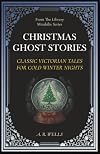
Eight excellent Victorian ghost stories are presented as prime examples of ghost stories told on Christmas Eve. As the title suggests this is a book focused on the tradition of telling Ghost stories on Christmas Eve and the selection of stories is excellent. The authors included is a who’s who of genre and includes Elizabeth Gaskell, Ada Buisson, Charlotte Riddell, Ameila Edwards, M. R. James, E. F. Benson, Arthur Conan Doyle and Jerome K. Jerome.
Each story is preceded by an introductory show more section that I insisted on reading only after reading the story. These story specific commentaries are useful discussions on the nature of the story concerned and support the editor’s intention of presenting the stories in a sequence that revealed the differing natures of ghost stories.
The overall introduction to the volume talks about the tradition of telling ghost stories on Christmas Eve. The final conclusion is a good summary of the evolution of such tales and how both the tellers and listeners participating in the practice were affected by the stories. The final story by Jerome K. Jerome is a humorous look at the behaviours of the people involved in one such story telling session and is well worth the read.
I recommend this selection as a good collection of ghost stories and suggest reading the stories in the sequence presented. This was an enjoyable read. show less
Each story is preceded by an introductory show more section that I insisted on reading only after reading the story. These story specific commentaries are useful discussions on the nature of the story concerned and support the editor’s intention of presenting the stories in a sequence that revealed the differing natures of ghost stories.
The overall introduction to the volume talks about the tradition of telling ghost stories on Christmas Eve. The final conclusion is a good summary of the evolution of such tales and how both the tellers and listeners participating in the practice were affected by the stories. The final story by Jerome K. Jerome is a humorous look at the behaviours of the people involved in one such story telling session and is well worth the read.
I recommend this selection as a good collection of ghost stories and suggest reading the stories in the sequence presented. This was an enjoyable read. show less
This review was written for LibraryThing Early Reviewers.You May Also Like
Associated Authors
Statistics
- Works
- 7
- Members
- 33
- Popularity
- #421,954
- Rating
- 4.4
- Reviews
- 14
- ISBNs
- 3
