
Ramsey Campbell
Author of The Hungry Moon
About the Author
John Ramsey Campbell was born January 4, 1946 in Liverpool, England. He is a horror fiction author and editor. At the age of 11 he wrote a collection called Ghostly Tales which was published as a special issue of Crypt of Cthulhu magazine titled- Ghostly Tales- Crypt of Cthulhu 6. He continued to show more write and later published his collection called The Inhabitant of the Lake and Less Welcome Tenants. At the suggestion of August Derleth, he rewrote many of his earliest stories, which he had originally set in the Massachusetts locales of Arkham, Dunwich and Innsmouth, and relocated them to English settings in and around the fictional Gloucestershire city of Brichester. The invented locale of Brichester was deeply influenced by Campbell's native Liverpool, and much of his later work is set in the real locales of Liverpool. In particular, his 2005 novel Secret Stories both exemplifies and satirizes Liverpoolian speech, characters and humor. John Campbell's titles include The Doll Who Ate His Mother, The One Safe Place , The Seven Days of Cain and The Last Revelation of Gla'aki. (Bowker Author Biography) show less
Disambiguation Notice:
Most, but not all, of the Carl Dreadstone books are by Campbell. The authors of the others are unknown.
Series
Works by Ramsey Campbell
Alone with the Horrors: The Great Short Fiction of Ramsey Campbell, 1961–1991 (1993) 390 copies, 4 reviews
The Folio Book of Horror Stories — Editor — 28 copies
The Decorations 11 copies
The Brood 8 copies
Napier Court 5 copies
The Chimney 5 copies
Respects 4 copies
The Changer Of Names 4 copies
The Entertainment 4 copies
Playing the Game [short fiction] 4 copies
The Show Goes On 4 copies
Heading Home 4 copies
The Depths 4 copies
The Scar 4 copies
Mackintosh Willy 4 copies
THE BLACK STONE. Stories for Lovecraftian Summonings: Curated by Raffaele Pezzella (Dark Fiction Series Book 1) (2021) 3 copies
Night Beat 3 copies
Loveman's Comeback 3 copies
Down There 3 copies
The Hands 3 copies
Drawing In 3 copies
The Other Side [short fiction] 3 copies
Saga of the Swamp Thing 3 copies
The Christmas Present 3 copies
The Old Horns 3 copies
Above The World 3 copies
No Strings 3 copies
The Sunshine Club 3 copies
Nightmare Abbey 5 3 copies
Calling Card [short story] 3 copies
Cold Print & Others 3 copies
Next Time You'll Know Me 3 copies
Out Of Copyright 3 copies
Call First 3 copies
It Helps If You Sing [short fiction] 3 copies
The Little Voice [short fiction] 2 copies
The Guide [short story] 2 copies
End Of The Line 2 copies
Where The Heart Is 2 copies
Digging Deep [short fiction] 2 copies
The Invocation 2 copies
The Collected Short Fiction 2 copies
Going Under 2 copies
A Street Was Chosen 2 copies
Bait 2 copies
The Change 2 copies
The Ferries 2 copies
Baby 2 copies
The Man In The Underpass 2 copies
To Wake the Dead [short fiction] 2 copies
The End of a Summer’s Day 2 copies
Hearing Is Believing 2 copies
Just Waiting 2 copies
Seeing The World 2 copies
Apples 2 copies
All For Sale 2 copies
The Voice On The Beach 2 copies
The Old School 2 copies
Cold Print [short story] 2 copies
The Sustenance Of Hoak 2 copies
The Pattern 2 copies
Merry May 2 copies
The Body In The Window 2 copies
Again 2 copies
The Limits Of Fantasy 2 copies
Stages 2 copies
The Alternative [short fiction] 2 copies
The Mouths Of Light 2 copies
The Trick 2 copies
Dracula's Daughter 1 copy
The Interloper 1 copy
The Last Voice They Hear 1 copy
Peep 1 copy
The Faces At Pine Dunes 1 copy
The Guy 1 copy
The Word 1 copy
Dragged Down 1 copy
Dead Letters [short fiction] 1 copy
Tatters 1 copy
See How They Run 1 copy
Agatha's Ghost 1 copy
Paure eccellenti 1 copy
The Decorations 1 copy
Descenso 1995 1 copy
Ra*e 1 copy
Fear the Dead 1 copy
The Room In The Castle 1 copy
Dolls 1 copy
The Other Woman 1 copy
Welcomeland 1 copy
Never To Be Heard 1 copy
Jack In The Box 1 copy
Lilith's 1 copy
The Seductress 1 copy
Kill Me Hideously 1 copy
The Winner 1 copy
Getting Through 1 copy
Hain's Island 1 copy
Horror Stories 1 copy
No End of Fun 1 copy
Hain's Island 1 copy
At Lorn Hall 1 copy
Twice by Fire 1 copy
Breaking Up 1 copy
The Unheld [short fiction] 1 copy
Another World 1 copy
Chucky Comes To Liverpool 1 copy
No Story In It 1 copy
Conversion 1 copy
The Puppets 1 copy
The Proxy 1 copy
Nameless-Can: Froggy-Can 1 copy
Unblinking 1 copy
Through The Walls 1 copy
Old Clothes 1 copy
Rising Generation 1 copy
The Unbeheld 1 copy
Snoepjes 1 copy
A New Life 1 copy
Midnight Hobo 1 copy
Return Journey 1 copy
The Sneering 1 copy
The Fit 1 copy
Dictionnaire des auteurs 1 copy
Stiefkind van de nacht 1 copy
Between the Floors 1 copy
The Dead Must Die 1 copy
Associated Works
Swamp Thing Vol. 1: Saga of the Swamp Thing (1987) — Foreword, some editions — 1,284 copies, 34 reviews
Prime Evil: New Stories by the Masters of Modern Horror (1988) — Contributor — 682 copies, 8 reviews
The Year's Best Fantasy and Horror: First Annual Collection (1986) — Contributor — 333 copies, 6 reviews
The Year's Best Fantasy and Horror: Fourteenth Annual Collection (2001) — Contributor — 257 copies, 2 reviews
The Year's Best Fantasy and Horror: Sixteenth Annual Collection (2003) — Contributor — 240 copies, 2 reviews
The Arbor House Treasury of Horror and the Supernatural (1981) — Contributor — 220 copies, 3 reviews
He Is Legend: An Anthology Celebrating Richard Matheson (2009) — Introduction — 208 copies, 6 reviews
The Year's Best Fantasy and Horror: Second Annual Collection (1987) — Contributor — 207 copies, 1 review
The Year's Best Fantasy and Horror: Third Annual Collection (1988) — Contributor — 193 copies, 2 reviews
Shining in the Dark: Celebrating 20 Years of Lilja's Library (2018) — Contributor — 115 copies, 2 reviews
The Best of the Best Horror of the Year: 10 Years of Essential Short Horror Fiction (2018) — Contributor — 112 copies, 2 reviews
The Mammoth Book of Halloween Stories: Terrifying Tales Set on the Scariest Night of the Year! (2018) — Contributor — 73 copies
Chamber of Horrors: Great Tales of Terror and the Supernatural (1984) — Contributor — 71 copies, 1 review
Bound in Blood: Stories of Cursed Books, Damned Libraries and Unearthly Authors (2024) — Contributor — 59 copies, 3 reviews
In the Shadow of Frankenstein: Tales of the Modern Prometheus (2016) — Contributor — 58 copies, 1 review
Terrifying Tales to Tell at Night: 10 Scary Stories to Give You Nightmares! (2019) — Contributor — 55 copies, 2 reviews
The Mammoth Book of Nightmare Stories: Twisted Tales Not to Be Read at Night! (2019) — Contributor — 55 copies
To Sleep, Perchance to Dream...Nightmare: 30 Terrifying Tales (1993) — Contributor — 54 copies, 1 review
Vampires, Zombies, Werewolves and Ghosts: 25 Classic Stories of the Supernatural (Signet Classics) (2011) — Contributor — 54 copies, 1 review
Shadows Over Main Street: An Anthology of Small-Town Lovecraftian Terror (2015) — Foreword — 51 copies
Arkham's Masters of Horror: A 60th Anniversary Anthology Retrospective of the First 30 Years of Arkham House (2000) — Contributor — 48 copies, 1 review
Where Nightmares Come From: The Art of Storytelling in the Horror Genre (2017) — Contributor — 46 copies, 3 reviews
Christmas Ghosts: Seventeen Great Ghost Stories in the Christmas Tradition (1987) — Contributor — 46 copies
The Children of Gla'aki: A Tribute to Ramsey Campbell's Great Old One (2016) — Contributor — 42 copies, 2 reviews
Grave Predictions: Tales of Mankind’s Post-Apocalyptic, Dystopian and Disastrous Destiny (2016) 35 copies, 7 reviews
Searchers After Horror: New Tales of the Weird and Fantastic (2014) — Contributor — 30 copies, 3 reviews
Professor Charlatan Bardot's Travel Anthology to the Most (Fictional) Haunted Buildings in the Weird, Wild World (2021) — Contributor — 22 copies, 3 reviews
Gauntlet: Exploring the Limits of Free Expression, No. 3 - Politically [In]Correct Issue (1992) — Contributor — 16 copies
J.K. Potter's Embrace the Mutation: Fiction Inspired by the Art of J. K. Potter (2002) — Contributor — 12 copies, 1 review
Stories of Hope and Wonder: In Support of the UK's Healthcare Workers (2020) — Contributor — 11 copies, 1 review
Flotsam Fantasique The Souvenir Book of World Fantasy Convention 2013 (2013) — Contributor — 6 copies
Four for Fear: A Quartet of Spooky Stories Commissioned for the Humber Mouth Literature Festival 2012 (2012) — Contributor — 5 copies
Noctum Aeternus 1 — Contributor — 3 copies
Tagged
Common Knowledge
- Legal name
- Campbell, John Ramsey
- Other names
- Dreadstone, Carl (shared pseudonym)
Dredston, Karl (shared pseudonym)
Ramsay, Jay
Campbell, J. Ramsey
Comfort, Montgomery
Leyton, E. K. (shared pseudonym) (show all 7)
Undercliffe, Errol (fictional author he wrote a story as) - Birthdate
- 1946-01-04
- Gender
- male
- Education
- St Edward's College, Liverpool, Merseyside, England, UK
- Occupations
- writer
tax officer
librarian
lecturer
film critic - Organizations
- British Fantasy Society (Lifetime President)
British Film Institute
Horror Writers Association
Society of Fantastic Films (Lifetime President) - Awards and honors
- Liverpool Daily Post & Echo Award for Literature (1994)
Premio alla Carriera ( [1995])
World Horror Convention Grand Master Award (1999)
Lifetime Achievement Award of the Horror Writers Association (1999)
The Howie Award of the H.P. Lovecraft Film Festival for lifetime achievement (2006)
Bram Stoker Award (1998|Lifetime Achievement, 1998) (show all 7)
International Horror Guild Living Legend (2006) - Agent
- [UK, foreign language] John Jarrold
[US, film/tv] Kay McCauley (Aurous Inc.) - Relationships
- Chandler, A. Bertram (father in law)
Chandler, Jenny (wife) - Nationality
- UK
- Birthplace
- Liverpool, Merseyside, England, UK
- Places of residence
- Wallasey, Merseyside, England, UK
Liverpool, Merseyside, England, UK (birth) - Map Location
- England, UK
- Disambiguation notice
- Most, but not all, of the Carl Dreadstone books are by Campbell. The authors of the others are unknown.
Members
Discussions
For all you fine press horror geeks... in Fine Press Forum (November 2022)
THE DEEP ONES: "The Correspondence of Cameron Thaddeus Nash" by Ramsey Campbell in The Weird Tradition (January 2022)
THE DEEP ONES: "The Faces at Pine Dunes" by Ramsey Campbell in The Weird Tradition (October 2013)
Ramsey Campbell - What am I missing? in Thing(amabrarian)s That Go Bump in the Night (July 2009)
Reviews
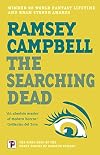
I've been reading Campbell's books for nearly as long as he's been writing them, and out of the several horror traditions that he's spent the most time on, the Lovecraft-homage stuff has usually been the least interesting to me even though I get why it's impressive. So it was a surprise for me to find that his most blatantly Lovecraftian book in many years is also really distinctive and effective, and feels like a fulfillment of several parts of his career. It's unusual for being the start show more of a trilogy, and also for being in a way the closest thing he's done to a Stephen King plot: a group of childhood friends, in a semi-autobiographical setting, one of whom wants to be a writer, discovers a supernatural menace that has to be repeatedly confronted across multiple generations. That sounds like It (and a little like Revival too maybe, with its resurrection-obsessed clergyman) but this is still unmistakably a Campbell novel, with his precise tone and heavy atmosphere evoking post-war Liverpool even more vividly than before (in a mostly anti-nostalgic way), and his characters don't go in the directions you might expect if you're a King reader. His idea of the antagonist is especially fascinating to me, because we don't just have a cosmic-horror force and a creepy guy who is its agent—we see that guy gradually feeling his way into that role, making it up as he goes along, and eventually creating a family so that he won't be alone in it. There are many hints of some apocalyptic stakes, but at this point the conflict is more of a personal one, and (again unusually for Campbell) the main character has a pretty clear grasp of what's going on. I was totally involved; I did end up feeling like the rest of the series didn't quite live up to this, but I think it's well worth reading on its own. show less
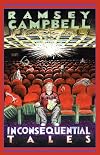
One of my enduring failures in life is that I am unable to not finish a book that isn’t worth reading. There is something in me that compels me to keep going, even when things are bleak indeed. I can probably count on one hand the number of books I’ve abandoned in the last ten years.
Unfortunately, Inconsequential Tales is not among the abandoned books. I admire Ramsey Campbell quite a bit, so when I see his name on a book, I’m apt to pick it up, which is how this collection of short show more stories wound up on my bookshelf. I assumed, upon reading the introduction, entitled “Truth or Consequences,” that Campbell was being overly modest in describing the tales contained in the book as unworthy of any reader’s attention. Alas, he was entirely accurate in describing the stories as “misshapen creatures of my superseded mind.”
The stories in Inconsequential Tales date from the early years of the author’s career, and are perhaps therefore interesting from a scholarly perspective. One can certainly see how Campbell developed as a writer over time, learning to leave out extraneous material, use adjectives more judiciously, and build an atmosphere before letting the bogeyman out. One can also draw the conclusion that straight science fiction wasn’t Campbell’s forte; though the florid prose of some of his horror might make one conclude, if one had only these stories to go on, that horror wouldn’t be his métier, either. Oddly, during these same years, Campbell was also writing some of his best stories, which are collected in Alone with the Horrors: The Great Short Fiction of Ramsey Campbell 1961-1991. It seems Inconsequential Tales is comprised of those tales deemed unworthy of the earlier, and much better, collection.
If you are such a fan of Ramsey Campbell that you need to own everything he has ever published, then this is a book for you. Otherwise – well, let’s just say I’m glad I took this book out of the library, rather than purchasing it. show less
Unfortunately, Inconsequential Tales is not among the abandoned books. I admire Ramsey Campbell quite a bit, so when I see his name on a book, I’m apt to pick it up, which is how this collection of short show more stories wound up on my bookshelf. I assumed, upon reading the introduction, entitled “Truth or Consequences,” that Campbell was being overly modest in describing the tales contained in the book as unworthy of any reader’s attention. Alas, he was entirely accurate in describing the stories as “misshapen creatures of my superseded mind.”
The stories in Inconsequential Tales date from the early years of the author’s career, and are perhaps therefore interesting from a scholarly perspective. One can certainly see how Campbell developed as a writer over time, learning to leave out extraneous material, use adjectives more judiciously, and build an atmosphere before letting the bogeyman out. One can also draw the conclusion that straight science fiction wasn’t Campbell’s forte; though the florid prose of some of his horror might make one conclude, if one had only these stories to go on, that horror wouldn’t be his métier, either. Oddly, during these same years, Campbell was also writing some of his best stories, which are collected in Alone with the Horrors: The Great Short Fiction of Ramsey Campbell 1961-1991. It seems Inconsequential Tales is comprised of those tales deemed unworthy of the earlier, and much better, collection.
If you are such a fan of Ramsey Campbell that you need to own everything he has ever published, then this is a book for you. Otherwise – well, let’s just say I’m glad I took this book out of the library, rather than purchasing it. show less
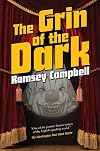
I haven't read a Ramsey Campbell in many many years, and I had forgotten how excruciatingly British they are. So while the protagonist is surrounded by odd noises and furtive movements and strange behaviours, the real creeping horror is the collision of manners, the pettiness of officials, the animosity of girflriend's parents, the toxicity of his relationship with his own parents, all fueled and exacerbated by misunderstandings, farcically embarrassing incidents, and the overspilling of show more repressed rage and frustration at what turns out to be wrong targets. Ramsey Campbell's everyday horrors are the horrors of social cringe. Of course there's also delving into the history of a forgotten silent movie star with an unsavory reputation and the protagonist's ongoing obliviousness to, or denial of, the fact that weird and strange and terrifying things are subtly warping his world, and the dysfunctional nature of his everyday world and the supernatural creepiness are melding and mixing until it's far too late to do anything about it, if there ever was something that could have been done about it. show less
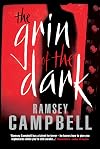
I've had mixed experiences with Campbell. His short stories have occasionally been brilliant, but more often obscure or underwhelming. Nonetheless, the best of his work has been sufficiently intriguing for me to seek out the bulk of his work in the hope of finding something similar.
This was my first novel of his and I'm happy to say that it's excellent, a masterful slow-burning work that ranks alongside the best in the genre. Like a lot of his short stories, there's a certain off-ness to show more the prose that works very effectively to unsettle and dislocate the reader's senses. Campbell uses the novel length format to ramp this up to almost unbearable levels and there were times when I began to feel genuinely uneasy; a sure sign of a great horror novel.
There are only a couple of things that stop this from being a five star novel. First, the work is a little too slow and subtle at times, at least for this reader. Secondly, Campbell makes no attempt to draw the reader in. You need to work and be committed to get the full effect. Not necessarily a criticism of the work as a whole, but I put a lot of stock in readability and Campbell lets me down a little here. show less
This was my first novel of his and I'm happy to say that it's excellent, a masterful slow-burning work that ranks alongside the best in the genre. Like a lot of his short stories, there's a certain off-ness to show more the prose that works very effectively to unsettle and dislocate the reader's senses. Campbell uses the novel length format to ramp this up to almost unbearable levels and there were times when I began to feel genuinely uneasy; a sure sign of a great horror novel.
There are only a couple of things that stop this from being a five star novel. First, the work is a little too slow and subtle at times, at least for this reader. Secondly, Campbell makes no attempt to draw the reader in. You need to work and be committed to get the full effect. Not necessarily a criticism of the work as a whole, but I put a lot of stock in readability and Campbell lets me down a little here. show less
Lists
Ghosts (1)
To Read - Horror (1)
Awards


You May Also Like


Associated Authors
Statistics
- Works
- 314
- Also by
- 367
- Members
- 9,861
- Popularity
- #2,415
- Rating
- 3.8
- Reviews
- 193
- ISBNs
- 545
- Languages
- 10
- Favorited
- 38
