
T.E.D. Klein (1947–)
Author of The Ceremonies
T.E.D. Klein is T. E. D. Klein (1). For other authors named T. E. D. Klein, see the disambiguation page.
Series
Works by T.E.D. Klein
Raising Goosebumps For Fun And Profit: A Brief Guide, for Beginners, to the How's and the Why's of Horror (1988) 11 copies
Collected Stories 5 copies
One Size Eats All [short fiction] 3 copies
Renaissance Man 1 copy
Growing Things 1 copy
Well Connected 1 copy
Ladder 1 copy
S.f. 1 copy
Associated Works
The H. P. Lovecraft Omnibus 2: Dagon and Other Macabre Tales (1985) — Introduction; Preface — 1,450 copies, 19 reviews
American Fantastic Tales : Terror and the Uncanny from the 1940's to Now (2009) — Contributor — 299 copies, 5 reviews
The Collected Jorkens, Vol. 2: Jorkens Has a Large Whiskey and The Fourth Book of Jorkens (2005) — Introduction — 73 copies
Tagged
Common Knowledge
- Legal name
- Klein, Theodore Donald
- Other names
- Klein, Theodore Eibon Donald
- Birthdate
- 1947-07-15
- Gender
- male
- Education
- Brown University
Columbia University - Occupations
- editor (Twilight Zone Magazine)
editor (CrimeBeat)
screenwriter - Awards and honors
- World Horror Convention Grand Master Award (2012)
- Nationality
- USA
- Birthplace
- New York, New York, USA
- Associated Place (for map)
- New York, USA
Members
Discussions
THE DEEP ONES: "Children of the Kingdom" by T. E. D. Klein in The Weird Tradition (August 2021)
THE DEEP ONES: "The Events at Poroth Farm" by T.E.D. Klein in The Weird Tradition (August 2021)
T.E.D. Klein in The Weird Tradition (August 2011)
Reviews
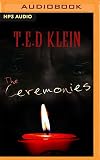
Over the years, I kept hearing about this book at odd times...referenced in a review for a different novel, or mentioned by a horror author, etc. I got my hands on a copy, but because of the length of the damn thing, kept putting it off. Finally, we were entering summer, and just coming off COVID containment, so I decided to dive in.
And I'm very glad I did. The book is long, absolutely. It needs to be, as Klein very meticulously first weaves the net, stitch by stitch, inch by inch, loop by show more loop, and then carefully lays it out for the players to then bumble into. Now, because it's long and intricate (though never complicated or confusing), the author does, at times, drop a stitch or too, or become a touch too focused on a specific element, but these are minor quibbles in the grand scheme of things.
I'm sure there's other novels out there of a similar theme, but none come to mind. Instead, I got vibes of [b:Harvest Home|816085|Harvest Home|Thomas Tryon|https://i.gr-assets.com/images/S/compressed.photo.goodreads.com/books/1328585596l/816085._SY75_.jpg|915361], Michael McDowell's excellent [b:Blackwater: The Complete Caskey Family Saga|23476097|Blackwater The Complete Caskey Family Saga (Blackwater, #1-6)|Michael McDowell|https://i.gr-assets.com/images/S/compressed.photo.goodreads.com/books/1431177310l/23476097._SY75_.jpg|43067426], and a touch of both [b:The Omen|226162|The Omen|David Seltzer|https://i.gr-assets.com/images/S/compressed.photo.goodreads.com/books/1421963974l/226162._SY75_.jpg|219058] and [b:Rosemary's Baby|228296|Rosemary's Baby (Rosemary's Baby, #1)|Ira Levin|https://i.gr-assets.com/images/S/compressed.photo.goodreads.com/books/1327878603l/228296._SY75_.jpg|883024]. Just vibes of each, mind you. Klein never copies or steals.
I'd also suggest that, while different from Stephen King's work, those that love his longer novels will likely enjoy this as well. You will notice a distinct difference from King, however. King builds stories and worlds that run primarily on their own internal logic, with only the odd taste of Matheson or Lovecraft. Other than that, King is firmly driving the bus.
Klein, on the other hand, carefully and systematically builds on those that came before him. Henry James. M.R. James. Robert W. Chambers. Lovecraft. Machen. He's smart enough to choose a main character who is in the process of reading them all and, through Jeremy, Klein offers admiring, yet realistic glimpses into the strengths and downfalls of these earlier pathfinders. The story draws from these earlier works and expands on them brilliantly.
Much is made of Klein's careful build of the primary characters, and it should be noted here, as it's definitely a strength of the story. If you didn't have a solid understanding of what made each one tick, the book would never have been as strong. And Klein is very good at setting up a character as unlikable, then just when you're thinking, what an asshole. I hate this character! he'll have that character show another side of themself, and you'll realize they aren't that bad. He did this to me several times, and in each occasion, it never felt out of character. It was just another facet of that person.
My only other complaint with the book is, Klein took several hundred pages to run us through five weeks of time, with the last third of the book really digging into the last week, day by day. To go through that, and understand and get in tune with the pace of the novel, the ultimate end of the story seemed to happen in the span of a few rushed pages. I would have liked to see the pace quickened, for sure, as it must when the story reaches the climax, but not so rushed that it blows by the reader before they know it.
So, for the minor dropped threads along the way, and the slightly-too-quick ending, one star off what is otherwise a very good horror novel show less
And I'm very glad I did. The book is long, absolutely. It needs to be, as Klein very meticulously first weaves the net, stitch by stitch, inch by inch, loop by show more loop, and then carefully lays it out for the players to then bumble into. Now, because it's long and intricate (though never complicated or confusing), the author does, at times, drop a stitch or too, or become a touch too focused on a specific element, but these are minor quibbles in the grand scheme of things.
I'm sure there's other novels out there of a similar theme, but none come to mind. Instead, I got vibes of [b:Harvest Home|816085|Harvest Home|Thomas Tryon|https://i.gr-assets.com/images/S/compressed.photo.goodreads.com/books/1328585596l/816085._SY75_.jpg|915361], Michael McDowell's excellent [b:Blackwater: The Complete Caskey Family Saga|23476097|Blackwater The Complete Caskey Family Saga (Blackwater, #1-6)|Michael McDowell|https://i.gr-assets.com/images/S/compressed.photo.goodreads.com/books/1431177310l/23476097._SY75_.jpg|43067426], and a touch of both [b:The Omen|226162|The Omen|David Seltzer|https://i.gr-assets.com/images/S/compressed.photo.goodreads.com/books/1421963974l/226162._SY75_.jpg|219058] and [b:Rosemary's Baby|228296|Rosemary's Baby (Rosemary's Baby, #1)|Ira Levin|https://i.gr-assets.com/images/S/compressed.photo.goodreads.com/books/1327878603l/228296._SY75_.jpg|883024]. Just vibes of each, mind you. Klein never copies or steals.
I'd also suggest that, while different from Stephen King's work, those that love his longer novels will likely enjoy this as well. You will notice a distinct difference from King, however. King builds stories and worlds that run primarily on their own internal logic, with only the odd taste of Matheson or Lovecraft. Other than that, King is firmly driving the bus.
Klein, on the other hand, carefully and systematically builds on those that came before him. Henry James. M.R. James. Robert W. Chambers. Lovecraft. Machen. He's smart enough to choose a main character who is in the process of reading them all and, through Jeremy, Klein offers admiring, yet realistic glimpses into the strengths and downfalls of these earlier pathfinders. The story draws from these earlier works and expands on them brilliantly.
Much is made of Klein's careful build of the primary characters, and it should be noted here, as it's definitely a strength of the story. If you didn't have a solid understanding of what made each one tick, the book would never have been as strong. And Klein is very good at setting up a character as unlikable, then just when you're thinking, what an asshole. I hate this character! he'll have that character show another side of themself, and you'll realize they aren't that bad. He did this to me several times, and in each occasion, it never felt out of character. It was just another facet of that person.
My only other complaint with the book is, Klein took several hundred pages to run us through five weeks of time, with the last third of the book really digging into the last week, day by day. To go through that, and understand and get in tune with the pace of the novel, the ultimate end of the story seemed to happen in the span of a few rushed pages. I would have liked to see the pace quickened, for sure, as it must when the story reaches the climax, but not so rushed that it blows by the reader before they know it.
So, for the minor dropped threads along the way, and the slightly-too-quick ending, one star off what is otherwise a very good horror novel show less

I have very little to say about The Ceremonies; it's just a bad book. Klein was a competent writer (but no more than that) and, obviously, some effort is required to produce a novel of this size. The trouble is that his effort was misdirected: the book isn't scary or disturbing or suspenseful. It's not even interesting. Nothing in this tale justifies its excessive length; there are too few characters and too little happening, so the only way that Klein could stretch his thin premise to an show more absurd 555 pages was to describe every incidental movement, every muttered aside and minor connecting event, in ploddingly painful detail ("painful" being the operative word). There's so much of this page-filling nonsense that the abrupt finale feels like an afterthought...and the reader has to assume that it was, since the villain's raison d'etre is never explained. He's just eeeeeevil, bwahahaha!!!
Considering its reputation, this novel was an unbelievable letdown. Despite its reputation (which seems to have had more to do with Klein's influence in the field of horror literature than with his talent), there are apparent reasons why The Ceremonies has not remained in print. show less
Considering its reputation, this novel was an unbelievable letdown. Despite its reputation (which seems to have had more to do with Klein's influence in the field of horror literature than with his talent), there are apparent reasons why The Ceremonies has not remained in print. show less

HP Lovecraft and Arthur Machen had a weird, twisted, snake-like baby that is this book. The main character's work on gothic and horror fiction is itself a class on the history of the genre, which is satisfying to read. Yet, it's hard to care about a protagonist who thinks things like this: "Deborah ... was cleaning up in here when we arrived, on her knees scrubbing the floor. Something curiously erotic about a woman in that position, exerting herself while you're at your ease." Ugh. He also show more talks shit about Shirley Jackson.
In general, the politics are of their time and therefore difficult, and the characters sometimes shift to fit the roles they are supposed to play (e.g., women getting randomly bitchy when they showed no sign of being so before).Also, I'm sick to death of the whole "virgin needed for ancient rite" plot device. It forces Carol into the role of a thing rather than allowing her to be a full and interesting character. It also means she must be saved by "her man", when all along I was hoping that she would save herself somehow. The only other interesting female character, Mrs. Poroth, is just as much a stereotype, cold and unmotherly, who is killed by the walking corpse of her son, offscreen. As if she's being punished for the lack of emotional care a woman is supposed to show. I was hoping she'd have SOME role to play, at least, but aside from smashing an altar, no.
Lastly, you would think that someone who is so well-versed in the literature of the supernatural would recognize some of the supernatural events occurring around him, or at least comment on how similar these things feel to the books he's reading? Is that a comment on the uselessness of academia? Still, there are truly creepy things in here, which have since become tropes of the genre. So, ups and downs. Recommended for horror fans. show less
In general, the politics are of their time and therefore difficult, and the characters sometimes shift to fit the roles they are supposed to play (e.g., women getting randomly bitchy when they showed no sign of being so before).
Lastly, you would think that someone who is so well-versed in the literature of the supernatural would recognize some of the supernatural events occurring around him, or at least comment on how similar these things feel to the books he's reading? Is that a comment on the uselessness of academia? Still, there are truly creepy things in here, which have since become tropes of the genre. So, ups and downs. Recommended for horror fans. show less
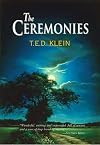
Dread is a word you don't see used much in association with horror fiction any more. And it's a shame, because used properly, slow building dread can be more horrific than any gore or bloodletting.
Fortunately, there are writers who understand this, and one of the best examples can be found in THE CEREMONIES, which starts slow, gets slower, but accumulates dread along the way like a wool suit collecting cat hairs. And it's a marvel of timing, precision and skill, with its cast of great show more characters all circling around the central motifs, each of them catching glimpses of the whole but none completely understanding what they are being shown, or why.
It's also a remarkably timeless book. It was written before laptops, before cellphones and email, but by setting it mostly in a remote rural farmscape, it feels older still, and its throwbacks to genre giants like Lovecraft and Machen in particular seem to root it even farther back in time again.
The slow build, taking care and attention to let us get to know, if not like, the main characters, gives their respective fates at the climax emotional resonance, and a depth thats often lacking in fiction in the field.
The writing itself is rich and lyrical, the handling of viewpoint and control of pacing is expertly done, and the book is one of the wonders of modern weird fiction.
It's a shame Klein hasn't produced more over the years, but kudos to PS Publishing for the fine new paperback edition I read this in, which is a lovely piece of packaging for a book that deserves to be showcased. show less
Fortunately, there are writers who understand this, and one of the best examples can be found in THE CEREMONIES, which starts slow, gets slower, but accumulates dread along the way like a wool suit collecting cat hairs. And it's a marvel of timing, precision and skill, with its cast of great show more characters all circling around the central motifs, each of them catching glimpses of the whole but none completely understanding what they are being shown, or why.
It's also a remarkably timeless book. It was written before laptops, before cellphones and email, but by setting it mostly in a remote rural farmscape, it feels older still, and its throwbacks to genre giants like Lovecraft and Machen in particular seem to root it even farther back in time again.
The slow build, taking care and attention to let us get to know, if not like, the main characters, gives their respective fates at the climax emotional resonance, and a depth thats often lacking in fiction in the field.
The writing itself is rich and lyrical, the handling of viewpoint and control of pacing is expertly done, and the book is one of the wonders of modern weird fiction.
It's a shame Klein hasn't produced more over the years, but kudos to PS Publishing for the fine new paperback edition I read this in, which is a lovely piece of packaging for a book that deserves to be showcased. show less
Lists
Awards


You May Also Like


Associated Authors
Statistics
- Works
- 59
- Also by
- 30
- Members
- 1,264
- Popularity
- #20,302
- Rating
- 3.9
- Reviews
- 31
- ISBNs
- 48
- Languages
- 4
- Favorited
- 15
