
Peter Straub (1) (1943–2022)
Author of The Talisman
For other authors named Peter Straub, see the disambiguation page.
About the Author
Author Peter Straub was born in Milwaukee, Wisconsin in 1943. He earned degrees in English from the University of Wisconsin and Columbia University. He taught English at his former high school for three years and worked for a time on his doctorate in Ireland. He began writing in 1969 and published show more two books of poetry in 1972. His novel Julia (1975) was an attempt to find a successful genre in which to work, after his first novel, Marriages (1973), did not sell well. He found that he had a talent for writing horror thrillers in the Gothic tradition. His stories are complex and well paced, with authentic settings that add to the believability of the plot. He is particularly good at creating grotesque characters and gruesome situations; the eeriness of his work is captivating. He has won numerous awards including the British Fantasy Award, the Bram Stoker Award, and the World Fantasy Award. (Bowker Author Biography) show less
Series
Works by Peter Straub
American Fantastic Tales : Terror and the Uncanny from the 1940's to Now (2009) — Editor; Contributor — 299 copies, 5 reviews
American Fantastic Tales : Terror and the Uncanny from Poe to the Pulps (2009) — Editor — 289 copies, 4 reviews
Mr. Clubb and Mr. Cuff 6 copies
The Juniper Tree 5 copies
Mr. Aickman's Air Rifle 3 copies
Variations on a Theme From Seinfeld 2 copies
Little Red's Tango 2 copies
i know what you are 1 copy
Koko 1 (ココ 上) 1 copy
Fee 1 copy
Ghosts 1 copy
Lapland or Film Noir 1 copy
Associated Works
Prime Evil: New Stories by the Masters of Modern Horror (1988) — Contributor — 682 copies, 8 reviews
Are You Loathsome Tonight? A Collection of Short Stories (1998) — Introduction — 640 copies, 7 reviews
Secret Windows: Essays and Fiction on the Craft of Writing (2000) — Introduction, some editions — 633 copies, 5 reviews
The New Gothic: A Collection of Contemporary Gothic Fiction (1991) — Contributor — 273 copies, 2 reviews
The Armless Maiden and Other Tales for Childhood's Survivors (1995) — Contributor — 256 copies, 4 reviews
The Year's Best Fantasy and Horror: Eighteenth Annual Collection (2005) — Contributor — 231 copies, 5 reviews
The Year's Best Fantasy and Horror: Sixth Annual Collection (1993) — Contributor — 219 copies, 1 review
Hint Fiction: An Anthology of Stories in 25 Words or Fewer (2010) — Contributor — 150 copies, 26 reviews
The Best of the Best Horror of the Year: 10 Years of Essential Short Horror Fiction (2018) — Contributor — 112 copies, 2 reviews
Mister October: An Anthology in Memory of Rick Hautala (Volume 2) (2013) — Contributor — 62 copies, 18 reviews
New York Fantastic: Fantasy Stories from the City that Never Sleeps (2017) — Contributor — 45 copies, 1 review
Last Drink Bird Head : A Flash Fiction Anthology for Charity (2009) — Contributor — 33 copies, 1 review
Mister October: An Anthology in Memory of Rick Hautala (Volumes 1 and 2) (2013) — Contributor — 17 copies, 15 reviews
Fear #16 — Interview — 1 copy
Tagged
Common Knowledge
- Legal name
- Straub, Peter Francis
- Other names
- Ridge, Putney Tyson
- Birthdate
- 1943-03-02
- Date of death
- 2022-09-04
- Gender
- male
- Education
- University of Wisconsin-Madison (BA Hons | 1965 - English)
Columbia University (MA|1966)
Milwaukee Country Day School (scholarship)
University College Dublin - Occupations
- novelist
poet
teacher (English)
contributing editor (Conjunctions) - Organizations
- Horror Writers Association
- Awards and honors
- Bram Stoker Award (nominated fourteen times|won ten|lifetime achievement award|2006)
World Fantasy Awards (nominated twelve times|won four|life achievement|2010)
World Horror Convention (Grand Master Award|1997)
International Horror Guild (Living Legend|2008) - Relationships
- Straub, Emma (daughter)
King, Stephen (friend, collaborator)
Gaiman, Neil (friend) - Cause of death
- broken hip (complications)
- Nationality
- USA
- Birthplace
- Milwaukee, Wisconsin, USA
- Places of residence
- Dublin, County Dublin, Ireland
London, Middlesex, England, UK
Brooklyn, New York, New York, USA - Place of death
- New York, New York, USA
- Associated Place (for map)
- USA
Members
Discussions
RIP Peter Straub in The Weird Tradition (November 2024)
THE DEEP ONES: "The Buffalo Hunter" by Peter Straub in The Weird Tradition (December 2022)
Nov./Dec. 2012 SK's Flavor of the Month - Black House in King's Dear Constant Readers (February 2014)
Does anyone think Peter Straub's writing a bit...well...abstract? in Thing(amabrarian)s That Go Bump in the Night (July 2011)
January 2010's SK Flavor of the Month - The Talisman in King's Dear Constant Readers (April 2010)
"In the Night Room 'y Peter Straub in Thing(amabrarian)s That Go Bump in the Night (May 2008)
Reviews

In the long introduction to The General's Wife, Peter Straub cheerfully acknowledges that the premise was derived from a Carlos Fuentes novella entitled Aura. I haven't read that piece, so I'm unable to make a comparison, but I can assure Straub fans that this little book delivers the goods. It's a vignette subtracted from Straub's already gargantuan novel Floating Dragon (and Andy, its central character, is essentially Patsy from that book, right down to the abusive husband), but The show more General's Wife is a polished exercise in narrative restraint. Straub would later produce three volumes of short fiction, but said that the only way he could write stories during this phase of his career was within the novels themselves...and this one works beautifully.
Andy's hateful, bullying husband is transferred to London for work, but despises the city and rarely wants to go out. Tentatively exploring London on her own, Andy answers a want ad placed by a former Army general whose career was marred by some scandal which is never quite specified. The old gentleman is compiling his memoirs and needs a transcriptionist; not surprisingly, Andy encounters the horrific and, ultimately, the inexplicable in the general's dank, sparsely furnished home. A noticeable antecedent to Straub's later masterpiece Mrs. God, this novella marks the first overt appearance of Robert Aickman's influence in the Straub oeuvre. It actually bears a much greater resemblance to Mrs. God than to Floating Dragon, but is perfectly, elegantly self-contained. In fact, no prior knowledge of any of Straub's work is required to enjoy The General's Wife (though, unless you're a fan and a collector, you're probably not going to shell out forty of fifty bucks for this).
1200 copies, each signed by Straub and illustrator Thomas Canty. My copy is #145. show less
Andy's hateful, bullying husband is transferred to London for work, but despises the city and rarely wants to go out. Tentatively exploring London on her own, Andy answers a want ad placed by a former Army general whose career was marred by some scandal which is never quite specified. The old gentleman is compiling his memoirs and needs a transcriptionist; not surprisingly, Andy encounters the horrific and, ultimately, the inexplicable in the general's dank, sparsely furnished home. A noticeable antecedent to Straub's later masterpiece Mrs. God, this novella marks the first overt appearance of Robert Aickman's influence in the Straub oeuvre. It actually bears a much greater resemblance to Mrs. God than to Floating Dragon, but is perfectly, elegantly self-contained. In fact, no prior knowledge of any of Straub's work is required to enjoy The General's Wife (though, unless you're a fan and a collector, you're probably not going to shell out forty of fifty bucks for this).
1200 copies, each signed by Straub and illustrator Thomas Canty. My copy is #145. show less
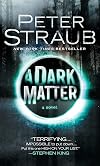
Much as I love Peter Straub, I'm afraid the point of this book eludes me: I've read it three times in the past eight years, but A Dark Matter feels a little more weightless each time I revisit it. It's almost as if Straub set out to write a straight dramatic novel but halfheartedly shifted gears when the publisher said, "We'd prefer a supernatural veneer on this thing, if you don't mind." Because that's what you get here: a meandering psychodrama with a pseudo-horrific event apparently show more tacked on as an afterthought. Said event (a magical invocation that goes terribly wrong, leaving one of the eight participants dead and another insane), ostensibly the foundation of the story, is never properly fleshed out...while the character conflicts, which Straub obviously fussed over, seem chintzy and soap opera-esque. Given the generally high quality of the author's work, A Dark Matter was a major disappointment.
If you're new to Straub, start anywhere but here. This can't be his swan song as a novelist, dammit. show less
If you're new to Straub, start anywhere but here. This can't be his swan song as a novelist, dammit. show less
*Partial spoilers ahead*
Bob Bunting is a data entry clerk who lives alone in a small, shabby New York apartment, and whose already tenuous connection to reality begins to unravel as--on his thirty-fifth birthday--he becomes obsessed with baby bottles. Bunting struggles with the demands of his daily existence, attempting to stay in touch with his aging, cantankerous parents in Michigan and doing his best not to disappoint a boorish but well-meaning coworker who wants to set him up on a blind show more date. As he becomes increasingly overwhelmed by the urge to retreat permanently to his apartment and his baby bottles, Bunting discovers (with mixed terror and fascination) that when he reads a book, it becomes absolutely real to him: he finds himself within the story, and this state of being is infinitely preferable to the outside world.
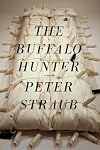
I'm not sure what else to say without revealing major spoilers to the first-time reader, but in this novella inspired by the Rona Pondick sculpture that appears on the cover, Peter Straub has crafted the ultimate masterpiece of psychological horror. There are people who will misunderstand and therefore hate it (you probably already know who you are), but if you're a fan of Oliver Onions's "The Beckoning Fair One," Charlotte Perkins Gilman's "The Yellow Wallpaper" or the Twilight Zone episode "Miniature," you'll adore The Buffalo Hunter. show less
Bob Bunting is a data entry clerk who lives alone in a small, shabby New York apartment, and whose already tenuous connection to reality begins to unravel as--on his thirty-fifth birthday--he becomes obsessed with baby bottles. Bunting struggles with the demands of his daily existence, attempting to stay in touch with his aging, cantankerous parents in Michigan and doing his best not to disappoint a boorish but well-meaning coworker who wants to set him up on a blind show more date. As he becomes increasingly overwhelmed by the urge to retreat permanently to his apartment and his baby bottles, Bunting discovers (with mixed terror and fascination) that when he reads a book, it becomes absolutely real to him: he finds himself within the story, and this state of being is infinitely preferable to the outside world.
I'm not sure what else to say without revealing major spoilers to the first-time reader, but in this novella inspired by the Rona Pondick sculpture that appears on the cover, Peter Straub has crafted the ultimate masterpiece of psychological horror. There are people who will misunderstand and therefore hate it (you probably already know who you are), but if you're a fan of Oliver Onions's "The Beckoning Fair One," Charlotte Perkins Gilman's "The Yellow Wallpaper" or the Twilight Zone episode "Miniature," you'll adore The Buffalo Hunter. show less

When I read Peter Straub's Shadowland, I was powerfully reminded of The Magus by John Fowles, and I found out afterwards that Fowles' novel was indeed an admitted conscious influence for Straub. The setting is very different, and the protagonist is younger: Tom Flanagan is a fifteen-year-old prep school student from Arizona who enters the demesne of his friend Del's magician uncle at an estate called Shadowland in Vermont. Also, Straub offers his own voice anonymously as the novelist show more narrator who went to school with Tom and Del and has kept tabs on various former classmates.
The story mixes stage magic and psychic thaumaturgy with fairy tale tropes and structures, within a narrative that ultimately stretches for nearly the full length of the twentieth century. It was Straub's first novel after Ghost Story, and it has a chronological scale similar to the book that came before: told about the past and excavating the deeper past, with framing elements of the present.
Also, like Ghost Story's original edition, it has a glancing contact with Thelemic magick to supply an aura of menace. Aleister Crowley has a walk-on role as a humbug who is cruelly bested by the tale's presiding magician (321). The encounter is supposedly in England at the start of the 1920s when Crowley was actually in Italy.
The book is nearly devoid of women characters. There are the bare presences of a secretary at the school, Tom's mother, and a furtive housekeeper Elena. There is also the teenage love interest Rose Armstrong and her precursor Rosa Forte, butRose is ultimately revealed to be a sort of juno loci of Shadowland. The novel also suffers from an exceedingly unalloyed manifestation of the "magical negro" trope. All of which is perhaps forgivable in the context of a story chiefly about the imagination of a boy going to a white boys-only private school in the fifties.
Straub's prose is powerful and evocative throughout. His representations of illusion, memory, and supernatural effects keep them suitably ambivalent. The metafictional elements are handled well, if not quite as spectacularly as in Robert Irwin's Arabian Nightmare, another novel published three years later that like Shadowland used the folk tale "The King of the Cats" as a key referent. show less
The story mixes stage magic and psychic thaumaturgy with fairy tale tropes and structures, within a narrative that ultimately stretches for nearly the full length of the twentieth century. It was Straub's first novel after Ghost Story, and it has a chronological scale similar to the book that came before: told about the past and excavating the deeper past, with framing elements of the present.
Also, like Ghost Story's original edition, it has a glancing contact with Thelemic magick to supply an aura of menace. Aleister Crowley has a walk-on role as a humbug who is cruelly bested by the tale's presiding magician (321). The encounter is supposedly in England at the start of the 1920s when Crowley was actually in Italy.
The book is nearly devoid of women characters. There are the bare presences of a secretary at the school, Tom's mother, and a furtive housekeeper Elena. There is also the teenage love interest Rose Armstrong and her precursor Rosa Forte, but
Straub's prose is powerful and evocative throughout. His representations of illusion, memory, and supernatural effects keep them suitably ambivalent. The metafictional elements are handled well, if not quite as spectacularly as in Robert Irwin's Arabian Nightmare, another novel published three years later that like Shadowland used the folk tale "The King of the Cats" as a key referent. show less
Lists
Strange Towns (1)
Off on a Quest (1)
Same Title (1)
New Hampshire (1)
New York (1)
1970s Horror (1)
100 Hemskaste (1)
Horror: Top 10 (1)
to get (1)
1980s (1)
1980 great books (1)
Eerie eTales (2)
1970s (2)
To Read - Horror (2)
Ghosts (1)
Which house? (1)
Unread books (2)
Dark Tower Books (2)
Jarett's Books (2)
Awards


You May Also Like


Associated Authors
Statistics
- Works
- 78
- Also by
- 90
- Members
- 42,401
- Popularity
- #404
- Rating
- 3.9
- Reviews
- 676
- ISBNs
- 860
- Languages
- 26
- Favorited
- 64


