
Tim Lucas
Author of The Book of Renfield: A Gospel of Dracula
Series
Works by Tim Lucas
Video Watchdog #75 2 copies
Video Watchdog #78 2 copies
Video Watchdog #80 2 copies
Video Watchdog #79 2 copies
Video Watchdog #70 2 copies
Video Watchdog #69 2 copies
Video Watchdog #68 2 copies
Video Watchdog #062 1 copy
Video Watchdog No. 35 1 copy
Video Watchdog #115 1 copy
Video Watchdog #124 1 copy
Video Watchdog #134 1 copy
Video Watchdog #063 1 copy
Video Watchdog #119 1 copy
Video Watchdog #120 1 copy
Video Watchdog #117 1 copy
Video Watchdog #128 1 copy
Video Watchdog #118 1 copy
Video Watchdog #064 1 copy
Video WatcHDoG No. 174 1 copy
Video Watchdog #46 1 copy
Video WatcHDoG No. 163 1 copy
Video WatcHDoG No. 183 1 copy
Video WatcHDoG No. 182 1 copy
Video WatcHDoG No. 181 1 copy
Video WatcHDoG No. 180 1 copy
Video WatcHDoG No. 175 1 copy
Video WatcHDoG No. 177 1 copy
Video WatcHDoG No. 166 1 copy
Video WatcHDoG No. 164 1 copy
Video WatcHDoG No. 178 1 copy
Video WatcHDoG No. 179 1 copy
Video Watchdog #116 1 copy
Video WatcHDoG No. 168 1 copy
Video Watchdog #065 1 copy
Video Watchdog #105 1 copy
Video Watchdog #114 1 copy
Video Watchdog #076 1 copy
Video Watchdog #088 1 copy
Video Watchdog #084 1 copy
Video Watchdog #082 1 copy
Video Watchdog #077 1 copy
Video Watchdog #066 1 copy
Video Watchdog #092 1 copy
Video Watchdog #089 1 copy
Video Watchdog #074 1 copy
Video Watchdog #112 1 copy
Video Watchdog #102 1 copy
Video Watchdog #107 1 copy
Video Watchdog #110 1 copy
Video Watchdog #109 1 copy
Video Watchdog #106 1 copy
Video Watchdog #101 1 copy
Video Watchdog #103 1 copy
Video Watchdog #100 1 copy
Video Watchdog #094 1 copy
Video Watchdog #071 1 copy
Video Watchdog #072 1 copy
Video Watchdog #073 1 copy
Video Watchdog #111 1 copy
Video Watchdog #098 1 copy
Video Watchdog #097 1 copy
Associated Works
Masters of Cinema : 233-235 : Three Edgar Allan Poe adaptations starring Bela Lugosi {booklet} (2021) — Contributor — 1 copy
Beat At Cinecittà, Volume 1 — Contributor — 1 copy
Tagged
Common Knowledge
- Birthdate
- 1956-05-30
- Gender
- male
- Nationality
- USA
- Birthplace
- Cincinnati, Ohio, USA
- Associated Place (for map)
- Ohio, USA
Members
Reviews

"A city without theaters is a guilty city…"
My review of Throat Sprockets deserves a disclaimer of sorts. Before reading Tim Lucas’ debut novel, I was already familiar with the author through his work on the publication Video Watchdog, a semi-obscure magazine dedicated to obscure cinema that – in an age before DVDs and streaming downloads – could even be considered underground. Dismissive of mainstream films and obsessive over frame rates and screen ratios, Video Watchdog catered to a show more subculture of cinema junkies that preferred their films scratchy, subtitled, and subversive. It was a fan-based movement where exploitation flicks mingled with avant-garde cinema, and while I would later abandon Video Watchdog due to its dogmatic rejection of anything even remotely mainstream, it was a culture I was very much a part of, and an experience that informed much of my current attitude towards film. Because of my background with both the author of the book and its subject matter, my reaction and interpretation of Throat Sprockets is - to say the least – biased, and so the work may touch me in ways that others can’t perceive. As they say, you don’t have to be crazy to work here, but it helps. Nevertheless…
While the novel indeed explores the existential boundaries of love, devotion, and loss, it is above all else a love letter to those obsessed with film. In fact, the books overall themes of love, obsession, loss, and cinema are neatly foreshadowed in the book’s opening sentence:
"The first time I saw Throat Sprockets was at the old Eros Theater; it’s long gone, but I visit it often in memory."
This is no accident, as Lucas’ expertly crafted prose proves throughout the novel; like a director creating layers of meaning and subtext with a single camera move, Lucas injects depth and introspection into his masterful use of language that often borders on poetry. In a way, Lucas often appears to successfully translate the visual language of cinema onto the page, if such a thing is even possible.
The main story of the novel follows an unnamed narrator whose (flashback to Video Watchdog) disdain for mainstream cinema drives to inhabit porn grindhouses, where he first views the film that alters the course of his life, the titular Throat Sprockets. His eventual obsession with the film’s subject matter, while containing other subtexts, mirrors the horror film subculture that both thrived and met with societal backlash through the eighties into the nineties. Much like Throat Sprockets, the horror film fan base grew exponentially when specialty theaters gave way to the video age, and the narrator’s story of tracking down his obscure cinematic obsession directly references many of the same pathways and hurdles I personally experienced as a horror film fan during that age, including video rental stores, foreign imports, alternate versions (a regular staple of Video Watchdog), and the bootleg video market – anybody who ever purchased a fourth-generation dup from Video Search of Miami will relate to the narrator’s dealings with hardcore bootlegger Paul Hood. Even the conservative assault on horror films and their fans is represented with a talk show scene that blatantly mimics The Morton Downy Jr. Show. There are other indirect topical references to the period in which the book was written and takes place, such as this thinly-veiled critique of Pretty Woman:
"There I watched, and he slept through, My Fair Hooker (at least that’s what it should have been called), an overbudgeted trifle starring one of the most grating actresses I’ve ever seen."
Not all of Lucas’ topical references are nostalgic in nature; one line in particular, meant to gauge a discontent with political affairs at the time, haunted me when I read it twenty-five years after its 1992 publication:
"…I yearn for my country, where a failed educational system has undermined the reliability of majority rule and made elections a dangerous farce, where people persist in looking for easy answers in a gridlock of gunmetal and bureaucracy…"
Of course, there is so much more going on in Throat Sprockets than film fanaticism. The narrator’s fascination with the film opens the doors to fetishism, societal disassociation, romantic longing and confusion, perversion, and all sorts of fun existential dilemmas. However, it is a film-lover’s surreal dementia through which these aspects are filtered, and it is that metaphor for the eternal search for a meaning to reality in the fabricated realm of forbidden entertainment which speaks deeply to my past participation in that misunderstood counter-culture (hence my opening disclaimer). However, you don’t need to be a member of the splatterpunk movement or Video Watchdog crowd to understand or connect with this novel, as Lucas’ Throat Sprockets – much like the novel’s cinematic namesake - easily transcends the source material, and imbues the audience with an unquenchable thirst. show less
My review of Throat Sprockets deserves a disclaimer of sorts. Before reading Tim Lucas’ debut novel, I was already familiar with the author through his work on the publication Video Watchdog, a semi-obscure magazine dedicated to obscure cinema that – in an age before DVDs and streaming downloads – could even be considered underground. Dismissive of mainstream films and obsessive over frame rates and screen ratios, Video Watchdog catered to a show more subculture of cinema junkies that preferred their films scratchy, subtitled, and subversive. It was a fan-based movement where exploitation flicks mingled with avant-garde cinema, and while I would later abandon Video Watchdog due to its dogmatic rejection of anything even remotely mainstream, it was a culture I was very much a part of, and an experience that informed much of my current attitude towards film. Because of my background with both the author of the book and its subject matter, my reaction and interpretation of Throat Sprockets is - to say the least – biased, and so the work may touch me in ways that others can’t perceive. As they say, you don’t have to be crazy to work here, but it helps. Nevertheless…
While the novel indeed explores the existential boundaries of love, devotion, and loss, it is above all else a love letter to those obsessed with film. In fact, the books overall themes of love, obsession, loss, and cinema are neatly foreshadowed in the book’s opening sentence:
"The first time I saw Throat Sprockets was at the old Eros Theater; it’s long gone, but I visit it often in memory."
This is no accident, as Lucas’ expertly crafted prose proves throughout the novel; like a director creating layers of meaning and subtext with a single camera move, Lucas injects depth and introspection into his masterful use of language that often borders on poetry. In a way, Lucas often appears to successfully translate the visual language of cinema onto the page, if such a thing is even possible.
The main story of the novel follows an unnamed narrator whose (flashback to Video Watchdog) disdain for mainstream cinema drives to inhabit porn grindhouses, where he first views the film that alters the course of his life, the titular Throat Sprockets. His eventual obsession with the film’s subject matter, while containing other subtexts, mirrors the horror film subculture that both thrived and met with societal backlash through the eighties into the nineties. Much like Throat Sprockets, the horror film fan base grew exponentially when specialty theaters gave way to the video age, and the narrator’s story of tracking down his obscure cinematic obsession directly references many of the same pathways and hurdles I personally experienced as a horror film fan during that age, including video rental stores, foreign imports, alternate versions (a regular staple of Video Watchdog), and the bootleg video market – anybody who ever purchased a fourth-generation dup from Video Search of Miami will relate to the narrator’s dealings with hardcore bootlegger Paul Hood. Even the conservative assault on horror films and their fans is represented with a talk show scene that blatantly mimics The Morton Downy Jr. Show. There are other indirect topical references to the period in which the book was written and takes place, such as this thinly-veiled critique of Pretty Woman:
"There I watched, and he slept through, My Fair Hooker (at least that’s what it should have been called), an overbudgeted trifle starring one of the most grating actresses I’ve ever seen."
Not all of Lucas’ topical references are nostalgic in nature; one line in particular, meant to gauge a discontent with political affairs at the time, haunted me when I read it twenty-five years after its 1992 publication:
"…I yearn for my country, where a failed educational system has undermined the reliability of majority rule and made elections a dangerous farce, where people persist in looking for easy answers in a gridlock of gunmetal and bureaucracy…"
Of course, there is so much more going on in Throat Sprockets than film fanaticism. The narrator’s fascination with the film opens the doors to fetishism, societal disassociation, romantic longing and confusion, perversion, and all sorts of fun existential dilemmas. However, it is a film-lover’s surreal dementia through which these aspects are filtered, and it is that metaphor for the eternal search for a meaning to reality in the fabricated realm of forbidden entertainment which speaks deeply to my past participation in that misunderstood counter-culture (hence my opening disclaimer). However, you don’t need to be a member of the splatterpunk movement or Video Watchdog crowd to understand or connect with this novel, as Lucas’ Throat Sprockets – much like the novel’s cinematic namesake - easily transcends the source material, and imbues the audience with an unquenchable thirst. show less

Published in 1992, The Video Watchdog Book was a companion piece to the new Video Watchdog Magazine, which at the time was an indispensable publication for fans of genre films beneath, behind, and beyond the mainstream. Video Watchdog started out originally as different columns in several other fan-based film magazines such as Gore Zone and Film Comment, and the bulk of this book contains the reprints of those previous contributions before editor Tim Lucas set out on his own to publish what show more I've always thought of as the Fangoria for adults.
Personally, I was a big fan of Video Watchdog Magazine for a long time, until they printed a review of Sixth Sense that included what is now commonly known as a "spoiler" of the ending. This may seem petty of me, but up until that point Video Watchdog was a very serious publication that devoted much of its time to critiquing and defending obscure low-budget films that most people dismiss as garbage, and always did so with respect for both the filmmakers and the film viewers. On top of loudly defending films that most people would dismiss as trash, Lucas also made it a point of not revealing the ending of any films reviewed in the magazine, no matter how well-known or inconsequential. Soo with this in mind, when the same magazine that rallied against Mystery Science Theater 3000 for insulting great cinema like Hercules Vs. The Moon Men and refused to give away the ending to Beach Blanket Bingo suddenly decided it was not only okay to give away the ending to a mainstream film they didn't like, but to advertise doing so on the cover, I decided it was time to move on.
I still keep this vast tome of original Video Watchdog articles in my collection, however, as it represents an era before IMDB and Google when film lovers like myself needed to depend on publications willing to discuss the movies that Entertainment Weekly would never consider. Things that people search online for now like different titles and deleted/alternate scenes were hard to come by outside of the fandom scene, and despite my issues with the direction of the editorial output, Video Watchdog still remains one of the most professional and exhaustive publications of that era, and this book is a perfect representation of what made this magazine such a treasure at the time. show less
Personally, I was a big fan of Video Watchdog Magazine for a long time, until they printed a review of Sixth Sense that included what is now commonly known as a "spoiler" of the ending. This may seem petty of me, but up until that point Video Watchdog was a very serious publication that devoted much of its time to critiquing and defending obscure low-budget films that most people dismiss as garbage, and always did so with respect for both the filmmakers and the film viewers. On top of loudly defending films that most people would dismiss as trash, Lucas also made it a point of not revealing the ending of any films reviewed in the magazine, no matter how well-known or inconsequential. Soo with this in mind, when the same magazine that rallied against Mystery Science Theater 3000 for insulting great cinema like Hercules Vs. The Moon Men and refused to give away the ending to Beach Blanket Bingo suddenly decided it was not only okay to give away the ending to a mainstream film they didn't like, but to advertise doing so on the cover, I decided it was time to move on.
I still keep this vast tome of original Video Watchdog articles in my collection, however, as it represents an era before IMDB and Google when film lovers like myself needed to depend on publications willing to discuss the movies that Entertainment Weekly would never consider. Things that people search online for now like different titles and deleted/alternate scenes were hard to come by outside of the fandom scene, and despite my issues with the direction of the editorial output, Video Watchdog still remains one of the most professional and exhaustive publications of that era, and this book is a perfect representation of what made this magazine such a treasure at the time. show less

This was an entertaining fast-paced read, that I think all Dracula lovers should appreciate. I think Lucas did a nice job of capturing Stoker's voice for Steward, I could very much feel that I was reading the same character I knew previously. I don't know that I find Renfield as convincing of someone from the same novel & time period, which I would imagine is due to the fact that Renfield has large significance but very small of a part in Dracula, so Lucas was not able to pull him from the show more source as well. But I still found it fully enjoyable. He uses the source to flesh out this other part of the adventure that we were not privy to in Dracula, and while Renfield's story may be a bit fantastical, his lunacy makes it so that we can accept what he says as true to him, at least, so it works. show less
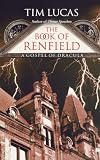
Not as good as I wanted it to be, but, with that said, great background info on Renfield-why he ended up in Carfax Asylum, how he can to be involved with Dracula. It was mainly the parts that about Dr. Seward that I really did not find all that interesting. If you are a fan of Dracula this references alot of the characters and there are tidbits of info about some of them you don't get it Dracula. The book takes on a "real" quality; in fact in the afterwords explains that 'The Book of show more Renfield is a warning to modern readers who, in their comfort and compacency, have forgotten that Evil once walked the earth and can return at any time-in fact, it may have never really gone away." Not all I had hoped for, but intriguing none-the-less. show less
Lists
Awards


You May Also Like


Associated Authors
Statistics
- Works
- 88
- Also by
- 14
- Members
- 392
- Popularity
- #61,821
- Rating
- 3.7
- Reviews
- 10
- ISBNs
- 21
- Languages
- 1
- Favorited
- 2