
Michael Blumlein (1948–2019)
Author of The Brains of Rats
About the Author
Michael Blumlein practices and teaches medicine at the University of California at San Francisco.
Works by Michael Blumlein
Thoreau's microscope plus "Paul and me" and "Fidelity" and "Know how, can do" and more (2018) 44 copies, 2 reviews
Hymenoptera 6 copies
Know How Can Do 5 copies
The Thing Itself [short fiction] 4 copies
California Burning 2 copies
Revenge 2 copies
Bestseller 2 copies
Fidelity: A Primer 1 copy
The Big One 1 copy
Isostasy 1 copy
Twenty-two And You 1 copy
Bird Walks In New England 1 copy
Choose Poison, Choose Life 1 copy
Paul and Me 1 copy
Snow In Dirt 1 copy
Associated Works
The Year's Best Science Fiction: Nineteenth Annual Collection (2002) — Contributor — 556 copies, 6 reviews
The Big Book of Science Fiction: The Ultimate Collection (2016) — Contributor — 520 copies, 7 reviews
The Norton Book of Science Fiction: North American Science Fiction, 1960-1990 (1993) — Contributor — 344 copies, 6 reviews
The Year's Best Fantasy and Horror: Second Annual Collection (1987) — Contributor — 207 copies, 1 review
The Best From Fantasy and Science Fiction: The Fiftieth Anniversary Anthology (1999) — Contributor — 127 copies, 3 reviews
The Magazine of Fantasy and Science Fiction September 2000, Vol. 99, No. 3 (2000) — Contributor — 19 copies
Asimov's Science Fiction: Vol. 40, No. 10 & 11 [October/November 2016] (2016) — Contributor — 10 copies
Johann Sebastian Bach Memorial Barbecue. Internationale Science Fiction Erzählungen. (1992) — Contributor — 4 copies
Zärtlich war die Zukunft. (7445 415). Liebesgeschichten aus der Welt von morgen. (1989) — Contributor — 2 copies
Tagged
Common Knowledge
- Legal name
- Blumlein, Michael John
- Birthdate
- 1948-06-28
- Date of death
- 2019-10-24
- Gender
- male
- Nationality
- USA
- Birthplace
- San Francisco, California, USA
- Associated Place (for map)
- California, USA
Members
Reviews
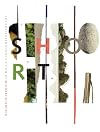
I’ve been a big fan of Blumlein’s fiction for years, ever since coming across one of his stories in an Interzone anthology back in the late 1980s - it was either his debut story, ‘Tissue Ablation and Variant Regeneration: A Case Report’, in Interzone: the 1st Anthology, or ‘The Brains of Rats’, his second published story, in Interzone: the 2nd Anthology. Whichever it was, it inspired me to track down everything else he had written.
Which was not easy at the time. I found a copy of show more his first collection, The Brains of Rats, which had been published by US small press Scream Press and was not readily available in the UK (I forget where I bought it; it might have been at a convention). His debut novel, The Movement of Mountains, which was science fiction, appeared in the UK in 1989. His second novel, X, Y, which was horror, was only available as a US massmarket paperback.
Then there was a gap - a story every year or two, a handful of novellas, but nothing at novel-length until The Healer. And a decade later, a handful of collections of his fiction. Of which Short, and its companion volume, Long, are the latest. Sadly, we lost Blumlein in 2019, so when these two volumes claim to be complete, they will stay that way. He was a singular talent, and almost sui generis. His stories were carefully crafted, and always thought-provoking. Some, obviously, worked better than others, and reading Short, which contains all twenty-nine of his published short stories, the differences can be stark.
Blumlein’s debut story, ‘Tissue Ablation and Variant Regeneration: A Case Report’, first published in Interzone in 1984, is remarkable. It’s also emblematic of Blumlein’s career - somewhere on the borderline between science fiction and horror, with occasional steps entirely into one genre or the other, often based around something medical, and always with very analytical prose. ‘Bestseller’, one of his more popular stories, is a case in point: a struggling writer answers a mysterious advert, and agrees to donate bone marrow for a large sum of money to an ailing billionaire. Then other parts of the billionaire’s body begin to fail, and the writer finds himself donating more and more…
Other stories read as though they were written to a specific market - ‘Snow in Dirt’, for example, was written for an anthology inspired by fairy tales. Even the stories originally published in F&SF feel like F&SF stories, and are lighter in tone than Blumlein’s other works.
Having said that, twenty-nine Blumlein stories in succession is a little overwhelming. His prose is intense and his stories are subtle. Short is a collection to be dipped into and savoured, I think. On the other hand, I now want to reread Blumlein’s novels. Fortunately, I recently purchased a copy of The Movement of Mountains (my copies of his books are in storage).
And, of course, I have Long still to read. show less
Which was not easy at the time. I found a copy of show more his first collection, The Brains of Rats, which had been published by US small press Scream Press and was not readily available in the UK (I forget where I bought it; it might have been at a convention). His debut novel, The Movement of Mountains, which was science fiction, appeared in the UK in 1989. His second novel, X, Y, which was horror, was only available as a US massmarket paperback.
Then there was a gap - a story every year or two, a handful of novellas, but nothing at novel-length until The Healer. And a decade later, a handful of collections of his fiction. Of which Short, and its companion volume, Long, are the latest. Sadly, we lost Blumlein in 2019, so when these two volumes claim to be complete, they will stay that way. He was a singular talent, and almost sui generis. His stories were carefully crafted, and always thought-provoking. Some, obviously, worked better than others, and reading Short, which contains all twenty-nine of his published short stories, the differences can be stark.
Blumlein’s debut story, ‘Tissue Ablation and Variant Regeneration: A Case Report’, first published in Interzone in 1984, is remarkable. It’s also emblematic of Blumlein’s career - somewhere on the borderline between science fiction and horror, with occasional steps entirely into one genre or the other, often based around something medical, and always with very analytical prose. ‘Bestseller’, one of his more popular stories, is a case in point: a struggling writer answers a mysterious advert, and agrees to donate bone marrow for a large sum of money to an ailing billionaire. Then other parts of the billionaire’s body begin to fail, and the writer finds himself donating more and more…
Other stories read as though they were written to a specific market - ‘Snow in Dirt’, for example, was written for an anthology inspired by fairy tales. Even the stories originally published in F&SF feel like F&SF stories, and are lighter in tone than Blumlein’s other works.
Having said that, twenty-nine Blumlein stories in succession is a little overwhelming. His prose is intense and his stories are subtle. Short is a collection to be dipped into and savoured, I think. On the other hand, I now want to reread Blumlein’s novels. Fortunately, I recently purchased a copy of The Movement of Mountains (my copies of his books are in storage).
And, of course, I have Long still to read. show less
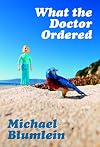
I’ve been a fan of Blumlein’s fiction since first reading him in Interzone back in the 1980s. Unfortunately, he has not been exactly prolific – three novels to date, and What The Doctor Ordered is only his second collection after 1990’s The Brains of Rats. Which doesn’t mean there aren’t a few stories still uncollected. What The Doctor Ordered collects fourteen stories, dating from 1997 to 2012, and originally appearing in a variety of venues, such as F&SF, Asimov’s, Flurb and show more a handful of original anthologies, mostly horror or dark fantasy. The one thing I’d forgotten during all the years I’d not read Blumlein was how bloody good he is. His three novels are all too different to really get a handle on him as a novel writer. But his short fiction really is very, very good. Best story in here is ‘Isostasy’, although ‘The Roberts’ is also excellent. Blumlein’s fiction is unsettling in ways that I think few authors manage to be. His prose is clinical and sharp, and he paints realistic pictures… into which he drops something fantastical that nonetheless manages to fit in. And then he twists it in ways that makes it seem all the more uncomfortable. One of the best collections I’ve read in recent years. show less
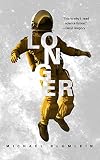
I’ve been a fan of Blumlein’s work since reading a short story by him in Interzone back in the late 1980s. At novel length, his work has been… variable. Only his one horror novel, X, Y, seemed to match his short fiction in style and tone. A few years ago, he was diagnosed with lung cancer, but after a short hiatus he seems to have become productive than before, with two novels and three collections published in the last ten years. Longer is marketed as a novel, but it’s published by show more Tor.com, who chiefly publish novellas, and it’s pretty thin, at only 227 pages. It’s also written in a very stripped-down style, with lots of dialogue and very little descriptive prose. Gunjita and Cav are the sole occupants of an orbiting laboratory, one of many owned by Gleem Pharmaceutical. Gunjita has rejuved, her second and last, but Cav has not, and it becomes increasingly obvious he has no plans to do so. Not only is his decision affecting their work, it’s also affecting their relationship – they’ve been happily married for a very long time. And then they discover something strange on a passing comet, a smear of material which may be organic but is certainly not terrestrial… In other hands, this could turn into, well, something not unlike a shitty sf film such as Life. But Blumlein is not interested in alien monsters, or even in the nature of the alien on the comet. It’s the relationship between Gunjita and Cav, and the way it fractures due to Cav’s choice, that drives the story of Longer. The alien is merely a crutch to bolster Cav’s decision; much as Gunjita is presented with one herself when the head of Gleem Pharmaceuticals, who has uniquely survived three rejuves, reveals to her the consequences of that third rejuve. The busyness of the story, and the depth of the themes it covers, with the bare-bones prose, unfortunately makes Longer read more like an outline or an excerpt than a full novel. Blumlein sets his scenes, and lays out his world, with enviable brevity, and the interiority of the main characters never feels lacking… but the plot seems to be mostly carried in discussion between Cav and Gunjita and it sometimes leaves you wanting more from the narrative. Blumlein is very good, but Longer is more like a charcoal sketch than an oil painting – it tells a story, and the artistry is plain to see, but there’s no colour. show less

A Locus review by Gary K Wolfe claims this is a collection of all of Blumlein’s fiction, which is not true. If anything, it’s a collection of his less obviously genre short fiction, although most of it was actually previously published in genre venues. It does indeed contain some of the stories also in What The Doctor Ordered (2013, USA), but with four additional ones – ‘Bloom’, ‘Y(ou)r Q(ua)ntifi(e)d S(el)f’, ‘Success’ and ‘Choose Poison, Choose Life’, but they show more appeared in Interzone, F&SF and Asimov’s SF, and ‘Y(ou)r Q(ua)ntifi(e)d S(el)f’ is original to this collection. Blumlein has been a favourite writer for many years, and I’ve championed his works whenever I could, but we lost him last year to cancer, and I can only be grateful he was held in high enough regard that pretty much all of his short fiction output has been collected over the years. His novels, however, are mostly out of print, and have been for a long time. The stories in All I Ever Dreamed are not heartland sf, and one or two hew closer to dark fantasy than science fiction. The three novellas are probably the strongest works. ‘The Roberts’ is available separately from Tachyon Publications, and is typical of Blumlein’s work: dense, intense and set somewhere at the intersection of science and technology and human relationships. ‘Success’, on other hand, does not use science and technology to fix a relationship, but to comment on it. The third novel sees three women, all named for flowers, each involved with a man, for better or for worse, on a desert island. There’s almost no obvious genre content, but the way the three narratives reflect on each other is cleverly done. Blumlein was a singular talent in science fiction, and there were, and are, few genre writers of his generation who matched his level of thoughtful rigour. show less
Lists
Awards


You May Also Like


Associated Authors
Statistics
- Works
- 29
- Also by
- 33
- Members
- 518
- Popularity
- #47,944
- Rating
- 3.6
- Reviews
- 18
- ISBNs
- 28
- Languages
- 2
- Favorited
- 1