

Lisa Tuttle
Author of Windhaven
About the Author
Lisa Tuttle won the John W. Campbell Award for best new writer in 1974 & is the author of numerous short stories & novels. (Bowker Author Biography)
Series
Works by Lisa Tuttle
Replacements [novelette] 8 copies
The Curious Affair of the Deodand 3 copies
In Translation [short fiction] 3 copies
Need 2 copies
His Wolf 2 copies
A Friend In Need 2 copies
Bug House 2 copies
A Cold Dish 2 copies
Woman Waiting 2 copies
Stone Circle 2 copies
Changelings [short fiction] 2 copies
The Horse Lord 2 copies
Variations on a theme 1 copy
Flies By Night — Author — 1 copy
Sangre 1 copy
Tir Nan Og 1 copy
Meeting the Muse 1 copy
Background: The Dream 1 copy
In The Arcade 1 copy
Turning Thirty 1 copy
Skin Of The Soul 1 copy
The Truth About Werewolves 1 copy
Grandfather's Teeth 1 copy
The Story Of No 1 copy
Honey I'm Home! 1 copy
Ragged Claw 1 copy
The Man in the Ditch 1 copy
Shelf-Life 1 copy
Paul's Mother 1 copy
The Mezzotint 1 copy
The Translator 1 copy
Associated Works
The Weird: A Compendium of Strange and Dark Stories (2011) — Contributor; Contributor — 968 copies, 21 reviews
Songs of Love and Death: All Original Tales of Star Crossed Love (2010) — Contributor — 808 copies, 37 reviews
Alien Sex: 19 Tales by the Masters of Science Fiction and Dark Fantasy (1990) — Contributor — 529 copies, 6 reviews
The Big Book of Science Fiction: The Ultimate Collection (2016) — Contributor — 522 copies, 8 reviews
The Year's Best Fantasy and Horror: First Annual Collection (1986) — Contributor — 333 copies, 6 reviews
The Year's Best Fantasy and Horror: Sixth Annual Collection (1993) — Contributor — 219 copies, 1 review
The Vampire Archives: The Most Complete Volume of Vampire Tales Ever Published (2007) — Contributor — 216 copies, 5 reviews
The Year's Best Fantasy and Horror: Third Annual Collection (1988) — Contributor — 193 copies, 2 reviews
Women of Wonder, the Classic Years: Science Fiction by Women from the 1940s to the 1970s (1995) — Contributor — 189 copies, 1 review
Daughters of Earth: Feminist Science Fiction in the Twentieth Century (2006) — Contributor — 188 copies, 6 reviews
The Year's Best Fantasy and Horror 2008: 21st Annual Collection (2008) — Contributor — 176 copies, 5 reviews
Hidden Turnings: A Collection of Stories Through Time and Space (1989) — Contributor — 140 copies, 6 reviews
Despatches from the Frontiers of the Female Mind: An Anthology of Original Stories (1985) — Contributor — 132 copies, 2 reviews
What Did Miss Darrington See? An Anthology of Feminist Supernatural Fiction (1989) — Contributor — 126 copies
The Future Is Female! Volume Two, The 1970s: More Classic Science Fiction Storie s By Women: A Library of America Special Publication (2022) — Contributor — 108 copies, 3 reviews
Circles of Stone: Weird Tales of Pagan Sites and Ancient Rites (2023) — Contributor — 74 copies, 2 reviews
The Mammoth Book of Zombie Apocalypse! Fightback (Mammoth Books) (2012) — Contributor — 65 copies, 1 review
A Darker Shade of Noir: New Stories of Body Horror by Women Writers (2023) — Contributor — 64 copies, 18 reviews
Flying Cups and Saucers: Gender Explorations in Science Fiction and Fantasy (1998) — Author — 57 copies, 3 reviews
Beyond Rue Morgue Anthology: Further Tales of Edgar Allan Poe's 1st Detective (2013) — Contributor — 57 copies, 3 reviews
The Best Horror Stories from The Magazine of Fantasy & Science Fiction (1988) — Contributor — 52 copies, 1 review
Light Years and Dark: Science Fiction and Fantasy of and for Our Time (1984) — Contributor — 38 copies
Analog Science Fiction/Science Fact: Vol. XCV, No. 5 (May 1975) (1975) — Contributor — 27 copies, 1 review
The Best Horror Stories from the Magazine of Fantasy & Science Fiction, Vol. II (1990) — Contributor — 20 copies
The Magazine of Fantasy and Science Fiction May 1985, Vol. 68, No. 5 (1985) — Contributor — 14 copies
The Magazine of Fantasy and Science Fiction December 1980, Vol. 59, No. 6 (1980) — Author — 14 copies
The Magazine of Fantasy and Science Fiction April 1983, Vol. 64, No. 4 (1983) — Contributor — 12 copies
Stories of Hope and Wonder: In Support of the UK's Healthcare Workers (2020) — Contributor — 11 copies, 1 review
The Magazine of Fantasy and Science Fiction 65. Cyrion in Bronze. (1985) — Contributor, some editions — 11 copies
The Future of Horror: The Collected Solaris Horror Anthologies, featuring House of Fear, Magic and End of the Road (2015) — Contributor — 8 copies
Flotsam Fantasique The Souvenir Book of World Fantasy Convention 2013 (2013) — Contributor — 6 copies
Tagged
Common Knowledge
- Legal name
- Tuttle, Lisa Gracia
- Other names
- Palmer, Maria (shared pseudonym)
Waring, Laura (shared pseudonym)
Baglio, Ben M. (shared pseudonym)
Daniels, Lucy (shared pseudonym) - Birthdate
- 1952-09-16
- Gender
- female
- Education
- Syracuse University
- Occupations
- science fiction writer
- Organizations
- Turkey City Writer's Workshop
- Awards and honors
- John W. Campbell Award (1974)
- Relationships
- Priest, Christopher (ex-husband, 1981-1987)
- Nationality
- USA
- Birthplace
- Houston, Texas, USA
- Places of residence
- Houston, Texas, USA
London, England, UK
Torinturk, Scotland, UK - Associated Place (for map)
- Houston, Texas, USA
Members
Discussions
THE DEEP ONES: "Replacements" by Lisa Tuttle in The Weird Tradition (September 2021)
Reviews
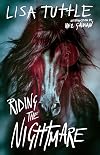
Riding the Nightmare is not a brutal collection in the way A Nest of Nightmares is brutal. It doesn’t corner you and demand a catastrophic choice. Instead, it settles in and asks a colder, more unsettling question: what does survival look like after inequality has already shaped your life?
This is a book about unequal relationships—romantic, social, bodily, intellectual—and the quiet violence that comes from living inside them. Tuttle isn’t interested in redemption arcs or mutual show more understanding. Power is asymmetrical by default. Someone always has more room to move, more authority to define reality, more freedom to opt out. The horror emerges not from monsters but from how thoroughly these imbalances are normalized.
Many of the stories work through adaptation rather than escape. Characters don’t triumph; they recalibrate. In “Bits and Pieces,” Fay becomes something wholly unexpected—not healed, not empowered, but reclassified. It’s one of the collection’s strongest moments precisely because it refuses moral reassurance. Survival doesn’t preserve the self you started with, and Tuttle never pretends otherwise.
“The Mezzotint” is a particularly sharp modern response to M. R. James. The supernatural image doesn’t offer rescue so much as recognition. The image becomes an archive of truth rather than a warning—agency preserved only in representation, not in life.
Across the collection, the tone is consistently unhappy but not sensational. The damage is corrosive, not explosive. These are stories about accommodation, about what happens when leaving would cost too much and staying costs the self. That restraint is part of the book’s power. It lingers.
The final story, “The Dragon’s Bride,” didn’t work for me. It leans into a mode and register that felt out of step with the rest of the collection—more overtly mythic, less psychologically grounded—and it broke the cumulative effect rather than deepening it. It wasn’t bad, just not aligned with what I value most in Tuttle’s work.
Even with that caveat, this is a strong, unsettling collection that rewards close, attentive reading. It doesn’t console. It doesn’t exaggerate. It simply watches what people do when fairness is no longer on the table.
Rating: 4.5/5 show less
This is a book about unequal relationships—romantic, social, bodily, intellectual—and the quiet violence that comes from living inside them. Tuttle isn’t interested in redemption arcs or mutual show more understanding. Power is asymmetrical by default. Someone always has more room to move, more authority to define reality, more freedom to opt out. The horror emerges not from monsters but from how thoroughly these imbalances are normalized.
Many of the stories work through adaptation rather than escape. Characters don’t triumph; they recalibrate. In “Bits and Pieces,” Fay becomes something wholly unexpected—not healed, not empowered, but reclassified. It’s one of the collection’s strongest moments precisely because it refuses moral reassurance. Survival doesn’t preserve the self you started with, and Tuttle never pretends otherwise.
“The Mezzotint” is a particularly sharp modern response to M. R. James. The supernatural image doesn’t offer rescue so much as recognition. The image becomes an archive of truth rather than a warning—agency preserved only in representation, not in life.
Across the collection, the tone is consistently unhappy but not sensational. The damage is corrosive, not explosive. These are stories about accommodation, about what happens when leaving would cost too much and staying costs the self. That restraint is part of the book’s power. It lingers.
The final story, “The Dragon’s Bride,” didn’t work for me. It leans into a mode and register that felt out of step with the rest of the collection—more overtly mythic, less psychologically grounded—and it broke the cumulative effect rather than deepening it. It wasn’t bad, just not aligned with what I value most in Tuttle’s work.
Even with that caveat, this is a strong, unsettling collection that rewards close, attentive reading. It doesn’t console. It doesn’t exaggerate. It simply watches what people do when fairness is no longer on the table.
Rating: 4.5/5 show less

I loved this. I loved it so much that I let out a happy little yip and hit request immediately when I saw its sequel pop up on Netgalley, and another when I got it – I can't wait.
Lisa Tuttle has worked with George R.R. Martin, so I would expect her to know what she's doing, and she does. She knows how to build characters without bending herself or her narrative into knots to make sure I picture them just as she wants me to; the main characters of this book are excellent companions. Miss show more Lane and Mr. Jasper Jesperson, striving to build a private investigation practice in 1893 London, are neither of them perfect. As the book begins, she has fled a position with a psychical research group upon discovering that a woman in whom she had perfect faith, a friend, was planning to conduct a fraudulent séance; I kept wanting to poke the author, or the character, asking if they didn't want to make some kind of stand against such fakery or something? At first it felt cowardly of Miss Lane, although I surely understood her feelings of betrayal. In the end, where her moonlight flit could have seemed like an out-of-character maneuver included solely to put chess pieces in place for the next move – it didn't. It made sense – and because it made sense and worked for the character, the rest of the plot evolves organically from it.
And as for Mr. Jesperson – he is a bit arrogant, a bit of a Sherlock Holmes-wanna-be, a bit over-focused on his own ends… but as it turns out, he has reason to be a bit arrogant, and good cause to expect to emulate Holmes – and his vision isn't so tunneled that he can't see a child in distress. The kitten incident was a beautiful illustration of his abilities and capabilities.
And his mother is terrific.
The writing has an effortless-seeming clarity that makes the pages fly by. The author manages the disparate elements of the plot like an expert juggler, keeping all the balls in the air until they fall neatly into their places. I love the way the climax of the action is handled. The left hand (and the reader) doesn't really know what the right hand is doing, and the right hand can't let the left know without sabotaging the whole plan. Miss Lane is put into a position where she has to accept the possibility that her new partner has let her down at least as badly as her last friend and partner. And Mr. Jesperson has to handle the situation with an aplomb and pragmatism that would do Holmes proud.
Another area where the writing shines is what feels like effortless exposition – or withholding of exposition. Just enough of the characters' stories are told to make them extremely engaging while still leaving lots of ground for future books to cover (lots of future books, I hope). I love that there are lots of things in both Miss Lane's and Mr. Jesperson's pasts that aren't detailed – including in their shared past, as some of their very first cases are alluded to like the Giant Rat of Sumatra ("the curious affair of the deodand"). (Wow – I never heard of a deodand before- what a fascinating thing.) I love that … shall we say, to avoid spoilers, the origin of a certain, er, fashion accessory is never, ever provided.Why does Miss Fox wear an eyepatch? I have no idea. And what's lovely about it is that no one ever asks, and Miss Lane never explains. It would, after all, be indelicate to discuss it. Fantastic.
Best of all, the author knows how to avoid that thing that has been driving me straight up the wall so much lately: recapping. So, so many books lately feature characters doing something, and then meeting someone who wasn't there and telling them all about it, or simply thinking about what happened a couple of chapters ago – during which the writer thoughtfully provides her apparently amnesiac reader with a summarization of those events, sometimes using just the same phrasings. Lisa Tuttle doesn't do this. "I gave him all the details, finishing just as we reached the station." I could just hug her for that.
I've been making note of a few fun names that have popped up in this year's books – like the one which used my name, except flipped, and the Mad Men character n WWII London. Here there is a set of twins named Amelia and Bedelia – and the Amelia Bedelia books (about a very Mary Poppins-ish lady, as I recall) were a staple of my early childhood. I wonder if that was on purpose.
It's such a great title – and I love that "psychic thief" doesn't mean what you might first think it means. And the somnambulism is a great deal of (sometimes very creepy) fun. (And I adore that cover.)
Yay, there is a second book – and I have it.
Great quote, and … well, yeah:
Why the dead should wish to communicate with the living in such a bizarre and roundabout way—materializing flowers, playing trumpets, rapping on tables—rather than sending straightforward messages through their mediums was a question no true believer would ask.
The usual disclaimer: I received this book via Netgalley for review. show less
Lisa Tuttle has worked with George R.R. Martin, so I would expect her to know what she's doing, and she does. She knows how to build characters without bending herself or her narrative into knots to make sure I picture them just as she wants me to; the main characters of this book are excellent companions. Miss show more Lane and Mr. Jasper Jesperson, striving to build a private investigation practice in 1893 London, are neither of them perfect. As the book begins, she has fled a position with a psychical research group upon discovering that a woman in whom she had perfect faith, a friend, was planning to conduct a fraudulent séance; I kept wanting to poke the author, or the character, asking if they didn't want to make some kind of stand against such fakery or something? At first it felt cowardly of Miss Lane, although I surely understood her feelings of betrayal. In the end, where her moonlight flit could have seemed like an out-of-character maneuver included solely to put chess pieces in place for the next move – it didn't. It made sense – and because it made sense and worked for the character, the rest of the plot evolves organically from it.
And as for Mr. Jesperson – he is a bit arrogant, a bit of a Sherlock Holmes-wanna-be, a bit over-focused on his own ends… but as it turns out, he has reason to be a bit arrogant, and good cause to expect to emulate Holmes – and his vision isn't so tunneled that he can't see a child in distress. The kitten incident was a beautiful illustration of his abilities and capabilities.
And his mother is terrific.
The writing has an effortless-seeming clarity that makes the pages fly by. The author manages the disparate elements of the plot like an expert juggler, keeping all the balls in the air until they fall neatly into their places. I love the way the climax of the action is handled. The left hand (and the reader) doesn't really know what the right hand is doing, and the right hand can't let the left know without sabotaging the whole plan. Miss Lane is put into a position where she has to accept the possibility that her new partner has let her down at least as badly as her last friend and partner. And Mr. Jesperson has to handle the situation with an aplomb and pragmatism that would do Holmes proud.
Another area where the writing shines is what feels like effortless exposition – or withholding of exposition. Just enough of the characters' stories are told to make them extremely engaging while still leaving lots of ground for future books to cover (lots of future books, I hope). I love that there are lots of things in both Miss Lane's and Mr. Jesperson's pasts that aren't detailed – including in their shared past, as some of their very first cases are alluded to like the Giant Rat of Sumatra ("the curious affair of the deodand"). (Wow – I never heard of a deodand before- what a fascinating thing.) I love that … shall we say, to avoid spoilers, the origin of a certain, er, fashion accessory is never, ever provided.
Best of all, the author knows how to avoid that thing that has been driving me straight up the wall so much lately: recapping. So, so many books lately feature characters doing something, and then meeting someone who wasn't there and telling them all about it, or simply thinking about what happened a couple of chapters ago – during which the writer thoughtfully provides her apparently amnesiac reader with a summarization of those events, sometimes using just the same phrasings. Lisa Tuttle doesn't do this. "I gave him all the details, finishing just as we reached the station." I could just hug her for that.
I've been making note of a few fun names that have popped up in this year's books – like the one which used my name, except flipped, and the Mad Men character n WWII London. Here there is a set of twins named Amelia and Bedelia – and the Amelia Bedelia books (about a very Mary Poppins-ish lady, as I recall) were a staple of my early childhood. I wonder if that was on purpose.
It's such a great title – and I love that "psychic thief" doesn't mean what you might first think it means. And the somnambulism is a great deal of (sometimes very creepy) fun. (And I adore that cover.)
Yay, there is a second book – and I have it.
Great quote, and … well, yeah:
Why the dead should wish to communicate with the living in such a bizarre and roundabout way—materializing flowers, playing trumpets, rapping on tables—rather than sending straightforward messages through their mediums was a question no true believer would ask.
The usual disclaimer: I received this book via Netgalley for review. show less
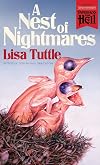
Rating: ★★★★¾ (4.75/5)
This quietly devastating collection took me by surprise with its emotional honesty, psychological depth, and restrained but persistent dread. Lisa Tuttle doesn't write horror that jumps out and grabs you—she writes the kind that seeps in, unsettling your sense of normalcy and making you question what you've taken for granted.
Each story centers around a female protagonist in some form of crisis—emotional, relational, maternal, or existential. The horrors are show more often ambiguous and deeply personal. You won’t find gore or monsters here in the usual sense, but rather the creeping horror of suffocating relationships, unlived lives, and the silent bargains we make to survive.
Tuttle’s writing is sharp, clean, and deceptively simple. The stories often feel like character studies where the horror emerges slowly, growing organically from the characters’ own fears and denials. Some protagonists are victims; some are, chillingly, not. And that complexity only makes the collection more rewarding.
There's a cumulative effect to reading this in order. As themes begin to repeat—sisters, controlling mothers, women isolated in remote houses—you realize Tuttle is building something larger than the sum of its parts: a psychological landscape where the most terrifying thing isn’t what’s outside the house... but who’s inside.
A standout feminist horror collection. Quiet, eerie, and emotionally bruising in the best way. show less
This quietly devastating collection took me by surprise with its emotional honesty, psychological depth, and restrained but persistent dread. Lisa Tuttle doesn't write horror that jumps out and grabs you—she writes the kind that seeps in, unsettling your sense of normalcy and making you question what you've taken for granted.
Each story centers around a female protagonist in some form of crisis—emotional, relational, maternal, or existential. The horrors are show more often ambiguous and deeply personal. You won’t find gore or monsters here in the usual sense, but rather the creeping horror of suffocating relationships, unlived lives, and the silent bargains we make to survive.
Tuttle’s writing is sharp, clean, and deceptively simple. The stories often feel like character studies where the horror emerges slowly, growing organically from the characters’ own fears and denials. Some protagonists are victims; some are, chillingly, not. And that complexity only makes the collection more rewarding.
There's a cumulative effect to reading this in order. As themes begin to repeat—sisters, controlling mothers, women isolated in remote houses—you realize Tuttle is building something larger than the sum of its parts: a psychological landscape where the most terrifying thing isn’t what’s outside the house... but who’s inside.
A standout feminist horror collection. Quiet, eerie, and emotionally bruising in the best way. show less
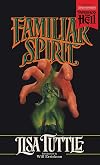
A young woman has recently split up from her boyfriend with whom she's still very much infatuated. She felt that the break-up was a mistake on her part, and what one thing had to do with the other I don't know...but she then moves into a haunted house. It's really difficult to explain just why the story feels rather pointless and empty without giving too many things away... but on some level the young woman seems to never learn anything throughout the story. I didn't find any of the show more characters likeable or anyone I could root for. The young woman could have been likeable, if her eventual fate had been the result of the spirit's twisting her desires and her character, but it wasn't. How she ends up is 100% her own fault, a result of the self-obsession and tiresome infatuation that she demonstrated from the start of the story, and before she ever set foot anywhere near the haunted house. The ending isn't shocking or satisfying either. It just felt inevitable...you knew it was going to happen like it did taking away a lot of the mystery and most of the horror. This is the second "Paperbacks from Hell" series that I've read. It's a collection of 80s and 90s horror that has been re-released. I think I may have been spoiled by the first one that I read, When Darkness Loves Us. I felt that even though this book was well enough written and I'm sure the author is talented... it missed something...or maybe I missed something. It lacked the "something" that I needed and wanted from a ghostly, spooky tale of possession, loss, regret and obsession. If you're after a story that will leave you feeling that you have been sufficiently scared and had your "dose" of horror...this, isn't it. show less
Lists
Faerie Mythology (1)
Awards


You May Also Like


Associated Authors
Statistics
- Works
- 121
- Also by
- 168
- Members
- 3,658
- Popularity
- #6,916
- Rating
- 3.7
- Reviews
- 115
- ISBNs
- 191
- Languages
- 13
- Favorited
- 5