

Thomas Tessier (1947–2026)
Author of The Nightwalker
Works by Thomas Tessier
A Little Orange Book of Voodoo Tales — Editor — 3 copies
The Last Crossing [short story] 3 copies
Food 3 copies
I fuochi azzurri (The Fates) 2 copies
In Praise of Folly 2 copies
Blanca [short fiction] 2 copies
The Infestation at Ralls 1 copy
Curing Hitler 1 copy
Mythes et légendes du monde 1 copy
Nocturne 1 copy
Lulu 1 copy
Moments of Change 1 copy
Infidel 1 copy
Associated Works
Prime Evil: New Stories by the Masters of Modern Horror (1988) — Contributor — 678 copies, 8 reviews
American Fantastic Tales : Terror and the Uncanny from the 1940's to Now (2009) — Contributor — 298 copies, 5 reviews
The Year's Best Fantasy and Horror: Seventh Annual Collection (1994) — Contributor — 282 copies, 3 reviews
Lethal Kisses: 18 Tales of Sex, Horror, and Revenge (1996) — Contributor, some editions — 76 copies, 5 reviews
Gauntlet: Exploring the Limits of Free Expression, No. 5 - Porn in the USA (1993) — Contributor — 14 copies
Tagged
Common Knowledge
- Birthdate
- 1947-05-10
- Date of death
- 2026-03-26
- Gender
- male
- Education
- University College Dublin
- Occupations
- poet
playwright
music columnist
novelist
short story writer - Organizations
- Millington Books
- Nationality
- USA
- Birthplace
- Waterbury, Connecticut, USA
- Places of residence
- Connecticut, USA
Dublin, Ireland
London, England, UK - Place of death
- Watertown, Connecticut, USA
- Associated Place (for map)
- Connecticut, USA
Members
Reviews
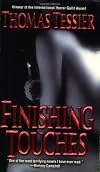
I knew within the first few chapters that Finishing Touches just wasn’t my kind of book, and finishing fifty pages confirmed it. This is one of those novels where the premise depends on a specific psychological dynamic — and the dynamic simply didn’t work for me.
The core issue is the characters. Roger, our protagonist, barely feels like a person. He’s supposed to be a doctor, but everything about him reads more like a directionless wanderer who’s been handed a profession for plot show more convenience. His entire personality seems to be “stays out drinking until someone interesting notices him.” None of his choices feel rooted in a real psychology.
Meanwhile, the plastic surgeon is the only character with a pulse: he has the quirks, the opinions, the texture. It’s hard not to feel like he’s the author’s stand-in — the charismatic, controlling figure Tessier actually cares about. Roger, in comparison, is a blank cut-out placed in the room so the surgeon has someone to manipulate. That imbalance makes the whole setup feel artificial.
The book also leans into a kind of male fantasy I don’t enjoy: the passive protagonist who does nothing and yet is rewarded with mystery, danger, and sexually available women. Even the erotic elements felt secondhand and hollow — like imitations of transgression rather than anything with emotional or psychological depth.
In short: the book wasn’t bad, but it wasn’t built for a reader like me.
I need character logic, psychological grounding, and desire that feels earned. Finishing Touches never found that footing. show less
The core issue is the characters. Roger, our protagonist, barely feels like a person. He’s supposed to be a doctor, but everything about him reads more like a directionless wanderer who’s been handed a profession for plot show more convenience. His entire personality seems to be “stays out drinking until someone interesting notices him.” None of his choices feel rooted in a real psychology.
Meanwhile, the plastic surgeon is the only character with a pulse: he has the quirks, the opinions, the texture. It’s hard not to feel like he’s the author’s stand-in — the charismatic, controlling figure Tessier actually cares about. Roger, in comparison, is a blank cut-out placed in the room so the surgeon has someone to manipulate. That imbalance makes the whole setup feel artificial.
The book also leans into a kind of male fantasy I don’t enjoy: the passive protagonist who does nothing and yet is rewarded with mystery, danger, and sexually available women. Even the erotic elements felt secondhand and hollow — like imitations of transgression rather than anything with emotional or psychological depth.
In short: the book wasn’t bad, but it wasn’t built for a reader like me.
I need character logic, psychological grounding, and desire that feels earned. Finishing Touches never found that footing. show less
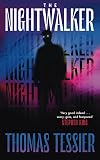
I’m not normally a fan of werewolf stories, but this is a more subtle and psychological story of a man in 1970’s London slowly succumbing to an animalistic madness as he becomes ever more violently aggressive in both behaviour and sexual lust
There’s a lot of ambiguous trails that weave throughout the story which work really well from his early life, leaving the reader guessing to how they connect Bobby Ives’ unravelling condition. What perhaps stands out best is the clever way show more Tessier ramps up the beast not with classic lycanthrope tropisms, but through acts of rage, through his thoughts, through his postures and through the degradation of lifestyle—at one point reflected in a change in the music he listens to. His descriptions of London also change and darken with his descent into madness, in fact London itself positions itself almost as a supporting character in its own right.
This isn’t a classic or overt story of the wolfman tale and anyone looking for a visually impressive were-beast of lore should look elsewhere. Instead this is a triumph of psychological bestial horror that burrows in deep and does not retract its claws. show less
There’s a lot of ambiguous trails that weave throughout the story which work really well from his early life, leaving the reader guessing to how they connect Bobby Ives’ unravelling condition. What perhaps stands out best is the clever way show more Tessier ramps up the beast not with classic lycanthrope tropisms, but through acts of rage, through his thoughts, through his postures and through the degradation of lifestyle—at one point reflected in a change in the music he listens to. His descriptions of London also change and darken with his descent into madness, in fact London itself positions itself almost as a supporting character in its own right.
This isn’t a classic or overt story of the wolfman tale and anyone looking for a visually impressive were-beast of lore should look elsewhere. Instead this is a triumph of psychological bestial horror that burrows in deep and does not retract its claws. show less

DNF at 17% – I found the narrative uncritically aligned with Jeff’s self-absorption. His interiority is treated as inherently meaningful while other people barely exist as real beings. Drinking, entitlement, and boundary violations are presented as ambient masculinity rather than corrosive forces. This framing made the book feel ethically and structurally wrong for me.

Whoa, I don't look at ratings or reviews until after I've read something but this book is just a little over 3 stars! That means most people don't get it or know what it was really about. Tessier is a tough author to categorize. He never writes the same novel twice and he rarely even crosses the same genre twice. And he's not very prolific. Because of this he has little loyal following and a lot of people build an expectation from reading just one of his novels or stories and this leads to show more both disappointment and a tendency for readers not to understand what is really going on. Tessier is not going to write the same book twice and he is not going to try to do the same thing twice, so forget that from the start and read the book again if you only gave it 2 or 3 stars; expect the unexpected.
What we have here is a slim little novel with an overworked horror trope. It's a pretty original lycanthropy story but certainly not the best I've ever read. If that was all it was, three stars, but oh dear reader, there is so much more going on here than in your average Stephen King novel. Tessier is leaving clues all over the place that lycanthropy is not what he wants you to really think about. He's going to not only sublimate the trope, he's going to bend the genre a little at the same time.
Why does Bobby consider Hyde Park his particular "spot" in London? Why does he pick up a copy of [b:The Man in the High Castle|216363|The Man in the High Castle|Philip K. Dick|http://d.gr-assets.com/books/1347388495s/216363.jpg|2398287] by [a:Philip K. Dick|4764|Philip K. Dick|http://d.gr-assets.com/authors/1264613853p2/4764.jpg]? Why the seeming digression into a real or imagined past life as a Zombie in the Caribbean? Contrast Bobby's pure (as in uncluttered) thoughts as a lycanthrope against his unsatisfying but depraved lifestyle in his normal life. Why a seemingly digressive dream or vision right at the penultimate moment? Think about fate and coincidence and people trapped in a life they never made, either physically or mentally.
This novel is very tightly wound. Tessier is spare in his prose and every word carries meaning. Most people will pick this up and race through it thinking, "that was an okay werewolf story," but they've missed more than the half of it. Read it again slowly and look up any overt cultural references you don't know, like the Dick novel that you should have already read. Think symbolism. show less
What we have here is a slim little novel with an overworked horror trope. It's a pretty original lycanthropy story but certainly not the best I've ever read. If that was all it was, three stars, but oh dear reader, there is so much more going on here than in your average Stephen King novel. Tessier is leaving clues all over the place that lycanthropy is not what he wants you to really think about. He's going to not only sublimate the trope, he's going to bend the genre a little at the same time.
Why does Bobby consider Hyde Park his particular "spot" in London? Why does he pick up a copy of [b:The Man in the High Castle|216363|The Man in the High Castle|Philip K. Dick|http://d.gr-assets.com/books/1347388495s/216363.jpg|2398287] by [a:Philip K. Dick|4764|Philip K. Dick|http://d.gr-assets.com/authors/1264613853p2/4764.jpg]? Why the seeming digression into a real or imagined past life as a Zombie in the Caribbean? Contrast Bobby's pure (as in uncluttered) thoughts as a lycanthrope against his unsatisfying but depraved lifestyle in his normal life. Why a seemingly digressive dream or vision right at the penultimate moment? Think about fate and coincidence and people trapped in a life they never made, either physically or mentally.
This novel is very tightly wound. Tessier is spare in his prose and every word carries meaning. Most people will pick this up and race through it thinking, "that was an okay werewolf story," but they've missed more than the half of it. Read it again slowly and look up any overt cultural references you don't know, like the Dick novel that you should have already read. Think symbolism. show less
Lists
Awards


You May Also Like


Associated Authors
Statistics
- Works
- 43
- Also by
- 37
- Members
- 805
- Popularity
- #31,684
- Rating
- 3.6
- Reviews
- 31
- ISBNs
- 73
- Languages
- 2
- Favorited
- 3