
Paul Park
Author of A Princess of Roumania
About the Author
Image credit: Fantastic Reviews
Series
Works by Paul Park
Get a Grip 6 copies
The Last Homosexual [short fiction] 5 copies
Fragrant Goddess 2 copies
Mysteries of the Old Quarter 2 copies
Watchers At The Living Gate 1 copy
A Family History 1 copy
Creative Nonfiction 1 copy
Abduction 1 copy
Tachycardia 1 copy
Associated Works
The Year's Best Science Fiction: Fourteenth Annual Collection (1997) — Contributor — 444 copies, 2 reviews
Ghosts by Gaslight: Stories of Steampunk and Supernatural Suspense (2011) — Contributor — 221 copies, 8 reviews
The Year's Best Fantasy and Horror 2008: 21st Annual Collection (2008) — Contributor — 176 copies, 5 reviews
Some of the Best from Tor.com: 2011 Edition: A Tor.Com Original (2012) — Contributor — 160 copies, 2 reviews
Asimov's Science Fiction: Vol. 42, No. 5 & 6 [May/June 2018] (2018) — Contributor — 12 copies, 1 review
Tagged
Common Knowledge
- Birthdate
- 1954-10-04
- Gender
- male
- Occupations
- science fiction writer
fantasy writer - Organizations
- Science Fiction and Fantasy Writers of America
- Relationships
- Park, Clara Claiborne (mother)
- Nationality
- USA
- Places of residence
- North Adams, Massachusetts, USA
- Associated Place (for map)
- Massachusetts, USA
Members
Reviews

I came to Paul Park's Celestis after reading his more recent Roumania series. Although Roumania is portal fantasy and Celestis is exoplanetary science fiction, they share a great deal in style and content--and neither sits placidly within its genre.
Park has clearly worked out a terrestrial future for background to this book, but Celestis is the site of the tale, and Earth is far away. Readers get little exposure to it, except via fragmentary memories and remarks of the diplomat Simon, who is show more part of the most recent (and possibly last) cohort of terrestrial emigrants. There is a subjugated species of indigenous humanoids, and another native race acknowledged to be more intelligent than humans but now largely exterminated after generations of human settlement and conflict.
Reviewers are generally quick to remark the political dimensions of this novel, but I think it is far more than a parable of colonialist decline. The religious features are conspicuous, with Christianity figuring notably in the cultivated mentality of the semi-protagonist Katharine, who is an assimilated aboriginal. (I suspect that her name is deliberately spelled to evoke "Cathar" i.e. Albigensian heresy.) The priest Martin Cohen (another allusive moniker) is a key character, if not exactly an admirable one. The differences in the native sensorium create an explicit multiplication of experiential worlds connected by symbols.
Despite its large themes, the book's action takes place on a very personal level. There is a fair amount of sex and violence, all of it suitably disturbing and difficult. Almost every interaction is fraught with misunderstanding, much of it willful. I was less than twenty pages from the end, and I said to myself, "This can't end well." Indeed, while a screen adaptation might superficially present the final tableau as "happy," any attentive reader should be left with a profound uneasiness. Questions of "fact" about events in the story may prove insoluble, not least because of irreconcilable perspectives, and the ending throws this feature into almost painful relief. show less
Park has clearly worked out a terrestrial future for background to this book, but Celestis is the site of the tale, and Earth is far away. Readers get little exposure to it, except via fragmentary memories and remarks of the diplomat Simon, who is show more part of the most recent (and possibly last) cohort of terrestrial emigrants. There is a subjugated species of indigenous humanoids, and another native race acknowledged to be more intelligent than humans but now largely exterminated after generations of human settlement and conflict.
Reviewers are generally quick to remark the political dimensions of this novel, but I think it is far more than a parable of colonialist decline. The religious features are conspicuous, with Christianity figuring notably in the cultivated mentality of the semi-protagonist Katharine, who is an assimilated aboriginal. (I suspect that her name is deliberately spelled to evoke "Cathar" i.e. Albigensian heresy.) The priest Martin Cohen (another allusive moniker) is a key character, if not exactly an admirable one. The differences in the native sensorium create an explicit multiplication of experiential worlds connected by symbols.
Despite its large themes, the book's action takes place on a very personal level. There is a fair amount of sex and violence, all of it suitably disturbing and difficult. Almost every interaction is fraught with misunderstanding, much of it willful. I was less than twenty pages from the end, and I said to myself, "This can't end well." Indeed, while a screen adaptation might superficially present the final tableau as "happy," any attentive reader should be left with a profound uneasiness. Questions of "fact" about events in the story may prove insoluble, not least because of irreconcilable perspectives, and the ending throws this feature into almost painful relief. show less

On a planet colonised by humans some time ago the Aboriginals are routinely given drugs and cosmetic surgery to make them more or less indistinguishable from their masters. They have become so human many of them have been converted to Christianity. From a British perspective it is tempting to see this aspect of the novel as an allegory of Empire and the morality of colonisation, of manipulating the natives – even unconsciously – is always in the subtext.
Simon Marayam is an envoy from show more Earth, which has suffered an environmental and population decline. He becomes involved with Katharine Styreme, a beautiful, piano playing Aboriginal, just as a rebellion against human rule is starting. The situation becomes more intricate when it becomes apparent that the planet’s other sentient inhabitants, the Coelestis of the title, were not totally wiped out by the human settlers. Before humans arrived the Coelestis had exercised a form of mind control over the Aboriginals, who considered them Gods. The drugs the aboriginals are given negate this effect.
Styreme and Mayaram are imprisoned by the rebels and as her drugs wear off she becomes increasingly detached from what Mayaram perceives as reality and more under the influence of the Coelestis.
Park employs various points of view to narrate his story and one of the strengths of the book is the divergence of the views of humans and Aboriginals over the same event(s). Styreme’s perceptions are depicted as more and more dream-like. This is one of the best explorations of what it might mean to be alien I can remember reading.
The planet itself is less convincing. Since it is tide-locked, life can only exist within a few hundred miles of the terminator. Yet the landscape and weather are described as if they were somewhere on 20th century Earth. A journey into the darkside does give us a glimpse over the horizon of a hellish Black Hole at the centre of the galaxy, though.
On a technical level as time went by I found Park’s stylistic tic of repeating a phrase within a sentence of it already being used – sometimes as the very next phrase – increasingly wearing.
Despite the resolution being what you might expect of a traditional SF story, Coelestis does not have the overall feel of Science Fiction. It is, however, a novel which transcends quibbles, illuminating about the self-deceptions people have about their relationships, how others see them, and how they believe only what they want to. show less
Simon Marayam is an envoy from show more Earth, which has suffered an environmental and population decline. He becomes involved with Katharine Styreme, a beautiful, piano playing Aboriginal, just as a rebellion against human rule is starting. The situation becomes more intricate when it becomes apparent that the planet’s other sentient inhabitants, the Coelestis of the title, were not totally wiped out by the human settlers. Before humans arrived the Coelestis had exercised a form of mind control over the Aboriginals, who considered them Gods. The drugs the aboriginals are given negate this effect.
Styreme and Mayaram are imprisoned by the rebels and as her drugs wear off she becomes increasingly detached from what Mayaram perceives as reality and more under the influence of the Coelestis.
Park employs various points of view to narrate his story and one of the strengths of the book is the divergence of the views of humans and Aboriginals over the same event(s). Styreme’s perceptions are depicted as more and more dream-like. This is one of the best explorations of what it might mean to be alien I can remember reading.
The planet itself is less convincing. Since it is tide-locked, life can only exist within a few hundred miles of the terminator. Yet the landscape and weather are described as if they were somewhere on 20th century Earth. A journey into the darkside does give us a glimpse over the horizon of a hellish Black Hole at the centre of the galaxy, though.
On a technical level as time went by I found Park’s stylistic tic of repeating a phrase within a sentence of it already being used – sometimes as the very next phrase – increasingly wearing.
Despite the resolution being what you might expect of a traditional SF story, Coelestis does not have the overall feel of Science Fiction. It is, however, a novel which transcends quibbles, illuminating about the self-deceptions people have about their relationships, how others see them, and how they believe only what they want to. show less
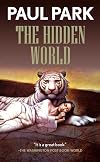
Right, then, the final volume in Park's quartet about Greater Roumania. Park has been compared to a lot of other writers over the course of these four books, but one other springs to mind: Michael Swanwick, specifically his anti-pastoral fairy tale, The Iron Dragon's Daughter. These stories share a common approach to fantasy in which they refuse to deliver or indulge in the traditional consolations of the fantasy genre. So when Miranda turns out to be a Princess in a magical world where she show more wields a terrifying magical power and has friends and allies and dangerous enemies, none of these things count as a blessing. Her home is destroyed, revealed as a magical illusion then ripped away, taking her adoptive parents with her. Her royal blood marks her out not as a figure of real power and influence but at best a ragged guerilla figurehead, or a political chess-piece in a morally and politically complex world in the throes of burgeoning modernity where royalty is rapidly becoming an empty symbol of the past.
Her powers work best in the Hidden World where she is the White Tyger, but even this is mostly the power to kill and destroy dispassionately, and as she realises herself, killing a few bad people here and there solves very few of the larger problems her country is confronted with. Her friends are altered and changed in profound and subtle ways. Her allies are powerless, superstitious gypsies or secretive, untrustworthy, jealous old women with ambiguous agendas. Her enemies include everyone powerful enough to damage or destroy her country. There is no clear path or plan for her to follow, no easy way to make things better and save her home or her friends. She makes many mistakes at terrible costs. This is not the rousing tale of a plucky modern princess rallying the peasants of a Ruritanian backwoods against an evil pretender to the throne.
In The Hidden World her mistake is to have the tourmaline stolen by the ghost of the mad baroness, stranding Miranda in the hidden world and allowing the baroness to possess bodies, including hers, in the real world. Dreadful, increasingly mechanised trench warfare rages on the border against the Turks and the Russians and a madman and murderer rules in Budapest. Is there anything she can do to save herself, her friends and her country? Answers do not come easy, and the ending is sad, lonely and uncertain, but concludes the quartet in a deeply satisfying manner. The four books mark a brave, thoughtful, beautiful addition to the fantasy canon and I recommend them unreservedly. show less
Her powers work best in the Hidden World where she is the White Tyger, but even this is mostly the power to kill and destroy dispassionately, and as she realises herself, killing a few bad people here and there solves very few of the larger problems her country is confronted with. Her friends are altered and changed in profound and subtle ways. Her allies are powerless, superstitious gypsies or secretive, untrustworthy, jealous old women with ambiguous agendas. Her enemies include everyone powerful enough to damage or destroy her country. There is no clear path or plan for her to follow, no easy way to make things better and save her home or her friends. She makes many mistakes at terrible costs. This is not the rousing tale of a plucky modern princess rallying the peasants of a Ruritanian backwoods against an evil pretender to the throne.
In The Hidden World her mistake is to have the tourmaline stolen by the ghost of the mad baroness, stranding Miranda in the hidden world and allowing the baroness to possess bodies, including hers, in the real world. Dreadful, increasingly mechanised trench warfare rages on the border against the Turks and the Russians and a madman and murderer rules in Budapest. Is there anything she can do to save herself, her friends and her country? Answers do not come easy, and the ending is sad, lonely and uncertain, but concludes the quartet in a deeply satisfying manner. The four books mark a brave, thoughtful, beautiful addition to the fantasy canon and I recommend them unreservedly. show less

The final volume of four in Paul Park's Roumania series affords many outcomes and resolutions, but readers of the earlier books will not be surprised that it avoids a tidy ending. My Other Reader remarked my unusual facial expression while I was reading the antepenultimate chapter "The Exorcism," and I guess I really did find it sort of horrifying. A lot of characters die in these books, but given the nature of the magic here, their deaths in no way remove them as agents from the continuing show more story. Where a traditional fantasy might have its protagonist's aims clarified and streamlined over the course of its telling, this one just becomes more crowded with possible motivations and relationships.
As in what has come before, the characters here are highly imperfect, alluring, and surprising. Fascist strongman Victor Bocu steps into the limelight as a villain, and Chloe Adira with her household complicates Peter's story. The setting remains original and provocative. Its manifold European war draws on more advanced African technologies. The alchemical legacies of the conjurors Newton and Kepler guide the coven attempting to engineer national and international destinies.
The arc of the four books seems to be something like this: In A Princess of Roumania the three apparent teenagers are displaced from somewhere like our Massachusetts into the "real" world where Roumania is. In The Tourmaline, their "real" adult personalities are ascendant, and they become embroiled in the political and sorcerous intrigues of Roumania itself. In The White Tyger they acquire more confidence and begin to integrate their Masachusetts memories with their resumed life histories in Roumania, and that integration reaches its fruition in The Hidden World. The completion of the arc is very remote from a happily-ever-after, and the aims of these books clearly differ from most of what dresses as fantasy literature. show less
As in what has come before, the characters here are highly imperfect, alluring, and surprising. Fascist strongman Victor Bocu steps into the limelight as a villain, and Chloe Adira with her household complicates Peter's story. The setting remains original and provocative. Its manifold European war draws on more advanced African technologies. The alchemical legacies of the conjurors Newton and Kepler guide the coven attempting to engineer national and international destinies.
The arc of the four books seems to be something like this: In A Princess of Roumania the three apparent teenagers are displaced from somewhere like our Massachusetts into the "real" world where Roumania is. In The Tourmaline, their "real" adult personalities are ascendant, and they become embroiled in the political and sorcerous intrigues of Roumania itself. In The White Tyger they acquire more confidence and begin to integrate their Masachusetts memories with their resumed life histories in Roumania, and that integration reaches its fruition in The Hidden World. The completion of the arc is very remote from a happily-ever-after, and the aims of these books clearly differ from most of what dresses as fantasy literature. show less
Lists
Awards


You May Also Like


Associated Authors
Statistics
- Works
- 33
- Also by
- 29
- Members
- 2,371
- Popularity
- #10,827
- Rating
- 3.4
- Reviews
- 71
- ISBNs
- 64
- Languages
- 2
- Favorited
- 6