Set in the mid 1990s – someone “says there’s going to be an election soon and things can only get better” – this novel reunites the reader with all the main characters from Greig’s earlier book The Return of John Macnab and throws in two more here for good measure in the shape of Maori rugby player Leo Ngatara and Norwegian musician Inga Johanssen.
The plot has more of a thriller touch this time, centring round the genuineness of the Stone of Destiny. In her job as a journalist in Dumfries Kirsty Fowler meets Billy Mackay, an old man in his last days, who tells of his participation in the making of two replacement stones during the time the “original” was missing in 1950. This leads to designations such as fake fake as opposed to the real fake foisted on England’s Edward I and kept at Westminster ever since (until recently at least.) It is the whereabouts of Columba’s Pillow, the real crowning stone, hidden from Edward at the time and kept in the care of Moon Runners - whose guardianship is embodied in rings inscribed with runes (Moon rune-ers, you see, with only ever three extant at one time) - ever since that drives the plot. Mackay gifts Kirsty one such ring and thus unwittingly places her in danger at the hands of a ruthless intermediary calling himself Adamson who came to know of their existence via Inga’s brother Colin – and has a buyer for the real stone. The goings-on in uncovering the hiding places of the two fake fake stones and the show more original fake itself, take the characters to various parts of Scotland and even on an excursion to Norway.
All this gives Greig an opportunity to display his familiarity with the art of rock climbing and the music scene and to comment about Scots’ habit of revering their homeland, “‘Ye’d hae thought Scotland was Helen of Troy the way some folk sighed over her,’” even as seen through the eyes of foreigner Inga, “Strange place to inspire such belonging.” There are wider ruminations too. We are told an ancient Sumerian manuscript bemoans the times as violent, chaotic and strange, the young don’t speak properly, the gods are unrespected, etc, etc. – which only means the writer was elderly. And Leo Ngatara comes to reflect bleakly that, “None of us will be all right. Mountains, sunsets, good times, bad times, mates, children – nothing endures. Nothing. No exceptions.”
Greig is never less than an insightful novelist but here the thriller plot sits a little uneasily with his gifts for illuminating character, describing landscape and revealing the complexities of human affairs. show less
The plot has more of a thriller touch this time, centring round the genuineness of the Stone of Destiny. In her job as a journalist in Dumfries Kirsty Fowler meets Billy Mackay, an old man in his last days, who tells of his participation in the making of two replacement stones during the time the “original” was missing in 1950. This leads to designations such as fake fake as opposed to the real fake foisted on England’s Edward I and kept at Westminster ever since (until recently at least.) It is the whereabouts of Columba’s Pillow, the real crowning stone, hidden from Edward at the time and kept in the care of Moon Runners - whose guardianship is embodied in rings inscribed with runes (Moon rune-ers, you see, with only ever three extant at one time) - ever since that drives the plot. Mackay gifts Kirsty one such ring and thus unwittingly places her in danger at the hands of a ruthless intermediary calling himself Adamson who came to know of their existence via Inga’s brother Colin – and has a buyer for the real stone. The goings-on in uncovering the hiding places of the two fake fake stones and the show more original fake itself, take the characters to various parts of Scotland and even on an excursion to Norway.
All this gives Greig an opportunity to display his familiarity with the art of rock climbing and the music scene and to comment about Scots’ habit of revering their homeland, “‘Ye’d hae thought Scotland was Helen of Troy the way some folk sighed over her,’” even as seen through the eyes of foreigner Inga, “Strange place to inspire such belonging.” There are wider ruminations too. We are told an ancient Sumerian manuscript bemoans the times as violent, chaotic and strange, the young don’t speak properly, the gods are unrespected, etc, etc. – which only means the writer was elderly. And Leo Ngatara comes to reflect bleakly that, “None of us will be all right. Mountains, sunsets, good times, bad times, mates, children – nothing endures. Nothing. No exceptions.”
Greig is never less than an insightful novelist but here the thriller plot sits a little uneasily with his gifts for illuminating character, describing landscape and revealing the complexities of human affairs. show less
In any case in his introduction to this collection its publisher Ian Whates relays “stalwart of the British SF community” and former owner of Birmingham’s much-lamented Andromeda bookshop Rog Peyton’s opinion that Brown is our greatest living SF writer - as much for the author’s concentration on the humans in his stories as for anything else. Whatever, Strange Visitors contains an excellent body of stories displaying Brown’s range and it is striking here how often those which reflect humanity and its foibles most directly are the most successful and satisfying. Many of Brown’s perennial concerns are evident (religion surprisingly excepted) but their handling shows Brown’s assurance as a writer.
In Life Beyond...... Brown pays effective homage to SF writer Clifford D Simak. An ageing writer faced with losing his recently orphaned grand-daughter to an adoptive family has a close encounter with a book-collecting alien.
Steps Along the Way is set thirty thousand years into the future where humans are effectively immortal, have spread all through the galaxy and can Enstate and Enable people from history.
Brown’s affection for the work of Michael G Coney shines through The Sins of Edward Veron where the titular Veron is an artist who has lost his ability to produce good work. Then an alien art collector from Mintaka V arrives at Sapphire Oasis. (SPOILER ALERT. There is a slight flaw in this story in that Veron seems to have been able to leave the Oasis the day show more after his wife died without engendering either suspicion or investigation.)
In Myths of the Martian Future Olinka and Tem, two crab-like cave dwellers on a far-future Mars, set out on their initiation rite on the surface. What they meet encompasses both the past of their species and a description of its future. There is a certain stiltedness in the narration, characteristic of all stories such as this.
The Scribe of Betelgeuse V is a tongue-in-cheek account of the invasion of Earth by octopods from Betelgeuse V, whose first act is to cause an episode of mass writers’ block. It manages to name check a couple of Brown’s writer friends as well as poke fun at the publishing industry.
The Rest Is Speculation. Two and a half billion years into the future representatives of every sentient race that ever existed on Earth are gathered together by the Effectuators to witness its last days.
The Tragic Affair of the Martian Ambassador is a Sherlock Holmes pastiche wherein the great detective is invited to investigate the murder of the Martian ambassador at Mars’s London embassy, where the two human employees are a certain Herbert Wells and Miss Rebecca West.
In Bukowski on Mars, With Beer Brown imagines how Charles Bukowski would cope after being brought back to life – along with all the greats – on a future Mars. The beer helps.
People of Planet Earth is an alien invasion story where the method of body snatching is exceedingly unusual, to say the least.
In P.O.O.C.H. Michael is punished for electronically stealing from the rich (but relaying the proceeds to charity) by being given his own Personal Omni-Operational Correction Hound; a robot which mimics a real dog in all respects. show less
In Life Beyond...... Brown pays effective homage to SF writer Clifford D Simak. An ageing writer faced with losing his recently orphaned grand-daughter to an adoptive family has a close encounter with a book-collecting alien.
Steps Along the Way is set thirty thousand years into the future where humans are effectively immortal, have spread all through the galaxy and can Enstate and Enable people from history.
Brown’s affection for the work of Michael G Coney shines through The Sins of Edward Veron where the titular Veron is an artist who has lost his ability to produce good work. Then an alien art collector from Mintaka V arrives at Sapphire Oasis. (SPOILER ALERT. There is a slight flaw in this story in that Veron seems to have been able to leave the Oasis the day show more after his wife died without engendering either suspicion or investigation.)
In Myths of the Martian Future Olinka and Tem, two crab-like cave dwellers on a far-future Mars, set out on their initiation rite on the surface. What they meet encompasses both the past of their species and a description of its future. There is a certain stiltedness in the narration, characteristic of all stories such as this.
The Scribe of Betelgeuse V is a tongue-in-cheek account of the invasion of Earth by octopods from Betelgeuse V, whose first act is to cause an episode of mass writers’ block. It manages to name check a couple of Brown’s writer friends as well as poke fun at the publishing industry.
The Rest Is Speculation. Two and a half billion years into the future representatives of every sentient race that ever existed on Earth are gathered together by the Effectuators to witness its last days.
The Tragic Affair of the Martian Ambassador is a Sherlock Holmes pastiche wherein the great detective is invited to investigate the murder of the Martian ambassador at Mars’s London embassy, where the two human employees are a certain Herbert Wells and Miss Rebecca West.
In Bukowski on Mars, With Beer Brown imagines how Charles Bukowski would cope after being brought back to life – along with all the greats – on a future Mars. The beer helps.
People of Planet Earth is an alien invasion story where the method of body snatching is exceedingly unusual, to say the least.
In P.O.O.C.H. Michael is punished for electronically stealing from the rich (but relaying the proceeds to charity) by being given his own Personal Omni-Operational Correction Hound; a robot which mimics a real dog in all respects. show less

“If you are easily offended, consign this book to the flames immediately, or return it to the shop from which you stole it.” So begins The Stornoway Way, but not the novel of that name contained within this book. The conceit is that the embedded novel is a manuscript sent to our author Kevin MacNeil by one R Stornoway (yes, the schoolboy joke is acknowledged) whose real identity - the town of the surname being one where everyone knows everyone else; and their business – MacNeil has sworn to keep secret. I doubt we are supposed to be taken in by any of this. In any case there is not really too much to be offended by; except I suppose if you are one of those determined killjoys for whom “the Old Testament was a good start, but it didn’t go far enough” with which the Western Isles and Scotland generally have historically been saddled.
The cover is a work of genius, by the way, invoking both Whisky Galore and the island obsession, also shared by much of the mainland, with alcohol. The cartoon figure, blotto, with bottle still in hand, is a particularly apposite touch. Unlike in Compton MacKenzie’s book though, the dark side of alcohol dependency gets an airing here. In case this sounds gloomy I should say that in many ways The Stornoway Way is an amusing book, but while at times comedic it is never light, and always serious. (The recitation entitled “The Neighbours We Could Have Had” might not find favour in southern parts of these islands though.) And it has show more copious footnotes!!!! Who doesn’t love footnotes? Admittedly a lot of these are translations of various Gaelic terms – some of which aren’t even in the text - but better footnotes than a glossary. In them for example we find the Gaelic Sasanach has no pejorative connotations, unlike its Scots/English borrowing.
Before the internal novel begins we are presented with a map of Scotland upside down compared to the usual occidentation*. This helps to illustrate the point that in Stornoway, “We do not live in the back of beyond, we live in the very heart of beyond, “Our blood relatives in Scandinavia to the left, our blood relatives in Ireland to the right.” Though “R Stornoway” perhaps overdoes it when he says, “The Western Islander’s response to our diminishing way of life is that of the oppressed the world over, from Native American to Australian aborigine: a powerful urge to drink oneself underground.” The Western Islanders - and the Scots - have been drinking themselves underground for centuries.
When the novel proper starts, poverty has brought would-be artist “R Stornoway” back to Lewis and his childhood home, which he had been avid to leave as soon as possible. From there we range over various incidents from his life, his first experience with alcohol being a seminal moment. In all of these, even his relationship with Eva, a student from Hungary, alcohol plays a significant part - as it does for Stornoway the town.
An example of the narrator’s sardonic humour occurs when he is accused of being uncaring - and an alky. He replies, ‘Some people will believe anything if you tell them it’s a rumour.’
His existential crisis comes when he wakes up beside a beautiful woman and, due to the booze, cannot remember who she is, how she came to be there, nor exactly what happened between them the night before. His decision to fetch the ingredients for breakfast without waking her backfires when he returns to find her gone. At this point there is still a substantial part of the novel to come though. Eventually he comes to terms with himself and his relationship with alcohol. “Drink doesn’t give you a better sense of who you are, it gives you a nonsense of who you are.”
The latter part of the novel has a more downbeat nature than the delicious early chapters, concomitant with the cumulative effects of alcohol on the individual personality, but even with that The Stornoway Way is overall brilliant stuff.
*One of MacNeil’s coinages, see also gloominous clouds, muselicious. show less
The cover is a work of genius, by the way, invoking both Whisky Galore and the island obsession, also shared by much of the mainland, with alcohol. The cartoon figure, blotto, with bottle still in hand, is a particularly apposite touch. Unlike in Compton MacKenzie’s book though, the dark side of alcohol dependency gets an airing here. In case this sounds gloomy I should say that in many ways The Stornoway Way is an amusing book, but while at times comedic it is never light, and always serious. (The recitation entitled “The Neighbours We Could Have Had” might not find favour in southern parts of these islands though.) And it has show more copious footnotes!!!! Who doesn’t love footnotes? Admittedly a lot of these are translations of various Gaelic terms – some of which aren’t even in the text - but better footnotes than a glossary. In them for example we find the Gaelic Sasanach has no pejorative connotations, unlike its Scots/English borrowing.
Before the internal novel begins we are presented with a map of Scotland upside down compared to the usual occidentation*. This helps to illustrate the point that in Stornoway, “We do not live in the back of beyond, we live in the very heart of beyond, “Our blood relatives in Scandinavia to the left, our blood relatives in Ireland to the right.” Though “R Stornoway” perhaps overdoes it when he says, “The Western Islander’s response to our diminishing way of life is that of the oppressed the world over, from Native American to Australian aborigine: a powerful urge to drink oneself underground.” The Western Islanders - and the Scots - have been drinking themselves underground for centuries.
When the novel proper starts, poverty has brought would-be artist “R Stornoway” back to Lewis and his childhood home, which he had been avid to leave as soon as possible. From there we range over various incidents from his life, his first experience with alcohol being a seminal moment. In all of these, even his relationship with Eva, a student from Hungary, alcohol plays a significant part - as it does for Stornoway the town.
An example of the narrator’s sardonic humour occurs when he is accused of being uncaring - and an alky. He replies, ‘Some people will believe anything if you tell them it’s a rumour.’
His existential crisis comes when he wakes up beside a beautiful woman and, due to the booze, cannot remember who she is, how she came to be there, nor exactly what happened between them the night before. His decision to fetch the ingredients for breakfast without waking her backfires when he returns to find her gone. At this point there is still a substantial part of the novel to come though. Eventually he comes to terms with himself and his relationship with alcohol. “Drink doesn’t give you a better sense of who you are, it gives you a nonsense of who you are.”
The latter part of the novel has a more downbeat nature than the delicious early chapters, concomitant with the cumulative effects of alcohol on the individual personality, but even with that The Stornoway Way is overall brilliant stuff.
*One of MacNeil’s coinages, see also gloominous clouds, muselicious. show less

cover" />
This is an account, initially written for his friends, of a trip Roberts took to Ireland but which he later used as background for his BSFA Award winning novel Gráinne.
It was Roberts’s first time flying and he was nervous but was equally astonished at the quickness of the flight. His trip came before the Celtic Tiger days and Roberts contrasts Ireland - mostly favourably - with the England he had travelled from but does note encounters with beggars. The politeness and hospitality he met with were initially strange to him and he describes navigating Dublin’s streets in a hired car as a daunting task. On only one occasion did he encounter a lack of consideration, when a man in a pub questioned him about the North.
His comparison of real Irish pubs to those in England is very favourable, “smarter and cleaner, and the service leaves us standing.” The addendum, “Try asking for tea in your local English boozer; then count the number of times you bounce before you land in the street,” is perhaps no longer so true. Even so he says about English attitudes to Ireland, “bigotry is time saving; you can form opinions without troubling to get the facts.” It was the ancient monuments he was mainly there to visit though (Tara of the Kings etc.)
One of the things that struck me most about this account was that almost without exception every female (women and girls) Roberts mentions is described as either pretty or beautiful; he even goes so far as to apologise in show more his head and in print to the author of Molly Malone for assuming he had described Dublin’s girls as “so pretty” merely for the rhyme. Roberts also has a fascination for describing their eyes.
At his trip’s end he had a curious sensation that, “I was led, conducted, given as much at any one time as I could handle. Shown carefully what someone, or some thing, wished me to see,” and conceived “a debt to Eirann, and its tutelary deity”, a debt which became Gráinne.
I rarely read travel books and did so here only for completeness – though there is still some of Roberts’s œuvre I have yet to catch up with. But good writing is good writing wherever you meet it and Roberts was a good writer. Better than good. show less
This is an account, initially written for his friends, of a trip Roberts took to Ireland but which he later used as background for his BSFA Award winning novel Gráinne.
It was Roberts’s first time flying and he was nervous but was equally astonished at the quickness of the flight. His trip came before the Celtic Tiger days and Roberts contrasts Ireland - mostly favourably - with the England he had travelled from but does note encounters with beggars. The politeness and hospitality he met with were initially strange to him and he describes navigating Dublin’s streets in a hired car as a daunting task. On only one occasion did he encounter a lack of consideration, when a man in a pub questioned him about the North.
His comparison of real Irish pubs to those in England is very favourable, “smarter and cleaner, and the service leaves us standing.” The addendum, “Try asking for tea in your local English boozer; then count the number of times you bounce before you land in the street,” is perhaps no longer so true. Even so he says about English attitudes to Ireland, “bigotry is time saving; you can form opinions without troubling to get the facts.” It was the ancient monuments he was mainly there to visit though (Tara of the Kings etc.)
One of the things that struck me most about this account was that almost without exception every female (women and girls) Roberts mentions is described as either pretty or beautiful; he even goes so far as to apologise in show more his head and in print to the author of Molly Malone for assuming he had described Dublin’s girls as “so pretty” merely for the rhyme. Roberts also has a fascination for describing their eyes.
At his trip’s end he had a curious sensation that, “I was led, conducted, given as much at any one time as I could handle. Shown carefully what someone, or some thing, wished me to see,” and conceived “a debt to Eirann, and its tutelary deity”, a debt which became Gráinne.
I rarely read travel books and did so here only for completeness – though there is still some of Roberts’s œuvre I have yet to catch up with. But good writing is good writing wherever you meet it and Roberts was a good writer. Better than good. show less

This is Robinson’s take on the generation starship novel, wherein he makes it clear what a risky and unlikely undertaking such an adventure would be. The ship contains a microcosm of Earth habitats spread through various biomes in an attempt to provide the future colonists with the wherewithal to survive on landfall and subsequently thrive.
We begin with the generation born just before arrival at the destination (Tau Ceti). The viewpoint is that of Freya, a seemingly cognitively impaired child (but really only mathematically) and whose deficiencies are symptomatic of the ship’s growing imbalances. Her mother Devi is the ship’s troubleshooter, interrogating and solving problems as they arise but increasingly frustrated at the finite nature of her resources.
The book has an odd structure, topped and tailed by sections focusing on Freya but with the five interior sections ranging more widely. The occasional odd word choice and sentence structure are clarified when it becomes obvious that the (five section long) middle part of the book is being narrated by the ship’s quantum computer AI. Comments such as, “How to decide how to sequence information in a narrative account? ... sentences linear, reality synchronous. Devise a prioritizing algorithm, if possible,” give some of the flavour here.
The target world, Aurora whose name is given also to the ship, orbits gas giant Planet E. The colonists begin to set about making it habitable - a very long-term project - but a show more setback when one is injured, her sealed suit punctured, which leads to the death of not only her but also those with whom she shared the tented living space they’d set up, means abandonment. Those who had remained on the ship are evenly split between “stayers” - willing to try another candidate moon in the system - and “backers” - those who want to return to Earth. Conflict ensues – a rather depressing authorial conclusion here; you might have thought people would avoid that in such a situation. The novel then follows the backers on their long trip home alleviated by the somewhat fortuitous (for Robinson’s purposes; deus ex machina thy name is god) development of hibernation technology on Earth (in radio contact with the colonists throughout) in the interim.
Many passages are given over to Ship pondering its liability to succumb to recursive programmes and what is known as the halting problem plus other philosophical conundrums to do with language and existence, including a discourse on metaphor and numerous references to the presence of metaphors when they occur in the narrative thereafter. All of which is interesting enough at an abstract level but is no more than filler. Yet Robinson appears more interested in this and in the nuts and bolts of interstellar travel, its inevitable flaws, its lack of controllability, than in any of the humans he is depicting.
Some have been intrigued by the proposition that the most interesting character in the book is an AI. While that is true it is only because the so-called humans are little more than ciphers. Moreover it seemed at one point that the whole thing was devised solely to allow Robinson to make a pun on the phrase “halting problem”. Ship’s late conclusion that, “Love gives meaning,” is not borne out by any of the preceding prose.
File under “worthy, but no more”. show less
We begin with the generation born just before arrival at the destination (Tau Ceti). The viewpoint is that of Freya, a seemingly cognitively impaired child (but really only mathematically) and whose deficiencies are symptomatic of the ship’s growing imbalances. Her mother Devi is the ship’s troubleshooter, interrogating and solving problems as they arise but increasingly frustrated at the finite nature of her resources.
The book has an odd structure, topped and tailed by sections focusing on Freya but with the five interior sections ranging more widely. The occasional odd word choice and sentence structure are clarified when it becomes obvious that the (five section long) middle part of the book is being narrated by the ship’s quantum computer AI. Comments such as, “How to decide how to sequence information in a narrative account? ... sentences linear, reality synchronous. Devise a prioritizing algorithm, if possible,” give some of the flavour here.
The target world, Aurora whose name is given also to the ship, orbits gas giant Planet E. The colonists begin to set about making it habitable - a very long-term project - but a show more setback when one is injured, her sealed suit punctured, which leads to the death of not only her but also those with whom she shared the tented living space they’d set up, means abandonment. Those who had remained on the ship are evenly split between “stayers” - willing to try another candidate moon in the system - and “backers” - those who want to return to Earth. Conflict ensues – a rather depressing authorial conclusion here; you might have thought people would avoid that in such a situation. The novel then follows the backers on their long trip home alleviated by the somewhat fortuitous (for Robinson’s purposes; deus ex machina thy name is god) development of hibernation technology on Earth (in radio contact with the colonists throughout) in the interim.
Many passages are given over to Ship pondering its liability to succumb to recursive programmes and what is known as the halting problem plus other philosophical conundrums to do with language and existence, including a discourse on metaphor and numerous references to the presence of metaphors when they occur in the narrative thereafter. All of which is interesting enough at an abstract level but is no more than filler. Yet Robinson appears more interested in this and in the nuts and bolts of interstellar travel, its inevitable flaws, its lack of controllability, than in any of the humans he is depicting.
Some have been intrigued by the proposition that the most interesting character in the book is an AI. While that is true it is only because the so-called humans are little more than ciphers. Moreover it seemed at one point that the whole thing was devised solely to allow Robinson to make a pun on the phrase “halting problem”. Ship’s late conclusion that, “Love gives meaning,” is not borne out by any of the preceding prose.
File under “worthy, but no more”. show less
This is the story of Gudrid Thorbjarnardóttir, who sailed beyond the end of the world, gave birth to the first European to be born in the Americas beyond Greenland, voyaged to the court of the King of Norway and made a pilgrimage to Rome. Her tale is so extraordinary that I was irresistibly drawn to the parallel of Poilar Crookleg, whose first sentence I have echoed above.
Expanding on her source material in the Icelandic sagas, Elphinstone in The Sea Road has Gudrid’s story framed by a Praefatio and Postscriptum written by Icelandic monk Asgar Asleifarsson who is - at the behest of Cardinal Hildebrand for the sake of some ephemeral Vatican political intrigue - taking down the memories of a Gudrid now a grandmother. On her dark (to Icelanders) appearance - though in Italy she is fair - she says, “Now it makes no difference. Old women are the same the world over.” The text is mostly Gudrid’s as supposedly written down by Asgar but there are occasional scenes observed in the third person and rendered in italics.
Elphinstone’s handling of her tale is exquisite. The characters live on the page and the relationship between Gudrid and Asgar is deftly portrayed. Despite his replies to her never being transcribed we still get insights into his thoughts and feelings. There is a prefatory list of principal characters which is unnecessary as there is never any difficulty in distinguishing them.
Gudrid was born just after Christianity had come to Iceland and on the death of show more her mother was fostered out by her father to his sister’s home. She herself was baptised when she was fourteen. There is tension between the old religion and the new in Iceland and Greenland both and some in Gudrid herself. Her first crisis comes when she is asked as a young girl to help a witch (this is the word used in the text) by singing along with the old songs.
Her father Thorbjorn, a friend of Eirik Raudi (Eric the Red) had always hankered after adventure and finally undertakes the voyage to Greenland taking Gudrid with him. Though of course the winters are harsh, through Asgar Gudrid tells us that “Eirik’s land is better than any she saw till she went to Norway” and at least till the time she left, “There have been no killings in the Green Land.” Leif Eiriksson, Raudi’s son, has by this time discovered Vinland. Gudrid might have been married to him but for his dalliance with an earl’s daughter in Ireland. Instead she marries another of Raudi’s sons, Thorstein, with whom she made her first voyage to Vinland, but he falls sick one winter in Greenland and dies along with Grumhild, the wife of their host Thorstein the Black. The two survivors spend five months in the same hut with the dead bodies, haunted by their ghosts. “In that place the dead watched everything,” she tells Asgar. “All that winter we were outside the boundaries of this world of yours,” and, “You look as if my callous attitude shocked you, and yet you’d not be shocked at all if I were a man and told you I’d wiped out a whole settlement in blood feud.” Spirits were never very far away in Gudrid’s world. “The launching of a ship is no place for new gods.” It is with a second husband, Thorfinn Harlsefni, come to the Green Land to make profit, that she again sails to Vinland and this time beyond.
Among Gudrid’s many insights we have, “You think there is a pattern to the way people behave... But I have never got to know any household well, when I didn’t find out quite soon that they don’t keep to the pattern..... the pattern doesn’t exist. I’ve never met a family that behaved normally. Have you?” which may be a comment on Tolstoy’s dictum about happy families. Then we have, “Girls are much harder to deal with generally but as far as I can make out boys of that age never think about anything except sex.” Make that boys of any age perhaps.
The Sea Road is a wonderful reminder that the Dark Age world was not as parochial as we might believe; a magnificently told tale about an extraordinary woman and extraordinary times, yet times which to Gudrid herself were unexceptional. show less
Expanding on her source material in the Icelandic sagas, Elphinstone in The Sea Road has Gudrid’s story framed by a Praefatio and Postscriptum written by Icelandic monk Asgar Asleifarsson who is - at the behest of Cardinal Hildebrand for the sake of some ephemeral Vatican political intrigue - taking down the memories of a Gudrid now a grandmother. On her dark (to Icelanders) appearance - though in Italy she is fair - she says, “Now it makes no difference. Old women are the same the world over.” The text is mostly Gudrid’s as supposedly written down by Asgar but there are occasional scenes observed in the third person and rendered in italics.
Elphinstone’s handling of her tale is exquisite. The characters live on the page and the relationship between Gudrid and Asgar is deftly portrayed. Despite his replies to her never being transcribed we still get insights into his thoughts and feelings. There is a prefatory list of principal characters which is unnecessary as there is never any difficulty in distinguishing them.
Gudrid was born just after Christianity had come to Iceland and on the death of show more her mother was fostered out by her father to his sister’s home. She herself was baptised when she was fourteen. There is tension between the old religion and the new in Iceland and Greenland both and some in Gudrid herself. Her first crisis comes when she is asked as a young girl to help a witch (this is the word used in the text) by singing along with the old songs.
Her father Thorbjorn, a friend of Eirik Raudi (Eric the Red) had always hankered after adventure and finally undertakes the voyage to Greenland taking Gudrid with him. Though of course the winters are harsh, through Asgar Gudrid tells us that “Eirik’s land is better than any she saw till she went to Norway” and at least till the time she left, “There have been no killings in the Green Land.” Leif Eiriksson, Raudi’s son, has by this time discovered Vinland. Gudrid might have been married to him but for his dalliance with an earl’s daughter in Ireland. Instead she marries another of Raudi’s sons, Thorstein, with whom she made her first voyage to Vinland, but he falls sick one winter in Greenland and dies along with Grumhild, the wife of their host Thorstein the Black. The two survivors spend five months in the same hut with the dead bodies, haunted by their ghosts. “In that place the dead watched everything,” she tells Asgar. “All that winter we were outside the boundaries of this world of yours,” and, “You look as if my callous attitude shocked you, and yet you’d not be shocked at all if I were a man and told you I’d wiped out a whole settlement in blood feud.” Spirits were never very far away in Gudrid’s world. “The launching of a ship is no place for new gods.” It is with a second husband, Thorfinn Harlsefni, come to the Green Land to make profit, that she again sails to Vinland and this time beyond.
Among Gudrid’s many insights we have, “You think there is a pattern to the way people behave... But I have never got to know any household well, when I didn’t find out quite soon that they don’t keep to the pattern..... the pattern doesn’t exist. I’ve never met a family that behaved normally. Have you?” which may be a comment on Tolstoy’s dictum about happy families. Then we have, “Girls are much harder to deal with generally but as far as I can make out boys of that age never think about anything except sex.” Make that boys of any age perhaps.
The Sea Road is a wonderful reminder that the Dark Age world was not as parochial as we might believe; a magnificently told tale about an extraordinary woman and extraordinary times, yet times which to Gudrid herself were unexceptional. show less

Complete with cover flap comments from David Bowie and Gore Vidal attesting to its subject’s importance this is an account of forgotten US artist Nathwell ‘Nat’ Tate, whose final artistic act was to burn as many of his works as he had managed to lay hands on (“perhaps a dozen survive”) before committing suicide by jumping off the Staten Island Ferry. The usual biographical conditions apply, obscure origins, father unknown, mother died young, adoption by her rich employer (emphatically not Tate’s father but an avid admirer and buyer of his work,) an influential teacher at Art School, chance viewing of his work by the founder of a gallery, socialising with other artists, the development of his style - aslant to that of his contemporaries and details of which Boyd provides - descent into alcohol, meetings with Picasso and Braque, disillusionment. The text is interspersed with photographs of three of the surviving paintings and various important stages of Tate’s life, four of which depict Tate but in only one is the adult artist the sole subject. Boyd gives us a convincing, if short, portrait of an artist and his life.
Yet the story of Tate is of course entirely fictitious. Not fictional, such biographies imagining the circumstances and lives of real people abound, but fictitious. Tate never existed. He is a total invention by Boyd.
On the book’s publication in 1998 the cover picture, containing as it does a cropped version of that black and white photograph of show more the adult “Tate” obviously photoshopped over a coloured one of New York, might have provided a clue to those not in on the joke but anyone at all familiar with Boyd’s work coming to it post hoc would be immediately aware of its confected nature on its first mention of Logan Mountstuart, protagonist of the author’s 2002 novel Any Human Heart. Boyd would also employ photographs to an equally verisimilituding end within the text of his 2016 novel Sweet Caress.
A hint of Boyd’s purpose in writing this book (apart from sending up the hagiographic artistic biography of the forgotten genius) may be gleaned from the passage where there are speculations on possible reasons for “Tate”’s destruction of his work and his suicide. “Tate was one of those rare artists who did not need, and did not seek, the transformation of his painting into a valuable commodity to be bought and sold on the whim of a market and its marketeers. He had seen the future and it stank.” show less
Yet the story of Tate is of course entirely fictitious. Not fictional, such biographies imagining the circumstances and lives of real people abound, but fictitious. Tate never existed. He is a total invention by Boyd.
On the book’s publication in 1998 the cover picture, containing as it does a cropped version of that black and white photograph of show more the adult “Tate” obviously photoshopped over a coloured one of New York, might have provided a clue to those not in on the joke but anyone at all familiar with Boyd’s work coming to it post hoc would be immediately aware of its confected nature on its first mention of Logan Mountstuart, protagonist of the author’s 2002 novel Any Human Heart. Boyd would also employ photographs to an equally verisimilituding end within the text of his 2016 novel Sweet Caress.
A hint of Boyd’s purpose in writing this book (apart from sending up the hagiographic artistic biography of the forgotten genius) may be gleaned from the passage where there are speculations on possible reasons for “Tate”’s destruction of his work and his suicide. “Tate was one of those rare artists who did not need, and did not seek, the transformation of his painting into a valuable commodity to be bought and sold on the whim of a market and its marketeers. He had seen the future and it stank.” show less

The novel is true to its sub-title. The first eight parts are all narrated in the first person from the respective viewpoints of a brain-washed cult member, perpetrator of a gas attack in a Japanese subway (in thrall to His Serendipity); a young half-Korean worker in a Tokyo shop selling jazz records; a compromised English banker in Hong Kong; a woman whose misfortune it was to live in China through most of the Twentieth Century; a mind-dwelling entity who can transmigrate from person to person by touch; a gallery attendant in the Hermitage, St Petersburg, who is an agent of an art-stealing syndicate; a London-dwelling, womanising ghostwriter; a female Irish physicist with the key to making atomic weapons worthless; and to round off we have transcripts from the broadcasts of Night Train FM, 97.8 ‘til late. The last two are awfully familiar but I can’t put my finger on from where (beyond the section set in Ireland in the same author’s The Bone Clocks.)
At first the connections between the parts seem tenuous, that between one and two is a misplaced phone call, between two and three seems to be a reference to the couple embarking on a love affair in part two, but gradually, the more sections come into play, the more resonances between them build up. Still, the Queen Anne chair mentioned in Hong Kong and a biography of His Serendipity seem lobbed into the London section when they arrive, gratuitous intrusions; the Music of Chance is the name of the ghostwriter’s band show more but also occurs as a phrase in a later section. Each part, though, is wonderfully written, suspending disbelief is never difficult - except in the case of the transmigrating mind entity, an interpolation of the fantastic which seems at odds with the realistic tone of the other parts. But then we find the fulcrum on which the novel comes to turn is a process called quantum cognition. This is not merely smuggling quantum physics into the literary landscape but making it the book’s focus - a piece of bravery (or potential folly) in a first novel which almost makes the previous mind-hopping seem mundane. “Evolution and history are the bagatelle of particle waves,” is not the sort of comparison common in literary texts.
Asides like, “For a moment I had an odd sensation of being in a story that someone was writing,” or “I added ‘writers’ to my list of people not to trust. They make everything up,” is perhaps over-egging the pudding, however. “Humans live in a pit of cheating, exploiting, hurting, incarcerating. Every time, the species wastes some part of what it could be. This waste is poisonous,” is a pessimistic view of humanity. The last bit is always worth repeating, though.
The pessimism is carried on by phrases like, “‘Loving somebody’ means ‘wanting something’. Love makes people do selfish, moronic, cruel and inhumane things,” but “‘womanisers are victims – unable to communicate with women any other way. They either never knew their mother or never had a good relationship with her,’” is more compassionate. The killer line follows as the womaniser is told, ‘I don’t quite know what you want from us. But it’s something to do with approval.’”
At one point one of the narrators says, “Italians give their cities sexes.... London’s middle-aged and male, respectably married but secretly gay.” I suspect all cities are secretly gay. “The USA is even crazier than the rest of humanity,” is either a prescient thesis or one now in the process of hard testing.
Ghosts, of memories and of sentience, begin to permeate the book. “Memories are their own descendants masquerading as the ancestors of the present,” while, “The act of memory is an act of ghostwriting..... We all think we’re in control of our own lives, but really they’re pre-ghostwritten by forces around us,” which leads to, “The real drag about being a ghostwriter is you never get to write anything beautiful.” Pessimism again.
But, “Technology is repeatable miracles.” That is the age in which we live.
I read in a recent(ish) review (of Slade House?) the opinion that Ghostwritten is still the best Mitchell has done. Not for me, of the ones I have read that would be The Thousand Autumns of Jacob de Zoet but in Ghostwritten I found the intrusion of the fantastical elements took away from the whole. Perhaps if they had been fully present from the start - part one is in the viewpoint of a delusion sufferer, true, but it is only the later parts which suggest it may not be a delusion - I would have felt differently, but I suppose in that case Mitchell might not have found a publisher. It’s brilliantly written and the characterisation is superb, but paradoxically, I thought Ghostwritten came to something less than the sum of its parts. show less
At first the connections between the parts seem tenuous, that between one and two is a misplaced phone call, between two and three seems to be a reference to the couple embarking on a love affair in part two, but gradually, the more sections come into play, the more resonances between them build up. Still, the Queen Anne chair mentioned in Hong Kong and a biography of His Serendipity seem lobbed into the London section when they arrive, gratuitous intrusions; the Music of Chance is the name of the ghostwriter’s band show more but also occurs as a phrase in a later section. Each part, though, is wonderfully written, suspending disbelief is never difficult - except in the case of the transmigrating mind entity, an interpolation of the fantastic which seems at odds with the realistic tone of the other parts. But then we find the fulcrum on which the novel comes to turn is a process called quantum cognition. This is not merely smuggling quantum physics into the literary landscape but making it the book’s focus - a piece of bravery (or potential folly) in a first novel which almost makes the previous mind-hopping seem mundane. “Evolution and history are the bagatelle of particle waves,” is not the sort of comparison common in literary texts.
Asides like, “For a moment I had an odd sensation of being in a story that someone was writing,” or “I added ‘writers’ to my list of people not to trust. They make everything up,” is perhaps over-egging the pudding, however. “Humans live in a pit of cheating, exploiting, hurting, incarcerating. Every time, the species wastes some part of what it could be. This waste is poisonous,” is a pessimistic view of humanity. The last bit is always worth repeating, though.
The pessimism is carried on by phrases like, “‘Loving somebody’ means ‘wanting something’. Love makes people do selfish, moronic, cruel and inhumane things,” but “‘womanisers are victims – unable to communicate with women any other way. They either never knew their mother or never had a good relationship with her,’” is more compassionate. The killer line follows as the womaniser is told, ‘I don’t quite know what you want from us. But it’s something to do with approval.’”
At one point one of the narrators says, “Italians give their cities sexes.... London’s middle-aged and male, respectably married but secretly gay.” I suspect all cities are secretly gay. “The USA is even crazier than the rest of humanity,” is either a prescient thesis or one now in the process of hard testing.
Ghosts, of memories and of sentience, begin to permeate the book. “Memories are their own descendants masquerading as the ancestors of the present,” while, “The act of memory is an act of ghostwriting..... We all think we’re in control of our own lives, but really they’re pre-ghostwritten by forces around us,” which leads to, “The real drag about being a ghostwriter is you never get to write anything beautiful.” Pessimism again.
But, “Technology is repeatable miracles.” That is the age in which we live.
I read in a recent(ish) review (of Slade House?) the opinion that Ghostwritten is still the best Mitchell has done. Not for me, of the ones I have read that would be The Thousand Autumns of Jacob de Zoet but in Ghostwritten I found the intrusion of the fantastical elements took away from the whole. Perhaps if they had been fully present from the start - part one is in the viewpoint of a delusion sufferer, true, but it is only the later parts which suggest it may not be a delusion - I would have felt differently, but I suppose in that case Mitchell might not have found a publisher. It’s brilliantly written and the characterisation is superb, but paradoxically, I thought Ghostwritten came to something less than the sum of its parts. show less

The novel is set in 1747, the year following that of the Jacobite cause’s final downfall at Culloden. Its plot unfolds over two days at Gleneagles, seat of the Haldanes (and Mitchison’s ancestral home) but the backstories of both Kirstie (Haldane) Macintosh and her husband William of Borlum delve into the long shadow thrown by the 1715 rebellion and the now all but forgotten Glenshiel rising of 1719.
The Jacobite rebellions are an itch that Scottish writers were seemingly unable not to scratch. (That this is no longer self-evidently true is, perhaps, a measure of how times have changed.) Walter Scott arguably had an excuse when he kicked off the historical novel with Waverley, Culloden was only ‘sixty years since’ as his subtitle attested (though see my caveats in that post's Pedant's Corner,) but this book was first published in 1947 a full two hundred years after the last of those events. (Then again, consider Zhou En Lai’s remark about the ramifications of the French Revolution -though it seems he was slightly misunderstood.) It cannot be denied however that the defeat of Jacobitism cemented the Union (which was then tempered by the acquisition of Empire) and the changes it brought about altered the Highlands, and their relations with the Lowlands, for ever.
Mitchison herself provides copious, very readable, sometimes intriguing notes on her novel, covering incidental details of the Scotland in which the book is set, the history of the Union and its effects on show more Scotland, the evolution of grouse shooting and much more.
The main characters in The Bull Calves are Kirstie and William Macintosh who are making a visit to Kirstie’s childhood home at Gleneagles. William’s family had been “out” in 1715 and his land was confiscated as a result. William himself had a price on his head and fled to the American colonies. On his return he managed to regain his Highland lands but despite not joining in the ’45 his assumed Jacobite sympathies mean his in-laws regard him with some suspicion. In that same interim Kirstie had made an unwise marriage to a dour Minister with the typically unsympathetic attitude of his type to the miners in his Ayrshire parish. There were doubts about his death and she has confessed to William that she had indulged in what may have been witchcraft, something which he dismissed out of hand. An on-the-run Robert Strange, who had been contracted to design and engrave Bonnie Prince Charlie’s (never distributed) banknotes - and was one of the author’s great-great-great grandfathers! – turns up, whereon William and a Haldane nephew contriving to hide him in the attic. Lachlan Macintosh of Kyllachy, who had set his cap at Kirstie in the long ago and therefore holds a grudge against her and husband both, and now believes he has compromising information about William’s sojourn in America, also arrives, thus putting all the plot motors in place.
Mitchison’s characterisation is delightful, extending even to minor figures such as Phemie Reid, Kirstie’s childhood nursemaid, and Mrs Grizzie, the Gleneagles housekeeper.
On the treatment meted out to the Mcgregor clan one character says, “‘If evil is done to one man or woman they may be able to ... forgive their enemies. But if evil is done to a whole race of folk, they will be bound to do evil again.’” A more general, and still true, observation is that “...’those who are making the best living out of a country, they will be expressing their fine moral sentiments... But they will not be seeing the kind of a lie they are telling themselves..... they will believe that the present ordering of life was ordained of the Lord. Which is .... blasphemy.... But... (Highlanders) will do best when they are sharing, with everything held in common, the old way.’”
A flavour of the times is given by exchanges such as (between William of Borlum and Mungo, head of Gleneagles,) “‘It seemed to us that the Union with England was destroying Scotland. It had been bad enough with Queen Anne, but the new lot had no interest at all in Scotland, we were thought of as a county of England.’
‘Ach, yes,’ Mungo replied. ‘We found that down in Westminster, “Have we not bought the Scots and the right to tax them?”’
About the unequal conditions Scotland was subject to in the Union’s early days we have, “‘Our fisheries could compete with the bigger Dutch boats but the salt tax ruined them, our coal trade with Ireland suffered from a duty not put on English coal, our linen trade was attacked, for all it was our staple, ...they wouldna buy our timber if it would mean spending money on roads.’”
Of the Ayrshire miners Kirstie incidentally remarks, “‘They would even keep the Popish holidays, such as Christmas.’” And Mungo supplies us with the typically Lowland sentiment, “‘English or Highland, what’s about it? You canna be trusting either of the two of them, although they have different kind of villainies.’”
Many people may ignore the Notes but I would urge you not to as for me that was where a lot of the interest lay. In them Mitchison made a plea for Scottish children to be allowed to express themselves in spoken and written Scots of their own district. That plea is no longer unheeded though it took nigh on forty years to be so.
She says, “At that time, as now in Scotland, a married woman was known by her maiden name.” This perhaps became slightly less true in some of the 70 years after her book’s first publication but has become so again, less as a cultural practice than an assertion of a woman’s individuality. In any case Scottish gravestones always attested to this phenomenon.
We are told that on his peregrinations down the country and back up again Bonnie Prince Charlie “paid for everything that he and his household got. Doubtless it was good policy for the Prince to pay, but – he did so. Cumberland was less particular.” On piety – or lack of it, “The Pharisees are well in control now, just the same as they used to be,” and, on the west coast, “in each succeeding generation the Elect manage to torture their children slightly less with fear of hell-fire,” On Scotland’s clinging to tradition, that” a church of hell-fire will be against change. In Scotland attention is still directed on personal sins, such as fornication, drunkenness and playing football on Sunday rather than social sins such as usury, and the forcing of the destructive facts of poverty on millions.” A cultural tic that has vanished in those 70 years is that, “God is called to save (the King) after every stage and screen performance, as well as by the BBC.”
We find in a note on Robert Strange that his betrothed, Isabella Lumisden, “did actually do the traditional thing, and hid him under her hoop, when a sudden searching of the house took place. Which only shows how much more gentlemanly, or less efficient, the soldiers who did the search were in those days.” Quite.
Much Scottish anxiety rested (rests?) on the tension between respectability and the desires of the flesh. Historically, respectability outwardly prevailed but Mitchison counters, “We would have it supposed that sculduddery (lewd behaviour, fornication) is far removed from our kailyards. Our illegitimacy statistics prove otherwise. So does our great national song, to a strathspey tune, of which not one verse is publishable.” Which last has me mystified. Does anyone know the song to which she refers?
In the context of authors seeking a new symbolism there is a mention of SF visionary Olaf Stapledon. Unlike others’, his was external rather than internal. show less
The Jacobite rebellions are an itch that Scottish writers were seemingly unable not to scratch. (That this is no longer self-evidently true is, perhaps, a measure of how times have changed.) Walter Scott arguably had an excuse when he kicked off the historical novel with Waverley, Culloden was only ‘sixty years since’ as his subtitle attested (though see my caveats in that post's Pedant's Corner,) but this book was first published in 1947 a full two hundred years after the last of those events. (Then again, consider Zhou En Lai’s remark about the ramifications of the French Revolution -though it seems he was slightly misunderstood.) It cannot be denied however that the defeat of Jacobitism cemented the Union (which was then tempered by the acquisition of Empire) and the changes it brought about altered the Highlands, and their relations with the Lowlands, for ever.
Mitchison herself provides copious, very readable, sometimes intriguing notes on her novel, covering incidental details of the Scotland in which the book is set, the history of the Union and its effects on show more Scotland, the evolution of grouse shooting and much more.
The main characters in The Bull Calves are Kirstie and William Macintosh who are making a visit to Kirstie’s childhood home at Gleneagles. William’s family had been “out” in 1715 and his land was confiscated as a result. William himself had a price on his head and fled to the American colonies. On his return he managed to regain his Highland lands but despite not joining in the ’45 his assumed Jacobite sympathies mean his in-laws regard him with some suspicion. In that same interim Kirstie had made an unwise marriage to a dour Minister with the typically unsympathetic attitude of his type to the miners in his Ayrshire parish. There were doubts about his death and she has confessed to William that she had indulged in what may have been witchcraft, something which he dismissed out of hand. An on-the-run Robert Strange, who had been contracted to design and engrave Bonnie Prince Charlie’s (never distributed) banknotes - and was one of the author’s great-great-great grandfathers! – turns up, whereon William and a Haldane nephew contriving to hide him in the attic. Lachlan Macintosh of Kyllachy, who had set his cap at Kirstie in the long ago and therefore holds a grudge against her and husband both, and now believes he has compromising information about William’s sojourn in America, also arrives, thus putting all the plot motors in place.
Mitchison’s characterisation is delightful, extending even to minor figures such as Phemie Reid, Kirstie’s childhood nursemaid, and Mrs Grizzie, the Gleneagles housekeeper.
On the treatment meted out to the Mcgregor clan one character says, “‘If evil is done to one man or woman they may be able to ... forgive their enemies. But if evil is done to a whole race of folk, they will be bound to do evil again.’” A more general, and still true, observation is that “...’those who are making the best living out of a country, they will be expressing their fine moral sentiments... But they will not be seeing the kind of a lie they are telling themselves..... they will believe that the present ordering of life was ordained of the Lord. Which is .... blasphemy.... But... (Highlanders) will do best when they are sharing, with everything held in common, the old way.’”
A flavour of the times is given by exchanges such as (between William of Borlum and Mungo, head of Gleneagles,) “‘It seemed to us that the Union with England was destroying Scotland. It had been bad enough with Queen Anne, but the new lot had no interest at all in Scotland, we were thought of as a county of England.’
‘Ach, yes,’ Mungo replied. ‘We found that down in Westminster, “Have we not bought the Scots and the right to tax them?”’
About the unequal conditions Scotland was subject to in the Union’s early days we have, “‘Our fisheries could compete with the bigger Dutch boats but the salt tax ruined them, our coal trade with Ireland suffered from a duty not put on English coal, our linen trade was attacked, for all it was our staple, ...they wouldna buy our timber if it would mean spending money on roads.’”
Of the Ayrshire miners Kirstie incidentally remarks, “‘They would even keep the Popish holidays, such as Christmas.’” And Mungo supplies us with the typically Lowland sentiment, “‘English or Highland, what’s about it? You canna be trusting either of the two of them, although they have different kind of villainies.’”
Many people may ignore the Notes but I would urge you not to as for me that was where a lot of the interest lay. In them Mitchison made a plea for Scottish children to be allowed to express themselves in spoken and written Scots of their own district. That plea is no longer unheeded though it took nigh on forty years to be so.
She says, “At that time, as now in Scotland, a married woman was known by her maiden name.” This perhaps became slightly less true in some of the 70 years after her book’s first publication but has become so again, less as a cultural practice than an assertion of a woman’s individuality. In any case Scottish gravestones always attested to this phenomenon.
We are told that on his peregrinations down the country and back up again Bonnie Prince Charlie “paid for everything that he and his household got. Doubtless it was good policy for the Prince to pay, but – he did so. Cumberland was less particular.” On piety – or lack of it, “The Pharisees are well in control now, just the same as they used to be,” and, on the west coast, “in each succeeding generation the Elect manage to torture their children slightly less with fear of hell-fire,” On Scotland’s clinging to tradition, that” a church of hell-fire will be against change. In Scotland attention is still directed on personal sins, such as fornication, drunkenness and playing football on Sunday rather than social sins such as usury, and the forcing of the destructive facts of poverty on millions.” A cultural tic that has vanished in those 70 years is that, “God is called to save (the King) after every stage and screen performance, as well as by the BBC.”
We find in a note on Robert Strange that his betrothed, Isabella Lumisden, “did actually do the traditional thing, and hid him under her hoop, when a sudden searching of the house took place. Which only shows how much more gentlemanly, or less efficient, the soldiers who did the search were in those days.” Quite.
Much Scottish anxiety rested (rests?) on the tension between respectability and the desires of the flesh. Historically, respectability outwardly prevailed but Mitchison counters, “We would have it supposed that sculduddery (lewd behaviour, fornication) is far removed from our kailyards. Our illegitimacy statistics prove otherwise. So does our great national song, to a strathspey tune, of which not one verse is publishable.” Which last has me mystified. Does anyone know the song to which she refers?
In the context of authors seeking a new symbolism there is a mention of SF visionary Olaf Stapledon. Unlike others’, his was external rather than internal. show less
In the preface to this collection Liu says he doesn’t pay much attention to the distinction between fantasy and science fiction – or, indeed, between genre and mainstream. For him fiction is about prizing the logic of metaphors over (an irreducibly random and senseless) reality; some stories simply literalise their metaphors a bit more explicitly. His position is borne out by this collection’s contents as many of the stories straddle those boundaries. Most are informed and coloured by the author’s Chinese heritage but the first few are more conventional fare.
The Bookmaking Habits of Selected Species is not about gambling but rather the ways in which different species (every sentient species it would seem) produce and consume books. In State Change Rina goes through life keeping her soul frozen in case she loses it - and her life with it. The Perfect Match reads a bit like a 1984 for the digital age. Tilly’s algorithm makes suggestions for you, finds partners for you, remembers for you. Its parent company Centillion’s mission statement is “to arrange the world’s information to ennoble the human race.” Tilly, however, doesn’t switch off.
The only story in the book with no real fantastical content is The Literomancer, who is a Mr Kan, and can tell fortunes via calligraphy. He befriends Lilly, the daughter of a US secret service operative. In 1950s Taiwan that turns out to be dangerous.
Good Hunting is set in late 19th century China, and comes over as a show more fantasy and steampunk cross wherein a werevixen and her former hunter’s lives become intermittently intertwined. The inventor of the titular technology in Simulacrum disgusts his daughter by using his invention in a debauched way. After their estrangement he keeps a copy of her childhood self, which despite her mother’s entreaties she still finds off-putting. The Regular sees us in gumshoe territory. Police investigators have software to inhibit their emotions and, to access their data for use in blackmail, a serial killer is targeting only those upmarket call-girls who have had security cameras built into their eyes. The police aren’t interested and (the rather programmatically named) ex-cop Ruth Law takes the case.
Multiple award winner The Paper Menagerie gains its title from the collection of origami animals the protagonist’s mother, a mail-order bride from China, made and breathed life into. As he grows, her lack of integration to life in the US embarrasses him so that he neglects his Chinese roots. Partly written in the second person An Advanced Reader’s Picture Book of Comparative Cognition deals with a project to use the gravitational lensing of the sun to search for extraterrestrial signals. This necessitates sending the receiver (and the humans to operate it, one of whom is “your” mother) to a point 550 AU away. The Waves is a strange beast wherein the occupants of a generation starship face a dilemma when life-prolonging technology becomes accessible. This on its own would have been enough for most authors but Liu goes further. When the ship reaches 61 Virginis the rest of humanity has got there before them and its members are so changed new choices must be made. The Japanese narrator of Mono No Aware (Japanese for the sense of the transience of all things) is faced with a threat to the solar sails of the generation starship carrying the last remnants of humanity fleeing from the destruction of Earth.
The longest story in the collection, All The Flavours, has little fantastical content bar the traditional Chinese tales with which it is interspersed in its account of the incoming of Chinese workers to 19th century Idaho and their (ultimately successful) attempts at fitting in. Boasting a Formosan narrator, A Brief History of the Trans-Pacific Tunnel is an alternative history wherein Japan proposed the project in response to the 1930s Great Depression. This being mainly an endeavour of Shōwa era Japan, regrettable incidents occur during its construction.
The Litigation Master and the Monkey King features a peasant lawyer (or vexatious litigant according to taste) who can see and converse with the demon spirit Monkey King. His coming into knowledge of a suppressed book describing the atrocities of the Yangzhou massacre a century before constricts his options. In The Man Who Ended History: A Documentary the discovery of quantum-entangled Bohm-Kirino particles allows the past to be witnessed but the process of doing so destroys the evidence. Its inventor wants to demonstrate to the world the realities of Unit 731, the site of Japanese medical experiments on prisoners during World War 2 in Harbin province. Politics remains politics though.
Liu’s stories are never less than well-crafted, he has an excellent range, and a clear eye for the subtleties of human relationships. You will read worse. show less
The Bookmaking Habits of Selected Species is not about gambling but rather the ways in which different species (every sentient species it would seem) produce and consume books. In State Change Rina goes through life keeping her soul frozen in case she loses it - and her life with it. The Perfect Match reads a bit like a 1984 for the digital age. Tilly’s algorithm makes suggestions for you, finds partners for you, remembers for you. Its parent company Centillion’s mission statement is “to arrange the world’s information to ennoble the human race.” Tilly, however, doesn’t switch off.
The only story in the book with no real fantastical content is The Literomancer, who is a Mr Kan, and can tell fortunes via calligraphy. He befriends Lilly, the daughter of a US secret service operative. In 1950s Taiwan that turns out to be dangerous.
Good Hunting is set in late 19th century China, and comes over as a show more fantasy and steampunk cross wherein a werevixen and her former hunter’s lives become intermittently intertwined. The inventor of the titular technology in Simulacrum disgusts his daughter by using his invention in a debauched way. After their estrangement he keeps a copy of her childhood self, which despite her mother’s entreaties she still finds off-putting. The Regular sees us in gumshoe territory. Police investigators have software to inhibit their emotions and, to access their data for use in blackmail, a serial killer is targeting only those upmarket call-girls who have had security cameras built into their eyes. The police aren’t interested and (the rather programmatically named) ex-cop Ruth Law takes the case.
Multiple award winner The Paper Menagerie gains its title from the collection of origami animals the protagonist’s mother, a mail-order bride from China, made and breathed life into. As he grows, her lack of integration to life in the US embarrasses him so that he neglects his Chinese roots. Partly written in the second person An Advanced Reader’s Picture Book of Comparative Cognition deals with a project to use the gravitational lensing of the sun to search for extraterrestrial signals. This necessitates sending the receiver (and the humans to operate it, one of whom is “your” mother) to a point 550 AU away. The Waves is a strange beast wherein the occupants of a generation starship face a dilemma when life-prolonging technology becomes accessible. This on its own would have been enough for most authors but Liu goes further. When the ship reaches 61 Virginis the rest of humanity has got there before them and its members are so changed new choices must be made. The Japanese narrator of Mono No Aware (Japanese for the sense of the transience of all things) is faced with a threat to the solar sails of the generation starship carrying the last remnants of humanity fleeing from the destruction of Earth.
The longest story in the collection, All The Flavours, has little fantastical content bar the traditional Chinese tales with which it is interspersed in its account of the incoming of Chinese workers to 19th century Idaho and their (ultimately successful) attempts at fitting in. Boasting a Formosan narrator, A Brief History of the Trans-Pacific Tunnel is an alternative history wherein Japan proposed the project in response to the 1930s Great Depression. This being mainly an endeavour of Shōwa era Japan, regrettable incidents occur during its construction.
The Litigation Master and the Monkey King features a peasant lawyer (or vexatious litigant according to taste) who can see and converse with the demon spirit Monkey King. His coming into knowledge of a suppressed book describing the atrocities of the Yangzhou massacre a century before constricts his options. In The Man Who Ended History: A Documentary the discovery of quantum-entangled Bohm-Kirino particles allows the past to be witnessed but the process of doing so destroys the evidence. Its inventor wants to demonstrate to the world the realities of Unit 731, the site of Japanese medical experiments on prisoners during World War 2 in Harbin province. Politics remains politics though.
Liu’s stories are never less than well-crafted, he has an excellent range, and a clear eye for the subtleties of human relationships. You will read worse. show less
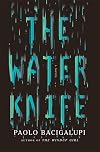
The south-western US states have run out of water. Federal authority has all but broken down; there are patrolled borders between states to cut down on refugees. Phoenix is a dust-bowl, any refugees that have made it from Texas face a life scraping on the margins, doing what they have to do. The South Nevada Water Authority under Catherine Case aggressively pursues its water rights over the Colorado River making Phoenix’s problems worse.
There are three narrative viewpoints; Angel, the water knife of the title, one of Catherine Case’s enforcers; Lucy, an investigative journalist; and Maria, a refugee from Texas scrabbling to survive. The plot centres round ancestral water rights which once belonged to Native Americans and which outweigh all others.
It is an almost relentlessly misanthropic endeavour. Only one character states a view approaching anything compassionate, “‘We’re all each other’s people.... When everything’s going to pieces, people can forget. But in the end? We’re all in it together.’” Yet he then goes on to say what an immigrant from India had told him, “‘... people are alone here in America. And they don’t trust anyone except themselves, and they don’t rely on anyone except themselves..... India would survive all this apocalyptic shit but America wouldn’t. Because here, no one knew their neighbo(u)rs.... in America everyone had left their homes in other countries, so maybe that was why we’d forgotten what it was to have show more neighbo(u)rs.’”
More representative is when Angel describes “a view of the world that anticipated evil from people because people always delivered.” Contrast that to the essentially optimistic view of humanity in Naomi Mitchison’s The Bull Calves which I read just beforehand. If anything, The Water Knife actually shows the necessity for a resilient, well-ordered, balanced society, even in times of stress; but that is not an argument which Bacigalupi makes.
The back cover here reads (in part,) “One of the most exciting and original novels you will read this year.” I must disagree. It’s the same picture of degradation and selfishness peddled by too much recent SF. Only the details differ. Bacigalupi does it well though. show less
There are three narrative viewpoints; Angel, the water knife of the title, one of Catherine Case’s enforcers; Lucy, an investigative journalist; and Maria, a refugee from Texas scrabbling to survive. The plot centres round ancestral water rights which once belonged to Native Americans and which outweigh all others.
It is an almost relentlessly misanthropic endeavour. Only one character states a view approaching anything compassionate, “‘We’re all each other’s people.... When everything’s going to pieces, people can forget. But in the end? We’re all in it together.’” Yet he then goes on to say what an immigrant from India had told him, “‘... people are alone here in America. And they don’t trust anyone except themselves, and they don’t rely on anyone except themselves..... India would survive all this apocalyptic shit but America wouldn’t. Because here, no one knew their neighbo(u)rs.... in America everyone had left their homes in other countries, so maybe that was why we’d forgotten what it was to have show more neighbo(u)rs.’”
More representative is when Angel describes “a view of the world that anticipated evil from people because people always delivered.” Contrast that to the essentially optimistic view of humanity in Naomi Mitchison’s The Bull Calves which I read just beforehand. If anything, The Water Knife actually shows the necessity for a resilient, well-ordered, balanced society, even in times of stress; but that is not an argument which Bacigalupi makes.
The back cover here reads (in part,) “One of the most exciting and original novels you will read this year.” I must disagree. It’s the same picture of degradation and selfishness peddled by too much recent SF. Only the details differ. Bacigalupi does it well though. show less
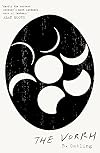
I had this on the back burner until I read the recent favourable review by Brian Kelly in the Guardian of The Erstwhile, the second part of Catling’s trilogy.
The book is an eccentric thing to be sure – featuring a mysterious forest, robots in basements, a more or less human cyclops, a bow forged from human bone and which has strange powers of attraction, a pioneering photographer, anthropophagi (a smaller species of cyclops - Catling seems to have a thing about one-eyed creatures - but whose heads protrude from their chests,) a ritual involving still-born or aborted children - but I fear you may have to be in the mood for it. And I wasn’t.
The Vorrh is a forest in Africa which may be the site of the Garden of Eden and may even still have living somewhere in its centre, Adam. Most of the action of the book, though, occurs in Essenwald, a European city “imported piece by piece to the Dark Continent” which lies to the Vorrh’s south-east. The time is sometime after the Great War – yet there are sections from the Victorian era featuring the photographer Eadweard Muybridge.
The more or less human cyclops is Ishmael, raised in the basement of 4 Khüler Brunnen by the Kin, gentle dark-brown robotic machines. He is rescued from them by the building’s inhabitant, Ghertrude Tulp, whose lifelong chastity is broken by her attraction to Ishmael. But having tasted freedom from the basement and seen the city via a camera obscura in 4 Khüler Brunnen’s upper levels show more Ishmael is not content and on Carnival weekend (a time of masked, licenced debauchery) travels the city, encounters and has sex with the blind Cyrena Lohr. The next morning, Ishmael disappeared, Cyrena finds she can see. As a result of this miracle she dedicates herself to finding him. Meanwhile the ability to cure or cause affliction has become transferable from person to person.
The city’s fortunes are tied up with trade with the Vorrh for timber, trade which can only take place via creatures known as the Limboia, whose cooperation is only achieved via the delivering to them of the bodies of still-born children, an enterprise in which a Dr Hoffmann is closely involved.
There are also passages featuring a Frenchman who is based on the real life Raymond Roussel, in whose book Impressions of Africa appeared a forest called the Vorrh. Likewise the names of Ishmael and Dr Hoffmann are, I’m sure, intended to have resonances.
In that review Stuart Kelly waxed lyrical about The Erstwhile as did Michael Moorcock about The Vorrh in his review. but none of this really grabbed me.
And the Muybridge strand was odd in that it did not link to the others. I suppose it may do so in subsequent volumes but that, along with the occurrence of at least 30 instances of “time interval later”, meant I found completing this something of a chore. Those subsequent volumes may have to wait. show less
The book is an eccentric thing to be sure – featuring a mysterious forest, robots in basements, a more or less human cyclops, a bow forged from human bone and which has strange powers of attraction, a pioneering photographer, anthropophagi (a smaller species of cyclops - Catling seems to have a thing about one-eyed creatures - but whose heads protrude from their chests,) a ritual involving still-born or aborted children - but I fear you may have to be in the mood for it. And I wasn’t.
The Vorrh is a forest in Africa which may be the site of the Garden of Eden and may even still have living somewhere in its centre, Adam. Most of the action of the book, though, occurs in Essenwald, a European city “imported piece by piece to the Dark Continent” which lies to the Vorrh’s south-east. The time is sometime after the Great War – yet there are sections from the Victorian era featuring the photographer Eadweard Muybridge.
The more or less human cyclops is Ishmael, raised in the basement of 4 Khüler Brunnen by the Kin, gentle dark-brown robotic machines. He is rescued from them by the building’s inhabitant, Ghertrude Tulp, whose lifelong chastity is broken by her attraction to Ishmael. But having tasted freedom from the basement and seen the city via a camera obscura in 4 Khüler Brunnen’s upper levels show more Ishmael is not content and on Carnival weekend (a time of masked, licenced debauchery) travels the city, encounters and has sex with the blind Cyrena Lohr. The next morning, Ishmael disappeared, Cyrena finds she can see. As a result of this miracle she dedicates herself to finding him. Meanwhile the ability to cure or cause affliction has become transferable from person to person.
The city’s fortunes are tied up with trade with the Vorrh for timber, trade which can only take place via creatures known as the Limboia, whose cooperation is only achieved via the delivering to them of the bodies of still-born children, an enterprise in which a Dr Hoffmann is closely involved.
There are also passages featuring a Frenchman who is based on the real life Raymond Roussel, in whose book Impressions of Africa appeared a forest called the Vorrh. Likewise the names of Ishmael and Dr Hoffmann are, I’m sure, intended to have resonances.
In that review Stuart Kelly waxed lyrical about The Erstwhile as did Michael Moorcock about The Vorrh in his review. but none of this really grabbed me.
And the Muybridge strand was odd in that it did not link to the others. I suppose it may do so in subsequent volumes but that, along with the occurrence of at least 30 instances of “time interval later”, meant I found completing this something of a chore. Those subsequent volumes may have to wait. show less

The novel is the memoir of Victor Maskell, scion of the estate of Carrickdrum in Northern Ireland, an Art Historian, expert on Poussin; and a spy for the USSR since his time at Cambridge in the 1930s. His journal is written down as if for Miss Serena Vandeleur, a journalist who comes to him after his exposure to the press long, long after the Security Services had become aware of his treacherous activities. He thus bears a more than superficial resemblance to Anthony Blunt but doubtless the parallels are not entirely exact.
The attention here is incidental but Banville has previously had painting and painters as a subject - as in The Sea, Athena, The Book of Evidence and Ghosts. The focus here (obviously drawn from Blunt's non-espionage career) is Poussin, specifically Maskell's prized possession, The Death of Seneca, but, in keeping with the book's theme of duplicity and subterfuge, there is a suggestion that the work is not genuine, or at least not by Poussin.
The novel is wonderfully written. Each sentence is in perfect balance; a work of art in itself, the text studded with unusual observations, “The silence that fell, or rather rose – for silence rises, surely?” or comments, “He was genuinely curious about people – the sure mark of the second-rate novelist,” and the occasional barb, “Trying for the common touch .. and failing ridiculously.” The literary allusions include a reference to Odysseus’s men drinking sea-dark wine.
There are subtle inferences show more to the insights of a spy, “He made the mistake of thinking that the way to be convincing is to put on a false front,” and the regrets of the trade, “It is odd, how the small dishonesties are the ones that snag in the silk of the mind,” and later, “It is the minor treacheries that weigh most heavily on the heart.” On encountering a tramp with a dog inside his coat Maskell tells us, "(I was) ashamed that I felt more sorrow for the dog than I did for the man. What a thing it is, the human heart."
Maskell claims almost from the outset to have been disenchanted with the USSR, a feeling to which his visit there in the 30s only contributed, and that his controllers consistently misunderstood England (as he puts it.) “Much of my time and energy ... was spent trying to teach Moscow to distinguish between form and content in English life.” Despite his betrayals he says, “I was nothing less than an old-fashioned patriot.” In mitigation he asks, “who could have remained inactive in this ferocious century?” and avers, "We should have had no mercy, no qualms. We would have brought down the whole world."
He receives the Order of the Red Banner (his medal glimpsed only once by him before being hidden away by his handler) for contributing to the Soviet victory at Kursk by transferring details, relayed from Bletchley, of a new German tank design. How much such information really affected that battle is of course debatable.
Some of the dialogue is representative of the times in which the book is set, “Mind if I turn off this nigger racket?” and "'What's the matter with the dago, sir?'" being cases in point.
One of Maskell’s defining features is his homosexuality (though he came to it late, after marriage to the sister of one of his University friends.) Of a lover of his he tells us, "Patrick had all the best qualities of a wife, and was blessedly lacking in two of the worst: he was neither female, nor fertile,” and further comments “(I ask myself..... if women fully realise how deeply, viscerally, sorrowfully, men hate them.)" He is of the opinion that in the fifties "to be queer was very bliss.... the last great age of queerdom." The "young hotheads" of the narrator's present day, "do not seem to appreciate, or at least seem to wish to deny, the aphrodisiac properties of secrecy and fear."
Part of his early protection from wider exposure was that he was sent by the King to Bavaria after the war to retrieve some potentially compromising papers. A distant relation, he refers sardonically to the Queen as Mrs W.
He has a jaundiced view of humanity and at one point he describes the American system as “itself, so demanding, so merciless, undeluded as to the fundamental murderousness and venality of humankind and at the same time grimly, unflaggingly optimistic.”
His observation about his work on Poussin, that he was trying "to pull together into a unity all the disparate strands of character and inspiration and achievement that make up this singular being," might be a description of the novel itself. In The Untouchable Banville has laid out for us a life in just such terms.
It is all a fascinating examination of the existence of a spy. As he ponders who it was who unmasked him - possibly twice - Maskell begins to question everything about his life but asides such as, "My memory is not as good as it's supposed to be. I may have misrecalled everything, got all the details wrong," and, "As to this - what? this memoir? this fictional memoir?" point to the unreliability of his account.
Brilliant stuff. show less
The attention here is incidental but Banville has previously had painting and painters as a subject - as in The Sea, Athena, The Book of Evidence and Ghosts. The focus here (obviously drawn from Blunt's non-espionage career) is Poussin, specifically Maskell's prized possession, The Death of Seneca, but, in keeping with the book's theme of duplicity and subterfuge, there is a suggestion that the work is not genuine, or at least not by Poussin.
The novel is wonderfully written. Each sentence is in perfect balance; a work of art in itself, the text studded with unusual observations, “The silence that fell, or rather rose – for silence rises, surely?” or comments, “He was genuinely curious about people – the sure mark of the second-rate novelist,” and the occasional barb, “Trying for the common touch .. and failing ridiculously.” The literary allusions include a reference to Odysseus’s men drinking sea-dark wine.
There are subtle inferences show more to the insights of a spy, “He made the mistake of thinking that the way to be convincing is to put on a false front,” and the regrets of the trade, “It is odd, how the small dishonesties are the ones that snag in the silk of the mind,” and later, “It is the minor treacheries that weigh most heavily on the heart.” On encountering a tramp with a dog inside his coat Maskell tells us, "(I was) ashamed that I felt more sorrow for the dog than I did for the man. What a thing it is, the human heart."
Maskell claims almost from the outset to have been disenchanted with the USSR, a feeling to which his visit there in the 30s only contributed, and that his controllers consistently misunderstood England (as he puts it.) “Much of my time and energy ... was spent trying to teach Moscow to distinguish between form and content in English life.” Despite his betrayals he says, “I was nothing less than an old-fashioned patriot.” In mitigation he asks, “who could have remained inactive in this ferocious century?” and avers, "We should have had no mercy, no qualms. We would have brought down the whole world."
He receives the Order of the Red Banner (his medal glimpsed only once by him before being hidden away by his handler) for contributing to the Soviet victory at Kursk by transferring details, relayed from Bletchley, of a new German tank design. How much such information really affected that battle is of course debatable.
Some of the dialogue is representative of the times in which the book is set, “Mind if I turn off this nigger racket?” and "'What's the matter with the dago, sir?'" being cases in point.
One of Maskell’s defining features is his homosexuality (though he came to it late, after marriage to the sister of one of his University friends.) Of a lover of his he tells us, "Patrick had all the best qualities of a wife, and was blessedly lacking in two of the worst: he was neither female, nor fertile,” and further comments “(I ask myself..... if women fully realise how deeply, viscerally, sorrowfully, men hate them.)" He is of the opinion that in the fifties "to be queer was very bliss.... the last great age of queerdom." The "young hotheads" of the narrator's present day, "do not seem to appreciate, or at least seem to wish to deny, the aphrodisiac properties of secrecy and fear."
Part of his early protection from wider exposure was that he was sent by the King to Bavaria after the war to retrieve some potentially compromising papers. A distant relation, he refers sardonically to the Queen as Mrs W.
He has a jaundiced view of humanity and at one point he describes the American system as “itself, so demanding, so merciless, undeluded as to the fundamental murderousness and venality of humankind and at the same time grimly, unflaggingly optimistic.”
His observation about his work on Poussin, that he was trying "to pull together into a unity all the disparate strands of character and inspiration and achievement that make up this singular being," might be a description of the novel itself. In The Untouchable Banville has laid out for us a life in just such terms.
It is all a fascinating examination of the existence of a spy. As he ponders who it was who unmasked him - possibly twice - Maskell begins to question everything about his life but asides such as, "My memory is not as good as it's supposed to be. I may have misrecalled everything, got all the details wrong," and, "As to this - what? this memoir? this fictional memoir?" point to the unreliability of his account.
Brilliant stuff. show less

C L R James was a Trinidadian historian and journalist whose book on cricket has been described by none other than John Arlott as the finest book written on the game. He was also a Marxist which if you didn’t already know could be divined here from the frequent use of the word bourgeoisie and many mentions of class. Note also, "The rich are only defeated when running for their lives."
The San Domingo Revolution was the only successful slave revolt in history. It eventually led to the establishment of the state of Haiti. Toussaint L'Ouverture, who changed his name from Toussaint Bréda when he joined the revolt, was its undoubted hero. James says however that “Toussaint did not make the revolution. It was the revolution that made Toussaint.”
San Domingo was a prodigious source of wealth for its white sugar planters and the merchants back in France who traded its product; wealth built on the backs of the slave workers imported from Africa, a slave trade which James says had turned Central Africa from peace and happy civilisation to violence and ferocity, the product of an intolerable pressure on the African peoples. Of those who dispute that statement we have, “Men will say (and accept) anything in order to foster national pride or soothe a troubled conscience.”
Before the revolt San Domingo was riven by differences; between the planters and the bureacracy, big whites, small whites, Mulattoes, blacks. (For some reason I couldn’t fathom James always capitalises show more the word Mulattoes.) For the small white with not much in the way of property, "race prejudice was more important than even the possession of slaves. The distinction between a white man and a man of colour was for them fundamental." An illustration of the central importance of colour to San Domingan life was that, "They divided the offspring of white and black and intermediate shades into 128 divisions. The true Mulatto was the child of pure white and pure black, a quarteron was the child of a Mulatto woman and a white man. This went all the way down to the sang-mêlé of 127 parts white and one part black but who was still a person of colour. These distinctions exemplify “the justification of plunder by any obvious differentiation to those holding power.” I note here that James describes pure blacks as negroes. I suppose the usage was common in the 1930s when he was writing but it strikes an odd note now.
Free Mulattoes were able to save, to own property and eventually to lend money. Their threat was such that, "white San Domingo passed a series of laws which for maniacal savagery are unique in the modern world." But the Mulattoes were too numerous and the colonists had to be satisfied with humiliations such as restrictions on dress, meetings, travel, and so on. Black slaves and Mulattoes hated each other, and those who were more white despised people with blacker ancestry. This internalisation of racial prejudice was still prevalent in the Jamaica of James's present.
In 1789 San Domingo accounted for 11 of the 17 million pounds of France's export trade. The beginning of British efforts to abolish slavery was an attempt to undermine this economic powerhouse. "The slave trade and slavery were the economic basis of the French Revolution." The fortunes made, "gave to the bourgeoisie that pride which needed liberty and contributed to emancipation." But then came the French Revolution and the ideals of liberté, egalité and fraternité, which took root in the fertile ground of the plantations.
When the uprising finally came James says that the slaves in their vengefulness were surprisingly moderate, far more humane than their masters had been, not maintaining it for long – unlike the systematic and enduring abuse the slaves had suffered. Toussaint himself established early a "great reputation for humanity, a very singular thing in the San Domingo of those days." The crucial event for the sustenance of the revolt was the abolition of slavery by the Constituent Assembly in Paris, a reason for the slaves to cleave to revolutionary ideals thereafter.
Britain then promptly rowed back on the abolition of slavery and attempted to take over San Domingo. Under Toussaint the former slaves inflicted on Britain “the severest defeat that has befallen a British expeditionary force between the days of Elizabeth and the Great War.” The British lost more men in actual deaths than Wellington did to all causes in the entire Peninsular War, "'her arm for six fateful years fettered and paralysed.'" Held by Toussaint and his raw levies Britain could not attack the revolution in France.
James has an undiluted admiration for Toussaint (along with Nelson and Napoleon one of the three outstanding personalities of the times) though admits his one fatal flaw. His allegiance to the French Revolution made him what he was; but in the end this ruined him. "His desire to avoid destruction was the very thing that caused it. It is the recurring error of moderates when face to face with a revolutionary struggle."
The rise of Napoleon is seen by James as the bourgeoisie reasserting itself. Under Bonaparte it was the French intention to restore slavery on the island and their actually doing so in Guadeloupe that led to Haiti’s final independence. Toussaint’s blind spot had seen him acquiesce to the new French Governor, eventual imprisonment, transportation to, and eventual death in, France. It was Toussaint’s more ruthless deputy Dessalines who came to see independence was the revolt’s only hope.
James keeps describing the slaves and their culture as primitive (as he also characterises those of Africa.) Is this as a result of his Marxist view of history and its laws? He notes that slaves brought from Africa were compelled to master European languages, "highly complex products of centuries of civilisation." There was therefore "a gap between the rudimentary conditions of the life of the slave and the language he used." (Note also that inclusive - exclusive? - "he".) It seems to me these sentiments are profoundly condescending - to African and slave alike.
Everything in the book is seen through the prism of Marxism, an approach which seems almost quaint these days as does James’s conclusion that salvation for the West Indies lies in Africa.
Aside:- For a fictional treatment of the slave revolution I would recommend the excellent All Souls’ Rising by Madison Smartt Bell. Having looked that up I discover Bell has published two subsequent books on the subject. show less
The San Domingo Revolution was the only successful slave revolt in history. It eventually led to the establishment of the state of Haiti. Toussaint L'Ouverture, who changed his name from Toussaint Bréda when he joined the revolt, was its undoubted hero. James says however that “Toussaint did not make the revolution. It was the revolution that made Toussaint.”
San Domingo was a prodigious source of wealth for its white sugar planters and the merchants back in France who traded its product; wealth built on the backs of the slave workers imported from Africa, a slave trade which James says had turned Central Africa from peace and happy civilisation to violence and ferocity, the product of an intolerable pressure on the African peoples. Of those who dispute that statement we have, “Men will say (and accept) anything in order to foster national pride or soothe a troubled conscience.”
Before the revolt San Domingo was riven by differences; between the planters and the bureacracy, big whites, small whites, Mulattoes, blacks. (For some reason I couldn’t fathom James always capitalises show more the word Mulattoes.) For the small white with not much in the way of property, "race prejudice was more important than even the possession of slaves. The distinction between a white man and a man of colour was for them fundamental." An illustration of the central importance of colour to San Domingan life was that, "They divided the offspring of white and black and intermediate shades into 128 divisions. The true Mulatto was the child of pure white and pure black, a quarteron was the child of a Mulatto woman and a white man. This went all the way down to the sang-mêlé of 127 parts white and one part black but who was still a person of colour. These distinctions exemplify “the justification of plunder by any obvious differentiation to those holding power.” I note here that James describes pure blacks as negroes. I suppose the usage was common in the 1930s when he was writing but it strikes an odd note now.
Free Mulattoes were able to save, to own property and eventually to lend money. Their threat was such that, "white San Domingo passed a series of laws which for maniacal savagery are unique in the modern world." But the Mulattoes were too numerous and the colonists had to be satisfied with humiliations such as restrictions on dress, meetings, travel, and so on. Black slaves and Mulattoes hated each other, and those who were more white despised people with blacker ancestry. This internalisation of racial prejudice was still prevalent in the Jamaica of James's present.
In 1789 San Domingo accounted for 11 of the 17 million pounds of France's export trade. The beginning of British efforts to abolish slavery was an attempt to undermine this economic powerhouse. "The slave trade and slavery were the economic basis of the French Revolution." The fortunes made, "gave to the bourgeoisie that pride which needed liberty and contributed to emancipation." But then came the French Revolution and the ideals of liberté, egalité and fraternité, which took root in the fertile ground of the plantations.
When the uprising finally came James says that the slaves in their vengefulness were surprisingly moderate, far more humane than their masters had been, not maintaining it for long – unlike the systematic and enduring abuse the slaves had suffered. Toussaint himself established early a "great reputation for humanity, a very singular thing in the San Domingo of those days." The crucial event for the sustenance of the revolt was the abolition of slavery by the Constituent Assembly in Paris, a reason for the slaves to cleave to revolutionary ideals thereafter.
Britain then promptly rowed back on the abolition of slavery and attempted to take over San Domingo. Under Toussaint the former slaves inflicted on Britain “the severest defeat that has befallen a British expeditionary force between the days of Elizabeth and the Great War.” The British lost more men in actual deaths than Wellington did to all causes in the entire Peninsular War, "'her arm for six fateful years fettered and paralysed.'" Held by Toussaint and his raw levies Britain could not attack the revolution in France.
James has an undiluted admiration for Toussaint (along with Nelson and Napoleon one of the three outstanding personalities of the times) though admits his one fatal flaw. His allegiance to the French Revolution made him what he was; but in the end this ruined him. "His desire to avoid destruction was the very thing that caused it. It is the recurring error of moderates when face to face with a revolutionary struggle."
The rise of Napoleon is seen by James as the bourgeoisie reasserting itself. Under Bonaparte it was the French intention to restore slavery on the island and their actually doing so in Guadeloupe that led to Haiti’s final independence. Toussaint’s blind spot had seen him acquiesce to the new French Governor, eventual imprisonment, transportation to, and eventual death in, France. It was Toussaint’s more ruthless deputy Dessalines who came to see independence was the revolt’s only hope.
James keeps describing the slaves and their culture as primitive (as he also characterises those of Africa.) Is this as a result of his Marxist view of history and its laws? He notes that slaves brought from Africa were compelled to master European languages, "highly complex products of centuries of civilisation." There was therefore "a gap between the rudimentary conditions of the life of the slave and the language he used." (Note also that inclusive - exclusive? - "he".) It seems to me these sentiments are profoundly condescending - to African and slave alike.
Everything in the book is seen through the prism of Marxism, an approach which seems almost quaint these days as does James’s conclusion that salvation for the West Indies lies in Africa.
Aside:- For a fictional treatment of the slave revolution I would recommend the excellent All Souls’ Rising by Madison Smartt Bell. Having looked that up I discover Bell has published two subsequent books on the subject. show less

In 1944 Urquhart was the Commander of the 1st Airborne Division which along with 1 Polish Parachute Brigade carried out the ‘Market’ part of the overall ‘Market Garden’ Operation to take the crossings over the Rivers Maas, Waal and Neder Rhine by aerial assault with a ground push intended to relieve them. As such he was therefore in command at Arnhem, location of the famous “Bridge Too Far.”
The book mainly covers Urquhart's own experiences at Arnhem to the west of the town and bridge but it does broaden out at times to cover other aspects of the operation.
Perhaps a desperate adventure in the best of circumstances, the enterprise was totally compromised by the plans for the complete operation being found by the Germans on the body of a US officer. The German commander, Model, had in any case quickly assessed the likely focus of the attack and made his dispositions accordingly. In addition, from the outset there were problems with British communications, as radio sets failed to function properly. As a result subsequent air supply fell on the places designated before the operation started which were mostly back in German hands by the time the drops took place. Urquhart pays tribute to the dedication and bravery of the aircrews on these missions. They had to fly in a straight line for kilometres sometimes making several passes over the drop zone all in the teeth of German anti-aircraft fire. As a result many planes and lives were lost. So too with the fortitude of show more the defenders of the Allied positions at the bridge and in the pocket.
A strange circumstance seemed to take place with medical provision for casualties at one location where relatively lightly wounded of both sides were treated in the same building (under German guard) before returning to their respective positions.
Oddly, I felt that a history of the battle might have been better written by someone not so intimately involved with it. Urquhart was perhaps too close to the events to clarify them sufficiently for the general reader. show less
The book mainly covers Urquhart's own experiences at Arnhem to the west of the town and bridge but it does broaden out at times to cover other aspects of the operation.
Perhaps a desperate adventure in the best of circumstances, the enterprise was totally compromised by the plans for the complete operation being found by the Germans on the body of a US officer. The German commander, Model, had in any case quickly assessed the likely focus of the attack and made his dispositions accordingly. In addition, from the outset there were problems with British communications, as radio sets failed to function properly. As a result subsequent air supply fell on the places designated before the operation started which were mostly back in German hands by the time the drops took place. Urquhart pays tribute to the dedication and bravery of the aircrews on these missions. They had to fly in a straight line for kilometres sometimes making several passes over the drop zone all in the teeth of German anti-aircraft fire. As a result many planes and lives were lost. So too with the fortitude of show more the defenders of the Allied positions at the bridge and in the pocket.
A strange circumstance seemed to take place with medical provision for casualties at one location where relatively lightly wounded of both sides were treated in the same building (under German guard) before returning to their respective positions.
Oddly, I felt that a history of the battle might have been better written by someone not so intimately involved with it. Urquhart was perhaps too close to the events to clarify them sufficiently for the general reader. show less
This is a collection of Walton’s contributions to a blog on Tor.com, appearing between 15/6/2008 and 25/2/2011, in which she discussed the works of SF and fantasy she had been re-reading during that time. Her claim to be able to read up to six books in a day astonished me. If she’s doing that how does she fit in everyday life - food shopping, cooking, eating, family life, putting out the bins? Where on Earth can she find time to write fiction, or a blog post? Yes she says she sometimes spends all day in bed (I assume through illness or some debilitation) but even so. Admittedly that six was a maximum and she says she starts another book as soon as finishing the previous one. There was also the odd, to me, observation that she feels she hasn’t read a book if she hasn’t re-read it at least once; that first impressions of a book are suspect. I differ here, certainly from a later in life perspective. If a book does it for me the first time that’s fine; with perhaps a very few exceptions, if it doesn’t, a re-read is unlikely to help. My tbr pile is too high for much re-reading anyway. I also cannot read at Walton’s pace. Perhaps I pay too close an attention to the minutiae of a text; vide Pedant’s corner.
Many of Walton’s enthusiasms I doubt I would share. She spends 14 posts and over 60 pages here on Lois McMaster Bujold’s Vorkosigan series which has far too many volumes for me to embark upon now, and in any case I have a disrecommendation from another show more source. Similarly 17 posts and 53 pages on Steven Brust’s Dragaera series. Not going to happen.
Walton always writes interestingly about the subject at hand; even of books I have no desire to read (whatever her eloquence.) And "IWantToReadItosity" is a great coinage. “It’s hard to explain, is utterly subjective and is entirely separate from whether a book is actually good.” We all have such guilty pleasures.
She occasionally digresses from the SF/Fantasy remit, for example enthusing about Iain Banks’s The Crow Road and of Middlemarch opines that George Eliot would have been a great writer of Science Fiction if only she’d had the idea to invent the form.
A puff on the back cover quotes Publishers Weekly, ‘For readers unschooled in the history of SF/F, this book is a treasure trove.’ I wouldn’t disagree. show less
Many of Walton’s enthusiasms I doubt I would share. She spends 14 posts and over 60 pages here on Lois McMaster Bujold’s Vorkosigan series which has far too many volumes for me to embark upon now, and in any case I have a disrecommendation from another show more source. Similarly 17 posts and 53 pages on Steven Brust’s Dragaera series. Not going to happen.
Walton always writes interestingly about the subject at hand; even of books I have no desire to read (whatever her eloquence.) And "IWantToReadItosity" is a great coinage. “It’s hard to explain, is utterly subjective and is entirely separate from whether a book is actually good.” We all have such guilty pleasures.
She occasionally digresses from the SF/Fantasy remit, for example enthusing about Iain Banks’s The Crow Road and of Middlemarch opines that George Eliot would have been a great writer of Science Fiction if only she’d had the idea to invent the form.
A puff on the back cover quotes Publishers Weekly, ‘For readers unschooled in the history of SF/F, this book is a treasure trove.’ I wouldn’t disagree. show less
Maureen O’Donnell is an abuse survivor in a relationship with a psychiatrist at the same hospital where she is receiving treatment for her continuing trauma. After a night out with a friend she tumbles straight into bed and wakes up in the morning to find her (married) boyfriend tied up in her living room with his throat slit. The police, the man’s wife and politician mother all believe Maureen, or her drug dealing brother, did it. In an attempt to make sure her name is cleared Maureen begins to investigate the crime herself.
The proximal subject matter, sexual abuse in institutions, is an important issue but I am astonished that this book could appear on anyone’s list of best or favourites as Mina’s writing leaves a lot to be desired. There is a profusion of telling not showing plus acres of unconvincing dialogue. Chapter titles tend to be people’s names but quite often those people barely appear within them. Every time there is a police interview we are told about the tape recording protocol. It is as if Mina believes the reader must be shown every little detail of her hero’s experience. We really don’t. In what must surely be a breach of police good practice one of the investigating officers conveniently gives her privileged information.
The novel is set in Glasgow but the city itself seems absent. None of its vibrancy or character comes across. Also there are constant references to the Byres Road, the Great Western Road, the Maryhill Road. No Glaswegian I show more have met has ever mentioned a street by name and used the definite article. It’s always just Byres Road, Great Western Road, Maryhill Road. No “the”.
Yes, the purpose of this sort of thing is the unfolding of the plot and the unravelling of “whodunit” and in this respect it just about meets the need. Yet even here there was a hiccup. Quite near the novel’s end Maureen is told the name of the murderer by one of her interviewees but Mina does not let the reader know it at that point. I don’t read much crime fiction but I would submit such an attempt to prolong suspense artificially is unfair on the reader. (That the murderer’s identity could be worked out fairly easily vitiated that attempt in any case.)
The more the book progressed the harder my suspension of disbelief became. Towards the end I wasn’t believing any of it.
Moreover the book is riddled with punctuation errors (see Pedant’s corner.) The edition I read was a reprint; the latest of numerous editions. (Goodreads lists well over ten.) How can these errors not have been spotted and rooted out long before this? Does no-one care about quality control? Some might say these are niggling concerns but when they stop a reader in his/her tracks and force a line, sentence or paragraph to be re-read to decipher the sense it becomes non-trivial.
This one is for die-hard crime fans only. show less
The proximal subject matter, sexual abuse in institutions, is an important issue but I am astonished that this book could appear on anyone’s list of best or favourites as Mina’s writing leaves a lot to be desired. There is a profusion of telling not showing plus acres of unconvincing dialogue. Chapter titles tend to be people’s names but quite often those people barely appear within them. Every time there is a police interview we are told about the tape recording protocol. It is as if Mina believes the reader must be shown every little detail of her hero’s experience. We really don’t. In what must surely be a breach of police good practice one of the investigating officers conveniently gives her privileged information.
The novel is set in Glasgow but the city itself seems absent. None of its vibrancy or character comes across. Also there are constant references to the Byres Road, the Great Western Road, the Maryhill Road. No Glaswegian I show more have met has ever mentioned a street by name and used the definite article. It’s always just Byres Road, Great Western Road, Maryhill Road. No “the”.
Yes, the purpose of this sort of thing is the unfolding of the plot and the unravelling of “whodunit” and in this respect it just about meets the need. Yet even here there was a hiccup. Quite near the novel’s end Maureen is told the name of the murderer by one of her interviewees but Mina does not let the reader know it at that point. I don’t read much crime fiction but I would submit such an attempt to prolong suspense artificially is unfair on the reader. (That the murderer’s identity could be worked out fairly easily vitiated that attempt in any case.)
The more the book progressed the harder my suspension of disbelief became. Towards the end I wasn’t believing any of it.
Moreover the book is riddled with punctuation errors (see Pedant’s corner.) The edition I read was a reprint; the latest of numerous editions. (Goodreads lists well over ten.) How can these errors not have been spotted and rooted out long before this? Does no-one care about quality control? Some might say these are niggling concerns but when they stop a reader in his/her tracks and force a line, sentence or paragraph to be re-read to decipher the sense it becomes non-trivial.
This one is for die-hard crime fans only. show less
The title page says “by Katharine Burdekin writing as Murray Constantine” though the revelation of the author as Burdekin was not made till many years after the book’s first publication in 1937. The pseudonymous publication may have been because of the threat of repercussions due to her anti-fascist views or for the usual reasons a female might adopt a male name when writing.
Swastika Night is an extrapolation from the time of writing of what Nazism might have led to. Considering the little that was known of fascism’s excesses at the time it was written it is remarkably insightful and prophetic of what unchecked fascism could very well have developed into.
As a result of their victory in the Twenty Year War, seven hundred years in the future, Germany and Japan still rule the world between them. In Germany and its European, Middle Eastern and African dominions Hitler is a God. A seven foot tall blond God, who never had anything to do with women. Women in this future Germany have no purpose except for breeding - and no inclination for anything else as it has been bred out of them.
The book is told mainly through the eyes of an ordinary German, Hermann, and the English friend, Alfred, he made when posted to England five years before. Alfred is on a pilgrimage to the Holy Land (Germany) and attracts the interest of the local ruler the Knight Friedrich von Hess who is the keeper of a secret about the real historical Hitler. Through von Hess, the author lays out how a show more relatively nondescript man was transformed into godhood and historical truth obliterated to ensure the domination of the party line. In its depiction of the manipulation of history this prefigures some of the works of Philip K Dick.
Burdekin’s appreciation of the most important struggle Nazism was to face is shown by the line, “But Russia after the most tremendous struggle in history, was finally beaten.” We also have, “von Hess says the Germans have always been inclined to hysteria” and “unshakable, impregnable empire has always been the dream of virile nations.” This of course can be read as an indictment of virility.
There is not much by way of action and a large part of the book is given over to philosophising but it never fails to maintain the reader’s interest.
As an illustration of the dangers of totalitarianism, of the vigilance needed to maintain standards of truth, Swastika Night is as potent as 1984 and, in 2017, sadly as relevant a critique in the here and now as it was when first published. show less
Swastika Night is an extrapolation from the time of writing of what Nazism might have led to. Considering the little that was known of fascism’s excesses at the time it was written it is remarkably insightful and prophetic of what unchecked fascism could very well have developed into.
As a result of their victory in the Twenty Year War, seven hundred years in the future, Germany and Japan still rule the world between them. In Germany and its European, Middle Eastern and African dominions Hitler is a God. A seven foot tall blond God, who never had anything to do with women. Women in this future Germany have no purpose except for breeding - and no inclination for anything else as it has been bred out of them.
The book is told mainly through the eyes of an ordinary German, Hermann, and the English friend, Alfred, he made when posted to England five years before. Alfred is on a pilgrimage to the Holy Land (Germany) and attracts the interest of the local ruler the Knight Friedrich von Hess who is the keeper of a secret about the real historical Hitler. Through von Hess, the author lays out how a show more relatively nondescript man was transformed into godhood and historical truth obliterated to ensure the domination of the party line. In its depiction of the manipulation of history this prefigures some of the works of Philip K Dick.
Burdekin’s appreciation of the most important struggle Nazism was to face is shown by the line, “But Russia after the most tremendous struggle in history, was finally beaten.” We also have, “von Hess says the Germans have always been inclined to hysteria” and “unshakable, impregnable empire has always been the dream of virile nations.” This of course can be read as an indictment of virility.
There is not much by way of action and a large part of the book is given over to philosophising but it never fails to maintain the reader’s interest.
As an illustration of the dangers of totalitarianism, of the vigilance needed to maintain standards of truth, Swastika Night is as potent as 1984 and, in 2017, sadly as relevant a critique in the here and now as it was when first published. show less

The common perception of British generalship in the Great War – as put forth in many depictions of the conflict from at least Oh, What a Lovely War! through “lions led by donkeys” to Blackadder Goes Fourth and beyond - is of cavalry officers with little knowledge of infantry tactics in charge, of widespread incompetence and callousness, of throwing men rather than competence at the enemy, of safely staying well behind the lines. In this book Neillands sets out the evidence for and against these assertions and as a result comes down in favour of the generals. In many respects for me he was pushing against an open door. It has always struck me that if the British generals were so incompetent and useless how come we didn’t lose the war? Add to that the fact that the British (and Empire) force was the only major Allied combatant (setting aside the short - but still bloody - sojourn of the US Expeditionary forces) that did not suffer a large mutiny or rout and the questions ought to be why, if their leaders were so useless, were British soldiers so steadfast? Why were they so willing to follow orders - and keep doing so?
Despite its all-encompassing sub-title the book is chiefly focused on the British generals on the Western Front, though French and German generals are of course dealt with as necessary. Overall, however, it is more of a complete history of the British sectors of the Western Front rather than a summary of the doings of the generals who directed the show more efforts there.
Neillands states that it is only British generals that have been subjected to such criticisms as a group. No such opprobrium has been heaped on the French or German generals as a whole despite similar propensities to life squandering, particularly the Germans at Langemarck and the French in Nivelle’s offensive. Plus there’s always Verdun.
For all sides this was a new kind of war (though slightly prefigured by aspects of the American Civil War and the Russo-Japanese War.) None of the European agonists had been subjected to industrial war of this kind before, though in terms of numbers the French and Germans were prepared for it, the latter also in terms of artillery. All expected a war of movement - and a quick resolution. As it was the trench system came about by accident; in the attempts of both sides to outflank each other in the “Race to the Sea.” And throughout defence held the upper hand.
Like all British armies at the start of a war the BEF was inadequate to the coming task in numbers and equipment; lacking in machine guns and especially artillery. Its astonishing proficiency in rifle fire could not make up for this. It would take time - years - to provide enough artillery ammunition, to recruit, to equip and to train not only the soldiers but also the staff officers necessary for the army to function efficiently (and of these the staff officers take much longer to train.) Until that came about the generals, like the soldiers, had to do the best with what they had, and to learn the techniques and tactics required to succeed. Plus they were fighting Germans; dogged professional soldiers who never gave in easily, the best army in the field - certainly until the end of 1916 (when the British perhaps took over the mantle.)
Among other beliefs Neillands describes as myths is that all British troops on the first day of the Battle of the Somme moved forward in line and at walking pace. There was in fact a large variation in tactics, the generals on the ground being largely responsible for their own formations’ procedures. The sentence attributed to Lieutenant-General Kiggell, after Passchendaele, “Good God, did we really send men to fight in that?” has no provenance and is likely to be apocryphal. Neillands finds it incredible that any general faced with all the reports from the front, aerial photos, requisitions etc could have been unaware of the conditions. Quite why Third Ypres was nevertheless persisted with is a question harder to avoid.
Some criticisms are easily dispatched. Much fewer than half of the British generals were originally from cavalry regiments while an average of one general a week was lost to enemy action, hardly indicative of distance from the front. They were not hidebound tactically but learned from earlier reverses. However, in response to British innovations in attack the Germans continually adopted new defensive tactics and provided new problems to solve.
Neillands contends that the difficulties of prosecuting such a war have not been sufficiently acknowledged by the critics. The generals were from the outset instructed by the British Government to co-operate closely with their French allies. This in many respects tied the hands of both British Commanders-in-Chief, Sir John French and Sir Douglas Haig. Sometimes this necessary support, as at Loos, led to attacks the British generals did not favour. At the Somme and Third Ypres the necessity to divert German resources to relieve pressure on the French (from Verdun and the consequences of the French mutiny respectively) more or less demanded action.
The static nature of the trench system, the opportunities it gave the Germans to develop defence in depth (from Second Ypres in 1914 till their spring offensive in 1918 the Germans did not launch a major attack on the British Army anywhere along the line,) was a large factor in preventing a breakthrough. Allenby was not a notable success on the Western Front but in a war of movement in Palestine was able to show his capabilities more readily.
The main problem affecting the war’s conduct, though, was communications; which could not be relied on. Amid the smoke of battle, lines of sight were obscured; wireless technology was neither robust nor portable; telephone lines - even buried metres deep – were prone to severance by shellfire; carrier pigeons inadequate. The problem was never properly solved even by the war’s end.
Nor are any alternative strategies entirely obvious. Short of abandoning the war (so allowing Germany to keep its gains) - a course which the Allied Governments never contemplated - there was little option but to carry on.
Another factor affecting the generals was that Prime Minister Lloyd George never trusted them, Haig in particular. Neillands holds Lloyd George partly responsible for the British being forced to retreat by the German “Michael” offensive of March 1918 as he had held troops back in Britain rather than reinforcing the front. The overwhelming force of their initial attack would have caused problems in any case but even in its unstrengthened form the army, though it retreated, nevertheless did not break; the Germans were held.
In passing Neillands decries the “Pommie bashing” of latter day Australian and Canadian historians who variously claim the British “establishment” was biased against their own commanders and treated colonial troops as cannon fodder. While acknowledging the quality of these troops and the abilities of the Canadian General Currie and the Australian General Monash in particular, he shows most British divisions - and not a few generals - were equally effective.
Some criticisms are harder to defray. Typically there was a failure to exploit initial success quickly (in the case of Cambrai a disbelief in the extent of that success and a lack of preparedness for it) and an all too prevalent tendency to keep bashing away when an attack slowed down, in the belief that the Germans were weakening and “one more push” would prevail.
Yet the final victories - and they were victories, the Hindenburg line was breached, the British Army ended up as far advanced from the trench lines as Mons (where its participation in the war had started) – are not given nearly as much attention as the earlier “failures”. That is an indictment of those who give more weight to the generals’ shortcomings than to the achievements of the men under their direction. It was the war, and its continuation, plus the inability of the technology of attack to overcome that of defence that was the problem.
This is a book that, while not ignoring their faults, attests to the good faith of the British generals of the Great War, men doing their best amidst adverse circumstances. show less
Despite its all-encompassing sub-title the book is chiefly focused on the British generals on the Western Front, though French and German generals are of course dealt with as necessary. Overall, however, it is more of a complete history of the British sectors of the Western Front rather than a summary of the doings of the generals who directed the show more efforts there.
Neillands states that it is only British generals that have been subjected to such criticisms as a group. No such opprobrium has been heaped on the French or German generals as a whole despite similar propensities to life squandering, particularly the Germans at Langemarck and the French in Nivelle’s offensive. Plus there’s always Verdun.
For all sides this was a new kind of war (though slightly prefigured by aspects of the American Civil War and the Russo-Japanese War.) None of the European agonists had been subjected to industrial war of this kind before, though in terms of numbers the French and Germans were prepared for it, the latter also in terms of artillery. All expected a war of movement - and a quick resolution. As it was the trench system came about by accident; in the attempts of both sides to outflank each other in the “Race to the Sea.” And throughout defence held the upper hand.
Like all British armies at the start of a war the BEF was inadequate to the coming task in numbers and equipment; lacking in machine guns and especially artillery. Its astonishing proficiency in rifle fire could not make up for this. It would take time - years - to provide enough artillery ammunition, to recruit, to equip and to train not only the soldiers but also the staff officers necessary for the army to function efficiently (and of these the staff officers take much longer to train.) Until that came about the generals, like the soldiers, had to do the best with what they had, and to learn the techniques and tactics required to succeed. Plus they were fighting Germans; dogged professional soldiers who never gave in easily, the best army in the field - certainly until the end of 1916 (when the British perhaps took over the mantle.)
Among other beliefs Neillands describes as myths is that all British troops on the first day of the Battle of the Somme moved forward in line and at walking pace. There was in fact a large variation in tactics, the generals on the ground being largely responsible for their own formations’ procedures. The sentence attributed to Lieutenant-General Kiggell, after Passchendaele, “Good God, did we really send men to fight in that?” has no provenance and is likely to be apocryphal. Neillands finds it incredible that any general faced with all the reports from the front, aerial photos, requisitions etc could have been unaware of the conditions. Quite why Third Ypres was nevertheless persisted with is a question harder to avoid.
Some criticisms are easily dispatched. Much fewer than half of the British generals were originally from cavalry regiments while an average of one general a week was lost to enemy action, hardly indicative of distance from the front. They were not hidebound tactically but learned from earlier reverses. However, in response to British innovations in attack the Germans continually adopted new defensive tactics and provided new problems to solve.
Neillands contends that the difficulties of prosecuting such a war have not been sufficiently acknowledged by the critics. The generals were from the outset instructed by the British Government to co-operate closely with their French allies. This in many respects tied the hands of both British Commanders-in-Chief, Sir John French and Sir Douglas Haig. Sometimes this necessary support, as at Loos, led to attacks the British generals did not favour. At the Somme and Third Ypres the necessity to divert German resources to relieve pressure on the French (from Verdun and the consequences of the French mutiny respectively) more or less demanded action.
The static nature of the trench system, the opportunities it gave the Germans to develop defence in depth (from Second Ypres in 1914 till their spring offensive in 1918 the Germans did not launch a major attack on the British Army anywhere along the line,) was a large factor in preventing a breakthrough. Allenby was not a notable success on the Western Front but in a war of movement in Palestine was able to show his capabilities more readily.
The main problem affecting the war’s conduct, though, was communications; which could not be relied on. Amid the smoke of battle, lines of sight were obscured; wireless technology was neither robust nor portable; telephone lines - even buried metres deep – were prone to severance by shellfire; carrier pigeons inadequate. The problem was never properly solved even by the war’s end.
Nor are any alternative strategies entirely obvious. Short of abandoning the war (so allowing Germany to keep its gains) - a course which the Allied Governments never contemplated - there was little option but to carry on.
Another factor affecting the generals was that Prime Minister Lloyd George never trusted them, Haig in particular. Neillands holds Lloyd George partly responsible for the British being forced to retreat by the German “Michael” offensive of March 1918 as he had held troops back in Britain rather than reinforcing the front. The overwhelming force of their initial attack would have caused problems in any case but even in its unstrengthened form the army, though it retreated, nevertheless did not break; the Germans were held.
In passing Neillands decries the “Pommie bashing” of latter day Australian and Canadian historians who variously claim the British “establishment” was biased against their own commanders and treated colonial troops as cannon fodder. While acknowledging the quality of these troops and the abilities of the Canadian General Currie and the Australian General Monash in particular, he shows most British divisions - and not a few generals - were equally effective.
Some criticisms are harder to defray. Typically there was a failure to exploit initial success quickly (in the case of Cambrai a disbelief in the extent of that success and a lack of preparedness for it) and an all too prevalent tendency to keep bashing away when an attack slowed down, in the belief that the Germans were weakening and “one more push” would prevail.
Yet the final victories - and they were victories, the Hindenburg line was breached, the British Army ended up as far advanced from the trench lines as Mons (where its participation in the war had started) – are not given nearly as much attention as the earlier “failures”. That is an indictment of those who give more weight to the generals’ shortcomings than to the achievements of the men under their direction. It was the war, and its continuation, plus the inability of the technology of attack to overcome that of defence that was the problem.
This is a book that, while not ignoring their faults, attests to the good faith of the British generals of the Great War, men doing their best amidst adverse circumstances. show less
In a society where dreams are forbidden Eliana experiences night-maeres, which she must keep hidden or suffer banishment. She lives in an island city, in the House of Webs, whose head is called the Weaver. All born on the island bear tattoos showing their citizenship with a mark added yearly to show age. The city is prone to flooding by the sea and there is an overhead transport system of gondolas travelling on suspended ropes, and rope bridges between buildings. One day a girl whose tongue has been cut out is brought in to the House. In a certain kind of light Eliana’s name can be seen to be tattooed on her hand. The mystery builds from that point as Eliana comes into contact with a resistance movement, is betrayed by the Weaver and banished to a punishment detachment diving for valuable red coral.
The normal text is interspersed at long intervals with passages rendered in italics and which, apart from starting and finishing partway on a page, have no punctuation to separate them from the rest.
The setting has similarities to Itäranta’s first novel Memory of Water in that there is an oppressive regime from whom secrets must be kept. The City of Woven Streets leans more towards fantasy than, and does not have the clarity nor focus of, that previous book. Eliana’s escape from servitude is fortuitous and the final confrontation seems a bit rushed. This may be due to the pressure of the deadline to which Itäranta refers in her Acknowledgements.
The normal text is interspersed at long intervals with passages rendered in italics and which, apart from starting and finishing partway on a page, have no punctuation to separate them from the rest.
The setting has similarities to Itäranta’s first novel Memory of Water in that there is an oppressive regime from whom secrets must be kept. The City of Woven Streets leans more towards fantasy than, and does not have the clarity nor focus of, that previous book. Eliana’s escape from servitude is fortuitous and the final confrontation seems a bit rushed. This may be due to the pressure of the deadline to which Itäranta refers in her Acknowledgements.
The narrative of this book covers the lives of various characters inhabiting the titular property and those with whom they come in contact. In the building live Pat, a young woman on her second gap year; her landlord flatmate Bruce, a narcissistic chancer; Irene, a pushy mother, with Bertie, her saxophone playing, Italian speaking five year-old who just wants to be a normal boy; and Domenica, an older woman more wise to the world. Pat takes up a job at an art gallery run by an incompetent set up by his father. Along the way we meet Bruce’s boss, a mainstay of the local Conservative Association, his wife and daughter; Big Lou, who runs a pub in the same street as the gallery; and Dr Fairbairn, Bertie’s psychiatrist - not to mention author Ian Rankin. There are occasional illustrations (by Iain McIntosh) at least one of which gave away an incident yet to occur on the page.
The problem with all this is its genesis as a periodic publication, appearing daily in The Scotsman. As a result none of the scenes is ever fully developed, they are sketched not drawn, and there is too much telling in place of showing. The characters are insufficiently fleshed out, types, not individuals.
What plot there is centres round the authenticity or otherwise, the disappearance and recovery, of a painting which might be a Peploe; but this is exiguous at best.
McCall Smith perhaps betrays his leanings when he puts these words about The Guardian into the mouth of five year-old Bertie, “Because show more it’s always telling you what you should think.” Then again it might just have been so he could add the rider, “Just like Mummy.” And don't all newspapers in effect "tell their readers what to think"?
McCall Smith’s writing is easy on the eye but undemanding on the brain as the whole enterprise is very lightweight, admittedly suitable for quick, and perhaps not necessarily attentive reading. Quite why it appears on a list of 20 Scottish Books everyone should read is beyond me, though. That it is The Scotsman’s list is a bit too much like that newspaper blowing its own trumpet. show less
The problem with all this is its genesis as a periodic publication, appearing daily in The Scotsman. As a result none of the scenes is ever fully developed, they are sketched not drawn, and there is too much telling in place of showing. The characters are insufficiently fleshed out, types, not individuals.
What plot there is centres round the authenticity or otherwise, the disappearance and recovery, of a painting which might be a Peploe; but this is exiguous at best.
McCall Smith perhaps betrays his leanings when he puts these words about The Guardian into the mouth of five year-old Bertie, “Because show more it’s always telling you what you should think.” Then again it might just have been so he could add the rider, “Just like Mummy.” And don't all newspapers in effect "tell their readers what to think"?
McCall Smith’s writing is easy on the eye but undemanding on the brain as the whole enterprise is very lightweight, admittedly suitable for quick, and perhaps not necessarily attentive reading. Quite why it appears on a list of 20 Scottish Books everyone should read is beyond me, though. That it is The Scotsman’s list is a bit too much like that newspaper blowing its own trumpet. show less

In Star Rider humans have differentiated into different strains, jaks and dreens. Narrator Lone, or Jade as she becomes, is a Jakalowar (jak.) Along with her dog-ancestried mount Hinx she can teleport easily across space. This is an ability which seems to be mixed in with a sort of telepathy/awareness called jink. All jaks are searching for the lost planet of Doubleluck, finding which would make their fortune. Jade is dogged by Big Jak, who knows where Doubleluck is and wishes to stop her finding it. He traps her but they are attacked by dreens and Jade is imprisoned, without Hinx, on a planet called Gibraltar. Separation from a mount normally makes a jak go mad but Jade manages to stay sane. This middle part of the novel is tonally somewhat at odds with what came before and what is to come. Eventually Jade persuades a dreen mount to let her jink, escapes, finds Hinx again and heads for old Earth where she uncovers Doubleluck inside a mountain. She is chased there by the dreens, whose leader Rulon wants to force her into marriage but who are eventually overcome in a sort of space battle and Jade then reveals to the victorious jaks her ability to jink to other galaxies, a jak goal for millennia.
The twists and turns of the story don’t seem to follow much logic and the text is occasionally embellished with unusual syntax which either I got used to as the novel progressed or, more likely given my attention to the minutiae of text, Piserchia tended to forget about. Neither show more are the characters very memorable; Piserchia’s focus is more on ongoing plot, with the occasional feminist aside. I would hazard Star Rider is not among the best SF from the 1970s. show less
The twists and turns of the story don’t seem to follow much logic and the text is occasionally embellished with unusual syntax which either I got used to as the novel progressed or, more likely given my attention to the minutiae of text, Piserchia tended to forget about. Neither show more are the characters very memorable; Piserchia’s focus is more on ongoing plot, with the occasional feminist aside. I would hazard Star Rider is not among the best SF from the 1970s. show less
The author is my second favourite writer of SF and I read this one for the sake of completeness. Silverberg is not widely known for his crime novels but he knocked a few out in the last dying days of the pulp era when that market for Science Fiction had dried up. Pulp crime was not long in following but that wasn’t Silverberg’s fault. He is incapable of writing anything that is less than readable but this has the vices of its idiom in its lack of ornamentation, of its time in its casual sexism and of its place in an equally casual attitude to the use of guns.
Narrator Nick is a law enforcement agent whose speciality is in subduing his own identity and impersonating less major criminals in order to get to the main players. The plot involves the distributor of very good forgeries of five and ten dollars bills and the discovery and release from bondage of the engraver who made the plates for their manufacture. None of the characters lifts beyond the functional - or typical - but the plot is well-honed and provides the action its intended readership presumably craved.
The two accompanying short stories used to pad out this paperback are from the same era and in similar vein. Dangerous Doll riffs on the counterfeiting game and, as its title suggests, features a femme fatale, while One Night of Violence sees a travelling salesman get caught up in a gangland shootout. In this story I did wonder what on earth the “video set” in a late 1950s hotel lobby might have been.
Narrator Nick is a law enforcement agent whose speciality is in subduing his own identity and impersonating less major criminals in order to get to the main players. The plot involves the distributor of very good forgeries of five and ten dollars bills and the discovery and release from bondage of the engraver who made the plates for their manufacture. None of the characters lifts beyond the functional - or typical - but the plot is well-honed and provides the action its intended readership presumably craved.
The two accompanying short stories used to pad out this paperback are from the same era and in similar vein. Dangerous Doll riffs on the counterfeiting game and, as its title suggests, features a femme fatale, while One Night of Violence sees a travelling salesman get caught up in a gangland shootout. In this story I did wonder what on earth the “video set” in a late 1950s hotel lobby might have been.
This is a brilliant debut novel but an odd reading experience, like Science Fiction as if written by Milan Kundera. Some of its tonal quality is, perhaps more understandably, also reminiscent of Stanisław Lem’s Solaris.
The set-up is that a comet has entered the Milky Way “from the Canis Major galaxy” and swept our solar system with a sandstorm of intergalactic dust. Consequently a purple cloud, named Chopra by its New Delhi discoverers, has formed between Venus and Earth. (I wondered here if there is perhaps a nod to M P Shiel’s 1901 novel, The Purple Cloud. Then again there is no reason for Kalfař, Czech born but who emigrated - the blurb says immigrated, there’s an end-point bias for you - to the US when he was sixteen.)
The Spaceman of the title, and our narrator, is Jakub Procházka, a man with a professional fascination with space dust and a professorship in astrophysics. With no other country publicly willing to investigate the Chopra phenomenon, the Czech Republic steps up to the mark, launching him from Petřín Hill on the space shuttle JanHus1. However, the book is not much concerned with the Science-Fictional scaffolding of this premise but more on Jakub’s life before the mission and his mental state while on it.
Not long into his voyage Jakub begins to perceive another living creature in his spaceship, a spider-like being whom he dubs Hanuš, after the maker of Prague’s astronomical clock, and which talks to him and enquires about his life. show more Kalfař’s writing leaves open the question as to whether this is an actual alien or an hallucination and Hanuš’s philosophy gradually begins to drive Jakub’s actions. Even at the end of the novel Hanuš is still a very real presence to Jakub.
The spaceship chapters are up to the last quarter of the book interspersed with the story of Jakub’s life until he became chosen for the mission. Jakub’s father had been a keen Communist and indeed a state torturer. With the fall of the Soviet Union the family’s fortunes of course changed, not helped by his parent’s death in a car crash, and Jakub’s late childhood, being looked after by his grandparents, was dogged by persecution by his peers. One day a man arrived carrying a rusty metal shoe which he said Jakub’s father once used to torture him. This “Shoe Man” now has the law on his side and causes the Procházkas’ eviction from their ancestral home – a telling reminder that injustice does not only exist under oppressive régimes. The most engaging of these “real life” chapters are those which deal with Jakub’s wife, Lenka, how he met her, their life together, and how, unknowingly to Jakub, they began drifting apart. This is a detailed portrait of a relationship.
In a clever decision by Kalfař the flashbacks are narrated in the present tense while the story of Jakub’s trip in space and its aftermath are in the past tense. This adds to the dreamy, hallucinatory nature of the space-based sections while the Earth bound sections are agreeably gritty. At one point Jakub sees Laika the dog drift past his ship, “her body preserved by the kindness of the vacuum, denying the corrosive effects of oxygen.” (Quite how she escaped the confines of the capsule she had been launched in Kalfař doesn’t explain, but it had me wondering.) This is of course a touch that borders on magic realism, emphasising the strangeness of Jakub’s voyage, but one of the novel’s concerns is the necessity to fight against or to accept the absurdity, the sheer unlikeliness, of the universe. In Jakub’s world even in space persecution cannot be avoided. Hanuš’s species has been pursued across galaxies by creatures called Gorompeds intent on its extinction. It is a neat touch that while Jakub uses the word humanity to describe our kind, Hanuš characterises us as humanry.
The book is also a primer on the history of Prague, the Czechs, and their achievements. To this end we are shown the martyrdom of Jan Hus (though in an apparent aside which is also a neat piece of foreshadowing Kalfař considers the possibility that Hus might have been replaced by a relative lookalike and lived out his days in seclusion,) the tragedy of Vaclav Havel – a man wanting only to write poetry but who instead became public property - who “lost his typewriter,” the plot of the opera Rusalka and the line from it, “All sacrifices are futile” that seems to apply to Jakub’s imminent demise at the hands (tendrils?) of the Chopra cloud, the impossible dilemma faced by Emile Hácha in Hitler’s office as he was offered ignominy or the slaughter of his country.
As the JanHus1 disintegrates in the purple cloud Hanuš disappears and Jakub is rescued by a “phantom” (deniable, incognito) Russian spaceship. He thwarts their authorities’ intention to detain him forever by interfering with the ship’s controls on its landing descent, making it crash, and so limps on into an afterlife in which everyone but the Shoe Man, whom he confronts in a park and whose complicity in his choice for the mission he uncovers, thinks he is dead.
The strangeness of the part of the narrative taking place in space, the distancing Jakub feels even when back on Earth, is echoed by the question he asks himself, “What if our existence is a field of study in probability conducted by the universe?”
My main thought during reading this is that in the flashback sections it bears far more similarity to a mainstream novel from Central/Eastern Europe than to Science Fiction. Kalfař writes in USian but odd word choices, phrases and emphases sometimes make the text seem like a translation - yet all of these add to the overall effect.
To see an examination of the history - and present - of a small country in the guise of a Science Fiction novel is an unusual but welcome phenomenon. But is this a trick Kalfař can pull off again?
One of my books of the year though, without a doubt. show less
The set-up is that a comet has entered the Milky Way “from the Canis Major galaxy” and swept our solar system with a sandstorm of intergalactic dust. Consequently a purple cloud, named Chopra by its New Delhi discoverers, has formed between Venus and Earth. (I wondered here if there is perhaps a nod to M P Shiel’s 1901 novel, The Purple Cloud. Then again there is no reason for Kalfař, Czech born but who emigrated - the blurb says immigrated, there’s an end-point bias for you - to the US when he was sixteen.)
The Spaceman of the title, and our narrator, is Jakub Procházka, a man with a professional fascination with space dust and a professorship in astrophysics. With no other country publicly willing to investigate the Chopra phenomenon, the Czech Republic steps up to the mark, launching him from Petřín Hill on the space shuttle JanHus1. However, the book is not much concerned with the Science-Fictional scaffolding of this premise but more on Jakub’s life before the mission and his mental state while on it.
Not long into his voyage Jakub begins to perceive another living creature in his spaceship, a spider-like being whom he dubs Hanuš, after the maker of Prague’s astronomical clock, and which talks to him and enquires about his life. show more Kalfař’s writing leaves open the question as to whether this is an actual alien or an hallucination and Hanuš’s philosophy gradually begins to drive Jakub’s actions. Even at the end of the novel Hanuš is still a very real presence to Jakub.
The spaceship chapters are up to the last quarter of the book interspersed with the story of Jakub’s life until he became chosen for the mission. Jakub’s father had been a keen Communist and indeed a state torturer. With the fall of the Soviet Union the family’s fortunes of course changed, not helped by his parent’s death in a car crash, and Jakub’s late childhood, being looked after by his grandparents, was dogged by persecution by his peers. One day a man arrived carrying a rusty metal shoe which he said Jakub’s father once used to torture him. This “Shoe Man” now has the law on his side and causes the Procházkas’ eviction from their ancestral home – a telling reminder that injustice does not only exist under oppressive régimes. The most engaging of these “real life” chapters are those which deal with Jakub’s wife, Lenka, how he met her, their life together, and how, unknowingly to Jakub, they began drifting apart. This is a detailed portrait of a relationship.
In a clever decision by Kalfař the flashbacks are narrated in the present tense while the story of Jakub’s trip in space and its aftermath are in the past tense. This adds to the dreamy, hallucinatory nature of the space-based sections while the Earth bound sections are agreeably gritty. At one point Jakub sees Laika the dog drift past his ship, “her body preserved by the kindness of the vacuum, denying the corrosive effects of oxygen.” (Quite how she escaped the confines of the capsule she had been launched in Kalfař doesn’t explain, but it had me wondering.) This is of course a touch that borders on magic realism, emphasising the strangeness of Jakub’s voyage, but one of the novel’s concerns is the necessity to fight against or to accept the absurdity, the sheer unlikeliness, of the universe. In Jakub’s world even in space persecution cannot be avoided. Hanuš’s species has been pursued across galaxies by creatures called Gorompeds intent on its extinction. It is a neat touch that while Jakub uses the word humanity to describe our kind, Hanuš characterises us as humanry.
The book is also a primer on the history of Prague, the Czechs, and their achievements. To this end we are shown the martyrdom of Jan Hus (though in an apparent aside which is also a neat piece of foreshadowing Kalfař considers the possibility that Hus might have been replaced by a relative lookalike and lived out his days in seclusion,) the tragedy of Vaclav Havel – a man wanting only to write poetry but who instead became public property - who “lost his typewriter,” the plot of the opera Rusalka and the line from it, “All sacrifices are futile” that seems to apply to Jakub’s imminent demise at the hands (tendrils?) of the Chopra cloud, the impossible dilemma faced by Emile Hácha in Hitler’s office as he was offered ignominy or the slaughter of his country.
As the JanHus1 disintegrates in the purple cloud Hanuš disappears and Jakub is rescued by a “phantom” (deniable, incognito) Russian spaceship. He thwarts their authorities’ intention to detain him forever by interfering with the ship’s controls on its landing descent, making it crash, and so limps on into an afterlife in which everyone but the Shoe Man, whom he confronts in a park and whose complicity in his choice for the mission he uncovers, thinks he is dead.
The strangeness of the part of the narrative taking place in space, the distancing Jakub feels even when back on Earth, is echoed by the question he asks himself, “What if our existence is a field of study in probability conducted by the universe?”
My main thought during reading this is that in the flashback sections it bears far more similarity to a mainstream novel from Central/Eastern Europe than to Science Fiction. Kalfař writes in USian but odd word choices, phrases and emphases sometimes make the text seem like a translation - yet all of these add to the overall effect.
To see an examination of the history - and present - of a small country in the guise of a Science Fiction novel is an unusual but welcome phenomenon. But is this a trick Kalfař can pull off again?
One of my books of the year though, without a doubt. show less
MacLaverty is from Belfast but moved to Scotland in his thirties. Grace Notes is partly set on Islay, with some scenes in Glasgow. However, Part One occurs entirely in Northern Ireland to where Catherine Anne McKenna is returning to her childhood home for the funeral of her father. She has been estranged from her Catholic parents for years, effectively since leaving home to go to University. They were very strict when she was young, with an embedded sense of right and wrong, and she drifted away from them, her failure to come home one Christmas causing her father to say she would no longer be welcome. In the meantime she has, unknown to them, had a child, Anna, out of wedlock; a child whose father, Dave, “is no longer on the scene.” She still suffers from the effects of post-natal depression but has begun to ascend out of it. While back “home” she takes the opportunity to visit her first piano teacher, Miss Bingham, showing us the roots of her vocation as a composer. Before she leaves again, her mother seems to be coming round to her situation but is still aggrieved at the thought of a grandchild her husband never knew.
Part Two deals with Catherine’s early composing career while a teacher on Islay, her relationship with Dave, Anna’s birth, the descent into depression, Dave’s increasing distance as his alcohol consumption gets out of control, and Catherine beginning to come out of her despond on a beach as she hears in her head a set of notes which will show more become the new symphony whose first performance ends the book.
The portrait of Catherine’s feelings as she gives birth and the ensuing onset of her depression is finely done and Dave is a familiar enough character if a little undercooked. In the end though the novel is about music (grace notes being non-essential “notes between notes” but which add colour to a piece - the literary equivalent being detail in description of scene and action.) MacLaverty conveys music’s power and atmosphere very well and at one point deploys that tremendous Scottish phrase “black affronted”.
Throughout we get the sense of Catherine as a real person. So too are her parents and Miss Bingham but Dave seemed less of an individual and more of a type. It has to be acknowledged though that there are many versions of him about.
MacLaverty’s skill as an author means the book is very readable. One of Scotland’s 100 best? Better than quite a few which feature on the list. show less
Part Two deals with Catherine’s early composing career while a teacher on Islay, her relationship with Dave, Anna’s birth, the descent into depression, Dave’s increasing distance as his alcohol consumption gets out of control, and Catherine beginning to come out of her despond on a beach as she hears in her head a set of notes which will show more become the new symphony whose first performance ends the book.
The portrait of Catherine’s feelings as she gives birth and the ensuing onset of her depression is finely done and Dave is a familiar enough character if a little undercooked. In the end though the novel is about music (grace notes being non-essential “notes between notes” but which add colour to a piece - the literary equivalent being detail in description of scene and action.) MacLaverty conveys music’s power and atmosphere very well and at one point deploys that tremendous Scottish phrase “black affronted”.
Throughout we get the sense of Catherine as a real person. So too are her parents and Miss Bingham but Dave seemed less of an individual and more of a type. It has to be acknowledged though that there are many versions of him about.
MacLaverty’s skill as an author means the book is very readable. One of Scotland’s 100 best? Better than quite a few which feature on the list. show less
The Power imagines what it would be like, how interactions between the sexes would be affected, how society would be changed, if women developed the ability to administer electric shocks – in much the same way a manta ray can. The premise is a fantastical one but is given a Science-Fictional rationale by positing an area of muscle across the collar bone, called a skein, as a centre for the power and an origin for the mutation in a Second World War chemical agent (Guardian Angel) which protected against gas attacks, which inevitably leaked into the environment.
The story of how this power changes the world is told mainly through four points of view: Allie, who becomes the head of a new religion emphasising God’s female nature by transforming herself into Mother Eve; a London gangster’s daughter called Roxy; Margot Cleary, a US city mayor eager for further political advancement and Tunde who, initially by accident, becomes the journalistic chronicler of events.
There is, of course, a backlash to the new reality, both in the political sphere and in the darker (and perhaps not so hidden) recesses of the internet. One conspiracy theorist called UrbanDox believes that Guardian Angel was leaked deliberately just to do men down.
Yet Alderman’s is no simplistic account. Biblical cadences emphasise the mythical nature of the origins of her future society. Her characters are by and large agreeably nuanced, their actions not entirely predictable but still credible. Roxy is show more wonderfully realised but I wasn’t entirely convinced by Alderman’s US ones, and wondered whether Saudi Arabian women would throw off sexual inhibitions quite so quickly as one does here. But I suppose in the heady throes of a revolution anything might go and Alderman’s tale implicitly argues that human nature is indivisible, characteristics and behaviours shown by any one individual may or may not be shown by others, irrespective of their sex.
Where I have major reservations is with the framing device, a series of letters supposedly sent five thousand years hence between “Neil” and “Naomi” wrapped around the contents of a manuscript whose title page reads The Power: a historical novel by Neil Adam Armon (the anagram is easily deciphered) and which purports to be an imaginative, speculative, account of how the power originated and precipitated what became known as the Cataclysm. These letters stand on their heads widely held beliefs (in our present) about the proclivities and habits of, and attitudes to, men and women. Alderman’s point in a nutshell, but perhaps a little too heavy-handed. Between each section of the book (which count down from the power’s first appearance to the Cataclysm) are illustrations of little understood artefacts from around the time described in the manuscript. The interpolation into the manuscript of seemingly intact “Archival documents relating to the electrostatic power, its origin, dispersal, and the possibility of a cure” also strains credibility. How could they have survived more or less intact, remaining understandable, when the illustrated artefacts did not? Moreover the manuscript itself is too close to present day speech patterns – especially in the character of Roxy – to make the framing device believable. A five thousand year hence Neil Adam Armon would have got so much of our present wrong that he actually gets right. From this point of view it might have been better just to present the story as speculation rather than an imagined history from the future. This is a very purist position, of course, which argues for every detail of the overall book to be true to its own reality as presented to the reader - and very difficult to bring off. And anyway, SF is always about the present, never the future (or in this case the manuscript’s distant past.) I also doubt whether the inhabitants of such a world would in fact call the historical break a cataclysm but all this is mere quibbling. Though its interpretation of human nature, power and how it is implemented is bleak, The Power is engrossing, well written and with a lot to say about relationships between the sexes. show less
The story of how this power changes the world is told mainly through four points of view: Allie, who becomes the head of a new religion emphasising God’s female nature by transforming herself into Mother Eve; a London gangster’s daughter called Roxy; Margot Cleary, a US city mayor eager for further political advancement and Tunde who, initially by accident, becomes the journalistic chronicler of events.
There is, of course, a backlash to the new reality, both in the political sphere and in the darker (and perhaps not so hidden) recesses of the internet. One conspiracy theorist called UrbanDox believes that Guardian Angel was leaked deliberately just to do men down.
Yet Alderman’s is no simplistic account. Biblical cadences emphasise the mythical nature of the origins of her future society. Her characters are by and large agreeably nuanced, their actions not entirely predictable but still credible. Roxy is show more wonderfully realised but I wasn’t entirely convinced by Alderman’s US ones, and wondered whether Saudi Arabian women would throw off sexual inhibitions quite so quickly as one does here. But I suppose in the heady throes of a revolution anything might go and Alderman’s tale implicitly argues that human nature is indivisible, characteristics and behaviours shown by any one individual may or may not be shown by others, irrespective of their sex.
Where I have major reservations is with the framing device, a series of letters supposedly sent five thousand years hence between “Neil” and “Naomi” wrapped around the contents of a manuscript whose title page reads The Power: a historical novel by Neil Adam Armon (the anagram is easily deciphered) and which purports to be an imaginative, speculative, account of how the power originated and precipitated what became known as the Cataclysm. These letters stand on their heads widely held beliefs (in our present) about the proclivities and habits of, and attitudes to, men and women. Alderman’s point in a nutshell, but perhaps a little too heavy-handed. Between each section of the book (which count down from the power’s first appearance to the Cataclysm) are illustrations of little understood artefacts from around the time described in the manuscript. The interpolation into the manuscript of seemingly intact “Archival documents relating to the electrostatic power, its origin, dispersal, and the possibility of a cure” also strains credibility. How could they have survived more or less intact, remaining understandable, when the illustrated artefacts did not? Moreover the manuscript itself is too close to present day speech patterns – especially in the character of Roxy – to make the framing device believable. A five thousand year hence Neil Adam Armon would have got so much of our present wrong that he actually gets right. From this point of view it might have been better just to present the story as speculation rather than an imagined history from the future. This is a very purist position, of course, which argues for every detail of the overall book to be true to its own reality as presented to the reader - and very difficult to bring off. And anyway, SF is always about the present, never the future (or in this case the manuscript’s distant past.) I also doubt whether the inhabitants of such a world would in fact call the historical break a cataclysm but all this is mere quibbling. Though its interpretation of human nature, power and how it is implemented is bleak, The Power is engrossing, well written and with a lot to say about relationships between the sexes. show less
There is a sense in which – like Tolstoy’s happy families – all Russian novels are alike. A blizzard of polysyllabic names potentially confusingly embellished with the corresponding patronymics not to mention the seemingly obligatory diminutives, with always a sense of foreboding in the background, if not the foreground. You certainly don’t turn to them for sweetness and light. Then again, love, sex and death are the wider novel’s perennial preoccupations.
To be sure there isn’t much focus on love in The White Guard, no sex at all, and I can recall only three actual deaths described in the text; but the prospect of death hangs over everything. Here there can be, too, as I also noticed when reading War and Peace, a sudden lurching through time from a particular chapter to the next. One surprising thing I discovered from it is that a Ukrainian clock seems to make the sounds tonk-tank rather than tick-tock.
The novel is set in Ukraine, in “the city” (only once identified as Kiev,) amid the turmoil that followed the 1917 revolution and centres round the affairs of the Turbin family and those who live in the same building. During the novel the city starts out under the rule of the Hetman - in whose army the male Turbins serve as officers - but is threatened by Ukrainian Nationalist forces led by Simon Petlyura; and beyond that, the Bolsheviks. The disorganisation and unpreparedness of the defending forces is well portrayed – a bit like Dad’s Army but show more without the laughs – and the mist of rumour and counter-rumour accompanying the situation when the city falls to Petlyura conveys the commensurate sense of febrility.
Bulgakov’s first novel and the only one to be published in the USSR in his lifetime, The White Guard is an insight into an all-but forgotten moment in an interregnum of upheaval and change and is worth reading for that alone. But a marker of the futility of it all is the thought that, “Blood is red on those deep fields and no one would redeem it. No one.”
While it has touches of the fantastic, including several dream sequences, The White Guard does not (cannot) touch the heights of the same author’s The Master and Margarita but it is well worth reading on its own terms. show less
To be sure there isn’t much focus on love in The White Guard, no sex at all, and I can recall only three actual deaths described in the text; but the prospect of death hangs over everything. Here there can be, too, as I also noticed when reading War and Peace, a sudden lurching through time from a particular chapter to the next. One surprising thing I discovered from it is that a Ukrainian clock seems to make the sounds tonk-tank rather than tick-tock.
The novel is set in Ukraine, in “the city” (only once identified as Kiev,) amid the turmoil that followed the 1917 revolution and centres round the affairs of the Turbin family and those who live in the same building. During the novel the city starts out under the rule of the Hetman - in whose army the male Turbins serve as officers - but is threatened by Ukrainian Nationalist forces led by Simon Petlyura; and beyond that, the Bolsheviks. The disorganisation and unpreparedness of the defending forces is well portrayed – a bit like Dad’s Army but show more without the laughs – and the mist of rumour and counter-rumour accompanying the situation when the city falls to Petlyura conveys the commensurate sense of febrility.
Bulgakov’s first novel and the only one to be published in the USSR in his lifetime, The White Guard is an insight into an all-but forgotten moment in an interregnum of upheaval and change and is worth reading for that alone. But a marker of the futility of it all is the thought that, “Blood is red on those deep fields and no one would redeem it. No one.”
While it has touches of the fantastic, including several dream sequences, The White Guard does not (cannot) touch the heights of the same author’s The Master and Margarita but it is well worth reading on its own terms. show less
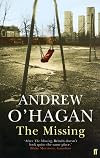
This was O’Hagan’s first book and unlike his later fiction works is a piece of investigative reporting.
It begins as a series of histories; of O’Hagan’s family, on both sides, of Glasgow’s troubles with sectarianism, of O’Hagan’s childhood, the Bible John murders, of Kilwinning and Irvine old (that of John Galt) and New, but transforms into a meditation on people who have gone missing; as a three year old boy and, later, a young woman of whom the only trace was her handbag, did during O’Hagan’s youth in Irvine to where his family had moved in the early days of the New Town’s construction. In the text he writes that he has, since childhood, fuelled by those two incidents in his home town, had a morbid fear of disappearing. Of that ongoing sectarianism O’Hagan says, “There’s sometimes too much pleasure, and too much social cohesion, involved in an ongoing mutual hatred for it to be surrendered just like that. In the absence of much else, of course, prejudice is just a form of tradition.” Which perhaps goes a long way to explaining sectarianism’s persistence.
In the book’s course O’Hagan meditates on the cruelties children perpetrate on one another when there are no adults around; with particular emphasis on an incident from his youth - when he was a joint perpetrator - and the James Bulger case (“There was something unhelpful about the way that case was discussed..... the two Scouse boys were called devils, treated as complete anomalies, show more and they were hounded outside the court by adults sick with the desire for retribution,”) before finally coming to the heart of his investigation, 25, Cromwell Street, Gloucester, by way of Fred West’s connections to Glasgow via his first wife, whose body, with those of her friend and daughter, was eventually dug up in the garden of West’s previous home in Much Marcle, Herefordshire. The last quarter of the book is taken up with West’s life and activities and the missing and, up till the discovery of their bodies, his seemingly unmissed, victims.
There are different ways to be a misper (as police jargon for missing persons has it.) Some people have reasons for going missing - and want to remain so. Many folk O’Hagan met in an occasional shelter, for drop-ins, fell into that category. He also notes an increasing category of missing who are simply unnoticed until their bodies are found in their homes months or years after their deaths.
While it is the thought and possible plight of missing persons that toll through the book it is the autobiographical details of O’Hagan’s family and early life which are the most immediate and memorable to the reader. (O’Hagan refers to going to school for the first time - in long trousers. Such a change there was in fifteen years or so; in my day such sartorial splendour was not sported until Secondary School.)
In the afterword to this 2004 edition O’Hagan writes that he opened the US publication of the book with the sentence, “We are none of us safe in this world,” and now does not wish to limit its “ominous tenor”. But surely that has always been true? We could fall under the proverbial bus - or cart as was. A close examination of the awful events that take place, of the lives cut short or compromised, will inevitably lead to such a sense of insecurity. Feeding and encouraging such thoughts is what fuels the tabloid press and right wing politicians eager to reduce freedoms for the populace and scrutiny of themselves. Perhaps O’Hagan’s journalistic endeavour has obscured to him a wider perspective. There is no such thing as absolute safety. And protection from threat – terrorist or otherwise – can never be complete. Yet notwithstanding what goes on today in the world - and the UK - my generation and that of my children are generally - and statistically - safer than those of my parents and grandparents. (This may not apply to the missing of course.)
It is a usually neglected yet necessary endeavour to reflect on and pay attention to people who are perhaps too easily forgotten and whose fate may or may not be grim. Even in this digital and camera-surveilled age it is possible to disappear, apparently without trace. The light O’Hagan shines on the problem is not sparing neither is it comfortable. show less
It begins as a series of histories; of O’Hagan’s family, on both sides, of Glasgow’s troubles with sectarianism, of O’Hagan’s childhood, the Bible John murders, of Kilwinning and Irvine old (that of John Galt) and New, but transforms into a meditation on people who have gone missing; as a three year old boy and, later, a young woman of whom the only trace was her handbag, did during O’Hagan’s youth in Irvine to where his family had moved in the early days of the New Town’s construction. In the text he writes that he has, since childhood, fuelled by those two incidents in his home town, had a morbid fear of disappearing. Of that ongoing sectarianism O’Hagan says, “There’s sometimes too much pleasure, and too much social cohesion, involved in an ongoing mutual hatred for it to be surrendered just like that. In the absence of much else, of course, prejudice is just a form of tradition.” Which perhaps goes a long way to explaining sectarianism’s persistence.
In the book’s course O’Hagan meditates on the cruelties children perpetrate on one another when there are no adults around; with particular emphasis on an incident from his youth - when he was a joint perpetrator - and the James Bulger case (“There was something unhelpful about the way that case was discussed..... the two Scouse boys were called devils, treated as complete anomalies, show more and they were hounded outside the court by adults sick with the desire for retribution,”) before finally coming to the heart of his investigation, 25, Cromwell Street, Gloucester, by way of Fred West’s connections to Glasgow via his first wife, whose body, with those of her friend and daughter, was eventually dug up in the garden of West’s previous home in Much Marcle, Herefordshire. The last quarter of the book is taken up with West’s life and activities and the missing and, up till the discovery of their bodies, his seemingly unmissed, victims.
There are different ways to be a misper (as police jargon for missing persons has it.) Some people have reasons for going missing - and want to remain so. Many folk O’Hagan met in an occasional shelter, for drop-ins, fell into that category. He also notes an increasing category of missing who are simply unnoticed until their bodies are found in their homes months or years after their deaths.
While it is the thought and possible plight of missing persons that toll through the book it is the autobiographical details of O’Hagan’s family and early life which are the most immediate and memorable to the reader. (O’Hagan refers to going to school for the first time - in long trousers. Such a change there was in fifteen years or so; in my day such sartorial splendour was not sported until Secondary School.)
In the afterword to this 2004 edition O’Hagan writes that he opened the US publication of the book with the sentence, “We are none of us safe in this world,” and now does not wish to limit its “ominous tenor”. But surely that has always been true? We could fall under the proverbial bus - or cart as was. A close examination of the awful events that take place, of the lives cut short or compromised, will inevitably lead to such a sense of insecurity. Feeding and encouraging such thoughts is what fuels the tabloid press and right wing politicians eager to reduce freedoms for the populace and scrutiny of themselves. Perhaps O’Hagan’s journalistic endeavour has obscured to him a wider perspective. There is no such thing as absolute safety. And protection from threat – terrorist or otherwise – can never be complete. Yet notwithstanding what goes on today in the world - and the UK - my generation and that of my children are generally - and statistically - safer than those of my parents and grandparents. (This may not apply to the missing of course.)
It is a usually neglected yet necessary endeavour to reflect on and pay attention to people who are perhaps too easily forgotten and whose fate may or may not be grim. Even in this digital and camera-surveilled age it is possible to disappear, apparently without trace. The light O’Hagan shines on the problem is not sparing neither is it comfortable. show less

Jonathan Yeager has just finished a tour working for a private defence contractor, protecting VIPs visiting Baghdad - in plainer terms, a mercenary - when he is recruited for a secret mission in Africa. Operation Guardian is to seek out and kill a group who may be infected by a deadly virus but its members are also given the strange instruction to kill on sight a “living creature you’ve never seen before,” a creature which becomes immediately clear is the operation’s real target.
Kento Koga is a pharmaceutical research worker whose father, a virologist, has just died. He receives an email from his dead father asking him to look in a certain book and not to tell anyone. In there he finds an ATM card and a memo informing him about a hidden laptop of which he is never to relinquish control, an address to go to and to expect all his communications to be monitored. The building contains equipment for carrying out Organic Chemistry reactions and he is tasked with researching and synthesising an agonist for a mutant form of the protein GPR769,l to be completed within one month.
Unfortunately the prologue, which describes a meeting in the White House, dissipates any sense of mystery about the reasons for Operation Guardian as it reveals the existence of a new life form (an evolved human, or more precisely a Pygmy born into the Kanga band of Mbuti.) This may lead to the extinction of the human race and of course is seen as a threat to the US. The President here is named as show more Gregor S Burns but reads as an extremely thinly disguised version of George W Bush, as he ordered an invasion of Iraq and Afghanistan and declared victory before the war was won.
The US security apparatus is also concerned about leaks to human rights organisations concerning extraordinary rendition (a procedure which Takano feels the need to explain to us at length.) A secondary purpose of Operation Guardian is to kill the leaker, Warren Garrett, one of its members, who wishes to intimidate President Burns into stopping rendition/torture by revealing the evidence to threaten him with a war crimes tribunal. We all know this could never really happen and like the text’s attempts to soften Yeager and the other members of the operation is rather limp. These are killers after all.
And the relationship between the two strands? Yeager’s son Justin suffers from pulmonary alveolar epithelial cell sclerosis, or PAECS, which is the fatal disease caused by mutant GPR769. There are occasional passages from other points of view which are only visited the once.
Takano has characters hark on violence’s inevitability. “We project our true colours onto our enemies, fear them, and attack them. And in using violence against others, the nation and religion are the support systems that pardon our actions.” Maybe so; but, “‘War is just another form of cannibalism. Humans use their intelligence to try to hide their instinct for cannibalism,’” Really? Again, “‘Good deeds are seen as virtuous precisely because they run counter to human nature,’” which is definitely arguable. The point is in any case somewhat undermined by Koga’s determination to succeed and the members of Operation Guardian ending up protecting the creature - a three-year old named Akili.
The descriptions of the mechanics involved in undertaking Organic Chemistry are also not convincing. And a month to synthesise a chemical’s agonist from scratch - even with the help of an advanced computer programme - is more than a tall order. The violent scenes, in addition to being curiously perfunctory, read more like reportage at a remove. Then there is the skating over of the ethics of administering an untested drug (actually two drugs; an allosteric agent is also required) on human patients.
Extinction is an uneasy mix of military fiction and thriller. A work of pure SF would surely focus more on the evolved human. Granted, Akili has an undeveloped pharynx and is therefore incapable of speech (though can two-finger type.) He can factorise large numbers into their prime components so compromising the security of encrypted data and communication between computers but otherwise his agency is limited. Not so Koga’s mysterious telephonic prompter, a further link between the two main narratives.
Whether it is a consequence of translation is difficult to determine but the writing is plodding. It is also full of redundancies and meanderings of various sorts such as a disquisition on the lack of remuneration scientists receive for their endeavours. The slightest action is described, information dumping is intrusive, often ad hoc and frequently unnecessary. One phrase read, “Yeager, who’d had reconnoitring training.” Haven’t all soldiers?
As SF, Extinction is nugatory. Action thriller devotees may wish to take a look. show less
Kento Koga is a pharmaceutical research worker whose father, a virologist, has just died. He receives an email from his dead father asking him to look in a certain book and not to tell anyone. In there he finds an ATM card and a memo informing him about a hidden laptop of which he is never to relinquish control, an address to go to and to expect all his communications to be monitored. The building contains equipment for carrying out Organic Chemistry reactions and he is tasked with researching and synthesising an agonist for a mutant form of the protein GPR769,l to be completed within one month.
Unfortunately the prologue, which describes a meeting in the White House, dissipates any sense of mystery about the reasons for Operation Guardian as it reveals the existence of a new life form (an evolved human, or more precisely a Pygmy born into the Kanga band of Mbuti.) This may lead to the extinction of the human race and of course is seen as a threat to the US. The President here is named as show more Gregor S Burns but reads as an extremely thinly disguised version of George W Bush, as he ordered an invasion of Iraq and Afghanistan and declared victory before the war was won.
The US security apparatus is also concerned about leaks to human rights organisations concerning extraordinary rendition (a procedure which Takano feels the need to explain to us at length.) A secondary purpose of Operation Guardian is to kill the leaker, Warren Garrett, one of its members, who wishes to intimidate President Burns into stopping rendition/torture by revealing the evidence to threaten him with a war crimes tribunal. We all know this could never really happen and like the text’s attempts to soften Yeager and the other members of the operation is rather limp. These are killers after all.
And the relationship between the two strands? Yeager’s son Justin suffers from pulmonary alveolar epithelial cell sclerosis, or PAECS, which is the fatal disease caused by mutant GPR769. There are occasional passages from other points of view which are only visited the once.
Takano has characters hark on violence’s inevitability. “We project our true colours onto our enemies, fear them, and attack them. And in using violence against others, the nation and religion are the support systems that pardon our actions.” Maybe so; but, “‘War is just another form of cannibalism. Humans use their intelligence to try to hide their instinct for cannibalism,’” Really? Again, “‘Good deeds are seen as virtuous precisely because they run counter to human nature,’” which is definitely arguable. The point is in any case somewhat undermined by Koga’s determination to succeed and the members of Operation Guardian ending up protecting the creature - a three-year old named Akili.
The descriptions of the mechanics involved in undertaking Organic Chemistry are also not convincing. And a month to synthesise a chemical’s agonist from scratch - even with the help of an advanced computer programme - is more than a tall order. The violent scenes, in addition to being curiously perfunctory, read more like reportage at a remove. Then there is the skating over of the ethics of administering an untested drug (actually two drugs; an allosteric agent is also required) on human patients.
Extinction is an uneasy mix of military fiction and thriller. A work of pure SF would surely focus more on the evolved human. Granted, Akili has an undeveloped pharynx and is therefore incapable of speech (though can two-finger type.) He can factorise large numbers into their prime components so compromising the security of encrypted data and communication between computers but otherwise his agency is limited. Not so Koga’s mysterious telephonic prompter, a further link between the two main narratives.
Whether it is a consequence of translation is difficult to determine but the writing is plodding. It is also full of redundancies and meanderings of various sorts such as a disquisition on the lack of remuneration scientists receive for their endeavours. The slightest action is described, information dumping is intrusive, often ad hoc and frequently unnecessary. One phrase read, “Yeager, who’d had reconnoitring training.” Haven’t all soldiers?
As SF, Extinction is nugatory. Action thriller devotees may wish to take a look. show less

To all intents and purposes this is a nineteenth century novel but it is one written with a modern sensibility. The text is divided into a prologue set on (an unspecified) New Year’s Eve followed by four parts split into unevenly distributed sections which are titled consecutively January to September and then finally November, all interspersed with letters written between the characters.
In it the recently (happily) widowed Cora Seaborne with her son Frankie – who seems to have OCD or at the least autistic traits – and his childhood nurse Martha travel to Colchester to get away from London. The doctor who attended her husband’s death bed, Luke Garrett, has meanwhile formed an unreciprocated attraction to her. An earthquake eight years before the book starts has, according to rumour, let loose again the Essex Serpent which for a short time in 1669 roamed the waters of the Essex coast. Every local mishap or disappearance is now blamed on it. In the Blackwater estuary village of Aldwinter, there is a representation of the serpent carved onto a pew in All Saints Church. Through a mutual acquaintance an introduction is arranged between its vicar, William Ransome, and Cora, who has an interest in ancient creatures inspired by Mary Anning. Both Cora and Ransome erroneously imagine the other to be a stereotype of their respective statuses. They first meet by accident while rescuing a sheep from the muddy river bank but on further introduction strike up an intellectual, show more if verbally combative, friendship. Ransome is at odds with his congregation in being unwilling to address or assuage their belief in the creature. Ransome’s wife, Stella, is a consumptive, who is pleased by, even encourages, the friendship between her husband and Cora, and herself befriends Frankie.
The ingredients are here for a tale of forbidden love (or two eternal triangles even) set against a backdrop of supernatural horror but Perry does not play that game. She is more subtle – and too good a writer. Yet something about the enterprise nevertheless misses the mark.
The prologue mentions the banks of the River Blackwater in its first sentence. Having once lived by that river’s banks myself – but way upstream not near the estuary – I was therefore disposed to like the book, but as time went by I grew increasingly frustrated by it. It is not that it is not accomplished in its way or fails to provide memorable characters - even the relatively minor ones are rounded and all too human. There was just something about it that felt askew. About halfway through the thought crystallised.
Perry has yet to learn economy. Accumulation of detail normally lends verisimilitude, but she overdoes it. Descriptions frequently contain at least one observation too many. There is too much telling, too many extended ruminations by the various characters. And is Cora just a little too modern in her attitudes? In this regard the sub-theme of the problem of social housing and high rents also seemed to be straining for contemporary relevance. And - this last was actually a grace note, so not infelicitous as such - I did wonder if Martha had been named solely so as that another character might say to her, “‘Martha, my dear.’”
A pointer to Perry’s intentions for the novel may be found when she puts into the mouth of Will Ransome the thought, “‘far from being one truth alone there may be several truths,’” but we are never in any doubt that there is only one reality here. In that regard the putative fantasy element of the serpent promises more than it delivers.
While Perry has a facility with character and behaviour and The Essex Serpent has much to recommend it, it is more than a touch overwritten. show less
In it the recently (happily) widowed Cora Seaborne with her son Frankie – who seems to have OCD or at the least autistic traits – and his childhood nurse Martha travel to Colchester to get away from London. The doctor who attended her husband’s death bed, Luke Garrett, has meanwhile formed an unreciprocated attraction to her. An earthquake eight years before the book starts has, according to rumour, let loose again the Essex Serpent which for a short time in 1669 roamed the waters of the Essex coast. Every local mishap or disappearance is now blamed on it. In the Blackwater estuary village of Aldwinter, there is a representation of the serpent carved onto a pew in All Saints Church. Through a mutual acquaintance an introduction is arranged between its vicar, William Ransome, and Cora, who has an interest in ancient creatures inspired by Mary Anning. Both Cora and Ransome erroneously imagine the other to be a stereotype of their respective statuses. They first meet by accident while rescuing a sheep from the muddy river bank but on further introduction strike up an intellectual, show more if verbally combative, friendship. Ransome is at odds with his congregation in being unwilling to address or assuage their belief in the creature. Ransome’s wife, Stella, is a consumptive, who is pleased by, even encourages, the friendship between her husband and Cora, and herself befriends Frankie.
The ingredients are here for a tale of forbidden love (or two eternal triangles even) set against a backdrop of supernatural horror but Perry does not play that game. She is more subtle – and too good a writer. Yet something about the enterprise nevertheless misses the mark.
The prologue mentions the banks of the River Blackwater in its first sentence. Having once lived by that river’s banks myself – but way upstream not near the estuary – I was therefore disposed to like the book, but as time went by I grew increasingly frustrated by it. It is not that it is not accomplished in its way or fails to provide memorable characters - even the relatively minor ones are rounded and all too human. There was just something about it that felt askew. About halfway through the thought crystallised.
Perry has yet to learn economy. Accumulation of detail normally lends verisimilitude, but she overdoes it. Descriptions frequently contain at least one observation too many. There is too much telling, too many extended ruminations by the various characters. And is Cora just a little too modern in her attitudes? In this regard the sub-theme of the problem of social housing and high rents also seemed to be straining for contemporary relevance. And - this last was actually a grace note, so not infelicitous as such - I did wonder if Martha had been named solely so as that another character might say to her, “‘Martha, my dear.’”
A pointer to Perry’s intentions for the novel may be found when she puts into the mouth of Will Ransome the thought, “‘far from being one truth alone there may be several truths,’” but we are never in any doubt that there is only one reality here. In that regard the putative fantasy element of the serpent promises more than it delivers.
While Perry has a facility with character and behaviour and The Essex Serpent has much to recommend it, it is more than a touch overwritten. show less