
Kevin MacNeil
Author of The Stornoway Way
About the Author
Image credit: From Wikipedia page of Author
Works by Kevin MacNeil
Visible From Space 1 copy
Associated Works
Tagged
Common Knowledge
- Gender
- male
Members
Reviews

“If you are easily offended, consign this book to the flames immediately, or return it to the shop from which you stole it.” So begins The Stornoway Way, but not the novel of that name contained within this book. The conceit is that the embedded novel is a manuscript sent to our author Kevin MacNeil by one R Stornoway (yes, the schoolboy joke is acknowledged) whose real identity - the town of the surname being one where everyone knows everyone else; and their business – MacNeil has show more sworn to keep secret. I doubt we are supposed to be taken in by any of this. In any case there is not really too much to be offended by; except I suppose if you are one of those determined killjoys for whom “the Old Testament was a good start, but it didn’t go far enough” with which the Western Isles and Scotland generally have historically been saddled.
The cover is a work of genius, by the way, invoking both Whisky Galore and the island obsession, also shared by much of the mainland, with alcohol. The cartoon figure, blotto, with bottle still in hand, is a particularly apposite touch. Unlike in Compton MacKenzie’s book though, the dark side of alcohol dependency gets an airing here. In case this sounds gloomy I should say that in many ways The Stornoway Way is an amusing book, but while at times comedic it is never light, and always serious. (The recitation entitled “The Neighbours We Could Have Had” might not find favour in southern parts of these islands though.) And it has copious footnotes!!!! Who doesn’t love footnotes? Admittedly a lot of these are translations of various Gaelic terms – some of which aren’t even in the text - but better footnotes than a glossary. In them for example we find the Gaelic Sasanach has no pejorative connotations, unlike its Scots/English borrowing.
Before the internal novel begins we are presented with a map of Scotland upside down compared to the usual occidentation*. This helps to illustrate the point that in Stornoway, “We do not live in the back of beyond, we live in the very heart of beyond, “Our blood relatives in Scandinavia to the left, our blood relatives in Ireland to the right.” Though “R Stornoway” perhaps overdoes it when he says, “The Western Islander’s response to our diminishing way of life is that of the oppressed the world over, from Native American to Australian aborigine: a powerful urge to drink oneself underground.” The Western Islanders - and the Scots - have been drinking themselves underground for centuries.
When the novel proper starts, poverty has brought would-be artist “R Stornoway” back to Lewis and his childhood home, which he had been avid to leave as soon as possible. From there we range over various incidents from his life, his first experience with alcohol being a seminal moment. In all of these, even his relationship with Eva, a student from Hungary, alcohol plays a significant part - as it does for Stornoway the town.
An example of the narrator’s sardonic humour occurs when he is accused of being uncaring - and an alky. He replies, ‘Some people will believe anything if you tell them it’s a rumour.’
His existential crisis comes when he wakes up beside a beautiful woman and, due to the booze, cannot remember who she is, how she came to be there, nor exactly what happened between them the night before. His decision to fetch the ingredients for breakfast without waking her backfires when he returns to find her gone. At this point there is still a substantial part of the novel to come though. Eventually he comes to terms with himself and his relationship with alcohol. “Drink doesn’t give you a better sense of who you are, it gives you a nonsense of who you are.”
The latter part of the novel has a more downbeat nature than the delicious early chapters, concomitant with the cumulative effects of alcohol on the individual personality, but even with that The Stornoway Way is overall brilliant stuff.
*One of MacNeil’s coinages, see also gloominous clouds, muselicious. show less
The cover is a work of genius, by the way, invoking both Whisky Galore and the island obsession, also shared by much of the mainland, with alcohol. The cartoon figure, blotto, with bottle still in hand, is a particularly apposite touch. Unlike in Compton MacKenzie’s book though, the dark side of alcohol dependency gets an airing here. In case this sounds gloomy I should say that in many ways The Stornoway Way is an amusing book, but while at times comedic it is never light, and always serious. (The recitation entitled “The Neighbours We Could Have Had” might not find favour in southern parts of these islands though.) And it has copious footnotes!!!! Who doesn’t love footnotes? Admittedly a lot of these are translations of various Gaelic terms – some of which aren’t even in the text - but better footnotes than a glossary. In them for example we find the Gaelic Sasanach has no pejorative connotations, unlike its Scots/English borrowing.
Before the internal novel begins we are presented with a map of Scotland upside down compared to the usual occidentation*. This helps to illustrate the point that in Stornoway, “We do not live in the back of beyond, we live in the very heart of beyond, “Our blood relatives in Scandinavia to the left, our blood relatives in Ireland to the right.” Though “R Stornoway” perhaps overdoes it when he says, “The Western Islander’s response to our diminishing way of life is that of the oppressed the world over, from Native American to Australian aborigine: a powerful urge to drink oneself underground.” The Western Islanders - and the Scots - have been drinking themselves underground for centuries.
When the novel proper starts, poverty has brought would-be artist “R Stornoway” back to Lewis and his childhood home, which he had been avid to leave as soon as possible. From there we range over various incidents from his life, his first experience with alcohol being a seminal moment. In all of these, even his relationship with Eva, a student from Hungary, alcohol plays a significant part - as it does for Stornoway the town.
An example of the narrator’s sardonic humour occurs when he is accused of being uncaring - and an alky. He replies, ‘Some people will believe anything if you tell them it’s a rumour.’
His existential crisis comes when he wakes up beside a beautiful woman and, due to the booze, cannot remember who she is, how she came to be there, nor exactly what happened between them the night before. His decision to fetch the ingredients for breakfast without waking her backfires when he returns to find her gone. At this point there is still a substantial part of the novel to come though. Eventually he comes to terms with himself and his relationship with alcohol. “Drink doesn’t give you a better sense of who you are, it gives you a nonsense of who you are.”
The latter part of the novel has a more downbeat nature than the delicious early chapters, concomitant with the cumulative effects of alcohol on the individual personality, but even with that The Stornoway Way is overall brilliant stuff.
*One of MacNeil’s coinages, see also gloominous clouds, muselicious. show less
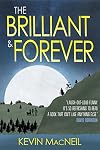
“The Brilliant and Forever” by Kevin McNeil is sadly neglected in this day and age. It is indeed brilliant (whether it is forever is more questionable but I hope it is around for a very long while.) McNeil started out as a poet and then published “The Stornoway Way”. I thought that a bit of a "poets novel"; there was some excellent writing and he described a Stornoway recognisable to me (entirely unromantacised which makes a change) but I did not think it was entirely satisfying as a show more story. “The Brilliant and Forever” goes up several gears. A truly brilliant bit of writing that is quite unlike anything else. That is something in itself but it is a really fun, inventive, clever, thought provoking story. Or rather stories because it is a sort of nest containing numerous short stories, none of which much resemble any others. “The Brilliant and Forever” of the title being a writing competition and all the entries in that are part of the book. There are also nods to Italo Calvino. However, the nearest thing I have read to it is probably Flann O'Brien's “The Third Policeman”. Apart from the... well, I am not sure if you would call it Magic Realism or Absurdist elements, there is something in the tone - it manages to be ridiculous (in a good way) and menacing at the same time, which is quite a trick to pull off. And quite different to The “Stornoway Way” which is grimly realistic.
It isn't perfect. I don't want to caste doubt on its quality by my nit-picking hypercritical ways (and to do so would involve spoilers) - but I think he could get even better yet, he is still a young guy. And it is good indeed. show less
It isn't perfect. I don't want to caste doubt on its quality by my nit-picking hypercritical ways (and to do so would involve spoilers) - but I think he could get even better yet, he is still a young guy. And it is good indeed. show less
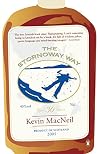
Very amusing - a scurrilous, rumbustious tale of excessive alcohol consumption and the occasionally demeaning consequences of it, set against the bleak terrain and climate of the Isle of Lewis.
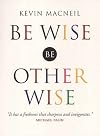
Woo-hoo! Finally scored a copy of an elusive little book I've been hunting for a year or two now!
Be Wise, Be Otherwise: ideas and advice for your kind of person is a book of aphorisms by Kevin MacNeil. MacNeil is a writer that deserves to be more widely known; half author, half poet, he has a deft skill with language that I love. His novel, The Stornoway Way, published in 2005, is one of my favourite Scottish novels of this century so far; and Love and Zen in the Outer Hebrides is a huge show more amount of fun. The Stornoway Way - rightly - garnered him a lot more attention than he previously had done but, insanely, no-one ever went back to do reprint runs of his earlier books to satisfy the demand that that novel created. Consequently, his earlier works are gey difficult to get a hold of.
Anyway, this is a brief little book that shares a lot of similarities with another book that I love, The Book of Shadows, a book of aphorisms by the poet Don Paterson. It's less than 200 pages, and each page has just a sentence or two, a little nugget of language and idea. Books of aphorisms are odd affairs, but when they work, they build to given an overall effect that is more than the sum of their contents, and this one does just that. Bright, refreshing, thought-provoking, yet easy to swallow, these are little timebombs of idea.
Very glad to finally have found and read a copy of this. show less
Be Wise, Be Otherwise: ideas and advice for your kind of person is a book of aphorisms by Kevin MacNeil. MacNeil is a writer that deserves to be more widely known; half author, half poet, he has a deft skill with language that I love. His novel, The Stornoway Way, published in 2005, is one of my favourite Scottish novels of this century so far; and Love and Zen in the Outer Hebrides is a huge show more amount of fun. The Stornoway Way - rightly - garnered him a lot more attention than he previously had done but, insanely, no-one ever went back to do reprint runs of his earlier books to satisfy the demand that that novel created. Consequently, his earlier works are gey difficult to get a hold of.
Anyway, this is a brief little book that shares a lot of similarities with another book that I love, The Book of Shadows, a book of aphorisms by the poet Don Paterson. It's less than 200 pages, and each page has just a sentence or two, a little nugget of language and idea. Books of aphorisms are odd affairs, but when they work, they build to given an overall effect that is more than the sum of their contents, and this one does just that. Bright, refreshing, thought-provoking, yet easy to swallow, these are little timebombs of idea.
Very glad to finally have found and read a copy of this. show less
Awards


You May Also Like


Associated Authors
Statistics
- Works
- 11
- Also by
- 1
- Members
- 236
- Popularity
- #95,934
- Rating
- 3.6
- Reviews
- 8
- ISBNs
- 21
- Languages
- 1