
Andrew Greig
Author of That Summer
About the Author
Works by Andrew Greig
Associated Works
Climb: Stories of Survival from Rock, Snow, and Ice (Adrenaline) (1999) — Contributor — 69 copies, 1 review
Tagged
Common Knowledge
- Birthdate
- 1951-09-23
- Gender
- male
- Education
- University of Edinburgh
- Awards and honors
- Eric Gregory Award (1972)
- Relationships
- Glaister, Lesley (wife)
- Nationality
- UK
- Places of residence
- Orkney, Scotland, UK
South Queensferry, Edinburgh, Scotland, UK
Sheffield, South Yorkshire, England, UK - Associated Place (for map)
- Scotland, UK
Members
Reviews

“So what’s it all about? Why do climbers climb, why did I do it, what does it mean? Somehow I no longer want to talk or think about it. I’d begun climbing eager to analyse my companions, myself and climbing; now I’m reluctant to draw any conclusions at all. There is no clear answer to these questions, and even if there were it would not be very important. It is in the experience itself that the value lies.“
Andrew Greig is a Scottish writer who was asked, in 1984, by climber Malcolm show more Duff, to document his expedition’s attempt to summit Mustagh Tower in the Karakoram Himalayas in northern Pakistan. The author never expected to undertake such a daunting task, but Duff helped him prepare and taught him the basics beforehand. This book takes the reader along for the entire trip, starting with the preparations and logistics. It recounts the various obstacles and challenges all along the way, including both the downtime and the actual climbing.
Greig documents the interpersonal dynamics, physical and mental challenges of climbing, landscapes, and people living in the region. It differs from many books I have read, which are more focused on the actual climb once all the preliminaries are completed. I always seem to enjoy these narratives, since it allows me to experience an expedition without, you know, risking life and limb.
“Above 20,000 feet one does not recharge, can eat little and usually sleep less, in conditions of great discomfort. And then the next day get up and do it all over again. It is this combination of absolute mental and physical demands that makes mountaineering the total experience. That makes it so addictive.” show less
Andrew Greig is a Scottish writer who was asked, in 1984, by climber Malcolm show more Duff, to document his expedition’s attempt to summit Mustagh Tower in the Karakoram Himalayas in northern Pakistan. The author never expected to undertake such a daunting task, but Duff helped him prepare and taught him the basics beforehand. This book takes the reader along for the entire trip, starting with the preparations and logistics. It recounts the various obstacles and challenges all along the way, including both the downtime and the actual climbing.
Greig documents the interpersonal dynamics, physical and mental challenges of climbing, landscapes, and people living in the region. It differs from many books I have read, which are more focused on the actual climb once all the preliminaries are completed. I always seem to enjoy these narratives, since it allows me to experience an expedition without, you know, risking life and limb.
“Above 20,000 feet one does not recharge, can eat little and usually sleep less, in conditions of great discomfort. And then the next day get up and do it all over again. It is this combination of absolute mental and physical demands that makes mountaineering the total experience. That makes it so addictive.” show less

“So what’s it all about? Why do climbers climb, why did I do it, what does it mean? Somehow I no longer want to talk or think about it. I’d begun climbing eager to analyse my companions, myself and climbing; now I’m reluctant to draw any conclusions at all. There is no clear answer to these questions, and even if there were it would not be very important. It is in the experience itself that the value lies.“
Andrew Greig is a Scottish writer who was asked, in 1984, by climber Malcolm show more Duff, to document his expedition’s attempt to summit Mustagh Tower in the Karakoram Himalayas in northern Pakistan. The author never expected to undertake such a daunting task, but Duff helped him prepare and taught him the basics beforehand. This book takes the reader along for the entire trip, starting with the preparations and logistics. It recounts the various obstacles and challenges all along the way, including both the downtime and the actual climbing.
Greig documents the interpersonal dynamics, physical and mental challenges of climbing, landscapes, and people living in the region. It differs from many books I have read, which are more focused on the actual climb once all the preliminaries are completed. I always seem to enjoy these narratives, since it allows me to experience an expedition without, you know, risking life and limb.
“Above 20,000 feet one does not recharge, can eat little and usually sleep less, in conditions of great discomfort. And then the next day get up and do it all over again. It is this combination of absolute mental and physical demands that makes mountaineering the total experience. That makes it so addictive.” show less
Andrew Greig is a Scottish writer who was asked, in 1984, by climber Malcolm show more Duff, to document his expedition’s attempt to summit Mustagh Tower in the Karakoram Himalayas in northern Pakistan. The author never expected to undertake such a daunting task, but Duff helped him prepare and taught him the basics beforehand. This book takes the reader along for the entire trip, starting with the preparations and logistics. It recounts the various obstacles and challenges all along the way, including both the downtime and the actual climbing.
Greig documents the interpersonal dynamics, physical and mental challenges of climbing, landscapes, and people living in the region. It differs from many books I have read, which are more focused on the actual climb once all the preliminaries are completed. I always seem to enjoy these narratives, since it allows me to experience an expedition without, you know, risking life and limb.
“Above 20,000 feet one does not recharge, can eat little and usually sleep less, in conditions of great discomfort. And then the next day get up and do it all over again. It is this combination of absolute mental and physical demands that makes mountaineering the total experience. That makes it so addictive.” show less
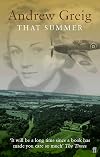
This novel tells the story of the relationship between an RAF pilot, Len Westbourne, and a RDF (radar) ground-controller, Stella Gardam,during the summer of 1940, in what would later be referred to as the Battle of Britain.
Set against a war-time background 'That Summer' is a well crafted love story full of both joy and sorrow. The story is told in first person narrative from the viewpoint of each of the main characters in short punchy chapters with each of the lovers narrating different show more sections.
I felt that Greig managed to vividly evoke the immediacy of life at the time, in particular that of the fighter pilots. There is an intensity to it as each one of them lives life to its full. Greig explores the hearts and minds of his characters, in doing so, turns this into a novel about what it means to enjoy life whilst you can at the same time bringing home the reality of the randomness of war.
This is not some nostalgic piece of work but a very contemporary one. You cannot help to care about Len and Stella, their friends Tad and Maddy, willing them all to survive unscathed against all the odds and we, the modern day reader, get a possible insight into the hopes and dreams for the future, after the war, of those that were actually there. Simple dreams of families and setting down roots.
The book does not glorify war but rather the futility of it. Overall I felt that this was a very well written and thoughtful piece of work from an author that I had not previously picked up. show less
Set against a war-time background 'That Summer' is a well crafted love story full of both joy and sorrow. The story is told in first person narrative from the viewpoint of each of the main characters in short punchy chapters with each of the lovers narrating different show more sections.
I felt that Greig managed to vividly evoke the immediacy of life at the time, in particular that of the fighter pilots. There is an intensity to it as each one of them lives life to its full. Greig explores the hearts and minds of his characters, in doing so, turns this into a novel about what it means to enjoy life whilst you can at the same time bringing home the reality of the randomness of war.
This is not some nostalgic piece of work but a very contemporary one. You cannot help to care about Len and Stella, their friends Tad and Maddy, willing them all to survive unscathed against all the odds and we, the modern day reader, get a possible insight into the hopes and dreams for the future, after the war, of those that were actually there. Simple dreams of families and setting down roots.
The book does not glorify war but rather the futility of it. Overall I felt that this was a very well written and thoughtful piece of work from an author that I had not previously picked up. show less
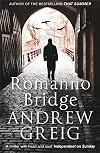
Set in the mid 1990s – someone “says there’s going to be an election soon and things can only get better” – this novel reunites the reader with all the main characters from Greig’s earlier book The Return of John Macnab and throws in two more here for good measure in the shape of Maori rugby player Leo Ngatara and Norwegian musician Inga Johanssen.
The plot has more of a thriller touch this time, centring round the genuineness of the Stone of Destiny. In her job as a journalist show more in Dumfries Kirsty Fowler meets Billy Mackay, an old man in his last days, who tells of his participation in the making of two replacement stones during the time the “original” was missing in 1950. This leads to designations such as fake fake as opposed to the real fake foisted on England’s Edward I and kept at Westminster ever since (until recently at least.) It is the whereabouts of Columba’s Pillow, the real crowning stone, hidden from Edward at the time and kept in the care of Moon Runners - whose guardianship is embodied in rings inscribed with runes (Moon rune-ers, you see, with only ever three extant at one time) - ever since that drives the plot. Mackay gifts Kirsty one such ring and thus unwittingly places her in danger at the hands of a ruthless intermediary calling himself Adamson who came to know of their existence via Inga’s brother Colin – and has a buyer for the real stone. The goings-on in uncovering the hiding places of the two fake fake stones and the original fake itself, take the characters to various parts of Scotland and even on an excursion to Norway.
All this gives Greig an opportunity to display his familiarity with the art of rock climbing and the music scene and to comment about Scots’ habit of revering their homeland, “‘Ye’d hae thought Scotland was Helen of Troy the way some folk sighed over her,’” even as seen through the eyes of foreigner Inga, “Strange place to inspire such belonging.” There are wider ruminations too. We are told an ancient Sumerian manuscript bemoans the times as violent, chaotic and strange, the young don’t speak properly, the gods are unrespected, etc, etc. – which only means the writer was elderly. And Leo Ngatara comes to reflect bleakly that, “None of us will be all right. Mountains, sunsets, good times, bad times, mates, children – nothing endures. Nothing. No exceptions.”
Greig is never less than an insightful novelist but here the thriller plot sits a little uneasily with his gifts for illuminating character, describing landscape and revealing the complexities of human affairs. show less
The plot has more of a thriller touch this time, centring round the genuineness of the Stone of Destiny. In her job as a journalist show more in Dumfries Kirsty Fowler meets Billy Mackay, an old man in his last days, who tells of his participation in the making of two replacement stones during the time the “original” was missing in 1950. This leads to designations such as fake fake as opposed to the real fake foisted on England’s Edward I and kept at Westminster ever since (until recently at least.) It is the whereabouts of Columba’s Pillow, the real crowning stone, hidden from Edward at the time and kept in the care of Moon Runners - whose guardianship is embodied in rings inscribed with runes (Moon rune-ers, you see, with only ever three extant at one time) - ever since that drives the plot. Mackay gifts Kirsty one such ring and thus unwittingly places her in danger at the hands of a ruthless intermediary calling himself Adamson who came to know of their existence via Inga’s brother Colin – and has a buyer for the real stone. The goings-on in uncovering the hiding places of the two fake fake stones and the original fake itself, take the characters to various parts of Scotland and even on an excursion to Norway.
All this gives Greig an opportunity to display his familiarity with the art of rock climbing and the music scene and to comment about Scots’ habit of revering their homeland, “‘Ye’d hae thought Scotland was Helen of Troy the way some folk sighed over her,’” even as seen through the eyes of foreigner Inga, “Strange place to inspire such belonging.” There are wider ruminations too. We are told an ancient Sumerian manuscript bemoans the times as violent, chaotic and strange, the young don’t speak properly, the gods are unrespected, etc, etc. – which only means the writer was elderly. And Leo Ngatara comes to reflect bleakly that, “None of us will be all right. Mountains, sunsets, good times, bad times, mates, children – nothing endures. Nothing. No exceptions.”
Greig is never less than an insightful novelist but here the thriller plot sits a little uneasily with his gifts for illuminating character, describing landscape and revealing the complexities of human affairs. show less
Lists
THE WAR ROOM (1)
Awards


You May Also Like


Associated Authors
Statistics
- Works
- 26
- Also by
- 4
- Members
- 1,050
- Popularity
- #24,543
- Rating
- 3.9
- Reviews
- 45
- ISBNs
- 95
- Languages
- 3
- Favorited
- 5