
Louise Welsh
Author of The Cutting Room
About the Author
Louise Welsh has published a wide range of short stories and articles. She was chosen as one of Britain's Best First Novelists of 2002 by the Guardian newspaper. The Cutting Room won The Crime Writers Association Creasey Dagger for the best first crime novel as well as The Saltire First Book of the show more Year Award show less
Series
Works by Louise Welsh
The Empire Cafe 2 copies
The Night Highway 1 copy
Associated Works
The Crime Interviews: Volume One: Bestselling Authors Talk About Writing Crime Fiction (2013) — Foreword — 2 copies
Tagged
Common Knowledge
- Canonical name
- Welsh, Louise
- Other names
- Welsh, L.
- Birthdate
- 1965-02-01
- Gender
- female
- Education
- University of Glasgow (Art History)
- Occupations
- Schriftstellerin
- Awards and honors
- Waterstones 25 Authors for the Future (2007)
Scotland on Sunday/Glenfiddich Spirit of Scotland Award (2004)
Stonewall Book Award (US) (2004)
Hawthornden Fellowship (2005) - Agent
- David Miller (Rogers Coleridge & White)
- Short biography
- After studying history at Glasgow University, Louise Welsh established a second-hand bookshop, where she worked for many years. Her first novel, The Cutting Room, won several awards, including the 2002 Crime Writers’ Association John Creasey Memorial Dagger, and was jointly awarded the 2002 Saltire Society Scottish First Book of the Year Award. Louise was granted a Robert Louis Stevenson Memorial Award in 2003, a Scotland on Sunday/Glenfiddich Spirit of Scotland Award in 2004, and a Hawthornden Fellowship in 2005.
She is a regular radio broadcaster, has published many short stories, and has contributed articles and reviews to most of the British broadsheets. She has also written for the stage. The Guardian chose her as a 'woman to watch' in 2003. - Nationality
- England
UK - Birthplace
- London, England, UK
- Places of residence
- Glasgow, Scotland, UK
- Associated Place (for map)
- UK
Members
Reviews
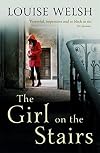
The Girl on the Stairs is a psychological crime thriller by Scottish author Louise Welsh. Jane and Petra are a lesbian couple who are expecting a baby. Jane is pregnant and has just moved to Berlin to join Petra. She is feeling a little isolated as she has no friends in Berlin and speaks little of the language. Petra is a successful businesswoman who often has to travel for her job. With little to keep her occupied, Jane becomes obsessed with the father and daughter who live next door. She show more hears arguments in the middle of the night and sees bruises on the 13 year old’s face and becomes insistent that the father is abusing his daughter. She also becomes involved with an older couple who live downstairs, although the woman is suffering from dementia and the man isn’t very welcoming. She hears rumors about the mother of the family next door being either missing or murdered.
The story is gripping and keeps the reader guessing whether any of what Jane suspects is true. Jane is obviously damaged in many ways herself but as soon as one starts to doubt Jane, something happens to escalate her suspicions and bring us back to her side. The atmosphere is dark and tense as Jane explores her neighbourhood that includes a derelict building that overlooks the apartment. Everyone in the book appears to be lying and keeping secrets. Who to believe – who to trust?
The Girl on the Stairs had me rooting for Jane one minute and wanting to force her to give up her poking and prying ways the next. The author maintains a claustrophobic tension throughout the book and the many twists and turns keep the pages turning. The book is unsettling and disturbing to the point that many readers will be uncomfortable. Personally I give it a big thumbs up! show less
The story is gripping and keeps the reader guessing whether any of what Jane suspects is true. Jane is obviously damaged in many ways herself but as soon as one starts to doubt Jane, something happens to escalate her suspicions and bring us back to her side. The atmosphere is dark and tense as Jane explores her neighbourhood that includes a derelict building that overlooks the apartment. Everyone in the book appears to be lying and keeping secrets. Who to believe – who to trust?
The Girl on the Stairs had me rooting for Jane one minute and wanting to force her to give up her poking and prying ways the next. The author maintains a claustrophobic tension throughout the book and the many twists and turns keep the pages turning. The book is unsettling and disturbing to the point that many readers will be uncomfortable. Personally I give it a big thumbs up! show less
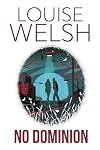
Envisioned long before Covid and published in 2017, No Dominion by Louise Welsh is the third book in her trilogy about a grim near-future where a flue like epidemic has killed off three-quarters of the world’s population. The survivors are left facing chaos and an uncertain future. After following two people north from London, we find in this third volume that is set about seven years later, that they have settled on the Orkney Islands and live a simple, rural life.
Three strangers arrive show more on the island and lure a group of teens to leave with them. They have also kidnapped a small child and left behind a murdered couple. The two main characters from the previous books set out after them. One of the children is Magnus’ foster son so this a very personal quest for him. The story as it unfolds is full of action and violence as well as quiet, surreal moments describing how nature is overtaking the land, or how technology has faded away.
Beautifully written, No Dominion paints both a dark picture of what humanity has lost, but also allows a glimmer of hope as we see the people on Orkney striving to build a community that has solid values and family connections. Although there were parts of this third volume that I found rather episodic, overall this is an intriguing and imaginative trilogy where the author has placed as much attention on character and world building as she has on the violence and action. show less
Three strangers arrive show more on the island and lure a group of teens to leave with them. They have also kidnapped a small child and left behind a murdered couple. The two main characters from the previous books set out after them. One of the children is Magnus’ foster son so this a very personal quest for him. The story as it unfolds is full of action and violence as well as quiet, surreal moments describing how nature is overtaking the land, or how technology has faded away.
Beautifully written, No Dominion paints both a dark picture of what humanity has lost, but also allows a glimmer of hope as we see the people on Orkney striving to build a community that has solid values and family connections. Although there were parts of this third volume that I found rather episodic, overall this is an intriguing and imaginative trilogy where the author has placed as much attention on character and world building as she has on the violence and action. show less

"The Girl On The Stairs" by Louise Welsh: tense, multi-layered thriller that I found deeply satisfying
At the start of "The Girl On The Stairs" I thought I was reading a well observed description of how dislocating it is to find oneself living in a foreign city, surrounded by people who speak a language you barely understand and who, when they politely switch to flawless English to include you in a conversation, somehow make you feel more isolated and add to your growing sense of cultural show more incompetence. I recognised the tension that accompanies becoming aware that, even though things here seem to be the same as at home, they are different in important ways that you sense only like a just-beyond-hearing-range high-pitched scream.
It felt real to me and bound me to poor, pregnant, Scottish Jane, living with here urbane partner, Petra, in a flat in Berlin that she did not choose, populated by people she does not know, and in which she is too often alone.
I absorbed her anxiety. I shared her suspicions of her what her neighbour was doing to his daughter, the girl on the stairs, behind closed doors. I admired Jane's bravery as she decided to act rather than to hide in her apartment and pretend everything was O.K.
Then, bit by bit, I started to doubt. Walsh gave me just enough information to suspect that Jane was not a reliable narrator, that her perception might be skewed, that not everything she described might be true.
Of course, I did not know which parts of Jane's narration could not be trusted and the foreign location and alien society made it harder for me to make a judgement. Which, of course, meant I was in exactly the same situation as Jane herself.
Walsh then ratcheted up the tension, drawing on the shadows of Berlin's dark past (the invading Russian Army used rape as a weapon of retribution on a scale that ranks second only to the Japanese in Nanking) and its unpleasant present (prostitution, violent punks, drunks and drug users in the streets and wraps it all in the chill dreariness of a Berlin winter.
The plot is clever, plausible and disclosed with a perfect control of pace.
But it is not the plot that haunts me, it is the perfectly evoked sense of threat that remains my strongest memory of this book. This is threat that many women experience, that their vulnerability will be translated into punishment at the hands of violent men. This threat, which is not just an absence of safety but an expectation of pain, drives Jane. It taints everything that she sees. It looms over her, cornering her, leaving her with the option of passive surrender or violent rage. This threat is amplified by Jane's history, by her pregnancy, and by her isolation. But what takes this book beyond the ordinary is that, in many ways, the most threatening thing is the book is Jane herself. I was left feeling that she cast the shadows she lived in. That she evoked, perhaps even provoked, the violence around her. That the girl on the stairs that we should worry about is not the neighbour's daughter, but Jane herself. That she is damaged and that the damage is contagious.
That notion is paranoid and not entirely rational but it is what the book led me to believe and feel. Which is, perhaps, what the whole book is about. show less
At the start of "The Girl On The Stairs" I thought I was reading a well observed description of how dislocating it is to find oneself living in a foreign city, surrounded by people who speak a language you barely understand and who, when they politely switch to flawless English to include you in a conversation, somehow make you feel more isolated and add to your growing sense of cultural show more incompetence. I recognised the tension that accompanies becoming aware that, even though things here seem to be the same as at home, they are different in important ways that you sense only like a just-beyond-hearing-range high-pitched scream.
It felt real to me and bound me to poor, pregnant, Scottish Jane, living with here urbane partner, Petra, in a flat in Berlin that she did not choose, populated by people she does not know, and in which she is too often alone.
I absorbed her anxiety. I shared her suspicions of her what her neighbour was doing to his daughter, the girl on the stairs, behind closed doors. I admired Jane's bravery as she decided to act rather than to hide in her apartment and pretend everything was O.K.
Then, bit by bit, I started to doubt. Walsh gave me just enough information to suspect that Jane was not a reliable narrator, that her perception might be skewed, that not everything she described might be true.
Of course, I did not know which parts of Jane's narration could not be trusted and the foreign location and alien society made it harder for me to make a judgement. Which, of course, meant I was in exactly the same situation as Jane herself.
Walsh then ratcheted up the tension, drawing on the shadows of Berlin's dark past (the invading Russian Army used rape as a weapon of retribution on a scale that ranks second only to the Japanese in Nanking) and its unpleasant present (prostitution, violent punks, drunks and drug users in the streets and wraps it all in the chill dreariness of a Berlin winter.
The plot is clever, plausible and disclosed with a perfect control of pace.
But it is not the plot that haunts me, it is the perfectly evoked sense of threat that remains my strongest memory of this book. This is threat that many women experience, that their vulnerability will be translated into punishment at the hands of violent men. This threat, which is not just an absence of safety but an expectation of pain, drives Jane. It taints everything that she sees. It looms over her, cornering her, leaving her with the option of passive surrender or violent rage. This threat is amplified by Jane's history, by her pregnancy, and by her isolation. But what takes this book beyond the ordinary is that, in many ways, the most threatening thing is the book is Jane herself. I was left feeling that she cast the shadows she lived in. That she evoked, perhaps even provoked, the violence around her. That the girl on the stairs that we should worry about is not the neighbour's daughter, but Jane herself. That she is damaged and that the damage is contagious.
That notion is paranoid and not entirely rational but it is what the book led me to believe and feel. Which is, perhaps, what the whole book is about. show less

Dark, disturbing, explicit, yet entertaining and not without humour. Rilke, an auctioneer in a second-rate auction house, is tasked by the sister of a dead man to empty her brother's house for auction and to personally deal with the contents of a locked room and destroy everything. When he has a first look in the attic room he finds a collection of pornographic books and distressing snuff photography. Gripped by a set of photos featuring a young woman, Rilke is compelled to find out if they show more were staged or if the girl was murdered. He begins by asking some shady characters he knows if this kind of setting can be faked.
Rilke himself is no angel, avenging or not, but a seedy, dissolute type who in the first few pages is arrested for having an illicit sexual encounter with a stranger in the park. Welsh lets the plot digress somewhat while she provides a picture of Glasgow's transvestite bars, drug dealers and Rilke's sexual experiences. She also offers an interesting look at auction houses and their sidekick clientele bent on fixing prices and profiting from legitimate transactions.
I almost abandoned this book after only a few pages but knowing the acclaim Welsh received, I'm glad I chose to continue because it is a brilliant example of literary noir fiction. Welsh's writing and characters have originality, and both are delightfully Glaswegian. It's not a book that I can recommend universally, but for those who enjoy the genre, it's a must read. I will definitely be reading more by Welsh. show less
Rilke himself is no angel, avenging or not, but a seedy, dissolute type who in the first few pages is arrested for having an illicit sexual encounter with a stranger in the park. Welsh lets the plot digress somewhat while she provides a picture of Glasgow's transvestite bars, drug dealers and Rilke's sexual experiences. She also offers an interesting look at auction houses and their sidekick clientele bent on fixing prices and profiting from legitimate transactions.
I almost abandoned this book after only a few pages but knowing the acclaim Welsh received, I'm glad I chose to continue because it is a brilliant example of literary noir fiction. Welsh's writing and characters have originality, and both are delightfully Glaswegian. It's not a book that I can recommend universally, but for those who enjoy the genre, it's a must read. I will definitely be reading more by Welsh. show less
Lists
Review 1 (1)
Awards


You May Also Like


Associated Authors
Statistics
- Works
- 19
- Also by
- 11
- Members
- 2,550
- Popularity
- #10,069
- Rating
- 3.4
- Reviews
- 131
- ISBNs
- 164
- Languages
- 12
- Favorited
- 9
