
Graeme Macrae Burnet
Author of His Bloody Project: Documents Relating to the Case of Roderick Macrae
About the Author
Series
Works by Graeme Macrae Burnet
His Bloody Project: Documents Relating to the Case of Roderick Macrae (2015) 1,885 copies, 97 reviews
Associated Works
These Our Monsters: The English Heritage Collection of Short Stories (2019) — Contributor — 26 copies, 1 review
Ubud : a short history of an art and cultural center in Bali (2011) — Author, some editions — 1 copy
Tagged
Common Knowledge
- Birthdate
- 1967
- Gender
- male
- Education
- Glasgow University
St Andrews University, Scotland - Occupations
- English teacher
novelist - Nationality
- Scotland
- Birthplace
- Kilmarnock, Ayrshire, Scotland, UK
Members
Reviews
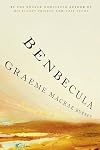
I’ve read a couple of this author’s books: His Bloody Project (https://schatjesshelves.blogspot.com/2016/08/review-of-his-bloody-project-by-graeme.html) and Case Study (https://schatjesshelves.blogspot.com/2022/10/review-of-case-study-by-graeme-macrae.html). Both of these I enjoyed, and this third one is equally good.
This historical novel, based on an actual crime committed in 1857, is set on Benbecula, an island of the Outer Hebrides. The narrator, Malcolm MacPhee, is living in the show more family home where a few years earlier, his younger brother Angus killed their father, mother and aunt. A recluse ostracized by his community, he seems to be slowly losing his grip on sanity.
Malcolm suggests that Angus was always unstable, though just prior to the murders, his fits of madness become more frequent and more violent. Young women feel unsafe in his presence: he “had a shameless fascination for those parts of his body and their functions that decency normally dictates are kept private.” Angus’ family, because they do not have the funds to have him placed in an asylum, are told to keep him under control. There is little doubt that he is suffering from a mental illness.
As Malcolm continues his story, it becomes increasingly obvious that he too may be suffering from a similar illness. From the beginning, he confesses to wanting to differentiate himself from his brother, “yet I was haunted by the sense that I was not his opposite but his mirror image” and adds, “He sometimes even came to me in my dreams so that I felt that Angus penetrated my whole being.” After the murders, Malcolm has become a recluse and has given up working, though earlier he was outraged that “there was not a fellow in the entirety of Benbecula more dedicated to the practice of Sloth than Angus.” He fantasies about rape. Even his youngest sibling tells him, “You’re a tyrant and a bully, Malcolm.” He also admits to seeing phantoms.
Malcolm starts questioning his own sanity. He talks about his mind being “a devious thing” and admits to hearing voices: “And I find myself wondering, when these dialogues run in my mind, whether I am the mind that goads me or I am the mind that reasons with the other mind. And I feel that I am not one man but two men. If I am the brain contained within my skullhouse, then there is another self contained within my skull. Were I to give him a name, I would call him Angus. It is Angus that goads me. It is Angus . . . that gives me no peace. There are times I confess when I have been driven to beat my head against the walls of the house to drive him out but that does no good.” But he clings to being normal: “I have heard other men say, I’m in two minds about such and such a thing. It is quite commonplace this being in two minds. I am a man just like other men and they are men just like me.”
What is most telling is Malcolm’s use of words. For example, he states, “I am still capable – through the careful weighing of evidence – of distinguishing between reality and illusion. The certainty that the tormented voices I hear are only inside my head convinces me that I remain in possession of my reason. A madman could surely not achieve such clarity of thought.” Words like still and surely undermine his certainty. He comments, “I am careful to behave like other men. To speak the way they speak and act the way they act for I am still capable of doing so.” The repetition of “am still capable” is telling.
All of this leaves the reader wondering about the origins of insanity. Is it a hereditary trait? (More than once, Malcolm speculates about how those possessed of fine features marry others with similar traits while “The less fortunate are left with what scraps they can find – the disfigured or feeble-minded – and through procreation combine the worst characteristics of each parent . . . [so] the rest of us become more degraded with each passing generation.” This almost implies inbreeding, and Malcolm’s relationship with his sister Marion left me wondering about the possibility of incest.) Or is Malcolm’s descent into madness a reaction to the killing of his family?
I found this novella thoroughly absorbing, especially the gradual revelation of Malcolm’s troubled state of mind. I suspected him of being an unreliable narrator from the beginning, but his last sentence still caught me by surprise. And the extended Afterword provides even more information for the reader to consider.
When a book lingers in my mind after I finish reading it and when I’m considering re-reading it, I have no hesitation in recommending it to others.
Note: Please check out my reader's blog (https://schatjesshelves.blogspot.com/) or substack (https://doreenyakabuski.substack.com) for over 1,200 of my book reviews. show less
This historical novel, based on an actual crime committed in 1857, is set on Benbecula, an island of the Outer Hebrides. The narrator, Malcolm MacPhee, is living in the show more family home where a few years earlier, his younger brother Angus killed their father, mother and aunt. A recluse ostracized by his community, he seems to be slowly losing his grip on sanity.
Malcolm suggests that Angus was always unstable, though just prior to the murders, his fits of madness become more frequent and more violent. Young women feel unsafe in his presence: he “had a shameless fascination for those parts of his body and their functions that decency normally dictates are kept private.” Angus’ family, because they do not have the funds to have him placed in an asylum, are told to keep him under control. There is little doubt that he is suffering from a mental illness.
As Malcolm continues his story, it becomes increasingly obvious that he too may be suffering from a similar illness. From the beginning, he confesses to wanting to differentiate himself from his brother, “yet I was haunted by the sense that I was not his opposite but his mirror image” and adds, “He sometimes even came to me in my dreams so that I felt that Angus penetrated my whole being.” After the murders, Malcolm has become a recluse and has given up working, though earlier he was outraged that “there was not a fellow in the entirety of Benbecula more dedicated to the practice of Sloth than Angus.” He fantasies about rape. Even his youngest sibling tells him, “You’re a tyrant and a bully, Malcolm.” He also admits to seeing phantoms.
Malcolm starts questioning his own sanity. He talks about his mind being “a devious thing” and admits to hearing voices: “And I find myself wondering, when these dialogues run in my mind, whether I am the mind that goads me or I am the mind that reasons with the other mind. And I feel that I am not one man but two men. If I am the brain contained within my skullhouse, then there is another self contained within my skull. Were I to give him a name, I would call him Angus. It is Angus that goads me. It is Angus . . . that gives me no peace. There are times I confess when I have been driven to beat my head against the walls of the house to drive him out but that does no good.” But he clings to being normal: “I have heard other men say, I’m in two minds about such and such a thing. It is quite commonplace this being in two minds. I am a man just like other men and they are men just like me.”
What is most telling is Malcolm’s use of words. For example, he states, “I am still capable – through the careful weighing of evidence – of distinguishing between reality and illusion. The certainty that the tormented voices I hear are only inside my head convinces me that I remain in possession of my reason. A madman could surely not achieve such clarity of thought.” Words like still and surely undermine his certainty. He comments, “I am careful to behave like other men. To speak the way they speak and act the way they act for I am still capable of doing so.” The repetition of “am still capable” is telling.
All of this leaves the reader wondering about the origins of insanity. Is it a hereditary trait? (More than once, Malcolm speculates about how those possessed of fine features marry others with similar traits while “The less fortunate are left with what scraps they can find – the disfigured or feeble-minded – and through procreation combine the worst characteristics of each parent . . . [so] the rest of us become more degraded with each passing generation.” This almost implies inbreeding, and Malcolm’s relationship with his sister Marion left me wondering about the possibility of incest.) Or is Malcolm’s descent into madness a reaction to the killing of his family?
I found this novella thoroughly absorbing, especially the gradual revelation of Malcolm’s troubled state of mind. I suspected him of being an unreliable narrator from the beginning, but his last sentence still caught me by surprise. And the extended Afterword provides even more information for the reader to consider.
When a book lingers in my mind after I finish reading it and when I’m considering re-reading it, I have no hesitation in recommending it to others.
Note: Please check out my reader's blog (https://schatjesshelves.blogspot.com/) or substack (https://doreenyakabuski.substack.com) for over 1,200 of my book reviews. show less
Divided Memories
Read by: Caroline Hewett
Length: 9hours 10 minutes
Mind Parasites, The Divided Self, sanity and madness in the sexual sixties, oh it all came roaring back to me as I read Graeme Macrae Burnet’s Case Study. The idea that craziness was in the eye of the beholder, that psychiatrists were the mad ones, that the nuclear family was dangerous - all this was layered onto the slowly growing acceptance that woman have sexual feelings too.
I found Case Study a difficult and patchy read. show more This may have been because of the structure of the book, which is divided into alternating chapters between diary notebooks and third person descriptions of an unqualified pop-psychologist - both the notebooks and the psych being fictional.
The diaries are those of a disturbed young woman who is journaling her quest to discover if the self-educated psychologist Collins Braithwaite is responsible for her sister’s death. She tricks Braithwaite into taking her on as a patient, using the fake name of Rebecca Smyth. All this is with the background of Swinging Sixties London.
Are the notebooks genuine or not? The fictional writer of the novel is unsure. The notebooks have no provenance. The writer of the notebooks presents herself to the reader as demure, introverted sexually-ignorant, much like de Maurier’s nameless character in her novel Rebecca. Both de Maurier’s and Macrae Burner’s Rebecca’s are sexually provocative and flirtatious. Case Study is full of fiction upon fiction. At times I think it’s just too clever for its own good.
There’s a lot of darkness and a lot of humour. It’s both funny and sad as we see the sexually-provocative Rebecca gradually take control of the demure sexually repressed young woman who has invented her. The scene where Rebecca seduces a young man in a snug in a London bar and the two personalities start talking to each other is a brilliant piece of comedy noire.
I had to read the novel in half-hour chunks, as the writings of R.D. Laing and his ilk contributed to the breakup of my first marriage. In retrospect at the anti-psychiatry movement of the ‘60s and ‘70s was probably necessary for the development of theories of mental illness. But back then, along with other social upheavals, it took a heavy toll.
Graeme Macrae captures the times so well, and even though some readers have nitpicked at minor details such as placing a Lyons teashop in the wrong (by a few meters) place, as he points out in his Postscript to the Second Edition, these are minor and have no bearing on the story.
Having lived and worked in London 1969 through 1971 I can vouch for the authenticity of Graeme Macrae’s description of London as it pertains to the novel.
I will certainly be reading more from this writer, and though I found it difficult to read, I feel this was more because of my own experiences revolving around the subject matter.
The sex scene in the snug will go down in my memory along with Flaubert’s Emma Leon and in the coach at Lyon, and the car-wash scene in Julian Barnes’s Before She Met Me. show less
Read by: Caroline Hewett
Length: 9hours 10 minutes
Mind Parasites, The Divided Self, sanity and madness in the sexual sixties, oh it all came roaring back to me as I read Graeme Macrae Burnet’s Case Study. The idea that craziness was in the eye of the beholder, that psychiatrists were the mad ones, that the nuclear family was dangerous - all this was layered onto the slowly growing acceptance that woman have sexual feelings too.
I found Case Study a difficult and patchy read. show more This may have been because of the structure of the book, which is divided into alternating chapters between diary notebooks and third person descriptions of an unqualified pop-psychologist - both the notebooks and the psych being fictional.
The diaries are those of a disturbed young woman who is journaling her quest to discover if the self-educated psychologist Collins Braithwaite is responsible for her sister’s death. She tricks Braithwaite into taking her on as a patient, using the fake name of Rebecca Smyth. All this is with the background of Swinging Sixties London.
Are the notebooks genuine or not? The fictional writer of the novel is unsure. The notebooks have no provenance. The writer of the notebooks presents herself to the reader as demure, introverted sexually-ignorant, much like de Maurier’s nameless character in her novel Rebecca. Both de Maurier’s and Macrae Burner’s Rebecca’s are sexually provocative and flirtatious. Case Study is full of fiction upon fiction. At times I think it’s just too clever for its own good.
There’s a lot of darkness and a lot of humour. It’s both funny and sad as we see the sexually-provocative Rebecca gradually take control of the demure sexually repressed young woman who has invented her. The scene where Rebecca seduces a young man in a snug in a London bar and the two personalities start talking to each other is a brilliant piece of comedy noire.
I had to read the novel in half-hour chunks, as the writings of R.D. Laing and his ilk contributed to the breakup of my first marriage. In retrospect at the anti-psychiatry movement of the ‘60s and ‘70s was probably necessary for the development of theories of mental illness. But back then, along with other social upheavals, it took a heavy toll.
Graeme Macrae captures the times so well, and even though some readers have nitpicked at minor details such as placing a Lyons teashop in the wrong (by a few meters) place, as he points out in his Postscript to the Second Edition, these are minor and have no bearing on the story.
Having lived and worked in London 1969 through 1971 I can vouch for the authenticity of Graeme Macrae’s description of London as it pertains to the novel.
I will certainly be reading more from this writer, and though I found it difficult to read, I feel this was more because of my own experiences revolving around the subject matter.
The sex scene in the snug will go down in my memory along with Flaubert’s Emma Leon and in the coach at Lyon, and the car-wash scene in Julian Barnes’s Before She Met Me. show less
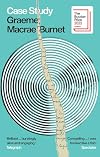
Having read and enjoyed the author’s His Bloody Project, I was interested in reading his latest, Case Study, which was longlisted for the 2022 Booker Prize.
A writer, GMB, had written about Collins Braithwaite, a 1960s psychotherapist and member of the anti-psychiatry movement. He has been toying with the idea of writing Braithwaite’s biography when he is contacted by Martin Grey offering him six notebooks written by his cousin who was once Braithwaite’s patient.
The novel alternates show more between a notebook and biographical information about Braithwaite. The notebooks are a first person account written by an unnamed young woman whose older sister Veronica recently committed suicide. Under the pseudonym of Rebecca Smyth, she visits Braithwaite believing he bears responsibility for Veronica’s death. As the notebooks progress, the narrator sinks into depression and becomes confused about her own identity: she begins to see Rebecca as a separate person. She loses sight of her initial objective in seeing the psychotherapist and becomes invested in his “therapy.”
Braithwaite is an imposter with no real training as a psychotherapist. He himself admits that his talent is in listening: “’time and again, I was told of my perceptiveness, of how I understood. All I did was listen. When a visitor arrives believing you are some kind of guru, your thoughts are already invested with profundity.’” He is very egotistical and manipulative. I found him repugnant.
The unnamed narrator I found much more interesting. She is, to say the least, odd. For instance, “He took my bag from the floor. I was terrified for a moment that he was going to find the dead mouse wrapped in tissue paper” and “I hand replaced the [telephone] receiver and wiped it clean of my fingerprints” and an optimistic period in her life she describes as an “embarrassing interlude.” The persona she adopts to visit Braithwaite she comes to see as an individual separate from her. Some of her comments suggest she suffers from dissociative identity disorder: “I sometimes wonder whether I shouldn’t let her take over completely.”
Readers come to realize that this narrator is not reliable. She claims, “I have no talent for dissembling,” but she is good at pretending and lying in her therapy sessions. Her ease at adopting a false persona should inspire one to ask what other truths she is hiding. Should her notebooks be accepted as the truth or a version of it?
The novel examines the nature of self and suggests that we all wear masks or adopt identities depending on the situation; perhaps we should “embrace the idea that a person is not a single self, but a bundle of personae.” We are all, like the song that Rebecca hears, great pretenders, or as Braithwaite says, “’phoneys. . . . You’d be a lot happier if you accepted it.’” Maybe we all have multiple personalities and that in itself is not a disorder.
The book offers interesting ideas for the reader to consider; I did not, however, find the novel as entertaining as His Bloody Project.
Note: Please check out my reader's blog (https://schatjesshelves.blogspot.com/) and follow me on Twitter (@DCYakabuski). show less
A writer, GMB, had written about Collins Braithwaite, a 1960s psychotherapist and member of the anti-psychiatry movement. He has been toying with the idea of writing Braithwaite’s biography when he is contacted by Martin Grey offering him six notebooks written by his cousin who was once Braithwaite’s patient.
The novel alternates show more between a notebook and biographical information about Braithwaite. The notebooks are a first person account written by an unnamed young woman whose older sister Veronica recently committed suicide. Under the pseudonym of Rebecca Smyth, she visits Braithwaite believing he bears responsibility for Veronica’s death. As the notebooks progress, the narrator sinks into depression and becomes confused about her own identity: she begins to see Rebecca as a separate person. She loses sight of her initial objective in seeing the psychotherapist and becomes invested in his “therapy.”
Braithwaite is an imposter with no real training as a psychotherapist. He himself admits that his talent is in listening: “’time and again, I was told of my perceptiveness, of how I understood. All I did was listen. When a visitor arrives believing you are some kind of guru, your thoughts are already invested with profundity.’” He is very egotistical and manipulative. I found him repugnant.
The unnamed narrator I found much more interesting. She is, to say the least, odd. For instance, “He took my bag from the floor. I was terrified for a moment that he was going to find the dead mouse wrapped in tissue paper” and “I hand replaced the [telephone] receiver and wiped it clean of my fingerprints” and an optimistic period in her life she describes as an “embarrassing interlude.” The persona she adopts to visit Braithwaite she comes to see as an individual separate from her. Some of her comments suggest she suffers from dissociative identity disorder: “I sometimes wonder whether I shouldn’t let her take over completely.”
Readers come to realize that this narrator is not reliable. She claims, “I have no talent for dissembling,” but she is good at pretending and lying in her therapy sessions. Her ease at adopting a false persona should inspire one to ask what other truths she is hiding. Should her notebooks be accepted as the truth or a version of it?
The novel examines the nature of self and suggests that we all wear masks or adopt identities depending on the situation; perhaps we should “embrace the idea that a person is not a single self, but a bundle of personae.” We are all, like the song that Rebecca hears, great pretenders, or as Braithwaite says, “’phoneys. . . . You’d be a lot happier if you accepted it.’” Maybe we all have multiple personalities and that in itself is not a disorder.
The book offers interesting ideas for the reader to consider; I did not, however, find the novel as entertaining as His Bloody Project.
Note: Please check out my reader's blog (https://schatjesshelves.blogspot.com/) and follow me on Twitter (@DCYakabuski). show less
Another of Burnet's faux-biographical-research stories in the vein of His Bloody Project. He's good enough at these that you may end up googling some of the characters to see if they existed... some did, some didn't. (Susanna Clarke pulls off something similar in her Piranesi, with which this one has some similarities, and which I liked a lot.) This one comprises a series of journal-type notebooks, kept by a young woman who believes that a controversial, egotistical blowhard of a therapist show more (or "untherapist") has driven her sister to suicide. Taking on an assumed (or is it?) identity, she presents herself as a patient / client (though he prefers the term "visitor") of A. Collins Braithwaite, to observe and engage with him and perhaps find out just what went on between him and her sister. Interspersed with the notebooks are passages from a biography of Braithwaite by someone with the initials GMB, which generally depicts an era of turmoil, bombast, rebellion and reaction in the field of psychiatry in 1960's London, including the work of R.D. Laing (who did in fact exist). Braithwaite is both an acolyte and a furious rebel, not to mention pretty repulsive (I kept picturing him as Steve Bannon). Spoiler: we never do really find out what happened to the sister, except to the extent that we see Braithwaite responding to someone with suicidal thoughts with "Well, what's stopping you?" Mostly, this story tangles with the idea of "self" (sometimes capitalized, sometimes not) - contradictory, overlapping selves, whose delusions, perceptions, and actions should (in Braithwaite and Laing's thought) be observed and taken seriously as a true expression of their reality and not simply exterminated by insulin comas, lobotomies, or electroshock. And surprisingly, this is actually all rather fun to read as our young journal-keeper fences with Braithwaite, but also slides deeper into her own conflicted "selves."
I round this down to 3 stars because the ending - as others have reported - just rather peters out. The "author" eventually meets the reclusive individual (a "cousin" of the young journal-keeper) who had given him his entrée to this story, with an unsurprising revelation. Braithwaite has a change of heart and behavior - which does him little good. And the sense of "Swinging London" in the 1960s is very much in the background and not particularly vivid. But still - an interesting, crafty, and skillful interweaving of story, character, identity and ideas that made it a clever and enjoyable read. show less
I round this down to 3 stars because the ending - as others have reported - just rather peters out. The "author" eventually meets the reclusive individual (a "cousin" of the young journal-keeper) who had given him his entrée to this story, with an unsurprising revelation. Braithwaite has a change of heart and behavior - which does him little good. And the sense of "Swinging London" in the 1960s is very much in the background and not particularly vivid. But still - an interesting, crafty, and skillful interweaving of story, character, identity and ideas that made it a clever and enjoyable read. show less
Lists
Take Four Books (1)
Booker Prize (1)
Awards


You May Also Like


Associated Authors
Statistics
- Works
- 7
- Also by
- 2
- Members
- 2,975
- Popularity
- #8,575
- Rating
- 3.8
- Reviews
- 154
- ISBNs
- 137
- Languages
- 11
- Favorited
- 1