
Francis Spufford
Author of Golden Hill
About the Author
Francis Spufford is also the author of I May Be Some Time. He was named Sunday Times (London) Young Writer of the Year and received the 1997 Somerset Maugham and Writers' Guild awards. He lives in London
Works by Francis Spufford
Red Plenty: Industry! Progress! Abundance! Inside the Fifties Soviet Dream (2007) 979 copies, 34 reviews
Unapologetic: Why, Despite Everything, Christianity Can Still Make Surprising Emotional Sense (2012) 478 copies, 16 reviews
The Ends of the Earth: An Anthology of the Finest Writing on the Arctic and the Antarctic (2007) — Editor & Contributor — 139 copies, 8 reviews
The Stone Table 1 copy
Associated Works
Tagged
Common Knowledge
- Birthdate
- 1964-04-22
- Gender
- male
- Education
- University of Cambridge (Trinity Hall| BA)
- Occupations
- non-fiction writer
- Organizations
- Goldsmiths, University of London
- Awards and honors
- Royal Society of Literature (Fellow)
- Relationships
- Spufford, Margaret (mother)
Spufford, Peter (father) - Nationality
- England
UK - Birthplace
- Cambridge, Cambridgeshire, England, UK
- Places of residence
- Cambridge, Cambridgeshire, England, UK
- Map Location
- England, UK
Members
Discussions
2021 Booker Prize Longlist: Light Perpetual by Francis Spufford in Booker Prize (August 2021)
Golden Hill by Francis Spufford in Historical Fiction (February 2017)
Reviews
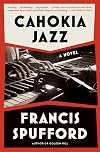
It's been a while since I read such an accomplished contemporary novel. This is an object-lesson in worldbuilding. Unlike many similar stories, 1920's Cahokia doesn't feel like trompe l'oeil trickery; it feels real and lived-in. For every ounce of exposition you sense a slew of alt-history dreamt up by the author but held in reserve. And it's equally convincing as a period piece: the America of our timeline that still more or less exists to the north and east of this one is unerringly show more evoked.
The 20's setting and themes of robber-baron capitalism, false-flag shenanigans and racist populism are grist for the book club mill. But what stood out to me were the sheer quality of the writing (e.g. a half-page description of river fog that Dickens would have envied) and the way the procedural was as much a vehicle for the characters as for the plot. I'm a sucker for a big lummoxy lunks of a protagonist and Joe Barrow charmed me from the start. Everyone comes with a streak of ambiguity (something Dickens wouldn't have appreciated). It's a grown-up book.
It's odd how jazz, a kind of music I mostly don't like, is the only kind of music I seem to enjoy reading descriptions of. The jazz writing and extended musical imagery in this novel are fucking phenomenal. show less
The 20's setting and themes of robber-baron capitalism, false-flag shenanigans and racist populism are grist for the book club mill. But what stood out to me were the sheer quality of the writing (e.g. a half-page description of river fog that Dickens would have envied) and the way the procedural was as much a vehicle for the characters as for the plot. I'm a sucker for a big lummoxy lunks of a protagonist and Joe Barrow charmed me from the start. Everyone comes with a streak of ambiguity (something Dickens wouldn't have appreciated). It's a grown-up book.
It's odd how jazz, a kind of music I mostly don't like, is the only kind of music I seem to enjoy reading descriptions of. The jazz writing and extended musical imagery in this novel are fucking phenomenal. show less
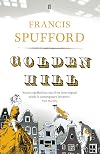
This book hit all of my favorite reading zones: historical fiction, mystery, adventure. It opens with Mr. Smith's arrival in New York from London, and two basic questions: how does a 23 year-old come by a bill for 1,000 pounds (about $200,000 in today's money), and what does he plan to do with all this cash once he has it in hand? These questions simmer and build among the citizens as Mr. Smith adventures around New York, never far from their prying and gossiping tongues. For me the show more questions often slipped to the background as one after another heart-stopping moment bubbled up; at times I was racing through passages because if I lingered the tension would have killed me. We are never very far from the start, however - suddenly readers are given tantalizing glimpses into Mr. Smith's mind, and we are urgently swept right back to those two original questions. show less

Spufford imagines the U.S. in 1922 with 3 fewer states than ours in that year, though still with Prohibition, and Jazz, and a Red Scare helping shape Federal politics. Harding is President. A recent war in France, seemingly broadly similar to ours, but also an active war in Novaya Siburskaya Territorii, to which our veteran protagonists Burrow and Drummond are threatened with being sent by Federal agents. No Nevada, no Idaho, no Utah: instead, the independent Republic of Deseret looms show more between Colorado and California, and together with the traditional Navajo home of Dinetah, this new American West signals all that has gone differently. Careful examination of the included map reveals other changes, never fully explained. And in the middle of that map, surprisingly low profile given all it represents, the very large State of Cahokia fills the space below Illinois, while in place of Oklahoma is found a state labeled SQ, suggesting Sequoyah but never (?) mentioned in the story at all.
A close examination of Spufford's imagined world, reflecting the myriad ways it interrogates ours, would be well worth writing. Spufford's world is nuanced enough and detailed to support a discussion capable of sharpening understanding of our own world, its pitfalls and its untapped possibility.
But such a discussion would largely bypass the story, which itself offers insight. None of Spufford's worldbuilding is foregrounded in the novel: the plot moves along and explicit diversions from our timeline are glimpsed mostly to one side or another, on the walls around the room, in the faces and conversations of onlookers and bystanders. This is to the novel's good. After all, the unfamiliar U.S. is setting, not story. And Spufford tells an engaging story, with interesting if uncomplicated characters, so figuring out just what the angles are (there always are angles to be figured in a noir) easily sustains interest even after the last page is read. And yet: when reflecting on the story's significance, a question niggled. Why this particular story, in this particular world? Why not historical fiction rather than alternate history? Why a crime noir and not, say, a family drama?
Good questions, not answered simply. The novel is not only crime fiction, and not merely alternate history. There is a fair amount of family drama, and history, and politics on offer. Spufford's mystery really could not have worked in any but this setting. But it was only while thinking of how each (the world, the story) insists on being considered seriously when assessing this novel overall, how each leans upon the other, and looking into Spufford's other published works, that I recognized a third aspect of the novel, a red thread not really covered by either of the other two: an abiding evangelism.
Spufford signposts this red thread through reference to the Jesuits: their past works rate mention in his imagined history, Jesuit characters drop in and out of the plot. In light of Spufford's other work, however, this Christian theme seems distinct from other facets of his alternate history. Other readers suggest (and Spufford in interviews to some extent acknowledges) a prevailing interest in different perspectives on Christianity, and specifically the utility of such inquiry for a Christian -- as opposed to new perspectives on secular American culture, or directed to indigenous individuals living here. Perhaps most suggestive, if this interest indeed predominates the story, is the denouement: Burrow's decision (to father a child, but not be its father); Drummond's soliloquy ("We're not awake, Joe. Fact, I'm not sure we're even alive ..." [429]); the final chapter's stigmata theater.
Alternate history to inform today's evangelist! -- such a possibility arrived as something of a surprise, despite the straightforward inclusion of Jesuit characters and missions, and yet as a more fitting summary of the novel than any other occurring to me. This unexpected fittingness also demonstrates the relative heft of the novel compared to many other alternate history stories out there. Probably worth a second reading. show less
A close examination of Spufford's imagined world, reflecting the myriad ways it interrogates ours, would be well worth writing. Spufford's world is nuanced enough and detailed to support a discussion capable of sharpening understanding of our own world, its pitfalls and its untapped possibility.
But such a discussion would largely bypass the story, which itself offers insight. None of Spufford's worldbuilding is foregrounded in the novel: the plot moves along and explicit diversions from our timeline are glimpsed mostly to one side or another, on the walls around the room, in the faces and conversations of onlookers and bystanders. This is to the novel's good. After all, the unfamiliar U.S. is setting, not story. And Spufford tells an engaging story, with interesting if uncomplicated characters, so figuring out just what the angles are (there always are angles to be figured in a noir) easily sustains interest even after the last page is read. And yet: when reflecting on the story's significance, a question niggled. Why this particular story, in this particular world? Why not historical fiction rather than alternate history? Why a crime noir and not, say, a family drama?
Good questions, not answered simply. The novel is not only crime fiction, and not merely alternate history. There is a fair amount of family drama, and history, and politics on offer. Spufford's mystery really could not have worked in any but this setting. But it was only while thinking of how each (the world, the story) insists on being considered seriously when assessing this novel overall, how each leans upon the other, and looking into Spufford's other published works, that I recognized a third aspect of the novel, a red thread not really covered by either of the other two: an abiding evangelism.
Spufford signposts this red thread through reference to the Jesuits: their past works rate mention in his imagined history, Jesuit characters drop in and out of the plot. In light of Spufford's other work, however, this Christian theme seems distinct from other facets of his alternate history. Other readers suggest (and Spufford in interviews to some extent acknowledges) a prevailing interest in different perspectives on Christianity, and specifically the utility of such inquiry for a Christian -- as opposed to new perspectives on secular American culture, or directed to indigenous individuals living here. Perhaps most suggestive, if this interest indeed predominates the story, is the denouement: Burrow's decision (to father a child, but not be its father); Drummond's soliloquy ("We're not awake, Joe. Fact, I'm not sure we're even alive ..." [429]); the final chapter's stigmata theater.
Alternate history to inform today's evangelist! -- such a possibility arrived as something of a surprise, despite the straightforward inclusion of Jesuit characters and missions, and yet as a more fitting summary of the novel than any other occurring to me. This unexpected fittingness also demonstrates the relative heft of the novel compared to many other alternate history stories out there. Probably worth a second reading. show less

A brilliant young financial secretary gets swept into a fantastical world of angels and time-traveling fascists in the early days of WWII.
Oh, this was a treat! Some might consider it a slow start, but I think of it as starting with very solid character development; by the time the adventures really kick off I had become so invested in Iris's story that I had to keep reading just to know how she would fair. It was a welcome change in pace from books where character development is sacrificed show more to plot.
The only thing I disliked about the book is that it ended with those most dreaded of words: "To be continued."
Received via NetGalley. show less
Oh, this was a treat! Some might consider it a slow start, but I think of it as starting with very solid character development; by the time the adventures really kick off I had become so invested in Iris's story that I had to keep reading just to know how she would fair. It was a welcome change in pace from books where character development is sacrificed show more to plot.
The only thing I disliked about the book is that it ended with those most dreaded of words: "To be continued."
Received via NetGalley. show less
Lists
Awards


You May Also Like


Associated Authors
Statistics
- Works
- 16
- Also by
- 7
- Members
- 5,865
- Popularity
- #4,207
- Rating
- 3.9
- Reviews
- 207
- ISBNs
- 128
- Languages
- 10
- Favorited
- 7

