
Sebastian Barry
Author of The Secret Scripture
About the Author
Sebastian Barry is a playwright whose work has been produced in London, Dublin, Sydney, and New York. He lives in Wicklow, Ireland, with his wife and three children. Sebastian Barry is an Irish writer and playwright, born in 1955. He is the author of two novels, A Long Long Way and Days Without show more End, which won the Costa Book Award for best novel. His other awards include the Kerry Group Irish Fiction Prize, the Irish Book Awards Novel of the Year, the Independent Booksellers Prize and the James Tait Black Memorial Prize. (Bowker Author Biography) show less
Series
Works by Sebastian Barry
The Only True History of Lizzie Finn/The Steward of Christendom/White Woman Street: Three Plays (1995) 26 copies
The Newer World 4 copies
A Russian Beauty 1 copy
White Woman Street 1 copy
Days Without End 1 copy
Barry Sebastian 1 copy
Associated Works
Tagged
Common Knowledge
- Legal name
- Barry, Sebastian
- Birthdate
- 1955-07-05
- Gender
- male
- Education
- Trinity College, Dublin
- Occupations
- playwright
novelist
poet - Organizations
- Harry Ransom Center
University of Iowa
Villanova University - Awards and honors
- Lloyds Private Banking Playwright of the Year Award (1995)
- Agent
- Derek Johns (AP Watt)
- Short biography
- Sebastian Barry is an Irish novelist, playwright and poet. He was named Laureate for Irish Fiction, 2019–2021. He is noted for his dense literary writing style and is considered one of Ireland's finest writers.
- Nationality
- Ireland
- Birthplace
- Dublin, Ireland
- Places of residence
- Dublin, Ireland
County Wicklow, Ireland - Associated Place (for map)
- Ireland
Members
Discussions
October 2022: Sebastian Barry in Monthly Author Reads (October 2022)
On Canaan's Side by Sebastian Barry in Booker Prize (September 2011)
Reviews

Tom Kettle is a retired detective, living alone in a small Irish town. His wife died several years earlier, and Tom’s days seem to be consumed with just getting by. He is thrown off balance when two members of the police force stop by to get Tom’s perspective on a cold case. Their questions bring long-dormant memories to the surface, and most of this novel is devoted to Tom’s internal monologue.
Reading Old God’s Time is like viewing the world through a haze. Tom is not the most show more reliable narrator, and prone to dozing off. Memories and dreams are commingled. What is fact, and what fiction? Small but important details are revealed without much fanfare. The cold case intersected with Tom’s personal life, the full extent of which gradually becomes clear, as do the lives of Tom and his two children.
It’s not a happy story, but it’s a compelling one, brilliantly crafted. show less
Reading Old God’s Time is like viewing the world through a haze. Tom is not the most show more reliable narrator, and prone to dozing off. Memories and dreams are commingled. What is fact, and what fiction? Small but important details are revealed without much fanfare. The cold case intersected with Tom’s personal life, the full extent of which gradually becomes clear, as do the lives of Tom and his two children.
It’s not a happy story, but it’s a compelling one, brilliantly crafted. show less
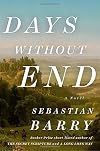
The interwoven lives of Irish immigrant Thomas McNulty and his devoted friend John Cole are followed as they traverse the harsh realities of 19th-century America in this stirring and poetic book. Young Thomas, who is fleeing the Great Famine, meets John right away after arriving in America. They spend their formative years in a gritty mining town as cross-dressing dancers. They later join the American Army and fight in both the Civil War and the Indian Wars. Their intense love for one show more another and their adopted Sioux daughter, Winona, shines through the violence and adversity as a source of strength and hope. The book, which is told in Thomas's unique and moving voice, examines themes of love, loss, identity, and the terrible effects of prejudice and war.
I enjoyed Barry's exceptional writing style, finding it both poetic and visceral. The narration had a unique blend of wit, innocence, and profound wisdom. The novel is an unflinching portrayal of the Indian Wars and the Civil War, offering a fresh perspective on these tumultuous periods through the eyes of an Irish immigrant. But it is also a powerful love story: the deep and unconventional love between Thomas and John is a central element, one I found sincere in its tenderness and strength in the face of adversity. show less
I enjoyed Barry's exceptional writing style, finding it both poetic and visceral. The narration had a unique blend of wit, innocence, and profound wisdom. The novel is an unflinching portrayal of the Indian Wars and the Civil War, offering a fresh perspective on these tumultuous periods through the eyes of an Irish immigrant. But it is also a powerful love story: the deep and unconventional love between Thomas and John is a central element, one I found sincere in its tenderness and strength in the face of adversity. show less
Two young immigrants – Thomas from Ireland, and John from England – meet under a shrub during a sudden downpour and become fast friends, and more. The time is the mid-19th century in America, and the boys go from working in a frontier saloon as “dancers” dressed as girls, to joining the Army and serving in both the Indian and Civil Wars. They take on an orphaned Indian girl as their servant and treat her as if she were their own child, forming a family of sorts.
This is a very show more atmospheric novel. Barry makes the landscape practically come alive, from the wide vistas of the western plains, to the bloody battlefields of the Civil War, and the horrendous conditions of Andersonville Prison.
The narration is done by Thomas, a poorly educated young man, who speaks in a unique dialect (which is made that much more challenging to read by Barry’s lack of quotation marks). Yet I feel privileged to have heard his story in his own words … of love, war, regret, pride, adventure, death and peace. He may have had a very limited education, but he told his story in words that were at times sheer poetry.
I found myself jotting notes and quotes, and reading aloud to my husband passage after passage:
We see a country whose beauty penetrates our bones … In the far distance, we see a land begin to be suggested as if maybe a man was out there painting it with a huge brush.
A man that only got noughts to count, can’t get 1 for an answer.
Words so black they were blacker than dried blood. Remorse not a whit. Killing hurts the heart and soils the soul.
The train moves like a giant dancer for all its bulk.
The palms of her hands like two maps of home, the lines leading homeward like old trails.
Several people in my F2F book club questioned the relationship between John and Thomas, feeling that it was gratuitous and unnecessary. And yet, I found it loving and tender and genuine. Clearly, they meant the world to one another, and felt strongly that Winona was “our daughter.” I was touched by their affection and loyalty. That they could find some joy in their relationship amidst all the horrific experiences of war … well, how could I possibly object to that?
All in all, this is beautiful, poetic, powerful writing that tugs at my heart and alternately disturbs me and cradles me in a loving embrace. show less
This is a very show more atmospheric novel. Barry makes the landscape practically come alive, from the wide vistas of the western plains, to the bloody battlefields of the Civil War, and the horrendous conditions of Andersonville Prison.
The narration is done by Thomas, a poorly educated young man, who speaks in a unique dialect (which is made that much more challenging to read by Barry’s lack of quotation marks). Yet I feel privileged to have heard his story in his own words … of love, war, regret, pride, adventure, death and peace. He may have had a very limited education, but he told his story in words that were at times sheer poetry.
I found myself jotting notes and quotes, and reading aloud to my husband passage after passage:
We see a country whose beauty penetrates our bones … In the far distance, we see a land begin to be suggested as if maybe a man was out there painting it with a huge brush.
A man that only got noughts to count, can’t get 1 for an answer.
Words so black they were blacker than dried blood. Remorse not a whit. Killing hurts the heart and soils the soul.
The train moves like a giant dancer for all its bulk.
The palms of her hands like two maps of home, the lines leading homeward like old trails.
Several people in my F2F book club questioned the relationship between John and Thomas, feeling that it was gratuitous and unnecessary. And yet, I found it loving and tender and genuine. Clearly, they meant the world to one another, and felt strongly that Winona was “our daughter.” I was touched by their affection and loyalty. That they could find some joy in their relationship amidst all the horrific experiences of war … well, how could I possibly object to that?
All in all, this is beautiful, poetic, powerful writing that tugs at my heart and alternately disturbs me and cradles me in a loving embrace. show less
Days Without End - Barry
Audio performance by Aidan Kelly ( a perfect 5 star performance)
5 stars
“We were two wood-shavings of humanity in a rough world. We were of the opinion that our share of the food was there if we sought it out.”
Thomas McNulty, true to his Irish roots, has the gift of blarney. He tells a good story, beginning with the luck of his meeting John Cole and their initial joint enterprise, their ‘dancing days’. (”We were the first girls in Daggsville and we show more weren’t the worst.” ) And when the ‘bloom’ was off them, Thomas tells how he and John Cole join the army to fight the Indians on the plains and in California. Thinking their army days are done, they spend a brief time in a minstrel show with their adopted daughter, Winona. Then the civil war, and more tragedy fighting the Indians. Thomas McNulty has a survivor’s story to tell. Is he a reliable narrator? I’m not sure it matters. He makes no apology for who he is and he has no difficulty stating his priorities; John Cole and Winona.
No description of this book can really do justice to the power of the writing. It’s deceptively simple; an Irish immigrant looks back over a difficult and unusual life and tells his story. Sometimes it’s charming, but often it’s dark, very dark. “It’s a dark thing when the world sets no value on you and your kin, and then Death comes stalking in, in his bloody boots”. There’s the darkness of poverty and starvation; the dark injustice of the Indian Wars and the slaughter of the Civil War. The tragedies, atrocities, and disasters follow each other without much respite. Sebastian Barry, with Thomas McNulty’s voice doesn’t stint on the realities of the times. You would think this would be a very depressing book.
But it isn’t. It’s really a love story; handsome John Cole and Thomas (Thomasina) McNulty and their daughter Winona. There’s lots of dry, Irish humor, affection, and wisdom in the telling of this story. And there’s poetry. I don’t know how Barry does it. McNulty’s voice is always in character, completely believable as a nearly uneducated Irish immigrant. But his words are strong and profound. I wanted to highlight them, memorize them, cut them out and keep them with me. The ending left me feeling that against all the odds, there might be hope for humanity. show less
Audio performance by Aidan Kelly ( a perfect 5 star performance)
5 stars
“We were two wood-shavings of humanity in a rough world. We were of the opinion that our share of the food was there if we sought it out.”
Thomas McNulty, true to his Irish roots, has the gift of blarney. He tells a good story, beginning with the luck of his meeting John Cole and their initial joint enterprise, their ‘dancing days’. (”We were the first girls in Daggsville and we show more weren’t the worst.” ) And when the ‘bloom’ was off them, Thomas tells how he and John Cole join the army to fight the Indians on the plains and in California. Thinking their army days are done, they spend a brief time in a minstrel show with their adopted daughter, Winona. Then the civil war, and more tragedy fighting the Indians. Thomas McNulty has a survivor’s story to tell. Is he a reliable narrator? I’m not sure it matters. He makes no apology for who he is and he has no difficulty stating his priorities; John Cole and Winona.
No description of this book can really do justice to the power of the writing. It’s deceptively simple; an Irish immigrant looks back over a difficult and unusual life and tells his story. Sometimes it’s charming, but often it’s dark, very dark. “It’s a dark thing when the world sets no value on you and your kin, and then Death comes stalking in, in his bloody boots”. There’s the darkness of poverty and starvation; the dark injustice of the Indian Wars and the slaughter of the Civil War. The tragedies, atrocities, and disasters follow each other without much respite. Sebastian Barry, with Thomas McNulty’s voice doesn’t stint on the realities of the times. You would think this would be a very depressing book.
But it isn’t. It’s really a love story; handsome John Cole and Thomas (Thomasina) McNulty and their daughter Winona. There’s lots of dry, Irish humor, affection, and wisdom in the telling of this story. And there’s poetry. I don’t know how Barry does it. McNulty’s voice is always in character, completely believable as a nearly uneducated Irish immigrant. But his words are strong and profound. I wanted to highlight them, memorize them, cut them out and keep them with me. The ending left me feeling that against all the odds, there might be hope for humanity. show less
Lists
Booker Prize (4)
THE WAR ROOM (1)
Best of 2017 (1)
WBS - Book Club (1)
Awards


You May Also Like


Associated Authors
Statistics
- Works
- 43
- Also by
- 4
- Members
- 9,650
- Popularity
- #2,480
- Rating
- 3.9
- Reviews
- 523
- ISBNs
- 353
- Languages
- 22
- Favorited
- 36


