
Donal Ryan
Author of The Spinning Heart
About the Author
Works by Donal Ryan
Associated Works
Tagged
Common Knowledge
- Birthdate
- 1976
- Gender
- male
- Nationality
- Ireland
- Birthplace
- Nenagh, County Tipperary, Ireland
- Places of residence
- Castletroy, County Limerick, Ireland
- Associated Place (for map)
- Ireland
Members
Discussions
2013 Booker longlist: The Spinning Heart by Donal Ryan in Booker Prize (January 2015)
Reviews
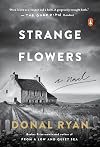
In this novel, a man tells his son that “there was more to the blind man’s story. More than we’re told in the Gospel of John.” What Donal Ryan has done is to take another Biblical story, that of the prodigal son, and retell it, to show what happened after the return.
In the early 1970s, Moll Gladney leaves her family home in rural Tipperary without explanation. Her parents Kit and Paddy pray for her return, and their prayers are answered five years later when Moll reappears. She show more remains tight-lipped as to why she left, but a black Englishman, Alexander Elmwood, arrives shortly afterwards, claiming to be her husband and the father of their infant son Joshua who is described as a “strange flower” because of his “perfect, unblemished whiteness.”
The book explores what happens when strange flowers appear in an environment where differences are viewed with suspicion. Joshua is not the only strange flower. Alex, by virtue of his colour, doesn’t fit into the rural Irish village, but there are others who don’t conform to the expectations of society and the Catholic Church in an insular village. More than one character tries escaping the confines of the village because of feelings of not properly belonging.
Because he is so foreign, Alex experiences racism. When he first arrives, people stare and he “expected sometimes that people would begin to throw coins at him, as though he were a street performer, or a beggar, some kind of exotic mendicant.” Jokes are made at his expense and he is called “Kunta Kinte.” Josh also experiences prejudice; walking home, his path is blocked by young men on horseback who then proceed to discuss his colour as if he weren’t present: “Well, he doesn’t look one bit black. Except for his hair and lips, maybe a tiny bit.”
Classism is also examined. Paddy and Kit are always servile to the members of the wealthy Jackman family. Paddy is dependent on them for work, and the house in which they live is on Jackman land. Andrew Jackman, the son, once tells Paddy, “You’re a servant, Paddy, that’s all you are, you’re not much more than a beggar man, and my mother and father could fuck you off our land any time they wanted.” Paddy “understood in that moment what it was to be a herded animal, to be barked at and rounded on, to be sheepish, to be cowed.”
The novel exposes life in a small village where gossip runs rampant. When Moll disappears, people think “that Moll Gladney was either pregnant or dead, and it was hard to know which one of those was worse.” When she returns, there is much speculation as to why she had left, “all sorts of theories swirled about, fables and yarns and tall tales and fairy stories and lascivious conjecture.” When Alex enters their lives, he is constantly aware “of the whispered conjecture, of the jokes he knew were being made at his expense, and at the expense of Moll and Paddy and Kit and Joshua.”
I love some of the characters in the novel. Paddy and Kit emerge as heroic. They are a quiet, ordinary couple but with so much dignity. They have a strong faith and are honest and hard-working. What is most emphasized is their capacity for love and forgiveness.
In fact, the book can also be seen as a study of love of all types. Paddy and Kit love Moll despite how she hurt them and her flaws. Alex is so deeply in love with Moll that Kit thinks of it as “the reverent way he loved her. Never loud in his love, or showy, but quiet, nervous almost, like he was afraid he was in a dream and if he wasn’t careful he could accidentally wake himself.” To be with her, he moves where he has no one, “no comrade, no family, no Jamaican café, no Sunday school or backroom church, no street of his own people.” He is also motivated by his love for his son, believing that his son would not be accepted were he raised by his black grandparents. Paddy and Kit welcome Alex into their lives and grow to love him. In the way he thinks about his father, Josh’s love is obvious. Other types of love are also presented.
Ryan’s style may not appeal to everyone, but I love immersing myself in his lengthy, lyrical, run-on sentences. His descriptions of the landscape are stunning. A paragraph that stands out for me is Alex’s meditation on the Irish landscape: “the greenness of the place. Everywhere greenness, trees heavy with it, hedgerows dappled light and dark and every shade of it, rolling fields of grass and green hills as far as his eye could see, and a lake below them in a silver line and, at the far side of it, below the blue and white and grey horizon, more greenness, more grassy hills and forests. Streams of flowers dazzling through the green along the roadsides and the lanes. Branches drooped with berries reaching out from hedgerows, everything looming and buzzing and dripping with life. Even the rain had a shimmer of green to it.”
I did not always enjoy Josh’s rewriting of the blind man’s story. The embedded narrative just didn’t work for me because it impeded the flow of the story, though I understand it serves as a parallel to Josh’s life. There are actually many Biblical references which a person, with more knowledge of the Bible than I, could spend quite some time analyzing. Certainly the chapter titles which are titles of books in the Bible are significant.
This, like other Donal Ryan novels I have read, is highly recommended and deserves not just to be read but to be re-read.
Note: Please check out my reader's blog (https://schatjesshelves.blogspot.com/) and follow me on Twitter (@DCYakabuski). show less
In the early 1970s, Moll Gladney leaves her family home in rural Tipperary without explanation. Her parents Kit and Paddy pray for her return, and their prayers are answered five years later when Moll reappears. She show more remains tight-lipped as to why she left, but a black Englishman, Alexander Elmwood, arrives shortly afterwards, claiming to be her husband and the father of their infant son Joshua who is described as a “strange flower” because of his “perfect, unblemished whiteness.”
The book explores what happens when strange flowers appear in an environment where differences are viewed with suspicion. Joshua is not the only strange flower. Alex, by virtue of his colour, doesn’t fit into the rural Irish village, but there are others who don’t conform to the expectations of society and the Catholic Church in an insular village. More than one character tries escaping the confines of the village because of feelings of not properly belonging.
Because he is so foreign, Alex experiences racism. When he first arrives, people stare and he “expected sometimes that people would begin to throw coins at him, as though he were a street performer, or a beggar, some kind of exotic mendicant.” Jokes are made at his expense and he is called “Kunta Kinte.” Josh also experiences prejudice; walking home, his path is blocked by young men on horseback who then proceed to discuss his colour as if he weren’t present: “Well, he doesn’t look one bit black. Except for his hair and lips, maybe a tiny bit.”
Classism is also examined. Paddy and Kit are always servile to the members of the wealthy Jackman family. Paddy is dependent on them for work, and the house in which they live is on Jackman land. Andrew Jackman, the son, once tells Paddy, “You’re a servant, Paddy, that’s all you are, you’re not much more than a beggar man, and my mother and father could fuck you off our land any time they wanted.” Paddy “understood in that moment what it was to be a herded animal, to be barked at and rounded on, to be sheepish, to be cowed.”
The novel exposes life in a small village where gossip runs rampant. When Moll disappears, people think “that Moll Gladney was either pregnant or dead, and it was hard to know which one of those was worse.” When she returns, there is much speculation as to why she had left, “all sorts of theories swirled about, fables and yarns and tall tales and fairy stories and lascivious conjecture.” When Alex enters their lives, he is constantly aware “of the whispered conjecture, of the jokes he knew were being made at his expense, and at the expense of Moll and Paddy and Kit and Joshua.”
I love some of the characters in the novel. Paddy and Kit emerge as heroic. They are a quiet, ordinary couple but with so much dignity. They have a strong faith and are honest and hard-working. What is most emphasized is their capacity for love and forgiveness.
In fact, the book can also be seen as a study of love of all types. Paddy and Kit love Moll despite how she hurt them and her flaws. Alex is so deeply in love with Moll that Kit thinks of it as “the reverent way he loved her. Never loud in his love, or showy, but quiet, nervous almost, like he was afraid he was in a dream and if he wasn’t careful he could accidentally wake himself.” To be with her, he moves where he has no one, “no comrade, no family, no Jamaican café, no Sunday school or backroom church, no street of his own people.” He is also motivated by his love for his son, believing that his son would not be accepted were he raised by his black grandparents. Paddy and Kit welcome Alex into their lives and grow to love him. In the way he thinks about his father, Josh’s love is obvious. Other types of love are also presented.
Ryan’s style may not appeal to everyone, but I love immersing myself in his lengthy, lyrical, run-on sentences. His descriptions of the landscape are stunning. A paragraph that stands out for me is Alex’s meditation on the Irish landscape: “the greenness of the place. Everywhere greenness, trees heavy with it, hedgerows dappled light and dark and every shade of it, rolling fields of grass and green hills as far as his eye could see, and a lake below them in a silver line and, at the far side of it, below the blue and white and grey horizon, more greenness, more grassy hills and forests. Streams of flowers dazzling through the green along the roadsides and the lanes. Branches drooped with berries reaching out from hedgerows, everything looming and buzzing and dripping with life. Even the rain had a shimmer of green to it.”
I did not always enjoy Josh’s rewriting of the blind man’s story. The embedded narrative just didn’t work for me because it impeded the flow of the story, though I understand it serves as a parallel to Josh’s life. There are actually many Biblical references which a person, with more knowledge of the Bible than I, could spend quite some time analyzing. Certainly the chapter titles which are titles of books in the Bible are significant.
This, like other Donal Ryan novels I have read, is highly recommended and deserves not just to be read but to be re-read.
Note: Please check out my reader's blog (https://schatjesshelves.blogspot.com/) and follow me on Twitter (@DCYakabuski). show less
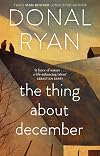
Loneliness covers the earth like a blanket. It flows in the stream down through the Callows to the lake. It’s in the muck in the yard and the briars in the haggard and the empty outbuildings are bursting with it. It runs down the walls inside of the house like tears and grows on the walls outside like a poisonous choking weed. It’s in the sky and the stones and the clouds and the grass. The air is thick with it: you breathe it into your lungs and you feel like it might suffocate you. Itshow more
runs into hollow places like rainwater. It settles on the grass and on trees and takes their shapes and all the earth is wet with it. It has a smell, like the inside of a saucepan: scraped metal, cold and sharp. When it hits you, it feels like a rap of a hurl across your knuckles on a frosty winter’s morning in PE: sharp, shocking pain, but inside you, so it can’t be seen and no one says sorry for causing it nor asks are you okay, and no kind teacher wants to look at it and tut-tut and tell you you’ll be grand, good lad.
But you know if another man stood where you’re standing and looked at the same things he wouldn’t see it or feel it. (p.44)
Johnsey Cunliffe has lived in his rural Irish village all his life. But his grief-stricken mother died not long after his father succumbed to cancer, and now Johnsey – naïve, inexperienced and easily rattled by official documents or unfamiliar situations – is all on his own. The novel traces a year of his life, month by month, culminating in a devastating conclusion that seems inevitable from the outset…
Each chapter begins with Johnsey’s memories of the cycle of farm life, often described with humour that suggests that Johnsey is not as simple as he seems:
January was lonely and slow and drawn out as a rule, no matter what Mother said about it. The first day of February is the first day of spring, Daddy used to say, as if you could dictate to a season when it was to start. More would contend spring began in March, but the way Daddy used to say it, looking up at the sky as if to see if God was listening, to remind him to send the new season, his words would nearly make the world warm up. (p.29)
To read the rest of my review please visit https://anzlitlovers.com/2018/02/09/the-thing-about-december-by-donal-ryan-bookr... show less

Melody Shee’s already tenuous marriage collapses when she becomes pregnant by another man. The father’s identity is a closely guarded secret, but the reader knows he is an Irish Traveller, an ethnic group subject to cultural and political discrimination. Melody struggles to cope with this dramatic change in circumstances, made worse by knowing she bears most of the responsibility for the mess she is now in. Melody takes to lurking around the Travellers’ part of town and learns her show more baby’s father has left the area for work. She befriends his cousin Mary who is much younger than Melody but wiser in many ways.
Through her friendship with Mary, Melody becomes more involved in issues the Travellers face day-to-day, and while she cannot change these societal forces she hopes to at least provide Mary with safety and respect. In turn, Mary gives Melody emotional support that sustains her throughout her pregnancy and helps her resist pressure from her father and husband to return to her “normal” married life.
Both women are in situations that threaten to fall apart at any moment. And sure enough, they do, in dramatic page-turning fashion. Donal Ryan kept me on the edge of my seat, frantic with worry, and brought events to a fitting emotional conclusion that, in hindsight, was the best way to resolve both Melody and Mary’s predicaments. show less
Through her friendship with Mary, Melody becomes more involved in issues the Travellers face day-to-day, and while she cannot change these societal forces she hopes to at least provide Mary with safety and respect. In turn, Mary gives Melody emotional support that sustains her throughout her pregnancy and helps her resist pressure from her father and husband to return to her “normal” married life.
Both women are in situations that threaten to fall apart at any moment. And sure enough, they do, in dramatic page-turning fashion. Donal Ryan kept me on the edge of my seat, frantic with worry, and brought events to a fitting emotional conclusion that, in hindsight, was the best way to resolve both Melody and Mary’s predicaments. show less
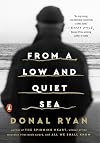
Just when you think maybe you've read too many things, and that originality is impossible now, except when the author is being ridiculously experimental just for the sake of it, along comes Donal Ryan, and shows you that literary artistry in the cause of a good story isn't finished at all, at all.
[From a Low and Quiet Sea] is a short novel in 4 parts...each of the first three tells the story of a man trying to come to terms with his circumstances or his past, and each would make a worthy show more novella on its own. A Syrian doctor, desperate to save his family from religious hatred, takes a risk to get them out of their homeland. A fatherless young Irish man whose girl has left him flounders about, uncertain what to do with his life while his grandfather hides a deep love for the boy behind bluster and bar stories. A man with no future left looks back on his less-than-admirable life, and seeks absolution. Three fine stories...but wait...the blurbs say "cleverly constructed", the blurbs say "unpredictable", the blurbs suggest there will be a connection among them. Sure, and it's brilliant, that fourth part. I want to read it all over again. Highly recommended. show less
[From a Low and Quiet Sea] is a short novel in 4 parts...each of the first three tells the story of a man trying to come to terms with his circumstances or his past, and each would make a worthy show more novella on its own. A Syrian doctor, desperate to save his family from religious hatred, takes a risk to get them out of their homeland. A fatherless young Irish man whose girl has left him flounders about, uncertain what to do with his life while his grandfather hides a deep love for the boy behind bluster and bar stories. A man with no future left looks back on his less-than-admirable life, and seeks absolution. Three fine stories...but wait...the blurbs say "cleverly constructed", the blurbs say "unpredictable", the blurbs suggest there will be a connection among them. Sure, and it's brilliant, that fourth part. I want to read it all over again. Highly recommended. show less
Lists
Awards


You May Also Like


Associated Authors
Statistics
- Works
- 9
- Also by
- 3
- Members
- 2,273
- Popularity
- #11,291
- Rating
- 3.8
- Reviews
- 159
- ISBNs
- 114
- Languages
- 8
- Favorited
- 5