
Paul Lynch (1) (1977–)
Author of Prophet Song
For other authors named Paul Lynch, see the disambiguation page.
Works by Paul Lynch
Tagged
Common Knowledge
- Birthdate
- 1977-05-09
- Gender
- male
- Nationality
- Ireland
- Associated Place (for map)
- Ireland
Members
Reviews
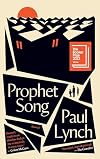
"The NAP {new government} is trying to change what you and I call reality, they want to muddy it like water if you say one thing is another thing and you say it enough times then it must be so, and if you keep saying it over and over people accept it as true."
One day Eilish, a Dublin mother of four who works as a scientist, finds her husband has been taken, presumably arrested, and officials won't tell her anything. There follows an insidious progression of events, some in the background, show more some in your face. Some people begin leaving, but Eilish can't get a passport for her youngest child, still an infant. She still can't locate her husband and doesn't want to leave until he returns. There are talks of internment camps as more and more are arrested. Then demonstrations at which the government shoots the demonstrators. The government declares a national emergency; habeas corpus is suspended; the government takes control of the judiciary, as well as the media; listening to foreign stations is outlawed; schools are closed; soldiers patrol the streets. Soon bombs are falling. What they said can't happen here has happened here. It's not somewhere faraway that's happening on the news.
Through it all we are focused on Eilish who is desperately trying to hold her family together. But events move beyond her control ("You cannot put a stop to the wind he says and the wind is going to blow right through this country....") as she and one member after the other of her family are affected in ways that will change them forever. The book is written in long sections without paragraphs, without quotation marks so that it is difficult to know when someone is speaking, and who that person might be, and there is scant other punctuation. This means the book requires close reading, we must move right in where Eilish and her family and the people around her are suffering, and suffer along with them. The style of writing is what makes this book so brilliant.
This was a very scary, and I will say prescient book. I look around at a country in which millions are willing to vote for a rapist and psychopathic con man, a man facing 91 felony counts, and a man who has told us what he will do in a second term, which would turn this country into a banana republic with him as King--starting with jailing his political rivals and anyone who has spoken an ill word of him, and I am terrified. The importance of this book is it shows us that yes, it can happen here, and unfortunately millions of people don't seem to care.
I leave you with these quotes from the book:
"it is vanity to think that the world will end during your lifetime in some sudden event, that what ends is your life and only your life, that what is sung by the prophets is but the same song sung across time, the coming of the sword, the world devoured by fire, the sun gone down into the earth at noon and the world cast into darkness..."
"The world is always ending over and over again in one place but not another and that the end of the world is always a local event, it comes to your country and visits your town and knocks on the door of your house and becomes to others some distant warning, a brief report on the news, an echo of events that has passed into folklore...."
and,
"How could he have known anyhow, how could any of us have known what was going to happen, I suppose other people seemed to know, but I never understood how they were so certain, what I mean is, you could never have imagined it, not in a million years, all that was to happen, and I could never understand those that left, how they could just leave like that, leave everything behind, all that life, all that living, it was absolutely impossible for us to do so at the time and the more I look at it the more it seems there was nothing we could do anyhow..."
Highly recommended.
5 stars show less
One day Eilish, a Dublin mother of four who works as a scientist, finds her husband has been taken, presumably arrested, and officials won't tell her anything. There follows an insidious progression of events, some in the background, show more some in your face. Some people begin leaving, but Eilish can't get a passport for her youngest child, still an infant. She still can't locate her husband and doesn't want to leave until he returns. There are talks of internment camps as more and more are arrested. Then demonstrations at which the government shoots the demonstrators. The government declares a national emergency; habeas corpus is suspended; the government takes control of the judiciary, as well as the media; listening to foreign stations is outlawed; schools are closed; soldiers patrol the streets. Soon bombs are falling. What they said can't happen here has happened here. It's not somewhere faraway that's happening on the news.
Through it all we are focused on Eilish who is desperately trying to hold her family together. But events move beyond her control ("You cannot put a stop to the wind he says and the wind is going to blow right through this country....") as she and one member after the other of her family are affected in ways that will change them forever. The book is written in long sections without paragraphs, without quotation marks so that it is difficult to know when someone is speaking, and who that person might be, and there is scant other punctuation. This means the book requires close reading, we must move right in where Eilish and her family and the people around her are suffering, and suffer along with them. The style of writing is what makes this book so brilliant.
This was a very scary, and I will say prescient book. I look around at a country in which millions are willing to vote for a rapist and psychopathic con man, a man facing 91 felony counts, and a man who has told us what he will do in a second term, which would turn this country into a banana republic with him as King--starting with jailing his political rivals and anyone who has spoken an ill word of him, and I am terrified. The importance of this book is it shows us that yes, it can happen here, and unfortunately millions of people don't seem to care.
I leave you with these quotes from the book:
"it is vanity to think that the world will end during your lifetime in some sudden event, that what ends is your life and only your life, that what is sung by the prophets is but the same song sung across time, the coming of the sword, the world devoured by fire, the sun gone down into the earth at noon and the world cast into darkness..."
"The world is always ending over and over again in one place but not another and that the end of the world is always a local event, it comes to your country and visits your town and knocks on the door of your house and becomes to others some distant warning, a brief report on the news, an echo of events that has passed into folklore...."
and,
"How could he have known anyhow, how could any of us have known what was going to happen, I suppose other people seemed to know, but I never understood how they were so certain, what I mean is, you could never have imagined it, not in a million years, all that was to happen, and I could never understand those that left, how they could just leave like that, leave everything behind, all that life, all that living, it was absolutely impossible for us to do so at the time and the more I look at it the more it seems there was nothing we could do anyhow..."
Highly recommended.
5 stars show less
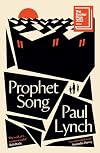
Cormac McCarthy passed away this year but his spirit lives on in the visceral writing of Paul Lynch. The landscape is different with the lanes and houses of Dublin replacing the Badlands of the US but the human concerns are the same.
This is a book that is painful but rewarding to read. It is a book with a voice that demands to be heard - a voice decrying state overreach, the loss of liberty, inhumanity, oppression, the feral greed of conflict, the importance of human kindness and familial show more togetherness. It is a book without a proper end although there is a watershed of sorts. It is a book that chilled me to the bone severally and had little in the way of lightness about it. It is a book that forced you to read in chunks by its very structure. It is a book to be moved by and to remember.
I don't know whether this book will win the Booker, and I suspect it probably will not, but I do believe that it will outlive whatever does go on to win and it will certainly stay with me long after I came weeping to the end. show less
This is a book that is painful but rewarding to read. It is a book with a voice that demands to be heard - a voice decrying state overreach, the loss of liberty, inhumanity, oppression, the feral greed of conflict, the importance of human kindness and familial show more togetherness. It is a book without a proper end although there is a watershed of sorts. It is a book that chilled me to the bone severally and had little in the way of lightness about it. It is a book that forced you to read in chunks by its very structure. It is a book to be moved by and to remember.
I don't know whether this book will win the Booker, and I suspect it probably will not, but I do believe that it will outlive whatever does go on to win and it will certainly stay with me long after I came weeping to the end. show less
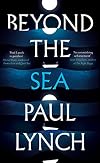
This is a survival story tackling psychological rather than physical aspects of survival. The story is told from the point of view of Bolivar, one of two men who are washed out to sea in a small boat. The language is very sparse but beautiful, poetic at times. Paul Lynch has created a new tone, new voice, distinct and memorable. The author takes us to new territories, both literally and figuratively speaking, he goes where few have stepped before. The novel has similarities with show more existentialist and modernist literature but where Camus and Beckett are interested in the extremes of human condition, Lynch accepts a broader range. His Bolivar is the most common man, he is "only a fisherman". Exploring the depths of this fisherman's mind we enter the corners that are very dark and disturbing. Reading this part of the novel is almost physically painful...
Looking forward to more from Paul Lynch. show less
Looking forward to more from Paul Lynch. show less
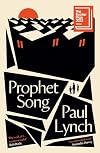
Reading my third book by Paul Lynch I knew what to expect. I enjoy his style, how he imposes darkness on his readers. How you almost crave for more, and you get it, you get more than you wanted, expected, or were able to take. And then, when you reach the deepest darkness of all, the bottom of a bottomless well of despair, finally there is hope and maybe there is light.
Lists
Best Dystopias (1)
New Books March (1)
Awards


You May Also Like


Associated Authors
Statistics
- Works
- 5
- Members
- 2,564
- Popularity
- #10,015
- Rating
- 4.1
- Reviews
- 126
- ISBNs
- 104
- Languages
- 11
- Favorited
- 4