
Paul Murray (1) (1975–)
Author of Skippy Dies
For other authors named Paul Murray, see the disambiguation page.
Works by Paul Murray
Skippy Dies, Part 1: Hopeland 6 copies
Associated Works
Tagged
Common Knowledge
- Birthdate
- 1975
- Gender
- male
- Education
- Trinity College, Dublin
University of East Anglia - Occupations
- diplomat
- Nationality
- Ireland
- Birthplace
- Dublin, Ireland
- Places of residence
- Barcelona, Spain
Dublin, Ireland - Associated Place (for map)
- Ireland
Members
Reviews
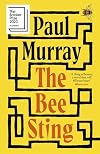
Oh this book is a proper saga. A personal “look-into” the car crash that is the Barnes family. It is a derailed train, and you get a front row seat to see it all happen.
This book will make you laugh and cry at the same time. It is such a well told story, that even at its 600+ pages, you just don’t want it to end. And what an ending!!!
We get to experience the Barnes family through the years in the viewpoint of each member. We learn their personal story and their combined stories as show more well. How one (or many) little action and decision can shape, and utterly alter not just one life, but several.
I truly don’t want to say much more to avoid giving anything away, but please, PLEASE! read this one. The pacing, the build up, the heartache and the heartbreak are too good to let it pass you by.
Then you get to the ending. I am still reeling it all in. show less
This book will make you laugh and cry at the same time. It is such a well told story, that even at its 600+ pages, you just don’t want it to end. And what an ending!!!
We get to experience the Barnes family through the years in the viewpoint of each member. We learn their personal story and their combined stories as show more well. How one (or many) little action and decision can shape, and utterly alter not just one life, but several.
I truly don’t want to say much more to avoid giving anything away, but please, PLEASE! read this one. The pacing, the build up, the heartache and the heartbreak are too good to let it pass you by.
Then you get to the ending. I am still reeling it all in. show less

This is the story of a family who falls apart in the aftermath of Ireland's 2008 economic crisis. The Barnes's are among the wealthiest families in a small town in the middle of Ireland, owning and running a car dealership there. When the crash comes, it seems for awhile like they can sail through, and then it seems like they might sail through with a little belt-tightening. And then it seems the sailing days are over.
Murry begins this story with Cass, who plans to attend university in show more Dublin and live with her best friend. When the financial pressures become evident, so does the disparity in the relationship with her best friend. Cut adrift, Cass has trouble concentrating on her exams, and as her normal teenage woes veer into more serious terrain, it's clear her parents aren't paying attention. Then there's PJ, a sweet child, who may spend his time playing truly frightening video games, but that hasn't affected his sensitive heart, which notices his parents's troubles and does his part to not bother them, no matter what. He's found an on-line friend who is supportive which his parents definitely don't notice.
Murray's skill as a writer is in full display as, having killed all sympathy for these negligent parents, he proceeds to tell their stories and to force the reader to care about them. Murray writes each character so well, each has a voice of their own and the mother's section was just fantastic -- written in a stream-of-consciousness that reflects who she is. The book opens with long sections for each of the four family members, then moving between them more rapidly as the novel builds to its conclusion. We've all read books that end pages, or even chapters, later than they should have. This is the first time I've encountered a book that deliberately ended too early. I'm not sure what to think of that. show less
Murry begins this story with Cass, who plans to attend university in show more Dublin and live with her best friend. When the financial pressures become evident, so does the disparity in the relationship with her best friend. Cut adrift, Cass has trouble concentrating on her exams, and as her normal teenage woes veer into more serious terrain, it's clear her parents aren't paying attention. Then there's PJ, a sweet child, who may spend his time playing truly frightening video games, but that hasn't affected his sensitive heart, which notices his parents's troubles and does his part to not bother them, no matter what. He's found an on-line friend who is supportive which his parents definitely don't notice.
Murray's skill as a writer is in full display as, having killed all sympathy for these negligent parents, he proceeds to tell their stories and to force the reader to care about them. Murray writes each character so well, each has a voice of their own and the mother's section was just fantastic -- written in a stream-of-consciousness that reflects who she is. The book opens with long sections for each of the four family members, then moving between them more rapidly as the novel builds to its conclusion. We've all read books that end pages, or even chapters, later than they should have. This is the first time I've encountered a book that deliberately ended too early. I'm not sure what to think of that. show less
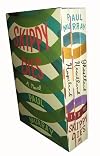
Though it ends with an act of arson and several near death experiences, the novel Skippy Dies by Paul Murray left me feeling serene. I felt filled with an overarching sense of meaning, of internal stillness, that comes at the end of a very good book. This is not altogether a good thing--it's difficult to be fully engaged in a text whilst you are still suspended in the amber of its magic. But it left me grasping at disparate details, at small things, to assemble them into a whole, to pick show more apart the compositional threads of the novel's wholecloth and then try to weave them back together.
I'd argue that that's what the whole book is about.
But I'm putting the cart ahead of the horse. This is a good book. The actual, physical book is nice. The American hardback is published by Farber and Farber Inc., and you can tell they invested in it. The paper (oh the paper, the glorious paper) is smooth and soft and lends it a reassuring solidity. The cover is abstract, but in a good way: it communicates something in the end, resembling waves drawn in watercolor, shaky and bleeding into each other at the intersections. The typography is nicely balanced and not at all intrusive, and there's some fun stuff with formatting that would be lost in a digital edition: an instance of E. E. Cummings-like fiddling with spacing and symbols; a popstar's name rendered in what looks like Curlz MT instead of the steady serif of the rest of the text; a sci-fi inspired font for SMS communication. They're small, these variations, and used sparingly, but they make the text feel whole. It feels polished and finished, like an entity unto itself. (Might I add how nice it is that the kids text in this book? I feel like in a lot of literary fiction, technology simply fades into the background. It's like Facebook or any facsimile thereof simply doesn't exist. No one skypes, no one has to go charge their car, no one almost walks out into traffic because they were playing games on their phone while walking around with earbuds in. Tcheh.)
The title is a spoiler. Daniel "Skippy" Juster is a boarder at a prestigious Irish school. He is in his second year, which is roughly equivalent to 8th or 9th grade, and within six pages he is dead. So, okay, while the jacket copy's comparison to Infinite Jest is mostly off the wall, the two are similar in that they revolve around a death, and that though Skippy is the protagonist, the novel just as often takes place from the perspective of other characters: Lorelei, girl he's infatuated with; Howard Fallon, his history teacher; Carl, the menacing and more than slightly crazy classmate who harasses him. Murray invokes the poltergeist of adolescent lust almost too well. Awkward, all-consuming infatuation, lust, jumbled sex ed, schoolyard politics... and a reminder through the adults that all that still lurks below the polish of maturity.
He also uses the second person, and though the first time I was taken aback by the sheer novelty, it feels natural. It lets him slip readers into a pocket dimension within the book's greater arc--into Carl's fracturing and dream-like reality, into Skippy's video games. It works. It makes me so happy that it works.
The one thing that irks me a little is the end. In places it feels rushed--that act of arson pulls back from the limited perspective of the rest of the piece. It moves quicker, yes, but it felt a little glossed over. And the novel's thesis of sorts is spelled out rather plainly in the last few pages... but I sort of liked that.
I'm dumb sometimes. Epiphanies cannot be summoned on command. But the experience of this book, and books in general, is one similar to my layman's knowledge of the relationship between the quantum and the relativistic as they stand now: two realms indivisible, their interactions incomprehensible, except for the beautiful idea that we are all comprised of buzzing strings that bind us into one whole, across infinity, across space-time and n dimensions. (I said layman's knowledge, okay?) But it felt like Murray (and his publisher and editors) has been spinning this web of stories, of characters and actions and plot and typography and cover design into one whole, into one moment dwindling down to a single point, into a supercompact dimension a breath away from ours and unimaginably dense: pages 654 and 655. It felt like an ending, and a good one at that. show less
I'd argue that that's what the whole book is about.
But I'm putting the cart ahead of the horse. This is a good book. The actual, physical book is nice. The American hardback is published by Farber and Farber Inc., and you can tell they invested in it. The paper (oh the paper, the glorious paper) is smooth and soft and lends it a reassuring solidity. The cover is abstract, but in a good way: it communicates something in the end, resembling waves drawn in watercolor, shaky and bleeding into each other at the intersections. The typography is nicely balanced and not at all intrusive, and there's some fun stuff with formatting that would be lost in a digital edition: an instance of E. E. Cummings-like fiddling with spacing and symbols; a popstar's name rendered in what looks like Curlz MT instead of the steady serif of the rest of the text; a sci-fi inspired font for SMS communication. They're small, these variations, and used sparingly, but they make the text feel whole. It feels polished and finished, like an entity unto itself. (Might I add how nice it is that the kids text in this book? I feel like in a lot of literary fiction, technology simply fades into the background. It's like Facebook or any facsimile thereof simply doesn't exist. No one skypes, no one has to go charge their car, no one almost walks out into traffic because they were playing games on their phone while walking around with earbuds in. Tcheh.)
The title is a spoiler. Daniel "Skippy" Juster is a boarder at a prestigious Irish school. He is in his second year, which is roughly equivalent to 8th or 9th grade, and within six pages he is dead. So, okay, while the jacket copy's comparison to Infinite Jest is mostly off the wall, the two are similar in that they revolve around a death, and that though Skippy is the protagonist, the novel just as often takes place from the perspective of other characters: Lorelei, girl he's infatuated with; Howard Fallon, his history teacher; Carl, the menacing and more than slightly crazy classmate who harasses him. Murray invokes the poltergeist of adolescent lust almost too well. Awkward, all-consuming infatuation, lust, jumbled sex ed, schoolyard politics... and a reminder through the adults that all that still lurks below the polish of maturity.
He also uses the second person, and though the first time I was taken aback by the sheer novelty, it feels natural. It lets him slip readers into a pocket dimension within the book's greater arc--into Carl's fracturing and dream-like reality, into Skippy's video games. It works. It makes me so happy that it works.
The one thing that irks me a little is the end. In places it feels rushed--that act of arson pulls back from the limited perspective of the rest of the piece. It moves quicker, yes, but it felt a little glossed over. And the novel's thesis of sorts is spelled out rather plainly in the last few pages... but I sort of liked that.
I'm dumb sometimes. Epiphanies cannot be summoned on command. But the experience of this book, and books in general, is one similar to my layman's knowledge of the relationship between the quantum and the relativistic as they stand now: two realms indivisible, their interactions incomprehensible, except for the beautiful idea that we are all comprised of buzzing strings that bind us into one whole, across infinity, across space-time and n dimensions. (I said layman's knowledge, okay?) But it felt like Murray (and his publisher and editors) has been spinning this web of stories, of characters and actions and plot and typography and cover design into one whole, into one moment dwindling down to a single point, into a supercompact dimension a breath away from ours and unimaginably dense: pages 654 and 655. It felt like an ending, and a good one at that. show less
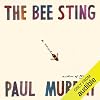
Fly Like a Butterfly
“Dust be diamonds, water be wine
Happy, happy, happy all the time, time, time
Dust be diamonds, water be wine
Happy, happy, happy all the time, time, time”
- from the album Be Glad for the Song Has No Ending, Incredible String Band, 1969.
First lines:
”In the next town over a man had killed his family. He had nailed the doors shut so they couldn’t get out. Their neighbors heard them running through the rooms screaming for mercy. When he’d finished he’d turned the show more gun on himself.”
With over 26 audio reading time hours between the first and last lines, it’s no wonder that many readers thought the song had no ending. But the story does, ambiguous as it may be, like Murray’s characters the reader must decide.
It’s a rambling tale of three generations of an Irish family living in a small village, and on the face of it one could be forgiven in thinking it is just another, albeit well-crafted, Irish story that has become almost a genre in its own right.
But that is just what it is not. It’s a story about time, how the past stays with us, how people change or think they do. How we don’t realise in our moment that this is our life. There’s no returning. That’s all folks.
Imelda - the middle generation -
“Time doesn’t do what you think it will, does it? You get your turn, but they don’t tell you that’s all it is. A turn. A moment. Everything explodes, you’re nothing but feelings. Your life begins at last. You think it’ll be all like that. Then the moment passes. The moment passes but you stay in the shape you were then, in the life that’s come out of the things that you did. The remainder of that girl you used to be.”
And Dickie, Imelda’s husband, on trying to recover his past, walking through his old stamping ground of Trinity College in Dublin nearly two decades later.
“There were new buildings everywhere with obtuse designs, deliberate acts of modernity. They struggled against the university’s aura of pastness The plush heaviness like a brocade of pure time that covered everything and held it in suspension.”
Against the tales of the individual characters hangs the beginnings and forebodings of climate change and ecological damage. The piece of plastic blowing in the wind, semi attached to a power pole, that once held a memorial photo of Imelda’s first love, brother of Dickie. Frank whose ghostly presence lingers on. That plastic will, Imelda muses, outlast all our lives, all our “turns”.
Bad things seem to happen with weather changes, storms, flash flooding. But the characters literally plough through downpours and flooded roads. In sync with their doom. A come-what-may-ness. There’s an “All the world’s a stage” vibe about The Bee Sting.
A gem of a book. Read it for the prose alone. As for the characters, I came away almost in love with one of them, the boy, PJ. And I guess I’m not alone.
Read this book. show less
“Dust be diamonds, water be wine
Happy, happy, happy all the time, time, time
Dust be diamonds, water be wine
Happy, happy, happy all the time, time, time”
- from the album Be Glad for the Song Has No Ending, Incredible String Band, 1969.
First lines:
”In the next town over a man had killed his family. He had nailed the doors shut so they couldn’t get out. Their neighbors heard them running through the rooms screaming for mercy. When he’d finished he’d turned the show more gun on himself.”
With over 26 audio reading time hours between the first and last lines, it’s no wonder that many readers thought the song had no ending. But the story does, ambiguous as it may be, like Murray’s characters the reader must decide.
It’s a rambling tale of three generations of an Irish family living in a small village, and on the face of it one could be forgiven in thinking it is just another, albeit well-crafted, Irish story that has become almost a genre in its own right.
But that is just what it is not. It’s a story about time, how the past stays with us, how people change or think they do. How we don’t realise in our moment that this is our life. There’s no returning. That’s all folks.
Imelda - the middle generation -
“Time doesn’t do what you think it will, does it? You get your turn, but they don’t tell you that’s all it is. A turn. A moment. Everything explodes, you’re nothing but feelings. Your life begins at last. You think it’ll be all like that. Then the moment passes. The moment passes but you stay in the shape you were then, in the life that’s come out of the things that you did. The remainder of that girl you used to be.”
And Dickie, Imelda’s husband, on trying to recover his past, walking through his old stamping ground of Trinity College in Dublin nearly two decades later.
“There were new buildings everywhere with obtuse designs, deliberate acts of modernity. They struggled against the university’s aura of pastness The plush heaviness like a brocade of pure time that covered everything and held it in suspension.”
Against the tales of the individual characters hangs the beginnings and forebodings of climate change and ecological damage. The piece of plastic blowing in the wind, semi attached to a power pole, that once held a memorial photo of Imelda’s first love, brother of Dickie. Frank whose ghostly presence lingers on. That plastic will, Imelda muses, outlast all our lives, all our “turns”.
Bad things seem to happen with weather changes, storms, flash flooding. But the characters literally plough through downpours and flooded roads. In sync with their doom. A come-what-may-ness. There’s an “All the world’s a stage” vibe about The Bee Sting.
A gem of a book. Read it for the prose alone. As for the characters, I came away almost in love with one of them, the boy, PJ. And I guess I’m not alone.
Read this book. show less
Lists
Awards


You May Also Like


Associated Authors
Statistics
- Works
- 5
- Also by
- 1
- Members
- 5,337
- Popularity
- #4,663
- Rating
- 3.8
- Reviews
- 235
- ISBNs
- 156
- Languages
- 9
- Favorited
- 7