
Patrick deWitt
Author of The Sisters Brothers
About the Author
Image credit: photo:colmangetty
Works by Patrick deWitt
Arinmalar 1 copy
Associated Works
Tagged
Common Knowledge
- Canonical name
- deWitt, Patrick
- Birthdate
- 1975-03-06
- Gender
- male
- Occupations
- novelist
screenwriter - Awards and honors
- Rogers Writers' Trust Fiction Prize (2011)
Governor General's Literary Award for English-language fiction (2011)
Stephen Leacock Memorial Medal for Humour (2012, 2024)
Canadian Authors Association Award for Fiction (2012)
Canadian Booksellers Association Libris Award (2012)
Oregon Book Award for fiction (2024) - Nationality
- Canada (birth)
USA (naturalized) - Birthplace
- Sidney, Vancouver Island, British Columbia, Canada
- Places of residence
- Bainbridge Island, Washington, USA
Portland, Oregon, USA
Los Angeles, California, USA - Map Location
- USA
Members
Discussions
The Sisters Brothers by Patrick deWitt in Booker Prize (September 2013)
Reviews
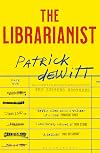
A disappointingly dull novel. I read and enjoyed Patrick deWitt's The Sisters Brothers previously: a picaresque Western with a great line in dark comedy. In The Librarianist, he seems to have regressed: this seems more of a first novel than the polished work of a much published author. The book is centered around the life of Bob Comet, a diffident, introverted retired librarian whose choice of profession was motivated by his confession: "Why not?" He reads, does his chores, and remarks on show more how people exhaust him. A librarian mentored him, but it's quite easy to see that if an engineer had mentored him, he would have passively wandered into the engineering field until he retired thence, instead.
At the outset of the book, Comet encounters a confused old woman in a store: breaking from routine, he is able to track her down and return her to the care home that she attends. Joining the care home as a volunteer, he proceeds to bore the residents (and us) with a stultifying reading list that they do not care for - while he earnestly lectures them on the power of Russian classics, they wander off to do other things. When it is revealed that one of the residents of the home has a connection to him, the rest of the novel takes on an account of Bob's life before this point. You would be forgiven in thinking that this presents an account for some major betrayal or trauma which made him the way he is. Indeed, we're told that he met a young woman in straitened circumstances and married her, and then proceeded to treat her as diffidently as he did everything else in his life. Naturally, the marriage didn't last long, culminating in a painful betrayal. But as we move further into Bob's past, we find that he was equally passive before this event, as he was after. Comet is a man to whom life happens, which he sits in mild distaste with knitted brow and wonders at it all. He is a man who can muster up, at best, a self-description that amounts to "not unhappy". Even his youthful moment of rebellion: running away for four days, is uneventful: he comes to no harm, does nothing special, and is safely returned home.
DeWitt has all the elements that could produce a great novel: pathos, a gentle domesticity, love, betrayal, the inescapable passage of time and aging. DeWitt, though, chooses nothing to do with any of these: instead, the book sort of fizzles away towards the end in a series of vignettes. Bob Comet lives a life unexamined, and the man who wrote him chooses not to examine it either. Why? I don't know. show less
At the outset of the book, Comet encounters a confused old woman in a store: breaking from routine, he is able to track her down and return her to the care home that she attends. Joining the care home as a volunteer, he proceeds to bore the residents (and us) with a stultifying reading list that they do not care for - while he earnestly lectures them on the power of Russian classics, they wander off to do other things. When it is revealed that one of the residents of the home has a connection to him, the rest of the novel takes on an account of Bob's life before this point. You would be forgiven in thinking that this presents an account for some major betrayal or trauma which made him the way he is. Indeed, we're told that he met a young woman in straitened circumstances and married her, and then proceeded to treat her as diffidently as he did everything else in his life. Naturally, the marriage didn't last long, culminating in a painful betrayal. But as we move further into Bob's past, we find that he was equally passive before this event, as he was after. Comet is a man to whom life happens, which he sits in mild distaste with knitted brow and wonders at it all. He is a man who can muster up, at best, a self-description that amounts to "not unhappy". Even his youthful moment of rebellion: running away for four days, is uneventful: he comes to no harm, does nothing special, and is safely returned home.
DeWitt has all the elements that could produce a great novel: pathos, a gentle domesticity, love, betrayal, the inescapable passage of time and aging. DeWitt, though, chooses nothing to do with any of these: instead, the book sort of fizzles away towards the end in a series of vignettes. Bob Comet lives a life unexamined, and the man who wrote him chooses not to examine it either. Why? I don't know. show less

What is it that we find so attractive in wretched villains? Why do we get so interested in the stories of those on the other side of the moral red lines? How does it happen that we genuinely wish them well?
I was wondering what the brothers, who are Sisters, have in common with a mental image I carried all along. And I think the closest image I can conjure is some scene from The Dead Man by Jarmusch. The quirkiness, the lawlessness, the twisted moral code - it’s all there, as is the show more scenery, the setting in the woodlands of the West.
Go on this trip with Sisters, it’s a wild ride, unpredictable and grim but also unexpectedly touching at times show less
I was wondering what the brothers, who are Sisters, have in common with a mental image I carried all along. And I think the closest image I can conjure is some scene from The Dead Man by Jarmusch. The quirkiness, the lawlessness, the twisted moral code - it’s all there, as is the show more scenery, the setting in the woodlands of the West.
Go on this trip with Sisters, it’s a wild ride, unpredictable and grim but also unexpectedly touching at times show less
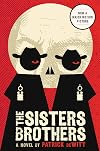
Original review (2011)
It's always nice to go into a book with heightened expectations and still have them met. Of course the downside is that it's somewhat difficult to sing the book's praises coherently. Basically, this book was exactly what I was looking for: a wonderfully wry Western with a heart, an excellent narrative voice in the form of put-upon younger brother Eli Sisters, some laugh-out-loud dialogue (e.g. "I did not come here to discuss the quality of your seed") and extremely show more vivid depictions of violence and gore... fortunately the violence/gore is intermittent and over very quickly. I must confess to being confused about the purpose of the "intermissions", of which there are two (the other divisions of the book into parts made sense), but that confusion did not hinder my enjoyment of the story in any way. It was excellent from beginning to end and I am tempted to turn right around and reread it immediately. Highly recommended for fans of Westerns and dark humour, especially those who enjoyed Deadwood or True Grit (particularly the remake).
Re-read review (2019)
My original review still stands, although I just realized that I constructed a sentence incorrectly. I wasn’t *looking* for extremely vivid depictions of violence and gore, but I did come across them! I’d give a content warning for this book: if you don’t like eye injuries, particularly in animals, there’s one part that makes for uncomfortable reading. But it’s not treated lightly or with irreverence. The humour is reserved for the dynamics between Eli and Charlie, and Eli’s matter-of-factness that often disarms the people he encounters. I still recommend this book if it interests you—and definitely get the edition with the amazing cover designed by Dan Stiles. show less
It's always nice to go into a book with heightened expectations and still have them met. Of course the downside is that it's somewhat difficult to sing the book's praises coherently. Basically, this book was exactly what I was looking for: a wonderfully wry Western with a heart, an excellent narrative voice in the form of put-upon younger brother Eli Sisters, some laugh-out-loud dialogue (e.g. "I did not come here to discuss the quality of your seed") and extremely show more vivid depictions of violence and gore... fortunately the violence/gore is intermittent and over very quickly. I must confess to being confused about the purpose of the "intermissions", of which there are two (the other divisions of the book into parts made sense), but that confusion did not hinder my enjoyment of the story in any way. It was excellent from beginning to end and I am tempted to turn right around and reread it immediately. Highly recommended for fans of Westerns and dark humour, especially those who enjoyed Deadwood or True Grit (particularly the remake).
Re-read review (2019)
My original review still stands, although I just realized that I constructed a sentence incorrectly. I wasn’t *looking* for extremely vivid depictions of violence and gore, but I did come across them! I’d give a content warning for this book: if you don’t like eye injuries, particularly in animals, there’s one part that makes for uncomfortable reading. But it’s not treated lightly or with irreverence. The humour is reserved for the dynamics between Eli and Charlie, and Eli’s matter-of-factness that often disarms the people he encounters. I still recommend this book if it interests you—and definitely get the edition with the amazing cover designed by Dan Stiles. show less
The Sisters Brothers (shortlisted for the Booker prize in 2011) is one of those rare genre novels. It's a western yes, but it is so much more than just your standard adventure novel. The story is dark comedy that is essentially about the bonds of family and human nature. The story focuses on The Sisters brothers Eli and Charlie, who are two famous paid killers working for the Commodore. They are hired to find and kill a prospector in San Fransisco during the Gold Rush. The novel presents show more their journey to California and their adventures while they are there.
The novel really is a psychological examination of what it means to have the same blood; to be kin. Eli and Charlie could not be more different from each other. Charlie is bossy, impulsive, a bit of psychopath, loves to drink and does not hold too much respect for his brother. Eli, on the other hand, is sensitive, loves his brother, cares for his horses, does not enjoy killing people uselessly and his dream is to settle down with a woman.
The story is told by Eli, in a gorgeous, wise voice that is also comic. One gets the sense that Eli strives to be a good man but can't quite escape the violent and disturbing nature that seems to run in his blood. This makes it all the more satisfying when the brothers' quest come to end and movingly, Eli returns home to his mother. It's not quite settling down with a woman per se that Eli longs for but it seems to be a sensible ending to this tragicomedy.
Comparisons to Charles Portis (who wrote one of my favorite novels, True Grit) and Mark Twain are apt. This is dark, strange, funny, and unexpectedly moving frontier saga about the bonds of brotherhood, the dark nature of man, the power of greed, and the need for connection. show less
The novel really is a psychological examination of what it means to have the same blood; to be kin. Eli and Charlie could not be more different from each other. Charlie is bossy, impulsive, a bit of psychopath, loves to drink and does not hold too much respect for his brother. Eli, on the other hand, is sensitive, loves his brother, cares for his horses, does not enjoy killing people uselessly and his dream is to settle down with a woman.
The story is told by Eli, in a gorgeous, wise voice that is also comic. One gets the sense that Eli strives to be a good man but can't quite escape the violent and disturbing nature that seems to run in his blood. This makes it all the more satisfying when the brothers' quest come to end and movingly, Eli returns home to his mother. It's not quite settling down with a woman per se that Eli longs for but it seems to be a sensible ending to this tragicomedy.
Comparisons to Charles Portis (who wrote one of my favorite novels, True Grit) and Mark Twain are apt. This is dark, strange, funny, and unexpectedly moving frontier saga about the bonds of brotherhood, the dark nature of man, the power of greed, and the need for connection. show less
Lists
A Novel Cure (1)
World Books (1)
StoryTel 2023 (1)
READ in 2023 (1)
Awards


You May Also Like


Associated Authors
Statistics
- Works
- 12
- Also by
- 3
- Members
- 8,295
- Popularity
- #2,911
- Rating
- 3.8
- Reviews
- 532
- ISBNs
- 162
- Languages
- 13
- Favorited
- 6