
Esi Edugyan
Author of Washington Black
About the Author
Image credit: wikimedia.org
Works by Esi Edugyan
Associated Works
The Decameron Project: 29 New Stories from the Pandemic (2020) — Contributor — 161 copies, 5 reviews
New Daughters of Africa: An International Anthology of Writing by Women of African Descent (2019) — Contributor — 117 copies, 1 review
Tagged
Common Knowledge
- Birthdate
- 1978
- Gender
- female
- Education
- Johns Hopkins University (MA ∙ Writing Seminars)
University of Victoria, British Columbia, Canada - Occupations
- novelist
- Awards and honors
- Giller Prize (2011|2018)
- Relationships
- Price, Steven (husband)
- Nationality
- Canada
- Birthplace
- Calgary, Alberta, Canada
- Places of residence
- Victoria, British Columbia, Canada
- Associated Place (for map)
- Canada
Members
Discussions
2018 Booker Prize Longlist: Washington Black by Esi Edugyan in Booker Prize (July 2018)
Half Blood Blues by Esi Edugyan in Booker Prize (September 2011)
Reviews

Nearly five stars. The imagery is fantastic, vivid and compelling. I have trouble sometimes getting a feel for the setting of a book, but this was no problem at all for me with this novel. No idea if I got it right (or if Edugyan did), but I'm not sure that matters.
I have mixed feelings about the ending. I won't say a lot about it, just that it kind of annoyed me at first and then after I slept on it, I decided it was a good "annoyed." There's a lot of room for interpretation, which show more satisfies the English major in me.
Thematically, this novel is incredibly rich. The themes that resonate most with me are the nature of freedom and the effects of bondage, and the tendency to see individuals as representative of a group or cause rather than as distinct persons and how this is dehumanizing even when it's not attached to overt violence.
As with dreams, one role of fiction is to help bring understanding, insight, and organization to complex subjects and emotions; Washington Black fulfills this role beautifully. Well worth the time I spent waiting for it to move through my library holds list. show less
I have mixed feelings about the ending. I won't say a lot about it, just that it kind of annoyed me at first and then after I slept on it, I decided it was a good "annoyed." There's a lot of room for interpretation, which show more satisfies the English major in me.
Thematically, this novel is incredibly rich. The themes that resonate most with me are the nature of freedom and the effects of bondage, and the tendency to see individuals as representative of a group or cause rather than as distinct persons and how this is dehumanizing even when it's not attached to overt violence.
As with dreams, one role of fiction is to help bring understanding, insight, and organization to complex subjects and emotions; Washington Black fulfills this role beautifully. Well worth the time I spent waiting for it to move through my library holds list. show less
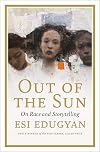
In five essays, Edugyan explores the ways in which race is portrayed in art and storytelling all around the world.
She begins with art in Europe, investigating the ways that Black people were portrayed in paintings (when they were at all), such as using symbols to show the "other". "Canada and the Art of Ghosts" was an interesting look at the ghost stories that do - and don't - get told, what we are collectively afraid of and what we allow to be forgotten.
I was particularly struck by the show more middle essay, "America and the Art of Empathy", in which she takes on the idea of transracialism, briefly talking about "passing," but spending more of her time on folks such as Rachel Dolezal who was born white but self-identifies as Black. There was a lot to chew on there, and I highlighted this quote:
Finally, in "Africa and the Art of the Future" she talks about Afrofuturism and her experience watching Black Panther, and "Asia and the Art of Storytelling" (possibly the weakest of the bunch, but still good) details her own story of traveling Asia and the challenging relationship China and Japan have with race, particularly in accepting Black people and why their attitudes are what they are.
There is a lot to unpack in this fairly slim book, but it's well worth the effort. show less
She begins with art in Europe, investigating the ways that Black people were portrayed in paintings (when they were at all), such as using symbols to show the "other". "Canada and the Art of Ghosts" was an interesting look at the ghost stories that do - and don't - get told, what we are collectively afraid of and what we allow to be forgotten.
I was particularly struck by the show more middle essay, "America and the Art of Empathy", in which she takes on the idea of transracialism, briefly talking about "passing," but spending more of her time on folks such as Rachel Dolezal who was born white but self-identifies as Black. There was a lot to chew on there, and I highlighted this quote:
Perhaps all our arguments around transracialism come down to a larger social disconnect between the individual freedoms we all cherish and the authenticity we now demand of everything. We want to everyone to be able to live out exactly the lives they wish, for our children to grow up to be anything, for everyone to be free to experience their true selves. But we are also living now in a time when the concept of identity is fragile, and we put great stock in absolute authenticity. We ask that art transport us to places and into lives we could not have otherwise fathomed, but we also put fences around those imaginative acts, by demanding, for example, that only gay actors play gay roles, or that only Black writers write Black characters.That resonates a lot with me, as it's a tension I find in my reading. I want to read diversely, and sometimes that means I notice when a book is all-white characters, but a lot of the time it means that I'm purposely seeking out books by people who are Black or Asian American or Latinx, and yes, I do look for a certain "authenticity" in that I don't want all the diverse stories I read to be written from a white lens. But, at the same time, I do think that a creative act should allow a writer to write about things they have not personally experienced. It can be a fine line to walk sometimes, and the lack of diversity in publishing with the decision-makers adds another layer to this.
Finally, in "Africa and the Art of the Future" she talks about Afrofuturism and her experience watching Black Panther, and "Asia and the Art of Storytelling" (possibly the weakest of the bunch, but still good) details her own story of traveling Asia and the challenging relationship China and Japan have with race, particularly in accepting Black people and why their attitudes are what they are.
There is a lot to unpack in this fairly slim book, but it's well worth the effort. show less
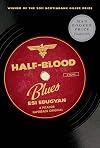
This is a novel that deftly explores a lesser-known aspect of the Holocaust: the persecution of Blacks and German “Mischlings” in Germany during World War II. It’s set against the backdrop of the jazz age, which has been effectively shut down in Berlin because the music is seen as “degenerate.” The tale is narrated by Sid, and moves back and forth in time to unfold the story of a talented band and its young trumpet player, Hieronymus Falk. The musicians must struggle against the show more growing danger of Nazism, and each experiences varying degrees of safety in Europe based on their background and citizenship. One of the most endangered is Hiero, a German of mixed race, who is taken by the Nazis one night and never returns. Sid witnesses this, and a major focus of the novel is Sid’s guilt as he grapples with what he did, and did not do, on that night.
The novel gracefully swerves from Paris, to Berlin, to present-day United States, as Sid tells the story both from an immediate perspective, and from the future, looking back. It’s written in a rhythmic, lyrical jazz slang that reads almost like poetry. The prose is at times sharp and laugh-out-loud witty, and at other times raw and chilling. After about 30 pages, I was so hooked on the story I found it difficult to put the book down.
Esi Edugyan has that special something that allows the reader to live in the historical context she’s created, right along with her wonderfully human, flawed characters. She shines a light on what it would be like to live in a world turned upside-down by hate, and explores what the average person would do when caught in an impossible situation in which death could be around every corner. Through it all the musicians continue to cling to their music, the one thing that still makes sense when nothing else does.
This is not a novel where everything is wrapped up tidy and neat. It leaves you wondering, thinking, and somewhat haunted by the characters and their story. Edugyan is an extraordinarily gifted writer with a very unique style and voice. Very highly recommended. show less
The novel gracefully swerves from Paris, to Berlin, to present-day United States, as Sid tells the story both from an immediate perspective, and from the future, looking back. It’s written in a rhythmic, lyrical jazz slang that reads almost like poetry. The prose is at times sharp and laugh-out-loud witty, and at other times raw and chilling. After about 30 pages, I was so hooked on the story I found it difficult to put the book down.
Esi Edugyan has that special something that allows the reader to live in the historical context she’s created, right along with her wonderfully human, flawed characters. She shines a light on what it would be like to live in a world turned upside-down by hate, and explores what the average person would do when caught in an impossible situation in which death could be around every corner. Through it all the musicians continue to cling to their music, the one thing that still makes sense when nothing else does.
This is not a novel where everything is wrapped up tidy and neat. It leaves you wondering, thinking, and somewhat haunted by the characters and their story. Edugyan is an extraordinarily gifted writer with a very unique style and voice. Very highly recommended. show less

Washington Black is a young slave working in the sugar cane fields of a Barbados plantation when he catches the eye of the Master's brother, Titch. Titch is a scientist who has developed an aerostat, a flying machine that uses a hydrogen-filled balloon. Titch trains Wash in the natural sciences as well as teaching him the rudiments of reading and Wash finds he has a talent for drawing. But while Titch treats him humanely, Wash is still living on a plantation full of enslaved people and white show more men who regard the slaves as things. Circumstances cause Titch and Wash to flee in the aerostat, and the subsequent years bring both adventures and fear, as Wash travels to Virginia, the Arctic, Upper Canada, London, Continental Europe and Morocco.
Esi Edugyan has written this book as a traditionally structured historical novel, with plenty of adventure and lots going on. But there's a much larger and more subversive story going on as well. The reader feels Wash's real fear as a black man in a world that is hostile to him, where even when he is in places where slavery is illegal, he knows he can be forcibly taken. His moments of peace are always temporary. And Edugyan also looks at what slavery does to the traditional family structure and with a person's ability to function independently. Titch may be a caring person who can see Wash as a human being, but he's also still fed and supported by slavery and unable and unwilling to stand up against the existing structures. Each place Wash finds himself has its own racist structures in place, even in places known as places of refuge for escaped slaves.
From an abolitionist who studies decay in human corpses, to a woman with tobacco- stained teeth and a mind of her own, to a mute Dutch man more comfortable in the Arctic than at home, this is a novel full of colorful and unlikely characters, all of whom exist in some way outside of borders of respectable society. show less
Esi Edugyan has written this book as a traditionally structured historical novel, with plenty of adventure and lots going on. But there's a much larger and more subversive story going on as well. The reader feels Wash's real fear as a black man in a world that is hostile to him, where even when he is in places where slavery is illegal, he knows he can be forcibly taken. His moments of peace are always temporary. And Edugyan also looks at what slavery does to the traditional family structure and with a person's ability to function independently. Titch may be a caring person who can see Wash as a human being, but he's also still fed and supported by slavery and unable and unwilling to stand up against the existing structures. Each place Wash finds himself has its own racist structures in place, even in places known as places of refuge for escaped slaves.
From an abolitionist who studies decay in human corpses, to a woman with tobacco- stained teeth and a mind of her own, to a mute Dutch man more comfortable in the Arctic than at home, this is a novel full of colorful and unlikely characters, all of whom exist in some way outside of borders of respectable society. show less
Lists
World Books (1)
Female Author (1)
Awards


You May Also Like


Associated Authors
Statistics
- Works
- 9
- Also by
- 5
- Members
- 4,700
- Popularity
- #5,364
- Rating
- 3.8
- Reviews
- 259
- ISBNs
- 110
- Languages
- 8
- Favorited
- 2
