
Lawrence Hill (1)
Author of The Book of Negroes
For other authors named Lawrence Hill, see the disambiguation page.
About the Author
Lawrence Hill was born in 1957 in Newmarket, Ontario. He earned a B.A. in economics from Laval University in Quebec City and later an M. A. in writing from Johns Hopkins University. Hill taught undergraduate fiction writing while completing his M.A. at Johns Hopkins, and since graduating has taught show more creative writing in numerous adult education programs. He has worked as a full-time newspaper reporter for The Globe and Mail and The Winnipeg Free Press. He has authored several books. Hill's nonfiction books include Trials and Triumphs: The Story of African-Canadians, Black Berry, Sweet Juice: On Being Black and White in Canada , The Deserter's Tale: The Story of An Ordinary Soldier Who Walked Away from the War in Iraq, and Dear Sir, I Intend to Burn Your Book: An Anatomy of a Book Burning. Hill's fictional works include Some Great Thing, Any Known Blood ,The Book of Negroes, and The Illegal. The Book of Negroes won several awards including the Rogers Writers Trust Fiction Prize. (Bowker Author Biography) show less
Image credit: Lawrence Hill - Photo by Lisa Sakulensky
Works by Lawrence Hill
The Deserter's Tale: The Story Of An Ordinary Soldier Who Walked Away From The War In Iraq (2007) 132 copies, 3 reviews
Dear Sir, I Intend to Burn Your Book: An Anatomy of a Book Burning (Henry Kriesel Lecture Series) (2013) 35 copies, 5 reviews
Associated Works
Tagged
Common Knowledge
- Canonical name
- Hill, Lawrence
- Birthdate
- 1957
- Gender
- male
- Education
- University of Toronto Schools
Laval University, Quebec City, Quebec, Canada
Johns Hopkins University, Baltimore, Maryland, USA - Occupations
- memoirist
novelist
university professor - Organizations
- University of Guelph
- Awards and honors
- Commonwealth Writers Prize
Rogers Writers' Trust Fiction Prize
Winner of Canada Reads 2009 CBC radio One [2009]
Scotiabank Giller Prize - Agent
- Levine, Ellen
- Relationships
- Hill, Daniel G. (father)
Hill, Dan (brother)
Hill, Miranda (wife)
Hill, Karen (sister)
Hill, Donna M. (mother) - Nationality
- Canada
- Birthplace
- Toronto, Ontario, Canada
- Places of residence
- Burlington, Ontario, Canada
Hamilton, Ontario, Canada
Woody Point, Newfoundland, Canada
Baltimore, Maryland, USA
France
Spain - Associated Place (for map)
- Ontario, Canada
Members
Reviews
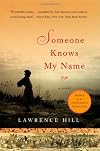
Someone Knows My Name - Lawrence Hill
also published as The Book of Negroes
5 stars
“Every time I have sailed the seas, I have had the sense of gliding over the unburied.”
Aminata Diallo tells a story from a unique perspective. She is female, literate, and was born a free African. She has survived captivity, enslavement, abuse, loss, and revolution. She was born in the middle of the 18th century and sees the beginning of the next. Lawrence Hill’s fictional Aminata feels as real to me show more as any prominent hero of the American Revolution. Although I knew that the British offered freedom to slaves who assisted them during the American Revolution, I’d never read a word about the plight of the Black Loyalists. I’m grateful to Aminata and Lawrence Hill for the story.
Aminata’s story is gruesome; she doesn’t avoid the reality of her personal situation. Nor does she soften her condemnation of the individuals, institutions and governments who are responsible for the slave trade. Fortunately, the story isn’t overwhelmingly dismal. Aminata remains intellectually and emotionally independent in every situation. She has some good luck to balance her devastating bad luck. Superficially, Aminata is historically unlikely. A female slave who reads? A female slave who keeps her master’s financial books? A female slave who engineers her own escape to freedom? Somehow, Lawrence HIll makes Aminata completely believable. She emerges as an exceptional human being, but nothing about her history seems impossible.
This book may push out Russell’s Epitaph for the top spot among my favorites this year. It captured me from the first sentence. I was very sorry to see it end. show less
also published as The Book of Negroes
5 stars
“Every time I have sailed the seas, I have had the sense of gliding over the unburied.”
Aminata Diallo tells a story from a unique perspective. She is female, literate, and was born a free African. She has survived captivity, enslavement, abuse, loss, and revolution. She was born in the middle of the 18th century and sees the beginning of the next. Lawrence Hill’s fictional Aminata feels as real to me show more as any prominent hero of the American Revolution. Although I knew that the British offered freedom to slaves who assisted them during the American Revolution, I’d never read a word about the plight of the Black Loyalists. I’m grateful to Aminata and Lawrence Hill for the story.
Aminata’s story is gruesome; she doesn’t avoid the reality of her personal situation. Nor does she soften her condemnation of the individuals, institutions and governments who are responsible for the slave trade. Fortunately, the story isn’t overwhelmingly dismal. Aminata remains intellectually and emotionally independent in every situation. She has some good luck to balance her devastating bad luck. Superficially, Aminata is historically unlikely. A female slave who reads? A female slave who keeps her master’s financial books? A female slave who engineers her own escape to freedom? Somehow, Lawrence HIll makes Aminata completely believable. She emerges as an exceptional human being, but nothing about her history seems impossible.
This book may push out Russell’s Epitaph for the top spot among my favorites this year. It captured me from the first sentence. I was very sorry to see it end. show less
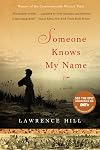
Beautifully written historical novel about Aminata Diallo, who as a child was kidnapped from her home in Mali by slave traders. I have kind of a thing about male authors writing woman narrators, but Hill does a good job with Aminata's voice. This novel helps make the nonfiction I've been reading more vibrant and real to me. Hill does a particularly good job capturing the feel of the many locations in the novel. Some of the events felt a little too coincidental, but maybe the world was a show more smaller place in the 19th century. show less
Aminata Diallo was a young girl of about twelve when her African village was attacked and she was sold into slavery. Aminata narrates her life story while living out her final days as a free woman among the abolitionists in London. Her journey to London took her through the indigo plantations of South Carolina, Revolutionary War era New York, a Loyalist settlement in Nova Scotia, and Freetown in Sierra Leone. Aminata somehow survived ordeals that killed many of her homelanders. With survival show more came the grief and loneliness of separations from everyone she loved.
This powerful novel pulls readers into the horrific experiences and emotions of the millions of Africans caught in the net of the slave trade. However, I was always aware that I had a choice. When Aminata's story got too intense, I could put the book down and pick it up later. I could just stop reading without finishing the book. Aminata and the hundreds of thousands of African slaves she represents didn't get that choice. show less
This powerful novel pulls readers into the horrific experiences and emotions of the millions of Africans caught in the net of the slave trade. However, I was always aware that I had a choice. When Aminata's story got too intense, I could put the book down and pick it up later. I could just stop reading without finishing the book. Aminata and the hundreds of thousands of African slaves she represents didn't get that choice. show less
This is the story of Aminata Diallo. At age eleven, she survives abduction from Benin that killed her parents. She is taken by slave ship to South Carolina, where she works in the indigo fields. At the plantation, she meets a surrogate mother and eventually finds love with a fellow African on another plantation.
Aminata is an intelligent woman, gifted in languages. She is familiar with multiple African dialects and learns English easily. When a Jewish indigo inspector arrives at the show more plantation, he notices Aminata’s intelligence and convinces the cruel plantation owner to sell her to him. This is a fortunate turn of events. The man’s wife teaches her to read and write but also uses her skills to help in his business. Aminata and her second owner travel to New York. She escapes, and earns a living through the practice of midwifery, which she learned from her mother.
Toward the end of the American Revolution, Aminata participates in scribing names into the Book of Negroes (the original title of this book). This was a real document created by the English to reward black loyalists with freedom and safe passage to Nova Scotia. She always yearns to return to her village in Africa. She meets several abolitionists, and her ultimate fate is linked to a voyage to Sierra Leone and ties to the abolitionists.
This novel provides a deep immersion into the life of a strong woman who faces the cruelties of slavery but manages to survive. Since Aminata is able to obtain education, she is the perfect protagonist to convey a broad scope of events, touching on many aspects of slavery. It tells the whole picture, including brutalities, but is not solely focused on miseries. It is a beautifully written epic saga. It is one of the best slave narratives I have read, and a superb example of historical fiction done well. show less
Aminata is an intelligent woman, gifted in languages. She is familiar with multiple African dialects and learns English easily. When a Jewish indigo inspector arrives at the show more plantation, he notices Aminata’s intelligence and convinces the cruel plantation owner to sell her to him. This is a fortunate turn of events. The man’s wife teaches her to read and write but also uses her skills to help in his business. Aminata and her second owner travel to New York. She escapes, and earns a living through the practice of midwifery, which she learned from her mother.
Toward the end of the American Revolution, Aminata participates in scribing names into the Book of Negroes (the original title of this book). This was a real document created by the English to reward black loyalists with freedom and safe passage to Nova Scotia. She always yearns to return to her village in Africa. She meets several abolitionists, and her ultimate fate is linked to a voyage to Sierra Leone and ties to the abolitionists.
This novel provides a deep immersion into the life of a strong woman who faces the cruelties of slavery but manages to survive. Since Aminata is able to obtain education, she is the perfect protagonist to convey a broad scope of events, touching on many aspects of slavery. It tells the whole picture, including brutalities, but is not solely focused on miseries. It is a beautifully written epic saga. It is one of the best slave narratives I have read, and a superb example of historical fiction done well. show less
Lists
Awards


You May Also Like


Associated Authors
Statistics
- Works
- 10
- Also by
- 1
- Members
- 5,451
- Popularity
- #4,564
- Rating
- 4.2
- Reviews
- 237
- ISBNs
- 135
- Languages
- 7
- Favorited
- 10
