
Kevin Barry (1) (1969–)
Author of Night Boat to Tangier
For other authors named Kevin Barry, see the disambiguation page.
About the Author
Kevin Barry was born in 1969 in Ireland. He is the author of two collections of short stories and the novel City of Bohane. He started out as a frelance journalist writing a column for the Irish Examiner. He soon focused all of his time on writing. In 2007 he won the Rooney Prize for Irish show more Literature for his short story collection There are Little Kingdoms. In 2011 he released his debut novel City of Bohane, which was followed in 2012 by the short story collection Dark Lies the Island. Barry won the International Dublin Literary Award for his novel City of Bohane in 2013. He also won the Goldsmiths Prize 2015 with his title Beatlebone. (Bowker Author Biography) show less
Image credit: Guardian News and Media
Series
Works by Kevin Barry
Innocent Until Proven Deadly 2 copies
A Cruelty 1 copy
Associated Works
The O. Henry Prize Stories 2017 (The O. Henry Prize Collection) (2017) — Contributor — 55 copies, 1 review
The Sunday Times Audible Short Story Award Shortlist Collection 2019 (2019) — Contributor — 5 copies
Tagged
Common Knowledge
- Birthdate
- 1969
- Gender
- male
- Occupations
- writer
- Nationality
- Ireland
- Birthplace
- Limerick, Ireland
- Places of residence
- Cork, County Cork, Ireland
Santa Barbara, California, USA
Barcelona, Catalonia, Spain
Sligo, County Sligo, Ireland
Liverpool, Merseyside, England, UK - Associated Place (for map)
- Ireland
Members
Reviews
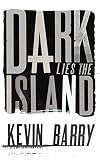
There are any number of addictions in these stories. Drink, drugs, pain, love – they’re all represented, as are the people that can’t do without them.
The disaster of a flooded inn gives a depressed poet the will to write again. Men in several of the stories mourn the loss of their women – none of whom they ever seemed to have a firm grip on in any case. There are many drunks: drunken doctors, drunken poets, drunken men missing their women, drunken drunks.
The addiction and pain is cut show more by the humor. Barry can find it in the worst of circumstances. He can also venture to the dark side. Two seemingly harmless women stalk and kidnap children in Ernestine and Kit. An Irish bomber in 1980s London loses his focus due to a girl in The Mainland Campaign, but it doesn’t stop him from carrying out his task. A girl addicted to cutting herself is alone in a remote home.
The stories in Dark Lies the Island reflect modern Ireland while continuing the tradition of telling compelling stories. show less
The disaster of a flooded inn gives a depressed poet the will to write again. Men in several of the stories mourn the loss of their women – none of whom they ever seemed to have a firm grip on in any case. There are many drunks: drunken doctors, drunken poets, drunken men missing their women, drunken drunks.
The addiction and pain is cut show more by the humor. Barry can find it in the worst of circumstances. He can also venture to the dark side. Two seemingly harmless women stalk and kidnap children in Ernestine and Kit. An Irish bomber in 1980s London loses his focus due to a girl in The Mainland Campaign, but it doesn’t stop him from carrying out his task. A girl addicted to cutting herself is alone in a remote home.
The stories in Dark Lies the Island reflect modern Ireland while continuing the tradition of telling compelling stories. show less
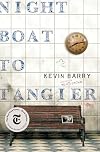
‘They talk of ageing and death. They talk of those they have crossed and those they have helped, of their first loves and lost loves, of their enemies and friends. They talk of the old days in Cork, and in Barcelona, and in London, and in Málaga, and in the ghosted city of Cádiz. They talk of the feelings of those places. They talk about being here, once again, on the coast of Barbary, as though on a magnet’s drag.’
Wowser. In what is turning out, for me, to be a vintage year of show more astonishing literary fiction, 2019 produces another book that has left me in awe of its skill, its dexterity, and its power to profoundly move.
Two Irish gangsters, in their early 50s, sit in the ferry terminal at Algeciras. They are waiting for a woman to arrive, either on or for the night boat to Tangier. She is Dilly Hearne, the two men are her father Maurice Hearne and Charlie Redmond, his lifelong friend and enemy. Over the course of the next twenty-four hours the two men talk and reminisce, and as the narrative skips back in time we learn more of the history of these two characters, of their pain and sorrow and, yes, some nefarious drug-dealing. Chapter One opens with the line: ‘Would you say there’s any end in sight, Charlie?’, and the final chapter very nearly closes with the line: ‘Is there any end in sight, Maurice?’ Yes, we are very much in Waiting for Godot territory; indeed, the novel started out as a draft for a play which Barry chose to make a novel instead. For me, that’s entirely a good decision, for surely a play would suffer in contrast to Beckett’s classic? As it is, the book distils the essence of – indeed quotes from - the great Irish trilogy of Beckett, Joyce, and Yeats; it is a hymn to Irish identity and manhood and nostalgia, the seven distractions, as the book calls them: love, grief, pain, sentimentality, avarice, lust, want-of-death. Maurice in particular, we learn from the flashbacks, has spent a wandering time, leaving and returning to Ireland as events carry him:
‘Fucking Ireland. Its smiling fiends. Its speaking rocks. Its haunted fields. Its sea memory. Its wildness and strife. Its haunt of melancholy. The way it closes in.’
These are damaged men – and dangerous men, the kind of man you would precisely not want to meet on a dark night at a ferry terminal. Charlie has one badly damaged leg, Maurice has one badly damaged eye – these are important, as we learn just how they got these injuries and how they are, in a way, the outward illustration of their intertwined lives and the violence in their souls. A couple of times you physically flinch as a reader when you read some of the violence, brief though it is. From the pair’s opening encounter at the terminal with a boy called Benny and his dog the threat is just below the surface, and it doesn’t take long for it to reveal itself. And yet, and yet… Their story is beguiling, lyrical, and for some crazy reason you pity these two middle-aged men who are ‘old enough for the long view in either direction now.’
Kevin Barry writes the kind of sentences that draw you in with their poetic lilt and, bam!, a sudden jolt back to reality:
‘The world was at its cusp and turned to begin the long, slow slide into new light, new time, and he couldn’t fucking bear it.’
How can a book about two gangsters draw you in so much? The novel is full of tenderness and lyricism, of regret and pain; it is funny and raw and at times you might just need to put it down and walk away, to return later. Maurice and Charlie will remind you of yourself, and that is why you will like them, even if you know you shouldn’t. Ultimately it is a book about simply surviving, of accepting the past, and as they leave the ferry terminal at the end of the novel, in the pouring rain, you will want to believe, like Maurice, that it might stop raining soon. A dazzling book, which will definitely be one of my books of the year. 5 twinkling Irish stars. show less
Wowser. In what is turning out, for me, to be a vintage year of show more astonishing literary fiction, 2019 produces another book that has left me in awe of its skill, its dexterity, and its power to profoundly move.
Two Irish gangsters, in their early 50s, sit in the ferry terminal at Algeciras. They are waiting for a woman to arrive, either on or for the night boat to Tangier. She is Dilly Hearne, the two men are her father Maurice Hearne and Charlie Redmond, his lifelong friend and enemy. Over the course of the next twenty-four hours the two men talk and reminisce, and as the narrative skips back in time we learn more of the history of these two characters, of their pain and sorrow and, yes, some nefarious drug-dealing. Chapter One opens with the line: ‘Would you say there’s any end in sight, Charlie?’, and the final chapter very nearly closes with the line: ‘Is there any end in sight, Maurice?’ Yes, we are very much in Waiting for Godot territory; indeed, the novel started out as a draft for a play which Barry chose to make a novel instead. For me, that’s entirely a good decision, for surely a play would suffer in contrast to Beckett’s classic? As it is, the book distils the essence of – indeed quotes from - the great Irish trilogy of Beckett, Joyce, and Yeats; it is a hymn to Irish identity and manhood and nostalgia, the seven distractions, as the book calls them: love, grief, pain, sentimentality, avarice, lust, want-of-death. Maurice in particular, we learn from the flashbacks, has spent a wandering time, leaving and returning to Ireland as events carry him:
‘Fucking Ireland. Its smiling fiends. Its speaking rocks. Its haunted fields. Its sea memory. Its wildness and strife. Its haunt of melancholy. The way it closes in.’
These are damaged men – and dangerous men, the kind of man you would precisely not want to meet on a dark night at a ferry terminal. Charlie has one badly damaged leg, Maurice has one badly damaged eye – these are important, as we learn just how they got these injuries and how they are, in a way, the outward illustration of their intertwined lives and the violence in their souls. A couple of times you physically flinch as a reader when you read some of the violence, brief though it is. From the pair’s opening encounter at the terminal with a boy called Benny and his dog the threat is just below the surface, and it doesn’t take long for it to reveal itself. And yet, and yet… Their story is beguiling, lyrical, and for some crazy reason you pity these two middle-aged men who are ‘old enough for the long view in either direction now.’
Kevin Barry writes the kind of sentences that draw you in with their poetic lilt and, bam!, a sudden jolt back to reality:
‘The world was at its cusp and turned to begin the long, slow slide into new light, new time, and he couldn’t fucking bear it.’
How can a book about two gangsters draw you in so much? The novel is full of tenderness and lyricism, of regret and pain; it is funny and raw and at times you might just need to put it down and walk away, to return later. Maurice and Charlie will remind you of yourself, and that is why you will like them, even if you know you shouldn’t. Ultimately it is a book about simply surviving, of accepting the past, and as they leave the ferry terminal at the end of the novel, in the pouring rain, you will want to believe, like Maurice, that it might stop raining soon. A dazzling book, which will definitely be one of my books of the year. 5 twinkling Irish stars. show less
The Publisher Says: In the dark waiting room of the ferry terminal in the sketchy Spanish port of Algeciras, two aging Irishmen — Maurice Hearne and Charlie Redmond, longtime partners in the lucrative and dangerous enterprise of smuggling drugs — sit at night, none too patiently. It is October 23, 2018, and they are expecting Maurice’s estranged daughter (or is she?), Dilly, to either arrive on a boat coming from Tangier or depart on one heading there. This nocturnal vigil will show more initiate an extraordinary journey back in time to excavate their shared history of violence, romance, mutual betrayals and serial exiles, rendered with the dark humor and the hardboiled Hibernian lyricism that have made Kevin Barry one of the most striking and admired fiction writers at work today.
THIS CAME TO ME VIA MY LIBRARY'S I.L.L. PROGRAM. THANKS Y'ALL!
My Review: Sunsets are biblical, nighttime flowers are dull amethysts, quiet rubies...a tiny, sultana-faced man in lilac slacks and a blazer beneath a pompadour appears, to no story affect...London's bones limned against weak and apologetic light...this is a beautiful read.
The story is horrible, two men...Maurice and Charlie...whose love of their loucheness and their criminality and their addictions, their love for each other that excludes all the women they adore so helplessly and whose lives they casually, violently ruin, seek their daughter.
No. They aren't gay. The woman they both adored for a time had a baby and, well, who knows whose she really is.
Their awfulness is, in their fiftysomething selves, incredible and unforgivable. Their time in the Bughouse... smoky-grey brick Victoriana carrying the misery of three centuries...detoxing from heroin addiction is not enough to make the difference in their shared past. Their shared room, twin beds, no hint of physical intimacy they're Irish fagawdsake. No one in this book touches except for fucking or killing. People die, have died rather; these men haven't but they know they will. Soonish.
But they are themselves to the end. Does one wonder that Dilly, the desperately sought daughter, left and doesn't wish to be found? One does not. But neither does one feel their hunger to see her again, their desperate desire to connect to Life, is out of character. The way they seek to accomplish that connection is both toxic and perfect. They only know each other in this world. They came to do this desperate thing together. They'll leave together, they'll make whatever there is to be made of breathing after life is over.
I will be a bit let down if this book does not win the 2019 Booker in twelve days. No, strike that, I'll be jawdroppingly stunned and not a little pissed off. Beautiful, poetic, smooth phrases telling hideous, deforming agonies in stertorously breathed oxygen-poor oceans of wreckage aren't common and neither should they be. A diet of these stories would put me in the Bughouse to breathe the smoky-grey brickdust of bygone agonies.
But when they appear these highly luminescent scimitars, curved to the reader's psychic throat, should get the fearful praise and nervous acknowledgment that Charlie and Maurice have always commanded. show less
THIS CAME TO ME VIA MY LIBRARY'S I.L.L. PROGRAM. THANKS Y'ALL!
My Review: Sunsets are biblical, nighttime flowers are dull amethysts, quiet rubies...a tiny, sultana-faced man in lilac slacks and a blazer beneath a pompadour appears, to no story affect...London's bones limned against weak and apologetic light...this is a beautiful read.
The story is horrible, two men...Maurice and Charlie...whose love of their loucheness and their criminality and their addictions, their love for each other that excludes all the women they adore so helplessly and whose lives they casually, violently ruin, seek their daughter.
No. They aren't gay. The woman they both adored for a time had a baby and, well, who knows whose she really is.
Their awfulness is, in their fiftysomething selves, incredible and unforgivable. Their time in the Bughouse... smoky-grey brick Victoriana carrying the misery of three centuries...detoxing from heroin addiction is not enough to make the difference in their shared past. Their shared room, twin beds, no hint of physical intimacy they're Irish fagawdsake. No one in this book touches except for fucking or killing. People die, have died rather; these men haven't but they know they will. Soonish.
But they are themselves to the end. Does one wonder that Dilly, the desperately sought daughter, left and doesn't wish to be found? One does not. But neither does one feel their hunger to see her again, their desperate desire to connect to Life, is out of character. The way they seek to accomplish that connection is both toxic and perfect. They only know each other in this world. They came to do this desperate thing together. They'll leave together, they'll make whatever there is to be made of breathing after life is over.
I will be a bit let down if this book does not win the 2019 Booker in twelve days. No, strike that, I'll be jawdroppingly stunned and not a little pissed off. Beautiful, poetic, smooth phrases telling hideous, deforming agonies in stertorously breathed oxygen-poor oceans of wreckage aren't common and neither should they be. A diet of these stories would put me in the Bughouse to breathe the smoky-grey brickdust of bygone agonies.
But when they appear these highly luminescent scimitars, curved to the reader's psychic throat, should get the fearful praise and nervous acknowledgment that Charlie and Maurice have always commanded. show less
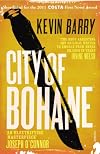
This is my second experience of Kevin Barry - I read the equally compelling and original but very different Beatlebone in January. This one is a mixture of genres that I would normally steer well clear of - gangland thriller, dystopian fantasy, steampunk and graphic novel cliches abound. What carries it is the sheer vibrancy and humour of the language and the many cultural reference points that echo the likes of Joyce and Flann O'Brien.
The setting is the fictional city of Bohane, on the west show more coast of Ireland and the time is 2053 to 2054, in a country that has become an anarchic battleground between rival gangs, loosely under the watch of a corrupt city authority and a police force that is largely content to keep the main players in place. For a futuristic setting, the reference points are surprisingly old-fashioned, in fact the dominant inspiration seems to be the 50s and early 60s, and many Irish traditions and cultural divisions survive in modified form. The language is a complex hybrid of Irish street speak and other influences such as Rastafarianism and the Catholic church, and the characters are all cartoonish and larger than life.
I found the whole thing surprisingly compulsive and satisfying, and although Barry's vision is a bleak, profane and violent one, dark humour is never very far from the surface. In some ways this reminded me of his compatriot and namesake Sebastian Barry's Days Without End, another book which shouldn't work but is sustained by the brilliance of its narrative voice. show less
The setting is the fictional city of Bohane, on the west show more coast of Ireland and the time is 2053 to 2054, in a country that has become an anarchic battleground between rival gangs, loosely under the watch of a corrupt city authority and a police force that is largely content to keep the main players in place. For a futuristic setting, the reference points are surprisingly old-fashioned, in fact the dominant inspiration seems to be the 50s and early 60s, and many Irish traditions and cultural divisions survive in modified form. The language is a complex hybrid of Irish street speak and other influences such as Rastafarianism and the Catholic church, and the characters are all cartoonish and larger than life.
I found the whole thing surprisingly compulsive and satisfying, and although Barry's vision is a bleak, profane and violent one, dark humour is never very far from the surface. In some ways this reminded me of his compatriot and namesake Sebastian Barry's Days Without End, another book which shouldn't work but is sustained by the brilliance of its narrative voice. show less
Lists
Awards


You May Also Like


Associated Authors
Statistics
- Works
- 21
- Also by
- 11
- Members
- 2,943
- Popularity
- #8,691
- Rating
- 3.7
- Reviews
- 148
- ISBNs
- 160
- Languages
- 6
- Favorited
- 4