

John McGahern (1934–2006)
Author of Amongst Women
About the Author
John McGahern was born in Dublin in 1934. He has received several awards for his writing, including the AE Memorial Award in 1952, for the manuscript of "'The Barracks," and British Arts Council awards in 1968, 1970, and 1973. His other books include "The Dark" and "Amongst Women," nominated for show more the Booker Prize in 1990. (Bowker Author Biography) show less
Image credit: Photo © 2003 Jerry Bauer
Works by John McGahern
Dear Mr McLaverty: the literary correspondence of John McGahern and Michael McLaverty 1959-1980 (2006) 5 copies
Sierra Leone [short story] 1 copy
Great Irish Writers 1 copy
McGahern John 1 copy
Associated Works
Tagged
Common Knowledge
- Canonical name
- McGahern, John
- Other names
- MacGahern, John
- Birthdate
- 1934-11-12
- Date of death
- 2006-03-30
- Gender
- male
- Education
- University College Dublin
- Occupations
- novelist
short story writer
laborer
teacher - Organizations
- Aosdána
- Awards and honors
- Irish Book Award (Lifetime Achievement, 2007)
Lannan Literary Award (Fiction, 2003) - Relationships
- Kiberd, Declan (student)
- Nationality
- Ireland
- Birthplace
- Knockanroe, Ireland
- Places of residence
- Dublin, Ireland (birth)
- Place of death
- Dublin, Ireland
- Burial location
- St Patrick's Church, Aughawillan, Co. Leitrim, Ireland
- Associated Place (for map)
- Ireland
Members
Reviews
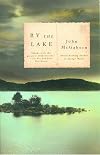
BY THE LAKE (2002) is my second John McGahern novel, having read his THE LEAVETAKING a year or two back. McGahern, who died in 2006, was a revered writer in Ireland, and this quiet look at a year in a small rural community is a fine example of his work. Told from the vantage point of Joe and Kate Ruttledge, a childless, semi-retired professional couple (she is an illustrator, he a copywriter in the advertising biz), outsiders (she from Boston, he from London) who have fled the London rat show more race to raise a few cows and sheep on a small farm by a lake. Other "cast members" are their neighbors, Jamesie and Mary Murphy, who know everyone around and keep them abreast of all the latest gossip. And "the Shah," Joe's bachelor uncle, made wealthy by his scrap yard empire. And John Quinn, a widower with several grown children who cuts a wide swath through various women. The local priest, who figures into Quinn's remarriage and the funeral of a former village resident who had worked for years in England. And Bill Evans, a mentally challenged man who lives alone in a house with no plumbing, and carries his water daily in buckets from the lake. The seasons change, relatives visit from Dublin and London. Calves and lambs are born and shipped off to market following stock auctions. Businesses change hands. The "Troubles" hover in the background, personified by a local Northerner who runs a local bar and is also the undertaker. All of the characters are fully depicted with their own faults, fears and insecurities. The lake and the surrounding countryside are colorful and key to McGahern's success. I thoroughly enjoyed this quiet narrative of country life and was sad to see it end. Very highly recommended, especially if you like Irish settings.
- Tim Bazzett, author of the memoir, BOOKLOVER show less
- Tim Bazzett, author of the memoir, BOOKLOVER show less
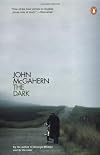
Again - so layered, so poignant. The character lends such innocence to his story and is yet bereft of the luxury that that should afford him. A careful and honest insight into a certain side of an Irish Catholic boyhood. McGahern approaches subjects and situations that are so human and everyday yet so hard to admit and acknowledge - he is brave in his truthfulness and it is expressed with such compassion. I imagine as I read, his lovely lilting voice and that kind, knowing tone.
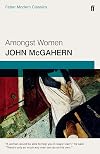
This is a short, austere and powerful story of a family dominated by a proud and petty tyrant. I remember seeing some of a bleak TV adaptation many years ago, which left me doubting whether I would enjoy the book, which I read as part of Goodreads' The Mookse and the Gripes group's latest project to discuss a historic Booker shortlist, this time 1990, which was the year when Possession won the prize.
Moran is a widowed veteran of the Irish wars of independence who runs a small farm with his show more five children. The opening part of the book introduces the family as they get together in his old age to try and revive his failing spirit. It is already clear in this section that he is a proud and difficult man to live with. The rest of the book is chronological, starting when his three daughters and youngest son are teenagers but the eldest son Luke has already left for London. He marries the self-effacing and saintly Rose, who has to do all of the running to get them together but soon forms a powerful bond with the three daughters. Moran's violent temper and unpredictable mood swings are oppressive even to the reader. The story follows Moran as his remaining children move away, with all but the estranged and unforgiving Luke returning to the farm frequently.
McGahern eventually succeeds in making you understand why the family tolerate and even love this monster, and by the end of the book one almost feels sorry for him. This is an eloquent and ultimately rather beautiful book. show less
Moran is a widowed veteran of the Irish wars of independence who runs a small farm with his show more five children. The opening part of the book introduces the family as they get together in his old age to try and revive his failing spirit. It is already clear in this section that he is a proud and difficult man to live with. The rest of the book is chronological, starting when his three daughters and youngest son are teenagers but the eldest son Luke has already left for London. He marries the self-effacing and saintly Rose, who has to do all of the running to get them together but soon forms a powerful bond with the three daughters. Moran's violent temper and unpredictable mood swings are oppressive even to the reader. The story follows Moran as his remaining children move away, with all but the estranged and unforgiving Luke returning to the farm frequently.
McGahern eventually succeeds in making you understand why the family tolerate and even love this monster, and by the end of the book one almost feels sorry for him. This is an eloquent and ultimately rather beautiful book. show less
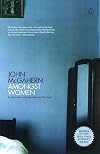
Amongst Women is my first time reading John McGahern. Beautiful, clear, and pristine. Felt something like panic when the ending came around - a harrowing look at how generational violence enacts itself in both muted and explicit ways. The title comes from the rosary - a relentless motif in the novel - and it's apt, describing how the tacit acceptance of a father's wrath and casual cruelty need not explanation, only a warped form of faith. Moran never changes, and the tragedy is that his show more daughters do not hold out hope that he would. Rather, like our prayers to God, these women hold their hands wide open, their faith as unyielding as his indifference. The family is a prison, but it is also the first world that we experience; sometimes, it can be hard to let that go.
— "They had assumed that time and distance would smooth all but the most angular of differences and they now feared that too much time had already passed. Beneath all differences was the belief that the whole house was essentially one. Together they were one world and could take on the world. Deprived of this sense they were nothing, scattered, individual things. They would put up with anything in order to have this sense of belonging. They would never let it go. No one could be allowed to walk out easily." show less
— "They had assumed that time and distance would smooth all but the most angular of differences and they now feared that too much time had already passed. Beneath all differences was the belief that the whole house was essentially one. Together they were one world and could take on the world. Deprived of this sense they were nothing, scattered, individual things. They would put up with anything in order to have this sense of belonging. They would never let it go. No one could be allowed to walk out easily." show less
Lists
Awards


You May Also Like


Associated Authors
Statistics
- Works
- 38
- Also by
- 12
- Members
- 4,460
- Popularity
- #5,611
- Rating
- 4.2
- Reviews
- 86
- ISBNs
- 150
- Languages
- 10
- Favorited
- 29
