
Roddy Doyle
Author of Paddy Clarke Ha Ha Ha
About the Author
Roddy Doyle is the author of five previous novels, including a Booker Prize nominee, The Van, and a Booker Prize winning international bestseller Paddy Clarke Ha Ha Ha. He has also written several screenplays, most recently When Brendan Met Trudy. His first children's book, The Giggler Treatment, show more will be published in September by Scholastic. He lives in Dublin. (Publisher Provided) Roddy Doyle was born in Dublin on May 8, 1958, and grew up in Kilbarrack, Ireland. Doyle graduated with a Bachelor of Arts degree from University College Dublin. He spent several years as an English and geography teacher before becoming a full-time writer in 1993. His personal notes and work books reside at the National Library of Ireland. Doyle's first three novels, The Commitments (1987), The Snapper (1990) and The Van (1991) comprise The Barrytown Trilogy, a trilogy centred around the Rabbitte family. All three novels were made into successful films. In 1993, Doyle published Paddy Clarke Ha Ha Ha, winner of the 1993 Man Booker Prize. Doyle is the author of ten novels for adults, seven books for children, seven plays and screenplays, and dozens of short stories. His work is set primarily in Ireland, especially working-class Dublin, and is notable for its heavy use of dialogue written in slang and Irish English dialect. (Bowker Author Biography) show less
Image credit: photo by Anthony Woods
Series
Works by Roddy Doyle
The Giggler Treatment - BBC Audio 3 copies
The Child 2 copies
Die Frauen hinter der Tür: Der neue Paula-Spencer-Roman von Booker-Preisträger Roddy Doyle (2025) 1 copy
Family [1994 TV series] — Screenwriter — 1 copy
Le donne dietro la porta 1 copy
The Pram 1 copy
Königs Erläuterungen und Materialien, Bd. 479, Interpretation zu Doyle. A Star Called Henry (2009) 1 copy
Blood 1 copy
The Commitments Soundtrack 1 copy
The Deportees - story 1 copy
I Understand 1 copy
Roddy Doyle audio book 1 copy
The Hens 1 copy
The Slave 1 copy
Local 1 copy
Home to Harlem 1 copy
New Boy 1 copy
The Bandstand 1 copy
The Painting 1 copy
Black Hoodie 1 copy
Pazzo Wee kend 1 copy
Associated Works
McSweeney's 23: Still Going Strong Like Castro (We Meant Ramón) (2007) — Contributor — 303 copies, 5 reviews
McSweeney's 12: Unpublished, Unknown, and/or Unbelievable (2003) — Contributor — 290 copies, 4 reviews
My Favourite Year: A Collection of New Football Writing (1996) — Contributor — 182 copies, 8 reviews
New Dubliners: Original Stories Celebrating 100 Years of Joyce's Dubliners (2005) — Contributor — 27 copies, 2 reviews
Hebbes noire : elf smaakmakers voor de zomer — Contributor — 8 copies
Tagged
Common Knowledge
- Canonical name
- Doyle, Roddy
- Legal name
- Doyle, Roderick
- Birthdate
- 1958-05-08
- Gender
- male
- Education
- St. Fintan's Christian Brothers School (Sutton)
University College Dublin (BA, English and Geography) - Occupations
- English teacher
geography teacher
novelist
dramatist
screenwriter
publisher - Awards and honors
- British Book Award (Author of the Year, 1994)
- Agent
- John Sutton
C & W Agency - Relationships
- Doyle, Ita Bolger (mother)
- Short biography
- Roddy Doyle (born 8 May 1958) is an Irish novelist, dramatist and screenwriter.
- Nationality
- Ireland
- Birthplace
- Dublin, County Dublin, Ireland
- Places of residence
- Kilbarrack, County Dublin, Ireland
- Map Location
- Ireland
Members
Reviews
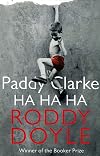
Paddy Clarke Ha Ha Ha achieves the remarkable feat of both depicting a childhood at its most normal and humdrum while also drawing out something much more profound about being a kid and coming of age. While Paddy and his friends are lighting fires, stealing magazines, and torturing his younger brother in the most typical of lowgrade miscreant ways, Doyle does a remarkable job of capturing the casual cruelty of childhood, the bullying, the posturing. At times the book is so good at portraying show more these things that it's almost hard to read, despite its impressive quality.
Doyle nails the random transitions of his child narrator's mind, the relationships that skirt the emotional depth that an adult can see but a child cannot, and the affliction of younger siblings that sits side by side with love. Most impressive of all, however, is Doyle's depiction of Paddy's confusion when adult situations have outpaced his understanding of them, but only by the slimmest of margins, so that while he knows something is amiss he can't grab ahold of what, if anything, he can do to fix it. Paddy Clarke Ha Ha Ha is one of those books that, for lack of any sort of linear plot, would seem to be about nothing, but in taking a snapshot of a life, it ends up being about a little of everything. show less
Doyle nails the random transitions of his child narrator's mind, the relationships that skirt the emotional depth that an adult can see but a child cannot, and the affliction of younger siblings that sits side by side with love. Most impressive of all, however, is Doyle's depiction of Paddy's confusion when adult situations have outpaced his understanding of them, but only by the slimmest of margins, so that while he knows something is amiss he can't grab ahold of what, if anything, he can do to fix it. Paddy Clarke Ha Ha Ha is one of those books that, for lack of any sort of linear plot, would seem to be about nothing, but in taking a snapshot of a life, it ends up being about a little of everything. show less

Roddy Doyle can write. He writes in a way that makes it all look so effortless; dialogue that flows as naturally as though you were overhearing a conversation in a bar, boys in a classroom written so that the reader can see the chalk dust floating in the air and feel the ennui, all without a wasted word or an unnecessary adjective. In Smile, he's a master writing at the top of his game and I didn't even notice it until I read the last paragraph and closed the book.
Smile tells the story of show more Victor Forde who, as the novel opens, is newly single and moving into a flat a few miles from the Dublin neighborhood where he grew up. He's feeling his way into his new life, searching out a pub he can consider his local, meeting an old classmate along the way. Victor remembers his schooldays, where he attended a school run by the Christian Brothers, with fondness, for the most part. But there are darker memories underneath the ones of boys goofing off. He remembers growing up in a home where his father dies in his first year at the school, and he remembers his mother trying to cope. He remembers making a name for himself as an up-and-coming young writer and he remembers meeting Rachel, who will eventually leave him when he's in his fifties, bringing him back to the flat in the building not too far from the sea. show less
Smile tells the story of show more Victor Forde who, as the novel opens, is newly single and moving into a flat a few miles from the Dublin neighborhood where he grew up. He's feeling his way into his new life, searching out a pub he can consider his local, meeting an old classmate along the way. Victor remembers his schooldays, where he attended a school run by the Christian Brothers, with fondness, for the most part. But there are darker memories underneath the ones of boys goofing off. He remembers growing up in a home where his father dies in his first year at the school, and he remembers his mother trying to cope. He remembers making a name for himself as an up-and-coming young writer and he remembers meeting Rachel, who will eventually leave him when he's in his fifties, bringing him back to the flat in the building not too far from the sea. show less

The Van by Roddy Doyle
Roddy Doyle's wonderful Rabbitte family saga—known as the Barrytown trilogy—concludes in [The Van]. Jimmy Rabbitte Sr and his good friend Bimbo Reeves go into business selling fish and chips out of an old van. It's about love, loyalty, sharing, trusting, working yer arse off, dealing with both setbacks and success. This novel is longer that the trilogy's first two, but it shares their attributes.
The setup is this. Jimmy Sr is out of work. He is a plasterer, a master show more of the finish coat, the embellishments, the details. Builders are cutting their costs using sheetrock instead of multiple coats of plaster over lath. Jimmy is expendable to the builders, but not to his family. His income lost, the family is paring back, way back. Jimmy no longer meets "the lads" for a pint every evening. The days are long and he can't find productive things to do. He cares for his granddaughter, Gina, who was born in the previous book, [The Snapper]. But he's bored, ashamed, depressed.
One day he does meet the lads, and when he arrives, Bimbo is crying. He can't draw out an explanation. Finally, Bimbo says:
One big difference for Bimbo is that he gets a one-time payment (like severance, I think). But like Jimmy Sr., he's unhappy in his idleness. The sudden absence of "the chipper van" from its usual spot outside a local pub, prompts Bimbo to ask Bertie, another of the lads, who's always got something to sell.
Not long after, Bertie tells Bimbo and Jimmy Sr that he wants them to see something. It's a derelict van.
But of course he does, and he even helps. They install the wheels and tires, getting it off the blocks that have supported it. It's got no engine, so it has to be towed to Bimbo's place. It has to be degreased and scoured and cleaned outside and in. It's got no electricity, of course, and no running water. The fryer and grill use bottled gas. Once the van is as clean as they can make it, they tackle the provisions, learning how best to cut and stockpile chips, how to batter the fish.
Although Jimmy Sr has no money to invest, Bimbo offers him a half interest in the new business. Therein will lie the rub. Almost from the start, the business is a success. But as with Jimmy Jr's band in [The Commitments], success leads to petty jealousies and bickering and sulking. Rest assured that all works out, eventually. show less
Roddy Doyle's wonderful Rabbitte family saga—known as the Barrytown trilogy—concludes in [The Van]. Jimmy Rabbitte Sr and his good friend Bimbo Reeves go into business selling fish and chips out of an old van. It's about love, loyalty, sharing, trusting, working yer arse off, dealing with both setbacks and success. This novel is longer that the trilogy's first two, but it shares their attributes.
The setup is this. Jimmy Sr is out of work. He is a plasterer, a master show more of the finish coat, the embellishments, the details. Builders are cutting their costs using sheetrock instead of multiple coats of plaster over lath. Jimmy is expendable to the builders, but not to his family. His income lost, the family is paring back, way back. Jimmy no longer meets "the lads" for a pint every evening. The days are long and he can't find productive things to do. He cares for his granddaughter, Gina, who was born in the previous book, [The Snapper]. But he's bored, ashamed, depressed.
One day he does meet the lads, and when he arrives, Bimbo is crying. He can't draw out an explanation. Finally, Bimbo says:
--I got a bit o' bad news earlier…It knocked me a bit.
…Bimbo's parents were already dead. Jimmy Sr knew that…Maybe Maggie's mother had snuffed it but—Bimbo was a bit of a softy but he wouldn't break out crying in his local for Maggie's mother; she'd been as good as dead for f*ckin' years. One of the kids—
Oh f*ck he wished Bertie was here.
Bimbo spoke.
--I was let go this mornin'.
--Wha'?
--Let go. ---I'm like you now, Jimmy, wha'. A man o' leisure.
One big difference for Bimbo is that he gets a one-time payment (like severance, I think). But like Jimmy Sr., he's unhappy in his idleness. The sudden absence of "the chipper van" from its usual spot outside a local pub, prompts Bimbo to ask Bertie, another of the lads, who's always got something to sell.
---Yeh wouldn't have a chipper van to sell, I suppose…would yeh, Bertie?
---Wha' abou' a Mister Whippy one? Bertie asked Bimbo. ---I think I could get me hands on one o' them.
---No, said Bimbo.
---You've your heart set on a chipper one?
---Yeah. ----Not really; just if yeh see one.
Not long after, Bertie tells Bimbo and Jimmy Sr that he wants them to see something. It's a derelict van.
It was filthy. He'd never seen anything like it. They walked around it. It was horrible to think that people had once eaten chip and stuff out of this thing; it was a f*ckin' scandal. There was no way he was going to look inside it…
Bimbo looked excited and disappointed, like a light going on and off. Jimmy Sr looked at the van again.
Ah Jesus, the thing was in f*ckin' tatters. The man was f*ckin' mad to be even looking at it. He wouldn't let him do this.
But of course he does, and he even helps. They install the wheels and tires, getting it off the blocks that have supported it. It's got no engine, so it has to be towed to Bimbo's place. It has to be degreased and scoured and cleaned outside and in. It's got no electricity, of course, and no running water. The fryer and grill use bottled gas. Once the van is as clean as they can make it, they tackle the provisions, learning how best to cut and stockpile chips, how to batter the fish.
Although Jimmy Sr has no money to invest, Bimbo offers him a half interest in the new business. Therein will lie the rub. Almost from the start, the business is a success. But as with Jimmy Jr's band in [The Commitments], success leads to petty jealousies and bickering and sulking. Rest assured that all works out, eventually. show less
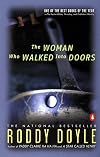
DO NOT read this book. Not if you've been a victim of domestic abuse. Not unless you can live under smothering apprehension and depression. Not if you don't want to live through Doyle's book which is so well-written you feel you've suffered the whole 17 years Paula was with her husband in only 188 pages. The writing mirrors the angst of the woman in the story. Staccato sentences filled with self-loathing and delusion. I actually had to quit reading for about a month before I could finish. show more Powerful. Awful. Great writing. show less
Lists
Gen X Library (1)
Tour of Ireland (1)
First Novels (1)
Awards


You May Also Like


Associated Authors
Statistics
- Works
- 73
- Also by
- 40
- Members
- 21,410
- Popularity
- #1,012
- Rating
- 3.9
- Reviews
- 458
- ISBNs
- 850
- Languages
- 26
- Favorited
- 74


