

Edna O'Brien (1930–2024)
Author of The Little Red Chairs
About the Author
Writer Edna O'Brien was born in Clare County, Ireland, in 1930 and attended Pharmaceutical College in Dublin. O'Brien, winner of the Kingsley Amis Award, the Los Angeles Times Book Price and the European Literature Prize, has written short stories, novels, plays, television plays and screenplays. show more She has also written for such magazines as Cosmopolitan, Ladies Home Journal and The New Yorker. (Bowker Author Biography) Edna O'Brien's previous works of fiction include "Down by the River", "House of Splendid Isolation", "Time & Tide", & "Lantern Slides", which won the Los Angeles Times Book Prize for fiction. Her book about James Joyce was published in 1999 & excerpted in "The New Yorker". An honorary member of the American Academy of Arts & Letters, O'Brien grew up in Ireland & now lives in London. (Publisher Provided) show less
Image credit: Edna O'Brien, pictured in 1968.
Series
Works by Edna O'Brien
Sister Imelda 2 copies
The Love Object [short story] 2 copies
The Widow {short story} 1 copy
The country girls triology 1 copy
Girl 1 copy
In the Forest 1 copy
A Journey 1 copy
Vannacht zal ik niet slapen 1 copy
In the Hours of Darkness 1 copy
Pakanallinen paikka 1 copy
Irlandzka dziewczyna 1 copy
Associated Works
The Art of the Tale: An International Anthology of Short Stories (1986) — Contributor — 381 copies, 3 reviews
The Condé Nast Traveler Book of Unforgettable Journeys: Great Writers on Great Places (2007) — Contributor — 280 copies, 5 reviews
The Pleasure of Reading: 43 Writers on the Discovery of Reading and the Books That Inspired Them (2015) — Contributor — 104 copies, 2 reviews
Who's Writing This? Notations on the Authorial I, with Self-Portraits {not Antæus} (1995) — Contributor — 75 copies
The Literary Lover: Great Stories of Passion and Romance (1993) — Contributor — 55 copies, 2 reviews
Antaeus No. 61, Autumn 1988 - Journals, Notebooks & Diaries (1988) — Contributor — 38 copies, 2 reviews
About Women: An Anthology of Contemporary Fiction, Poetry, and Essays (1973) — Contributor — 25 copies
Antaeus No. 64/65, Spring/Autumn 1990 - Twentieth Anniversary Issue (1990) — Contributor — 14 copies
* De Provence Lege Artis: Verhalen uit het land van Van Gogh — Contributor — 1 copy
Im Zeichen der Venus. Frauen schreiben erotische Geschichten ( Anthologie). (2001) — Contributor — 1 copy
Tagged
Common Knowledge
- Legal name
- O'Brien, Josephine Edna
- Birthdate
- 1930-12-15
- Date of death
- 2024-07-27
- Gender
- female
- Education
- Convent of Mercy, Loughrea
Pharmaceutical College of Dublin - Occupations
- pharmacist
novelist
playwright - Organizations
- American Academy of Arts and Letters (Foreign Honorary, Literature, 1987)
Aosdána - Awards and honors
- Irish Book Award Lifetime Achievement (2009)
- Agent
- Robert Lescher (Lescher & Lescher ∙ Ltd.)
Ed Victor - Relationships
- Gébler, Ernest (ex-husband)
Gebler, Carlo (son) - Nationality
- Ireland
- Birthplace
- Tuamgraney, County Clare, Ireland
- Places of residence
- Tuamgraney, County Clare, Ireland
London, Middlesex, England, UK - Place of death
- London, Middlesex, England, UK
- Associated Place (for map)
- London, Middlesex, England, UK
Members
Reviews

I read and very much enjoyed Edna O'Brien's COUNTRY GIRLS trilogy more than thirty years ago, so half a buck at a library sale for her HOUSE OF SPLENDID ISOLATION (1994) seemed a real bargain. And it was. Set in rural Ireland in relatively modern times, "the Troubles" are central to a story with a widely varied cast of characters, including members of the Garda, IRA operatives and sympathizers and more. The two central figures here, however, are Josie O'Meara, an older widow who lives alone show more in a crumbling manor house left to her by an abusive, alcoholic husband (and there's her own backstory of working as a maid in Brooklyn before returning to Ireland to marry); and McGreevy, a notorious IRA agent on the run from both the British and the Irish for bombings and other terrorist acts. His own history (prison time, a dead wife and child) is gradually revealed while he hides out in the O'Meara house, where the older woman begins to care for him. Initially the two plots seem very disconnected, especially with the other characters - the servants, nosy neighbors and the Garda, and even a witchy abortionist - thrown into the complex mix, but the lives of the two protagonists become ever closer as the authorities close in on McGreevy, concluding in an explosive showdown. Vastly different from her COUNTRY GIRLS books, this one is a bit of a slow starter, but heats up as it nears the end. You want a close, inside look at "the Troubles" and how so many lives have been lost or ruined in that long history? Read this book. Very highly recommended.
- Tim Bazzett, author of the memoir, BOOKLOVER show less
- Tim Bazzett, author of the memoir, BOOKLOVER show less

"Darkness is drawn to light but light does not know it, light must absorb the darkness and therefore meet its own extinguishment."
This novel is based on true events. Imelda Riney and her son Liam along with a local priest were murdered by crazed Brendan O'Donnell in 1994. When the book was first published in 2002 it caused some controversy as many people felt that not enough time had elapsed and that O'Brien was exploiting the grief of those involved. However, what a novel does that a show more newspaper article or court reports can never do is unemotionally look at the circumstances leading up to the crime.
Michan O'Kane, on release from prison in England, returns to his childhood environs. Once there he sets out on a course of delinquency, menacing the inhabitants and leaving a trail of thievery and destructiveness. He cuts an almost mythical presence. All the community's wrong doings seem to have been rolled up into one individual. The locals, including the Guarda, are afraid to either challenge or tackle him even leaving gifts of food outside their homes almost like they were making religious offerings to him.
In contrast the female victim, Eily Ryan, isn't totally a virtuous woman. She is a single mother with a young lover who teaches in a local school but also likes to drink, play pool and generally socialise in the local pub and going skinny dipping in the local lake with a group of youths. When the local Police commander discovers her diary he is rather scandalised by her thoughts about love and sex. Eily, is something of a free spirit in a religiously conservative country.
Eily moves out of a town apartment in to an isolated cottage which was the former hideout of Michan. He is initially infuriated with her but becomes infatuated. Michan lost his mother as a young boy and is schizophrenic, he has been in and out of various institutions most of his young life where he was brutalised by his fellow residents and those in charge alike. Haunted by voices, shunned by those around him, he has no idea to build relationships. He is demented and vicious and a storm is building within him.
This is a grim tale but the author's economic and at times lyrical style means that she manages to portray the horror whilst avoiding glamorising violence. So much so that I ended feeling almost as sorry for the the murderer, who was badly failed by the authorities, as I did the victims. This is my first O'Brien book and I enjoyed her writing style. I found it hard to put down once I got into it yet somehow felt that it lacked that little something which would have really made it stand out in a crowd. show less
This novel is based on true events. Imelda Riney and her son Liam along with a local priest were murdered by crazed Brendan O'Donnell in 1994. When the book was first published in 2002 it caused some controversy as many people felt that not enough time had elapsed and that O'Brien was exploiting the grief of those involved. However, what a novel does that a show more newspaper article or court reports can never do is unemotionally look at the circumstances leading up to the crime.
Michan O'Kane, on release from prison in England, returns to his childhood environs. Once there he sets out on a course of delinquency, menacing the inhabitants and leaving a trail of thievery and destructiveness. He cuts an almost mythical presence. All the community's wrong doings seem to have been rolled up into one individual. The locals, including the Guarda, are afraid to either challenge or tackle him even leaving gifts of food outside their homes almost like they were making religious offerings to him.
In contrast the female victim, Eily Ryan, isn't totally a virtuous woman. She is a single mother with a young lover who teaches in a local school but also likes to drink, play pool and generally socialise in the local pub and going skinny dipping in the local lake with a group of youths. When the local Police commander discovers her diary he is rather scandalised by her thoughts about love and sex. Eily, is something of a free spirit in a religiously conservative country.
Eily moves out of a town apartment in to an isolated cottage which was the former hideout of Michan. He is initially infuriated with her but becomes infatuated. Michan lost his mother as a young boy and is schizophrenic, he has been in and out of various institutions most of his young life where he was brutalised by his fellow residents and those in charge alike. Haunted by voices, shunned by those around him, he has no idea to build relationships. He is demented and vicious and a storm is building within him.
This is a grim tale but the author's economic and at times lyrical style means that she manages to portray the horror whilst avoiding glamorising violence. So much so that I ended feeling almost as sorry for the the murderer, who was badly failed by the authorities, as I did the victims. This is my first O'Brien book and I enjoyed her writing style. I found it hard to put down once I got into it yet somehow felt that it lacked that little something which would have really made it stand out in a crowd. show less
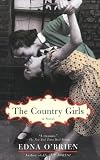
Beautiful portrayal of womanhood in its various guises. I was really rooting for the main character Caithleen - flighty, dreamy and desperate to be loved - I sensed from the get-go her path was never going to be straightforward. Her friend Baba is a stark representation of the other kind of woman - equally lonely and lost but with the confidence and wit to gloss over it. The blend of sadness with girlish humour is what creates this story's expertly crafted and lingering pathos.

Just as I picked this up to read, I learned O'Brien died a week earlier
This is the only O'Brien I've read but, my god, the woman can write! Eloquent, funny, astute, unflinching, and always with perfect restraint, she tells the story of Cait, a 14 year old living in various forms of poverty in Ireland of the 1950s. Poverty of financial resources, poverty of role-models, poverty of options.
Given the time and place, it's no surprise that Life isn't holding out fat, loving arms of bounty for show more Cait's taking. Her days would best be described as a series of navigations.
To navigate, there is her father, a violent alcoholic who loses their ancestral home by debts incurred during his long binges. Her mother is a sad put-upon woman who makes the best of what life has meagerly meted out to her, and then dies. Cait's best friend is the feisty, manipulative, and cruel Baba who regularly spouts off things to her like, "Be off trash." Then there is a whole village of lecherous men who are attracted to Cait's blooming youth, and do the creepy things that creepy old guys do. Although she earns a scholarship to a Catholic school, well, it's a Catholic school where nuns teach her Latin and Algebra but not anything much helpful to the girls there.
Sounds like a well-worn trope. But O'Brien makes it something more.
For four years, we follow Cait, and also Baba. Cait observes everything and feels what she feels. She mourns, she is repulsed, she falls in love, she escapes to Dublin, and she even hates who she hates. But she does not self-pity.
What transforms this into a stellar novel is O'Brien is that kind of writer I hold in the highest esteem: she writes just enough.
The best books are those that honor readers with that level of respect. show less
This is the only O'Brien I've read but, my god, the woman can write! Eloquent, funny, astute, unflinching, and always with perfect restraint, she tells the story of Cait, a 14 year old living in various forms of poverty in Ireland of the 1950s. Poverty of financial resources, poverty of role-models, poverty of options.
Given the time and place, it's no surprise that Life isn't holding out fat, loving arms of bounty for show more Cait's taking. Her days would best be described as a series of navigations.
To navigate, there is her father, a violent alcoholic who loses their ancestral home by debts incurred during his long binges. Her mother is a sad put-upon woman who makes the best of what life has meagerly meted out to her, and then dies. Cait's best friend is the feisty, manipulative, and cruel Baba who regularly spouts off things to her like, "Be off trash." Then there is a whole village of lecherous men who are attracted to Cait's blooming youth, and do the creepy things that creepy old guys do. Although she earns a scholarship to a Catholic school, well, it's a Catholic school where nuns teach her Latin and Algebra but not anything much helpful to the girls there.
Sounds like a well-worn trope. But O'Brien makes it something more.
For four years, we follow Cait, and also Baba. Cait observes everything and feels what she feels. She mourns, she is repulsed, she falls in love, she escapes to Dublin, and she even hates who she hates. But she does not self-pity.
What transforms this into a stellar novel is O'Brien is that kind of writer I hold in the highest esteem: she writes just enough.
The best books are those that honor readers with that level of respect. show less
Lists
Awards


You May Also Like


Associated Authors
Statistics
- Works
- 91
- Also by
- 31
- Members
- 10,479
- Popularity
- #2,269
- Rating
- 3.6
- Reviews
- 268
- ISBNs
- 591
- Languages
- 19
- Favorited
- 22


