
Joseph O'Connor (1) (1963–)
Author of Star of the Sea
For other authors named Joseph O'Connor, see the disambiguation page.
About the Author
Image credit: Petr Novák, Wikipedia
Series
Works by Joseph O'Connor
Back Roads 1 copy
A Tenement Story 1 copy
Associated Works
There's No Toilet Paper on the Road Less Traveled: The Best of Travel Humor and Misadventure (1998) — Contributor — 217 copies, 5 reviews
New Dubliners: Original Stories Celebrating 100 Years of Joyce's Dubliners (2005) — Contributor — 27 copies, 2 reviews
Tagged
Common Knowledge
- Birthdate
- 1963-09-20
- Gender
- male
- Education
- Blackrock College, County Dublin, Ireland
University College Dublin
Leeds Metropolitan University - Occupations
- novelist
journalist - Organizations
- Aosdána
- Relationships
- O'Connor, Sinéad (sister)
Casey, Anne-Marie (wife) - Nationality
- Ireland
- Birthplace
- Dublin, Ireland
- Places of residence
- Dublin, Ireland
Nicaragua
Oxford, Oxfordshire, England, UK
New York, New York, USA
London, England, UK
Members
Reviews
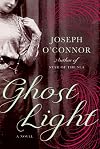
Beautiful evocation of Edwardian Dublin and the love affair between playwright J.M. Synge and Abbey Theatre actress Maire O'Neill. The author uses complicated tense changes [present for Synge's or Maire's present--1907 until his death for him, the year 1952 for her] and past for each of their pasts. An omnipotent narrator who will be returning from time to time, starts out by addressing Maire as "You" [he/she is addressing her] and we see that in 1952 London, Maire is a has-been actress and show more alcoholic living in a dilapidated tenement in penury. She obtains a job at BBC for a radio version of an O'Casey play. She trudges there, in the snowy, wintry weather from her home and besides doing errands, spends her day in the National Portrait Gallery, a church, and the cinema. The story moves back and forth from past to present: events in 'real-time' and those in Maire's memory as she makes her journey, recounting those years. Much remembrance is a type of stream of consciousness, but understandable. After the broadcast, the story becomes poignant and sad.
The story was slow-moving, so people wanting a lot of 'action' will not find it here. The language and descriptions were lovely! The author has a gift for putting words together in new ways meaningfully. Much dialogue was couched in Irish slang or Irish dialect; I was able to figure them out from context and they added to the Irish flavor. I especially liked the first half of Chapter 5: a hilarious rehearsal at the Abbey Theatre with Synge, Yeats, Lady Gregory, and Maire. I loved the author's quoting the various songs and ballads. The title was fitting: 'Ghost Light' is a theatrical superstition: when the theater is "dark" [no performances] at least one light is always left on for ghosts to perform their plays. The chapter where Synge meets Maire's mother and brother was written in the form of a play. O'Connor's note at the end was revealing.
Now I'm curious: I must read "Playboy of the Western World" by Synge. There was a big uproar when it was first presented. and I'd like to see why. show less
The story was slow-moving, so people wanting a lot of 'action' will not find it here. The language and descriptions were lovely! The author has a gift for putting words together in new ways meaningfully. Much dialogue was couched in Irish slang or Irish dialect; I was able to figure them out from context and they added to the Irish flavor. I especially liked the first half of Chapter 5: a hilarious rehearsal at the Abbey Theatre with Synge, Yeats, Lady Gregory, and Maire. I loved the author's quoting the various songs and ballads. The title was fitting: 'Ghost Light' is a theatrical superstition: when the theater is "dark" [no performances] at least one light is always left on for ghosts to perform their plays. The chapter where Synge meets Maire's mother and brother was written in the form of a play. O'Connor's note at the end was revealing.
Now I'm curious: I must read "Playboy of the Western World" by Synge. There was a big uproar when it was first presented. and I'd like to see why. show less
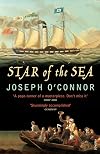
Forget that this was published in 2004 – this is a Dickensian novel, full of complex characters, vivid storytelling, biting social commentary, Victorian literary experimentation, and bitter wit, all overlaid by a seemingly infinite empathy and compassion for humanity – even those whose bitter lives shape them into monsters. Though the events of the novel are claustrophobically confined to the decks of Star of the Sea, a rotting hulk making one final transatlantic run from Ireland to the show more U.S. bearing a cargo of tainted coal, toxic mercury, a scattering of first class passengers, and a seething stew of steerage passengers, character backstories drag us across fragrant green Irish fields littered with heather, through cruel workhouses, sordid brothels and corrupt jails, inside bleak British boarding schools, down roads lined with emaciated Irish dead, then back again through the villages poor in wealth but rich in love and generosity. All the things that Dickens did so heart-breakingly well.
This is also a very Irish novel, bleak and beautiful, couched in lyric language and imagery, full of characters who might have just stepped out of Irish ballads – hard drinking laborers, cruel landlords, wily thieves, wastrel balladeers, doomed lovers, wronged servant girls – and set in 1847, the great potato famine. Except that, in O’Connor’s adept hands, these archetypes gain flesh (so that we feel their pain), hearts (so that we experience their sorrows) and souls (making it impossible for us to deny their humanity).
Reading these past two paragraphs, I realize there’s a risk of scaring people away with all the sorrow and despair stuff. While I can’t pretend anyone actually ends up living happily ever after at the culmination of this tale, I can reassure potential readers that if you enjoy Dickens, you’ll enjoy this for many of the same reasons. Aside from memorably multi-faceted characters, period ambiance, and bracing satire, a significant enticement is the choice O’Connor has made to let the story unfold through a variety of different literary forms – captain’s logs, newspaper articles, bits of letters and diary entries, police interviews, etc. This literary device not only allows the story to be told through multiple perspectives, but provides ample range to for the author to showcase his formidable narrative creativity and dexterous storytelling.
For this is, above all, a story about stories, and especially storytelling. This is O’Connor reminding us that two million Irish dead of famine isn’t a statistic – it’s two million separate stories, each one tragic in its own unique way. And it’s about the power that all of us possess to shape our own narratives, especially the decisions we make about how we to cast ourselves in the stories we tell to ourselves and others: whether we see ourselves (or wish to be seen by others) as protagonists or antagonists, dissemblers or truth-tellers, victims or villains. Just in case we as a society begin to forget that what we think of as “reality” will always be relative, as long as history continues to be fashioned by the narratives of the survivors, and the narratives of those who do not survive fade gradually away. show less
This is also a very Irish novel, bleak and beautiful, couched in lyric language and imagery, full of characters who might have just stepped out of Irish ballads – hard drinking laborers, cruel landlords, wily thieves, wastrel balladeers, doomed lovers, wronged servant girls – and set in 1847, the great potato famine. Except that, in O’Connor’s adept hands, these archetypes gain flesh (so that we feel their pain), hearts (so that we experience their sorrows) and souls (making it impossible for us to deny their humanity).
Reading these past two paragraphs, I realize there’s a risk of scaring people away with all the sorrow and despair stuff. While I can’t pretend anyone actually ends up living happily ever after at the culmination of this tale, I can reassure potential readers that if you enjoy Dickens, you’ll enjoy this for many of the same reasons. Aside from memorably multi-faceted characters, period ambiance, and bracing satire, a significant enticement is the choice O’Connor has made to let the story unfold through a variety of different literary forms – captain’s logs, newspaper articles, bits of letters and diary entries, police interviews, etc. This literary device not only allows the story to be told through multiple perspectives, but provides ample range to for the author to showcase his formidable narrative creativity and dexterous storytelling.
For this is, above all, a story about stories, and especially storytelling. This is O’Connor reminding us that two million Irish dead of famine isn’t a statistic – it’s two million separate stories, each one tragic in its own unique way. And it’s about the power that all of us possess to shape our own narratives, especially the decisions we make about how we to cast ourselves in the stories we tell to ourselves and others: whether we see ourselves (or wish to be seen by others) as protagonists or antagonists, dissemblers or truth-tellers, victims or villains. Just in case we as a society begin to forget that what we think of as “reality” will always be relative, as long as history continues to be fashioned by the narratives of the survivors, and the narratives of those who do not survive fade gradually away. show less

Billy Sweeney is writing a letter to his daughter, Maeve. But she may never read it since she is lying comatose in a Dublin hospital, the victim of a brutal assault by four thugs during a petrol station robbery. The letter is both a confession and the account of a revenge that goes horribly wrong. Or did it?
This isn't an easy read as it encompasses all the emotions of human life; love, hope, pain, guilt, despair and a realisation that none of us are perfect. However, I also found it so show more engrossing that I simply didn't want to put it down. It was so utterly believable.
As the story progressed, I had no idea as to how O'Connor intended conclude it, but the ending didn't disappoint. Even now I'm unsure as to whether this is a simple exploration of the Stockholm Syndrome or if Billy had really killed Quinn earlier on and it was his way of dealing with the guilt. Then perhaps it was simply me hoping that I would have pulled the trigger (you will know what I mean if you have read it) if something ever happened to my daughter.
This is my first O'Connor novel, but I don't intend it to be my last. show less
This isn't an easy read as it encompasses all the emotions of human life; love, hope, pain, guilt, despair and a realisation that none of us are perfect. However, I also found it so show more engrossing that I simply didn't want to put it down. It was so utterly believable.
As the story progressed, I had no idea as to how O'Connor intended conclude it, but the ending didn't disappoint. Even now I'm unsure as to whether this is a simple exploration of the Stockholm Syndrome or if Billy had really killed Quinn earlier on and it was his way of dealing with the guilt. Then perhaps it was simply me hoping that I would have pulled the trigger (you will know what I mean if you have read it) if something ever happened to my daughter.
This is my first O'Connor novel, but I don't intend it to be my last. show less
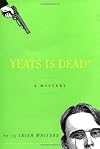
What a playful, funny romp this is! Intended as a fundraiser for Amnesty International, the novel is composed of 15 chapters, each written by a different illustrious Irish author - each of whom seems intent on dialing up the comedic mayhem as the novel progresses.
The meandering plot involves, among other elements, a pair of old maids who run a crime syndicate, a faux Jamaican Rastafarian, an entrepreneurial hit man, a randy Minister of Defense, a traveling toilet cake salesman, corrupt show more police officers, a mysterious chemical formula, an alleged unknown novel by James Joyce, numerous pubs, and (of course, because this is, after all, an Irish novel) a nun.
This is is a bit too cohesive to believe that the authors set out entirely without a plan, but it's clear they were given a lot of creative license. One can only imagine how much fun each of these esteemed writers had taking what they were given and then figuring out how they were going to ramp up the silly. Uniting all the chapters: a dedication to injecting as much preposterous, bawdy, dark humor as possible, overlaid on a plot that pokes fun at every Irish stereotype in sight. I smiled through most of this, and often laughed out loud.
If Carl Hiaasen was Irish, this is exactly what he'd be writing! show less
The meandering plot involves, among other elements, a pair of old maids who run a crime syndicate, a faux Jamaican Rastafarian, an entrepreneurial hit man, a randy Minister of Defense, a traveling toilet cake salesman, corrupt show more police officers, a mysterious chemical formula, an alleged unknown novel by James Joyce, numerous pubs, and (of course, because this is, after all, an Irish novel) a nun.
This is is a bit too cohesive to believe that the authors set out entirely without a plan, but it's clear they were given a lot of creative license. One can only imagine how much fun each of these esteemed writers had taking what they were given and then figuring out how they were going to ramp up the silly. Uniting all the chapters: a dedication to injecting as much preposterous, bawdy, dark humor as possible, overlaid on a plot that pokes fun at every Irish stereotype in sight. I smiled through most of this, and often laughed out loud.
If Carl Hiaasen was Irish, this is exactly what he'd be writing! show less
Lists
Irish writers (3)
Tour of Ireland (1)
Awards


You May Also Like


Associated Authors
Statistics
- Works
- 30
- Also by
- 8
- Members
- 5,539
- Popularity
- #4,496
- Rating
- 3.7
- Reviews
- 159
- ISBNs
- 413
- Languages
- 20
- Favorited
- 13