
Brian Moore (1) (1921–1999)
Author of The Lonely Passion of Judith Hearne
For other authors named Brian Moore, see the disambiguation page.
About the Author
Brian Moore, 1921 - 1999 Brian Moore was born in Belfast on August 25, 1921 to Doctor James Bernard Moore and Eileen McFadden. He attended St. Malachy's College, a Catholic school, where the students where beaten on the hands daily. He left the college without a School Leaving Certificate because show more he failed Math. In 1941, a bomb damaged the family home, so they moved to a house on Camden Street. A year later, his father died. In 1942, he joined the National Fire Service, but knew that he wanted to be a writer. Moore knew some French, so he was hired by the British Ministry of War Transport to go as a port official to Algiers, North Africa. Afterwards, he traveled to Italy, France, and after the war, Warsaw (1945), Spain, Canada (1948), the United States and England, finally settling in California. Moore immigrated to Canada in 1948, where he worked as a proofreader and reporter for the Montreal Gazette. In 1951, he published his first story in the Northern Review and married Jacqueline Sirois, a fellow journalist. His only child, Michael, was born on November 24, 1953. He split with his wife in 1964 and then married Jean Denney, who he stayed married to until his death. Moore published "The Lonely Passion of Judith Hearne" (1955), "The Feast of Lupercal" (1957) and "The Emperor of Ice Cream" (1966), which is his most autobiographical novel. He recounts his school experiences, as well as what is was like during the bombing. In the 1990's, he wrote political fables and four novels. "Lies of Silence" is a thriller set in Belfast and was a more political statement than the previous novels. It was nominated for the Booker Prize and was his bestselling book. Several of his books were made into films such as "The Luck of Ginger Coffey," "Catholics," "The Lonely Passion of Judith Hearne" and "The Temptation of Eileen Hughes" was adapted for television. Moore received many awards, which included the Governor General's Award in 1961 for "The Luck of Ginger Coffey" and again in 1975 for "The Great Victorian Collection," which also won the James Tait Black Award in England. He was short listed for the Booker Prize in 1987 for "The Colour of Blood" and again in 1990 for "Lies of Silence." In July 1987, he conferred an honorary doctorate by Queen's University, Belfast. His film "Catholics" received the W.H. Smith Award in 1973 and the Peabody Award in 1974. In 1999, Brian Moore died at his home in Malibu, California. (Bowker Author Biography) show less
Works by Brian Moore
Two Stories 1 copy
Cold Heaven [1991 film] — Author — 1 copy
Associated Works
Alfred Hitchcock: The Masterpiece Collection [14 films 1942-1976] (1942) — Writer — 117 copies, 2 reviews
The Pleasure of Reading: 43 Writers on the Discovery of Reading and the Books That Inspired Them (2015) — Contributor — 104 copies, 2 reviews
The Lonely Passion of Judith Hearne [1987 film] — Original novel — 5 copies
Tagged
Common Knowledge
- Other names
- Mara, Bernard
Bryan, Michael - Birthdate
- 1921-08-25
- Date of death
- 1999-01-11
- Gender
- male
- Education
- St Malachy's College
- Occupations
- novelist
screenwriter
journalist
administrator (United Nations) - Awards and honors
- Robert Kirsch Award (1994)
American Academy of Arts and Letters Academy Award (Literature, 1961) - Nationality
- UK (birth)
Canada (naturalized 1948) - Birthplace
- Belfast, County Antrim, Northern Ireland, UK
- Places of residence
- Belfast, County Antrim, Northern Ireland, UK (birth)
Montreal, Quebec, Canada
Malibu, California, USA - Place of death
- Malibu, California, USA
- Map Location
- Canada
Members
Reviews
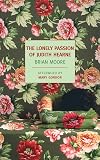
Other reviewers here have mentioned that "The Lonely Passion of Judith Hearne" is an extremely sad book, and they're hardly wrong to say so. What I really enjoyed about this book, though, was that Judy -- though she herself might not appreciate our overly familiar tone -- is that she isn't merely the victim of a cold, unwelcoming world. Yes, the author portrays Belfast as a small, rather boring place riven by social divisions, and Ms. Hearne herself is the product of an idea of upper-class show more femininity that was, as of the fifties, was rapidly becoming outmoded. Her ladies' education hasn't gotten her too far in life. While forgoing marriage to take care of an ailing aunt turns out to be a disastrous choice, the author is understanding enough of his protagonist to make clear that there were few good options available to Judy's only close relation. Even so, Ms. Hearne herself has her faults. She's inherited the biases natural to her class and refused to examine them. She seems stuck in mental and emotional patterns that she's either unwilling or unable to break. She daydreams but refuses to act. You can call the characters in this novel who find her dull or faintly ridiculous unkind, but they're handly wrong. Judy, and her life, are terribly boring, and she doesn't really do enough to change it. Predictably enough, things end badly.
Mary Gordon suggests that "The Lonely Passion of Judith Hearne" was written, as was much of the Irish literature of this period, under the star of Joyce, and while there is the stray free-flowing description here along with a few thematic similarities, I think that Moore's novel is really an altogether different sort of creature. His prose here is economical, almost cutting: a far cry from Jim's more lyrical moods. Lovers of period slang will enjoy returned Yankified returned Irishman James Madden's New York dialect, which is rendered so perfectly it often seems like he just stepped out of a film noir. His own truncated, spectacularly unsuccessful courtship of the titular character is, by way of closing, another one of this novel's principal attractions. Less a folie a deux than a dramatic mismatch of mercenary personal interests, it provides the perfect opportunity for the author to demonstrate what can happen when you remain trapped in your own badly calibrated perceptions. A rom-com in reverse, Judy and Jim's attempt at a love affair ends badly, too. It's not for the clinically depressed or the unshakably optimistic, but this one's a very good novel nonetheless. show less
Mary Gordon suggests that "The Lonely Passion of Judith Hearne" was written, as was much of the Irish literature of this period, under the star of Joyce, and while there is the stray free-flowing description here along with a few thematic similarities, I think that Moore's novel is really an altogether different sort of creature. His prose here is economical, almost cutting: a far cry from Jim's more lyrical moods. Lovers of period slang will enjoy returned Yankified returned Irishman James Madden's New York dialect, which is rendered so perfectly it often seems like he just stepped out of a film noir. His own truncated, spectacularly unsuccessful courtship of the titular character is, by way of closing, another one of this novel's principal attractions. Less a folie a deux than a dramatic mismatch of mercenary personal interests, it provides the perfect opportunity for the author to demonstrate what can happen when you remain trapped in your own badly calibrated perceptions. A rom-com in reverse, Judy and Jim's attempt at a love affair ends badly, too. It's not for the clinically depressed or the unshakably optimistic, but this one's a very good novel nonetheless. show less

This was a fabulous read: set in a grim Belfast boarding house in the 1950s, where new arrival Miss Hearne strives to appear genteel, while barely having enough to eat. Plain, on the shelf and alone, with little chance of an income, she yearns for love and strives to keep her Catholic faith ...and avoid the demon drink. But into the story comes her landlady's brother, just returned from the US..
Such a sad, hopeless tale; the almost hysterical stream-of-consciousness passages, relating the show more inner thoughts of someone on the edge of a breakdowm, recalled Jean Rhys' superb "Good Morning, Midnight."
Highly recommended. show less
Such a sad, hopeless tale; the almost hysterical stream-of-consciousness passages, relating the show more inner thoughts of someone on the edge of a breakdowm, recalled Jean Rhys' superb "Good Morning, Midnight."
Highly recommended. show less
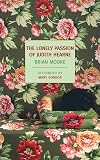
I loved this sad book about a 40 something spinster in 1950s Ireland trying desperately to find a place in the world. Judith Hearne was tied to an ill, controlling aunt through her 20s and missed her chance at marriage. Her lack of money and plain looks don't help either. What begins as a Barbara Pym-type story about a nice, lonely, poor, Catholic woman deteriorates to more desperate events as the reader learns more about what all this loneliness has led Judy to.
The author doesn't sugar show more coat anything and leaves the ending as it realistically would be. I thought this was a brilliant look at the limited options for a middle aged woman without family or funds in this time period. Despite the sadness, I loved this book and rooted for Judy Hearne with all of her faults.
A great find and highly recommended.
Original publication date: 1955
Author’s nationality: British/Northern Ireland (another one of these, correct me if I'm wrong!!)
Original language: English
Length: 223 pages
Rating: 5 stars
Format/where I acquired the book: purchased nyrb
Why I read this: bought for a litsy group read ages ago and finally getting to it show less
The author doesn't sugar show more coat anything and leaves the ending as it realistically would be. I thought this was a brilliant look at the limited options for a middle aged woman without family or funds in this time period. Despite the sadness, I loved this book and rooted for Judy Hearne with all of her faults.
A great find and highly recommended.
Original publication date: 1955
Author’s nationality: British/Northern Ireland (another one of these, correct me if I'm wrong!!)
Original language: English
Length: 223 pages
Rating: 5 stars
Format/where I acquired the book: purchased nyrb
Why I read this: bought for a litsy group read ages ago and finally getting to it show less

The kind of quietly devastating book that you finish and then need to just sit and stare at a blank wall for a moment while saying "oof" softly to yourself. Brian Moore's portrait of the chronically lonely Judith Hearne, a 40-something spinster clinging desperately to her fading gentility in 1950s Belfast is a well-observed one: a bleak look at woman imprisoning herself in a grisaille world.
Lists
Awards


You May Also Like


Associated Authors
Statistics
- Works
- 31
- Also by
- 16
- Members
- 5,990
- Popularity
- #4,112
- Rating
- 3.7
- Reviews
- 115
- ISBNs
- 413
- Languages
- 16
- Favorited
- 20

