
Eimear McBride
Author of A Girl Is a Half-formed Thing
About the Author
Image credit: Author Eimear McBride at the 2016 Texas Book Festival. By Larry D. Moore, CC BY-SA 4.0, https://commons.wikimedia.org/w/index.php?curid=53478913
Series
Works by Eimear McBride
Associated Works
Kingdom of Olives and Ash: Writers Confront the Occupation (2017) — Contributor — 167 copies, 5 reviews
Tagged
Common Knowledge
- Birthdate
- 1976
- Gender
- female
- Nationality
- Ireland
- Birthplace
- Liverpool, Merseyside, England, UK
- Places of residence
- Norwich, Norfolk, England, UK
- Associated Place (for map)
- England, UK
Members
Reviews

I almost didn’t make it past page 3 of A Girl is a Half-Formed Thing. I mean, what do you make of prose like this?
He says I can’t be waiting for it all the time. I’d give my eyes to fix him but. The heart cannot be wrung and wrung. And she like calmest Virgin Mary sitting on the bed. Hands warming up her sides for. What’re you saying? Breath. Going? Leaving? But he’s just stopped dying. This one’s to come. Please don’t no I won’t stop you. could never make you do a thing. show more You’ll support us. Aren’t you great? Oh the house is mine. It’s for the best. For who you me? Board my body up. I’m not for loving. Anymore. I’ll live for housework. Dressing kids. And you for mortgage new shoes spuds. Can’t live short hope but gas bills long and paid on time too. Oh so kind. Aren’t you the fine shape of a man.
It took some effort to understand the first chapter of this book in which the girl, still in utero, describes her older brother’s brain tumor and surgery, and the devastating impact of the boy’s illness on his parents’ marriage. And things don’t get any better once the unnamed girl enters the world. Her family is poor. Her brother’s intellectual development is slow and he is teased by classmates. Her mother is deeply religious, and convinced of the power of prayer to solve all of life’s problems. The girl becomes a victim of both verbal and sexual abuse, and lacking much-needed emotional support, she adopts extremely unhealthy behaviors as an adolescent and young adult. Eventually you can see a climax building, and it’s not pretty. In fact, it’s pretty devastating.
This book is unrelentingly bleak. Nothing good happens. Ever. But once I got past the choppy, disjointed writing style I found it surprisingly effective at conveying a mood, a tone. I was immersed in the girl’s world and could almost literally feel her pain. It’s not a book I’d recommend to just anyone, but if you are intrigued by its experimental nature and can deal with some very disturbing themes, you will be rewarded. show less
He says I can’t be waiting for it all the time. I’d give my eyes to fix him but. The heart cannot be wrung and wrung. And she like calmest Virgin Mary sitting on the bed. Hands warming up her sides for. What’re you saying? Breath. Going? Leaving? But he’s just stopped dying. This one’s to come. Please don’t no I won’t stop you. could never make you do a thing. show more You’ll support us. Aren’t you great? Oh the house is mine. It’s for the best. For who you me? Board my body up. I’m not for loving. Anymore. I’ll live for housework. Dressing kids. And you for mortgage new shoes spuds. Can’t live short hope but gas bills long and paid on time too. Oh so kind. Aren’t you the fine shape of a man.
It took some effort to understand the first chapter of this book in which the girl, still in utero, describes her older brother’s brain tumor and surgery, and the devastating impact of the boy’s illness on his parents’ marriage. And things don’t get any better once the unnamed girl enters the world. Her family is poor. Her brother’s intellectual development is slow and he is teased by classmates. Her mother is deeply religious, and convinced of the power of prayer to solve all of life’s problems. The girl becomes a victim of both verbal and sexual abuse, and lacking much-needed emotional support, she adopts extremely unhealthy behaviors as an adolescent and young adult. Eventually you can see a climax building, and it’s not pretty. In fact, it’s pretty devastating.
This book is unrelentingly bleak. Nothing good happens. Ever. But once I got past the choppy, disjointed writing style I found it surprisingly effective at conveying a mood, a tone. I was immersed in the girl’s world and could almost literally feel her pain. It’s not a book I’d recommend to just anyone, but if you are intrigued by its experimental nature and can deal with some very disturbing themes, you will be rewarded. show less
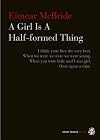
I should preface this review by saying that this book will not be for everyone. Written in a unique voice and style, A Girl is a Half-formed Thing is a stream of consciousness type novel of an unnamed first person protagonist. It’s not an easy read, as the sentence structure is sometimes fragmented and there are made-up words (which have a wonderful onomatopoeia quality to them). As the girl ages, things do become a little more coherent and conventional in terms of language – unless show more something awful is happening to her, which sadly is often in this book.
The storyline is quite simple – the story of the girl from before her birth (significant as her beloved brother had a brain tumour before she was born) to early adulthood. However, it’s what happens during these years that will shock you. Her household is very religious and her mother beats her children and threatens them during their youth. Then there’s an emotional upheaval where the family moves house, followed by the children meeting their aunt and uncle. For our protagonist, this changes her life course and sets her up for many meaningless sexual encounters and an awkward, unhealthy relationship.
In between all these harrowing events, the reader finds out how much the protagonist loves her brother. After his brain tumour, he’s left with an impressive scar and some intellectual impairment – he studies as hard as he can for hours and hours, but only sometimes passes. She protects him best she can, but doesn’t always succeed. Although she loves him, she finds it frustrating to have to look out for him and act as a go-between for him and their mother. She eventually moves away for college, where her brother proves his devotion and she the strength of her love, in harrowing circumstances.
This book is incredibly emotional – there are some parts that are distinctly uncomfortable to read because of the raw, brutal feelings and experiences that are being expressed by the protagonist. It’s quite sickening to think of these things happening to anyone, but when you’re reading about it happening to the main character, it’s almost unbearable. McBride conveys a feeling of reality as our protagonist is trying to block it all out, shown in the way her language starts to fragment and run wild, to focus on anything but what is actually happening to her.
The final section, which focuses on a tragic event involving the whole family, is packed full of emotion. Each person is doing what they think best, which happens to be at cross-purposes to what others think is right. There are tense scenes and things become much more complicated for our protagonist as everyone seems to be using her in some way, but she doesn’t seek help. Like the rest of the book, this part is very dark. It’s not a happy novel.
So why read it if it’s not conventionally structured or happy? I found once I got into the flow of the girl’s language, the whole scene just ‘popped’ into my head – the imagery was stunning. Plus, it’s a book that remained with me long after I closed it – I was thinking about our unnamed girl and her family and what might have been. The way A Girl is a Half-formed Thing makes the reader feel is second to none. It’s very, very powerful in creating strong reactions and emotions to the events that occur.
http://samstillreading.wordpress.com show less
The storyline is quite simple – the story of the girl from before her birth (significant as her beloved brother had a brain tumour before she was born) to early adulthood. However, it’s what happens during these years that will shock you. Her household is very religious and her mother beats her children and threatens them during their youth. Then there’s an emotional upheaval where the family moves house, followed by the children meeting their aunt and uncle. For our protagonist, this changes her life course and sets her up for many meaningless sexual encounters and an awkward, unhealthy relationship.
In between all these harrowing events, the reader finds out how much the protagonist loves her brother. After his brain tumour, he’s left with an impressive scar and some intellectual impairment – he studies as hard as he can for hours and hours, but only sometimes passes. She protects him best she can, but doesn’t always succeed. Although she loves him, she finds it frustrating to have to look out for him and act as a go-between for him and their mother. She eventually moves away for college, where her brother proves his devotion and she the strength of her love, in harrowing circumstances.
This book is incredibly emotional – there are some parts that are distinctly uncomfortable to read because of the raw, brutal feelings and experiences that are being expressed by the protagonist. It’s quite sickening to think of these things happening to anyone, but when you’re reading about it happening to the main character, it’s almost unbearable. McBride conveys a feeling of reality as our protagonist is trying to block it all out, shown in the way her language starts to fragment and run wild, to focus on anything but what is actually happening to her.
The final section, which focuses on a tragic event involving the whole family, is packed full of emotion. Each person is doing what they think best, which happens to be at cross-purposes to what others think is right. There are tense scenes and things become much more complicated for our protagonist as everyone seems to be using her in some way, but she doesn’t seek help. Like the rest of the book, this part is very dark. It’s not a happy novel.
So why read it if it’s not conventionally structured or happy? I found once I got into the flow of the girl’s language, the whole scene just ‘popped’ into my head – the imagery was stunning. Plus, it’s a book that remained with me long after I closed it – I was thinking about our unnamed girl and her family and what might have been. The way A Girl is a Half-formed Thing makes the reader feel is second to none. It’s very, very powerful in creating strong reactions and emotions to the events that occur.
http://samstillreading.wordpress.com show less

I can't, in good faith, recommend this book to anyone. It's an odd, acquired taste of a book that I loved inordinately and since it would forever taint my opinion of you, were you to read the book and dislike it, please leave it be.
Eimear McBride tells the story of a young Irish woman during her first year of drama school in London. Eily's thrust into the vibrant world of London and of drama school from her quiet life and it takes an effort for her to find her feet, both in finding friends show more at the school and in learning the ropes of independent life. One evening, she meets an actor twice her age in a pub and they begin a tentative relationship, which grows into an intense love affair between two broken and flawed people.
McBride tells the story from inside of Eily's head, and her stream-of-consciousness abandons grammatical norms, leaving the writing a challenge to follow. There are no quotation marks, and conversations take place over a single paragraph, with no indication of who is talking. This should have been annoying, instead it make the act of reading The Lesser Bohemians an immersive experience. This was not a book I could pick up and put down during a busy day. I needed to read it when I could set aside a block of uninterrupted time, during which I would enter so completely into Eily's world that I felt unmoored when I had to put the book down. I'm sorry to have finished it, but I'm eager to read anything else McBride writes, including her grocery lists, probably. show less
Eimear McBride tells the story of a young Irish woman during her first year of drama school in London. Eily's thrust into the vibrant world of London and of drama school from her quiet life and it takes an effort for her to find her feet, both in finding friends show more at the school and in learning the ropes of independent life. One evening, she meets an actor twice her age in a pub and they begin a tentative relationship, which grows into an intense love affair between two broken and flawed people.
McBride tells the story from inside of Eily's head, and her stream-of-consciousness abandons grammatical norms, leaving the writing a challenge to follow. There are no quotation marks, and conversations take place over a single paragraph, with no indication of who is talking. This should have been annoying, instead it make the act of reading The Lesser Bohemians an immersive experience. This was not a book I could pick up and put down during a busy day. I needed to read it when I could set aside a block of uninterrupted time, during which I would enter so completely into Eily's world that I felt unmoored when I had to put the book down. I'm sorry to have finished it, but I'm eager to read anything else McBride writes, including her grocery lists, probably. show less
 This review was written for LibraryThing Early Reviewers.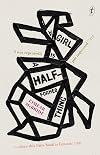
About two thirds of the way into A Girl… comes this paragraph:
“In the waves. I am the waves by the city in the sea. I’ve come out. To be in the cold. To see again for a long way off. Out there somewhere is. New York. What if I could go? It would be so. So far I cannot even see.”
The narrator is a young adult at this point. Still her world is small. This feels less like a desire than an expression of how proximate her perceptions still are – they are contained within the experience show more of the body/mind and extremities.
The page before comes this, she is on the phone to her uncle who is significant to the unravelling of this young girl’s life:
Hello. Are you still there? His voice tiny diamond cutting strips out of air.
At first I thought this metaphor clumsy. Until I read the next page and remembered that the world around the narrator is close in on her. So of course the air around her is dense, so dense only a diamond can cut through it. It’s as though she experiences the world with a higher density of gravity than the rest of us. Emotions, perceptions, sounds, sights, touch all compress her.
Proprioception is one of our senses, the one we never talk about and the one we never know how to pronounce. It is the sense we form early in life, as babies, of the immediate world around us. Watch a baby in a crib thrashing its arms and legs around uncoordinated, it is learning how to define itself in its own surroundings, as though reaching out towards the outer reaches of itself. Eventually we learn where those places are - where the tip of our fingers, our knees, the tops of our heads and our noses are in space. Then we no longer think about it. It is part of us. When someone loses that sense, say when the brain is damaged in particular locations, they may move and jerk like an insect on its back, they have lost their proprioception. The boundaries of the self is damaged and incapable of fixing itself.
This proprioception sense helps me understand the idea of the self as a location with a boundary. We cultivate boundaries so we don’t get harmed (physically and emotionally) and can go about our business. So it’s kind of the outer limit of our consciousness and sense of self. Every other person has the same sense of space and self around them, we think. With our narrator, this has broken down. The self and its awareness of the space around her was broken from the age of thirteen. Then the body, mind and all the ideas of personal integrity disappear. The narrator since thirteen has become not quite themselves, or another way, not grown up. Without boundaries, the body and self is available for abuse. The narrator can receive and can even instigate it. Her integrity was breached so to speak, she has lost the version of the self that was forming as a young teenager. She becomes an agent in her own self-destruction.
The effect on the page is that the space around our narrator in A Girl… is always close, as though we’re watching a life on a screen in close up.
Fragmentation is the norm for our narrator. The sense of self is bits and pieces, hence the bitsy, piecey, disconnect of data bits.
Qualia are the little units of experience data processed by our neurons, the sights sounds touch thoughts experiences of our immediate world all getting processed into something we want to place an understanding around. A little like narrative in a work of fiction.
Victoria, the teenage character from the comedy TV show Little Britain expresses herself in endless monologues of bits and pieces of her views and perceptions. She is the epitome of solipsism; the world doesn’t exist outside her immediate perception of it.
This immediate world is what we’re exposed to here, not Victoria’s reverie of comical diatribes, but a narrator whose voice and expression of her world is fixed at a point sometime in early teens. Trauma often fixes us into the age when an event happens to us and we don’t grow past it, forever in a state. So all those data bits we receive are processed through this fragmented ‘narrative voice’ too.
Perception, our sensory experience, isn’t received in sentence form and if it was, it’s syntax would be everywhere. The normal parts of speech placement - subject object verb noun adjective need a well formed socialised self to place them in order to articulate clear sentences. But literary narratives don’t need to do that. They can express an approximation of the inner world of the self. So in literature a story can take place with a disrupted syntax. If you listen to someone whose first language is not English tell a story in English, you experience this. But you can fill in the spaces with proper prose and know what they are saying, or you can just get the story from the bits that are there. If you listen hard enough. Similarly, if you listen long enough to street talk, teenage talk etc, all those sub-genres of language, you eventually work out the narrative that at first seems incomprehensible. You get into its flow.
Of course, to see the world the way our narrator does is not unusual. It is how a child experiences before they can articulate in a socialised way. Or just imagine spending a day encountering no one, living out an endless stream of thoughts and perceptions. You only need to order them when you encounter another person, you are OK in your own non-syntactical, grammatically disordered world. But when someone enters the room, you know you have to pull those thoughts back into a grammatical order again. Unless you have lost that ability and all of those thoughts exist right at the surface incapable of getting out.
Trauma may be the primary cause that keeps the narrator experiencing the world and herself the way she does. Though she’s more than a medical case history.
In A girl…, we are taken out of ourselves into a new world not our own. Once you get into the flow of the language, you willingly enter another dimension. When there, it’s not so different from how the world is experienced daily anyway by most of us. When we accept that we want to experience another’s world, we might be transported into one of the many possibilities of being human. show less
“In the waves. I am the waves by the city in the sea. I’ve come out. To be in the cold. To see again for a long way off. Out there somewhere is. New York. What if I could go? It would be so. So far I cannot even see.”
The narrator is a young adult at this point. Still her world is small. This feels less like a desire than an expression of how proximate her perceptions still are – they are contained within the experience show more of the body/mind and extremities.
The page before comes this, she is on the phone to her uncle who is significant to the unravelling of this young girl’s life:
Hello. Are you still there? His voice tiny diamond cutting strips out of air.
At first I thought this metaphor clumsy. Until I read the next page and remembered that the world around the narrator is close in on her. So of course the air around her is dense, so dense only a diamond can cut through it. It’s as though she experiences the world with a higher density of gravity than the rest of us. Emotions, perceptions, sounds, sights, touch all compress her.
Proprioception is one of our senses, the one we never talk about and the one we never know how to pronounce. It is the sense we form early in life, as babies, of the immediate world around us. Watch a baby in a crib thrashing its arms and legs around uncoordinated, it is learning how to define itself in its own surroundings, as though reaching out towards the outer reaches of itself. Eventually we learn where those places are - where the tip of our fingers, our knees, the tops of our heads and our noses are in space. Then we no longer think about it. It is part of us. When someone loses that sense, say when the brain is damaged in particular locations, they may move and jerk like an insect on its back, they have lost their proprioception. The boundaries of the self is damaged and incapable of fixing itself.
This proprioception sense helps me understand the idea of the self as a location with a boundary. We cultivate boundaries so we don’t get harmed (physically and emotionally) and can go about our business. So it’s kind of the outer limit of our consciousness and sense of self. Every other person has the same sense of space and self around them, we think. With our narrator, this has broken down. The self and its awareness of the space around her was broken from the age of thirteen. Then the body, mind and all the ideas of personal integrity disappear. The narrator since thirteen has become not quite themselves, or another way, not grown up. Without boundaries, the body and self is available for abuse. The narrator can receive and can even instigate it. Her integrity was breached so to speak, she has lost the version of the self that was forming as a young teenager. She becomes an agent in her own self-destruction.
The effect on the page is that the space around our narrator in A Girl… is always close, as though we’re watching a life on a screen in close up.
Fragmentation is the norm for our narrator. The sense of self is bits and pieces, hence the bitsy, piecey, disconnect of data bits.
Qualia are the little units of experience data processed by our neurons, the sights sounds touch thoughts experiences of our immediate world all getting processed into something we want to place an understanding around. A little like narrative in a work of fiction.
Victoria, the teenage character from the comedy TV show Little Britain expresses herself in endless monologues of bits and pieces of her views and perceptions. She is the epitome of solipsism; the world doesn’t exist outside her immediate perception of it.
This immediate world is what we’re exposed to here, not Victoria’s reverie of comical diatribes, but a narrator whose voice and expression of her world is fixed at a point sometime in early teens. Trauma often fixes us into the age when an event happens to us and we don’t grow past it, forever in a state. So all those data bits we receive are processed through this fragmented ‘narrative voice’ too.
Perception, our sensory experience, isn’t received in sentence form and if it was, it’s syntax would be everywhere. The normal parts of speech placement - subject object verb noun adjective need a well formed socialised self to place them in order to articulate clear sentences. But literary narratives don’t need to do that. They can express an approximation of the inner world of the self. So in literature a story can take place with a disrupted syntax. If you listen to someone whose first language is not English tell a story in English, you experience this. But you can fill in the spaces with proper prose and know what they are saying, or you can just get the story from the bits that are there. If you listen hard enough. Similarly, if you listen long enough to street talk, teenage talk etc, all those sub-genres of language, you eventually work out the narrative that at first seems incomprehensible. You get into its flow.
Of course, to see the world the way our narrator does is not unusual. It is how a child experiences before they can articulate in a socialised way. Or just imagine spending a day encountering no one, living out an endless stream of thoughts and perceptions. You only need to order them when you encounter another person, you are OK in your own non-syntactical, grammatically disordered world. But when someone enters the room, you know you have to pull those thoughts back into a grammatical order again. Unless you have lost that ability and all of those thoughts exist right at the surface incapable of getting out.
Trauma may be the primary cause that keeps the narrator experiencing the world and herself the way she does. Though she’s more than a medical case history.
In A girl…, we are taken out of ourselves into a new world not our own. Once you get into the flow of the language, you willingly enter another dimension. When there, it’s not so different from how the world is experienced daily anyway by most of us. When we accept that we want to experience another’s world, we might be transported into one of the many possibilities of being human. show less
Lists
Take Four Books (1)
Irish writers (1)
Awards


You May Also Like


Associated Authors
Statistics
- Works
- 7
- Also by
- 10
- Members
- 2,100
- Popularity
- #12,256
- Rating
- 3.6
- Reviews
- 178
- ISBNs
- 90
- Languages
- 10
- Favorited
- 6

