
Max Porter
Author of Grief is the Thing with Feathers
About the Author
Max Porter is the author of Grief is the Thing with Feathers, which made the Goldsmiths Prize shortlist 2015. This title also was shortlisted for the Guardian First Book Award. (Bowker Author Biography)
Works by Max Porter
Lanny 1 copy
Associated Works
Eight Ghosts: The English Heritage Book of New Ghost Stories (2017) — Contributor — 129 copies, 5 reviews
Tagged
Common Knowledge
- Legal name
- Porter, Max John
- Birthdate
- 1981
- Gender
- male
- Education
- Courtauld Institute of Art, University of London (BA|MA)
- Occupations
- writer
poet
essayist
bookseller - Awards and honors
- Young Bookseller of the Year award (2009)
Sunday Times PFD Young Writer of the Year Award (2016)
Books Are My Bag Readers' Award for fiction (2016)
International Dylan Thomas Prize (2016)
Europese Literatuurprijs (2016) - Agent
- Lisa Baker (Aitken Alexander Associates)
- Nationality
- England
UK - Birthplace
- High Wycombe, Buckinghamshire, England, UK
- Map Location
- England, UK
Members
Reviews

The house becomes a physical encyclopedia of no-longer hers, which shocks and shocks and is the principal difference between our house and a house where illness has worked away. Ill people, in their last day on Earth, do not leave notes stuck to bottles of red wine saying 'OH NO YOU DON'T COCK-CHEEK'. She was not busy dying, and there is no detritus of care, she was simply busy living, and then she was gone.
A woman dies suddenly, leaving behind her husband and two young sons. As they show more negotiate the days, months and years that follow, they are accompanied by the physical manifestation of their grief, a large and not entirely benign crow.
I was pretty sure I wouldn't enjoy this book and for the first half that remained largely true. My brother died suddenly last year and grief, it turns out, is both unique to each person and utterly, utterly universal. Porter's understanding of grief is so deep as to move past the differences and grab the heart of it.
Some days I realize I've been forgetting basic things, so I run upstairs, or downstairs, or wherever they are and I say, 'You must know that your Mum was the funniest, most excellent person. She was my best friend. She was so sarcastic and affectionate ...' and then I run out of steam because it feels so crass and lazy, and they nod and say, 'We know, Dad, we remember.'
'She would call me sentimental.'
'You are sentimental.'
The offer me space on the sofa next to them and the pain of them being so naturally kind is like appendicitis. I need to double over and hold myself because they are so kind and keep regenerating and recharging their kindness without any input from me.
This is a slight book, told from the alternating viewpoints of the husband, the two sons speaking together, and the crow, who begins as a malevolent and destructive force, then mutates into something approaching, but never quite reaching, comfort. show less
A woman dies suddenly, leaving behind her husband and two young sons. As they show more negotiate the days, months and years that follow, they are accompanied by the physical manifestation of their grief, a large and not entirely benign crow.
I was pretty sure I wouldn't enjoy this book and for the first half that remained largely true. My brother died suddenly last year and grief, it turns out, is both unique to each person and utterly, utterly universal. Porter's understanding of grief is so deep as to move past the differences and grab the heart of it.
Some days I realize I've been forgetting basic things, so I run upstairs, or downstairs, or wherever they are and I say, 'You must know that your Mum was the funniest, most excellent person. She was my best friend. She was so sarcastic and affectionate ...' and then I run out of steam because it feels so crass and lazy, and they nod and say, 'We know, Dad, we remember.'
'She would call me sentimental.'
'You are sentimental.'
The offer me space on the sofa next to them and the pain of them being so naturally kind is like appendicitis. I need to double over and hold myself because they are so kind and keep regenerating and recharging their kindness without any input from me.
This is a slight book, told from the alternating viewpoints of the husband, the two sons speaking together, and the crow, who begins as a malevolent and destructive force, then mutates into something approaching, but never quite reaching, comfort. show less
Lanny by Max Porter
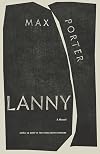
Lanny is a little boy living in an English village outside London. His father, Robert, is an asset manager in the city. His mother, Jolie, was once an actress and now writes edgy psychological thrillers. Lanny is learning about art from Pete, a famous artist who resides in the village who has agreed, at Jolie’s plea, to take on Lanny’s art tutelage. But deeper underground, or in the air, or in everything perhaps, is Dead Papa Toothwort, the elemental spirit of this land that sees all, show more feels all, and becomes all. And he’s taken a special interest in Lanny.
Max Porter’s writing captures the lives in this village in remarkably brief lines, like a charcoal sketch. But the village totally comes to life. He peoples it with the full range of village characters all of whom, of course, Toothwort himself embodies. It is a lively dance as the reader bounces across characters’ thoughts in the Toothwort sections of the novel. But the picture created of Lanny himself is always a bit vague. In part that’s because everyone sees him a bit differently. And in part because he is a bit different. He’s so in tune with his present moment, which in this case is also the ancient mythical Toothwort moment, that he is more naturally a resident of the village than anyone else there, and at the same time somewhat otherworldly. Enchanted would not be too much to say.
I found this novel entirely captivating. And it’s impossible not to be wondering even as you are reading, how did this novel find a publisher? It’s so unusual. Almost like an extended poem. And yet so dramatic (and sometimes traumatic). A wonderful, significant achievement.
Definitely recommended. show less
Max Porter’s writing captures the lives in this village in remarkably brief lines, like a charcoal sketch. But the village totally comes to life. He peoples it with the full range of village characters all of whom, of course, Toothwort himself embodies. It is a lively dance as the reader bounces across characters’ thoughts in the Toothwort sections of the novel. But the picture created of Lanny himself is always a bit vague. In part that’s because everyone sees him a bit differently. And in part because he is a bit different. He’s so in tune with his present moment, which in this case is also the ancient mythical Toothwort moment, that he is more naturally a resident of the village than anyone else there, and at the same time somewhat otherworldly. Enchanted would not be too much to say.
I found this novel entirely captivating. And it’s impossible not to be wondering even as you are reading, how did this novel find a publisher? It’s so unusual. Almost like an extended poem. And yet so dramatic (and sometimes traumatic). A wonderful, significant achievement.
Definitely recommended. show less
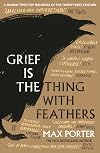
A father and his two sons mourn the loss of their wife and mother, respectively. How is grief even survivable? It’s like a garrulous, wild thing, ripping out viscera, playing with crisp packets, stomping on fingers and eyes, crying out in its guttural native tongue, “Oi, stab it!” Yes, grief is like Ted Hughes’ Crow. An elemental thing. A somewhat friend that comes and lives with you when the balance in your life has been tipped.
Max Porter’s pressingly immediate prose brings Crow show more to life: friend, confidant, baby-sitter, and bad egg. It is a remarkable achievement that something so outside the ordinary can nonetheless be utterly gripping, with a ring of truth.
Highly recommended. show less
Max Porter’s pressingly immediate prose brings Crow show more to life: friend, confidant, baby-sitter, and bad egg. It is a remarkable achievement that something so outside the ordinary can nonetheless be utterly gripping, with a ring of truth.
Highly recommended. show less
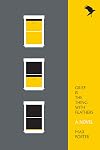
“I lay back, resigned, and wished my wife wasn't dead. I wished I wasn't lying terrified in a giant bird embrace in my hallway.”
“I missed her so much that I wanted to build a hundred-foot memorial to her with my bare hands. I wanted to see her sitting in a vast stone chair in Hyde Park, enjoying her view. Everybody passing could comprehend how much I miss her. How physical my missing is...”
After his wife dies suddenly, a man and his two young sons are plunged into a spiral of pain show more and despair.
The man is working on a biography of the poet, Ted Hughes and at the family's nadir, the father is visited by
Crow, the infamous trickster, that is featured in Hughes work. The bird is here to heal and comfort the grief-stricken.
This is an amazing debut. It is a potent novella, packed with dazzling verse. Despite it's dark themes, it also contains humor and glimmers of hope. One more quote, (I bookmarked a multitude):
“Moving on, as a concept, is for stupid people, because any sensible person knows grief is a long-term project. I refuse to rush. The pain that is thrust upon us let no man slow or speed or fix.” show less
“I missed her so much that I wanted to build a hundred-foot memorial to her with my bare hands. I wanted to see her sitting in a vast stone chair in Hyde Park, enjoying her view. Everybody passing could comprehend how much I miss her. How physical my missing is...”
After his wife dies suddenly, a man and his two young sons are plunged into a spiral of pain show more and despair.
The man is working on a biography of the poet, Ted Hughes and at the family's nadir, the father is visited by
Crow, the infamous trickster, that is featured in Hughes work. The bird is here to heal and comfort the grief-stricken.
This is an amazing debut. It is a potent novella, packed with dazzling verse. Despite it's dark themes, it also contains humor and glimmers of hope. One more quote, (I bookmarked a multitude):
“Moving on, as a concept, is for stupid people, because any sensible person knows grief is a long-term project. I refuse to rush. The pain that is thrust upon us let no man slow or speed or fix.” show less
Lists
Awards


You May Also Like


Associated Authors
Statistics
- Works
- 9
- Also by
- 5
- Members
- 3,387
- Popularity
- #7,528
- Rating
- 3.8
- Reviews
- 153
- ISBNs
- 115
- Languages
- 16
- Favorited
- 3