
Audrey Magee
Author of The Colony
About the Author
Audrey Magee worked for twelve years as a journalist and has written for, among others, The Times, The Irish Times, the Observer and the Guardian. She studied German and French at University College Dublin and journalism at Dublin City University. She lives in Wicklow, with her husband and three show more daughters. the Undertaking is her first novel. show less
Image credit: Audrey Magee [credit: Patrick Redmond]
Works by Audrey Magee
Tagged
Common Knowledge
- Birthdate
- 1966
- Gender
- female
- Education
- University College Dublin
Dublin City University - Occupations
- novelist
journalist - Short biography
- Audrey Magee worked for twelve years as a journalist and has written for, among others, The Times, The Irish Times, the Observer and Guardian. She studied German and French at University College Dublin and journalism at Dublin City University. She lives in Wicklow with her husband and three daughters. The Undertaking is her first novel.
In her 20s and 30s, she travelled extensively, first as a student, living in Germany and Australia, where she taught English; later as a journalist, covering, among many other issues, the war in Bosnia, child labour in Pakistan and Bangladesh, and the impact of Perestroika on Central Asia. She was Ireland Correspondent of The Times for six years, and wrote extensively about the Troubles in Northern Ireland, the subsequent peace process and the chaos caused by the Omagh bomb - Nationality
- Ireland
- Birthplace
- Ireland
- Places of residence
- Wicklow, Ireland
- Associated Place (for map)
- Wicklow, Ireland
Members
Reviews
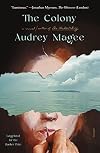
(book #61 from 2022):
The Colony by Audrey Magee
published: 2022
format: 384-page Kindle ebook
acquired: December 14, 2022 read: Dec 15-19, 2022 time reading: 7:19, 1.2 mpp
rating: 5
genre/style: Contemporary Fiction theme: Booker 2022
locations: A small island 10 miles off the coast of Ireland
about the author: Irish novelist, and one time journalist
My Litsy post:
Something about islands and stories. Earlier this year I loved [An Island] by Karen Jennings, and here I was again, smitten by isolation show more and the focus on quirky inexpressive characters against stark elements on a small, isolated island (here Irish). The inexpressive simplicity and implied complexity is compelling in itself somehow. And Magee kept me in a state throughout. This is my 7th from the longlist, and currently my favorite.
---
It's a one-off look at exploitation. An annoying English artist goes to an isolated tiny Irish island during the worst of the Northern Ireland Troubles, to be alone and paint cliffs or whatever else comes to mind. He's very frustrated when a French linguist (of partial Algerian decent) shows up. The linguist is staying awhile, studying the dying Irish language, still spoken by the few islanders. And he certainly doesn't like having an English speaker around corrupting this language. And there are native islanders, tense and partial about the Troubles, who have agreed to help out these thoroughly self-centered and mildly disturbed visitors.
It's really well done. I was fully taken in by the atmosphere and language. And I found myself liking every terrible character a lot... while reading, but not in hindsight. It had me thinking, and meditating, and worried, and left me rethinking it.
2022
https://www.librarything.com/topic/347061#8026747 show less
The Colony by Audrey Magee
published: 2022
format: 384-page Kindle ebook
acquired: December 14, 2022 read: Dec 15-19, 2022 time reading: 7:19, 1.2 mpp
rating: 5
genre/style: Contemporary Fiction theme: Booker 2022
locations: A small island 10 miles off the coast of Ireland
about the author: Irish novelist, and one time journalist
My Litsy post:
Something about islands and stories. Earlier this year I loved [An Island] by Karen Jennings, and here I was again, smitten by isolation show more and the focus on quirky inexpressive characters against stark elements on a small, isolated island (here Irish). The inexpressive simplicity and implied complexity is compelling in itself somehow. And Magee kept me in a state throughout. This is my 7th from the longlist, and currently my favorite.
---
It's a one-off look at exploitation. An annoying English artist goes to an isolated tiny Irish island during the worst of the Northern Ireland Troubles, to be alone and paint cliffs or whatever else comes to mind. He's very frustrated when a French linguist (of partial Algerian decent) shows up. The linguist is staying awhile, studying the dying Irish language, still spoken by the few islanders. And he certainly doesn't like having an English speaker around corrupting this language. And there are native islanders, tense and partial about the Troubles, who have agreed to help out these thoroughly self-centered and mildly disturbed visitors.
It's really well done. I was fully taken in by the atmosphere and language. And I found myself liking every terrible character a lot... while reading, but not in hindsight. It had me thinking, and meditating, and worried, and left me rethinking it.
2022
https://www.librarything.com/topic/347061#8026747 show less
I loved this book just as much as everyone else on LT. It's a beautifully written book with many layers that explores the life of the very few inhabitants on a remote Irish island. A Frenchman comes every summer to study the Irish language and to try to preserve it as it is on this isolated island. And an English artist comes to find inspiration for his landscapes from the dramatic cliffs and ocean views. Of course the two bring the outside world to the island inhabitants, changing and show more influencing them while they themselves are changed as well.
As all of this is happening, the Troubles are also happening, and Magee interrupts her story with short updates on the violence. At first it seems sort of remote from the island life, but as the book progresses you see how deeply everything is connected and that the islanders, even in a remote setting, have feelings and opinions about this as well.
This novel has so many layers to unpack. It's a book that will be well worth rereading and I'm glad I purchased a hardcover copy.
Original publication date: 2022
Author’s nationality: Irish
Original language: English
Length: 376 pages
Rating: 5 stars
Format/where I acquired the book: purchased hardback
Why I read this: LT buzz, Booker long list show less
As all of this is happening, the Troubles are also happening, and Magee interrupts her story with short updates on the violence. At first it seems sort of remote from the island life, but as the book progresses you see how deeply everything is connected and that the islanders, even in a remote setting, have feelings and opinions about this as well.
This novel has so many layers to unpack. It's a book that will be well worth rereading and I'm glad I purchased a hardcover copy.
Original publication date: 2022
Author’s nationality: Irish
Original language: English
Length: 376 pages
Rating: 5 stars
Format/where I acquired the book: purchased hardback
Why I read this: LT buzz, Booker long list show less
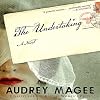
Discontent in Winter
Media: Audio
Read by: Suzanne Tores
You take what you need
And you leave the rest
But they should never
Have taken the very best -
Robbie Robertson from The Night They Drove Old Dixie Down
This is Magee’s debut novel and for a debut novel it’s pretty good.
Essentially an anti-war novel, its change from the standard novel of this sub-genre, is that it is told from the position of the “baddies”, the Germans in WWII.
There are references to the horrors of Naziism throughout, show more and especially at the book’s beginning, but a large part of the novel - certainly the most memorable - takes place in the frozen steppes of Russia in the months leading up to the German army’s inglorious retreat.
I’m not going to give a synopsis of the plot as it’s to be found elsewhere. The main characters, Peter and Katherina are deftly if not deeply drawn. The supporting cast of four German soldiers holds more interest.
These soldiers go from village to village in the frozen Russian snowscape, seeking refuge, and killing and pillaging the locals in the process. Gradually and one by one they become convinced that war is futile. They are starving, covered in lice and suffering more from frostbite than from Russian bullets. And as appears to be the way with soldiers everywhere, this band of brothers show compassion to fellow soldiers while simultaneously being oblivious to the suffering of the villagers whose lives they ruin.
It’s a good read. I had the audio version and have to commend the reader, Suzanne Toren for her ability to handle the many conversations that make up this book. Conversations are so often badly read, especially when the one reader has to handle two genders and different accents.
A good listen. show less
Media: Audio
Read by: Suzanne Tores
You take what you need
And you leave the rest
But they should never
Have taken the very best -
Robbie Robertson from The Night They Drove Old Dixie Down
This is Magee’s debut novel and for a debut novel it’s pretty good.
Essentially an anti-war novel, its change from the standard novel of this sub-genre, is that it is told from the position of the “baddies”, the Germans in WWII.
There are references to the horrors of Naziism throughout, show more and especially at the book’s beginning, but a large part of the novel - certainly the most memorable - takes place in the frozen steppes of Russia in the months leading up to the German army’s inglorious retreat.
I’m not going to give a synopsis of the plot as it’s to be found elsewhere. The main characters, Peter and Katherina are deftly if not deeply drawn. The supporting cast of four German soldiers holds more interest.
These soldiers go from village to village in the frozen Russian snowscape, seeking refuge, and killing and pillaging the locals in the process. Gradually and one by one they become convinced that war is futile. They are starving, covered in lice and suffering more from frostbite than from Russian bullets. And as appears to be the way with soldiers everywhere, this band of brothers show compassion to fellow soldiers while simultaneously being oblivious to the suffering of the villagers whose lives they ruin.
It’s a good read. I had the audio version and have to commend the reader, Suzanne Toren for her ability to handle the many conversations that make up this book. Conversations are so often badly read, especially when the one reader has to handle two genders and different accents.
A good listen. show less
Audrey Magee clearly is a writer who likes to test her readers. This novel begins with the arrival of the English painter James Lloyd, on a remote island off the west coast of Ireland; he wants to stay there for a few months to paint the spectacular light effects on the cliffs. From the start, Lloyd is presented as particularly unsympathetic and sullen, the few dozen Irish residents as closed and living far from civilization. Can it be more cliché? But then Magee intersperses her story with show more short, journalistic reports of terrorist attacks in Northern Ireland (the year is 1979); the connection with the foregoing is not immediately clear, but the repetitive nature of the accounts underlines the brutality of the Northern Irish conflict. Finally, she also brings to the island a French linguist, Jean-Paul Masson, a man who has made it his personal mission to record and preserve the ancient Irish language (Gaelic).
The subsequent interaction goes in different, interconnecting directions: Lloyd and Masson cannot tolerate each other and constantly argue, the young islander James hopes to develop an artist's career through Lloyd and turns out to actually have talent, his mother (Masson's mistress) develops into a kind of faun and presents herself to Lloyd to have herself painted naked, Masson turns out to be traumatized by his childhood as the son of an Algerian woman who was terrorized by her racist French husband, through Masso we also get a history lesson on Gaelic and on the bloody English oppression of the Irish, etc., etc. Gradually, the passages about the terror attacks in Northern Ireland increase, and the islanders also begin to comment on what they hear about that. And more and more the story takes the form of a series of interior monologues by different protagonists, with the narrative point of view jumping back and forth between the first and third person. And finally, there is also quite a bit of excitement and suspense about a mysterious canvas that Lloyd is painting of the islanders themselves.
Just to say: there is quite a lot in Magee's cocktail. But what is she really hinting on? As befits any good writer, the answer is not clear-cut. The most obvious storyline is that of the good and the bad: Lloyd as the gruff and unreliable Englishman, Masson as the savior of the true Irish soul, but, clearly, that is far too simple. Lloyd appears to be struggling with a complex private life and a sense of inferiority as an artist, and Masson turns out to have quite a few fanatical traits that are anything but nice. The Irish islanders also appear to be not just innocent sheep, neither the men nor the women; there is quite a bit of anger in them that expresses itself in very extreme opinions and behavior. It's as if Magee wanted to indicate that there is a terrorist or a fanatic in each of us.
Her ingenious use of style and perspective indicates that she had more in mind. At a certain point the book seems like an exposé about the interweaving of language and politics, about the charged nature of words and actions. And what with that title, ‘colony’? Does that refer to the English colonization of Ireland? To the French colonization of Algeria? To an artists' colony?... I have to say that I'm not quite sure what to think of this novel, because despite the layering and the ingenious stylistic play, there are quite a few weak elements in the book. As you can see, I'm struggling with it and I still haven't figured it out. So perhaps worth a reread. show less
The subsequent interaction goes in different, interconnecting directions: Lloyd and Masson cannot tolerate each other and constantly argue, the young islander James hopes to develop an artist's career through Lloyd and turns out to actually have talent, his mother (Masson's mistress) develops into a kind of faun and presents herself to Lloyd to have herself painted naked, Masson turns out to be traumatized by his childhood as the son of an Algerian woman who was terrorized by her racist French husband, through Masso we also get a history lesson on Gaelic and on the bloody English oppression of the Irish, etc., etc. Gradually, the passages about the terror attacks in Northern Ireland increase, and the islanders also begin to comment on what they hear about that. And more and more the story takes the form of a series of interior monologues by different protagonists, with the narrative point of view jumping back and forth between the first and third person. And finally, there is also quite a bit of excitement and suspense about a mysterious canvas that Lloyd is painting of the islanders themselves.
Just to say: there is quite a lot in Magee's cocktail. But what is she really hinting on? As befits any good writer, the answer is not clear-cut. The most obvious storyline is that of the good and the bad: Lloyd as the gruff and unreliable Englishman, Masson as the savior of the true Irish soul, but, clearly, that is far too simple. Lloyd appears to be struggling with a complex private life and a sense of inferiority as an artist, and Masson turns out to have quite a few fanatical traits that are anything but nice. The Irish islanders also appear to be not just innocent sheep, neither the men nor the women; there is quite a bit of anger in them that expresses itself in very extreme opinions and behavior. It's as if Magee wanted to indicate that there is a terrorist or a fanatic in each of us.
Her ingenious use of style and perspective indicates that she had more in mind. At a certain point the book seems like an exposé about the interweaving of language and politics, about the charged nature of words and actions. And what with that title, ‘colony’? Does that refer to the English colonization of Ireland? To the French colonization of Algeria? To an artists' colony?... I have to say that I'm not quite sure what to think of this novel, because despite the layering and the ingenious stylistic play, there are quite a few weak elements in the book. As you can see, I'm struggling with it and I still haven't figured it out. So perhaps worth a reread. show less
Lists
Awards


You May Also Like


Associated Authors
Statistics
- Works
- 2
- Members
- 800
- Popularity
- #31,871
- Rating
- 4.0
- Reviews
- 57
- ISBNs
- 50
- Languages
- 6
- Favorited
- 1

