
Aminatta Forna
Author of The Memory of Love
About the Author
Works by Aminatta Forna
The Angel of Mexico City 2 copies
The Last Vet 1 copy
Associated Works
New Daughters of Africa: An International Anthology of Writing by Women of African Descent (2019) — Contributor — 116 copies, 1 review
Tagged
Common Knowledge
- Birthdate
- 1964
- Gender
- female
- Education
- University College London|Law
University of California, Berkeley|Harkness Fellow - Occupations
- writer
documentary maker
professor of creative writing - Organizations
- Royal National Theatre|Board Member
Man Booker International Prize|Judge
Bath Spa University - Awards and honors
- Windham–Campbell Literature Prize (2014)
Order of the British Empire (Officer|2017)
Royal Society of Literature (Fellow) - Relationships
- Westcott, Scott (husband)
- Short biography
- Aminatta Forna was born in Scotland, but her family moved to Sierra Leone when she was six months old. Her father, Mohamed Forna, was a physician who became involved in politics. He was imprisoned between 1970 and 1973 and declared an Amnesty Prisoner of Conscience. In 1975, when Aminatta was 11, he was hanged for treason. She later wrote a memoir about her childhood and the conspiracy around her father called [The Devil that Danced on the Water]. She was educated in London and Berkeley, worked for the BBC as a reporter and documentary maker, and published her first book in 2003. She is now a professor and writer.
- Nationality
- Scotland
UK - Birthplace
- Bellshill, Lanarkshire, Scotland, UK
- Places of residence
- Glasgow, Scotland, UK
London, England, UK
Sierra Leone
California, USA - Map Location
- UK
Members
Discussions
April-June Theme Read: War and Regions in Conflict in Reading Globally (February 2024)
The Memory of Love by Aminatta Forna in 75 Books Challenge for 2022 (February 2022)
The Memory of Love by Aminatta Forna in Orange January/July (July 2011)
Reviews
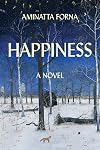
Ghanian psychiatrist Attila is in London to deliver the keynote address at a professional conference. Wildlife researcher Jean is in London to study the urban fox population. A chance meeting on a London bridge develops into a new friendship, and perhaps something more, as the two strangers bond over the search for a missing boy.
I love the community that forms in this urban novel. Jean has developed a network of service workers – hotel doormen, street sweepers, and traffic wardens among show more them – who band together in the common cause of searching for the lost boy. The actions and interactions of these characters challenged me to pay closer attention to my surroundings and the people I encounter on a daily basis.
I am intrigued by the psychological aspects of Forna’s writing. As in The Memory of Love, one of Forna’s main characters is a psychiatrist specializing in post-traumatic stress in the aftermath of war. Forna acknowledges the influence of Boris Cyrulnik’s Resilience in shaping her story. I would love to explore this novel with a reading group. I think it could spark a great conversation about resilience and overcoming past trauma. show less
I love the community that forms in this urban novel. Jean has developed a network of service workers – hotel doormen, street sweepers, and traffic wardens among show more them – who band together in the common cause of searching for the lost boy. The actions and interactions of these characters challenged me to pay closer attention to my surroundings and the people I encounter on a daily basis.
I am intrigued by the psychological aspects of Forna’s writing. As in The Memory of Love, one of Forna’s main characters is a psychiatrist specializing in post-traumatic stress in the aftermath of war. Forna acknowledges the influence of Boris Cyrulnik’s Resilience in shaping her story. I would love to explore this novel with a reading group. I think it could spark a great conversation about resilience and overcoming past trauma. show less
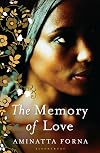
This enchanting novel is set in Freetown, the capital of Sierra Leone, at the end of the country's civil war that lasted from 1991-2002. Adrian Lockheart, a British psychologist who has left his family to pursue a more personally fulfilling career, is at the bedside of Elias Cole, a former university professor and dean who is nearing the end of his life. Adrian encourages Elias to share his story with him on weekly therapeutic visits , and Cole tells him about his career, including his show more friendship with Julius Kamara, another university professor, and his young wife Saffia, who Julius sees for the first time at a faculty gathering just before the successful Apollo 11 moon landing in 1969. He is immediately entranced by her, and spends much of his spare time thinking of ways to get closer to her.
The story of Elias and Saffia is interwined with Adrian's experiences in post-war Sierra Leone, along with his friendship with Kai, a talented young surgeon who has used Adrian's living quarters as a place to crash prior to the psychologist's arrival. The men become close friends, although Kai is clearly scarred by his experiences during the recent civil war, which he is unable to share with his friend.
Adrian's primary interest is in diagnosing and treating victims of post-traumatic stress disorder (PTSD), and he cares for several hospitalized patients who appear to suffer from this problem due to the civil war. He attempts to get several of them to talk about their experiences, but few of these poor souls are willing or able to share their stories or accede to his treatment plans. His colleagues and Kai are respectful of his work, but they tell him that his methods have little chance to make any impact on the lives of his patients, due to the country's lack of resources and the different cultural beliefs about mental health.
Elias is the only person who will talk freely about the past with Adrian, and through the life of the dying man and his relationships with Julius and Saffia he learns about the country's postcolonial history, including the devastating civil war that destroyed the fabric of the country and the will of thousands of Sierra Leoneans.
Adrian falls in love with a local woman, whose ties to the other major characters provide a tension to and deeper understanding of their stories. As their relationship deepens, Adrian is forced to decide whether to stay in Sierra Leone, where he is loved and believes he has much to offer, while Kai agonizes over his long held desire to move to the United States where he can practice medicine and exorcise the internal demons that plague his dreams and affect his work.
The Memory of Love is a stunning and deeply moving novel about love in its different forms, and how it can affect and be affected by greed, selfishness, personal ambition and war. The narrative is superb, and I found myself emotionally tied to the lives of the characters as much as any other book I've read in the past decade. show less
The story of Elias and Saffia is interwined with Adrian's experiences in post-war Sierra Leone, along with his friendship with Kai, a talented young surgeon who has used Adrian's living quarters as a place to crash prior to the psychologist's arrival. The men become close friends, although Kai is clearly scarred by his experiences during the recent civil war, which he is unable to share with his friend.
Adrian's primary interest is in diagnosing and treating victims of post-traumatic stress disorder (PTSD), and he cares for several hospitalized patients who appear to suffer from this problem due to the civil war. He attempts to get several of them to talk about their experiences, but few of these poor souls are willing or able to share their stories or accede to his treatment plans. His colleagues and Kai are respectful of his work, but they tell him that his methods have little chance to make any impact on the lives of his patients, due to the country's lack of resources and the different cultural beliefs about mental health.
Elias is the only person who will talk freely about the past with Adrian, and through the life of the dying man and his relationships with Julius and Saffia he learns about the country's postcolonial history, including the devastating civil war that destroyed the fabric of the country and the will of thousands of Sierra Leoneans.
Adrian falls in love with a local woman, whose ties to the other major characters provide a tension to and deeper understanding of their stories. As their relationship deepens, Adrian is forced to decide whether to stay in Sierra Leone, where he is loved and believes he has much to offer, while Kai agonizes over his long held desire to move to the United States where he can practice medicine and exorcise the internal demons that plague his dreams and affect his work.
The Memory of Love is a stunning and deeply moving novel about love in its different forms, and how it can affect and be affected by greed, selfishness, personal ambition and war. The narrative is superb, and I found myself emotionally tied to the lives of the characters as much as any other book I've read in the past decade. show less
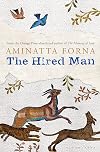
With a beautiful cover of a mosaic of prancing animals, a byline putting the spotlight on the author's previous book The Memory of Love, ultra-feminine -a ending names with a first name evoking a diminuitive, an open-to-interpretation title and a blurb describing a woman and her two children moving to an old house in an idyllic, picturesque small town helped by a bachelor neighbour, you might assume the novel is some frothy romance with inconsequential obstacles. And you would be completely show more wrong.
Set in small town in Croatia, the author intertwines the protagonist's past and present to explore competing and complementary themes which are magnified in a civil war. (Is this a spoiler? I was completely ignorant of Croatian history, but not knowing did not detract from my enjoyment of the story yet did unnecessarily compound the tension and mystery.) The breakdown of society and its subsequent resurrection, there are national changes, but what happens to the everyday people? Your neighbours, who betrayed other neighbours, who looted those abandoned homes, when it is all over, they are still there, they are still your neighbours, what do you do now that things are back to "normal"?, do you forgive?, or do you just live with the knowledge that they had and can turn against you anytime?
Nevertheless, time dulls, and years later, only a few remembers and the slow influx of outside influence/ignorance infiltrates and dilutes the collective memory. The new ones disregard the past - not intentionally, but they also do not try very hard to unearth the dark history of what they view as an untouched-by-mass-tourism haven - and mistake horrors for beauty, the most notable example the field of wildflowers, unaware of undetonated mines underneath.
The author expertly paints extends this dichotomy of surface appearances versus underlying truth, in renovating houses and building characters. Most are stock characters, serving the purpose of this being Duro's story, and probably also due to this being his story, with the end result of him being the most drawn out character. Duro's outward friendliness to the English family masks his secret punitive agendas, the final climax of his long-con was satisfying and the slow build of his subtle manipulations had me rereading some of his underhandedness in admiration. My other favourite character is Anka, who is almost too saintly but idealising your first love is probably inevitable and allows the novel to upend the usual first-love-is-the-be-all-end-all of all other potential relationships which pleased and saddened me simultaneously.
Despite all these heavy themes, the author manages to keep the story floating. Her almost casual tone, peppered with occasional jarring dark imagery, slowly builds in the reader's subconscious, until it is relentless and amplified and you end with a very different and dark book to the renovating diary you started with. Recommended for fifteen-years and up. show less
Set in small town in Croatia, the author intertwines the protagonist's past and present to explore competing and complementary themes which are magnified in a civil war. (Is this a spoiler? I was completely ignorant of Croatian history, but not knowing did not detract from my enjoyment of the story yet did unnecessarily compound the tension and mystery.) The breakdown of society and its subsequent resurrection, there are national changes, but what happens to the everyday people? Your neighbours, who betrayed other neighbours, who looted those abandoned homes, when it is all over, they are still there, they are still your neighbours, what do you do now that things are back to "normal"?, do you forgive?, or do you just live with the knowledge that they had and can turn against you anytime?
Nevertheless, time dulls, and years later, only a few remembers and the slow influx of outside influence/ignorance infiltrates and dilutes the collective memory. The new ones disregard the past - not intentionally, but they also do not try very hard to unearth the dark history of what they view as an untouched-by-mass-tourism haven - and mistake horrors for beauty, the most notable example the field of wildflowers, unaware of undetonated mines underneath.
The author expertly paints extends this dichotomy of surface appearances versus underlying truth, in renovating houses and building characters. Most are stock characters, serving the purpose of this being Duro's story, and probably also due to this being his story, with the end result of him being the most drawn out character. Duro's outward friendliness to the English family masks his secret punitive agendas, the final climax of his long-con was satisfying and the slow build of his subtle manipulations had me rereading some of his underhandedness in admiration. My other favourite character is Anka, who is almost too saintly but idealising your first love is probably inevitable and allows the novel to upend the usual first-love-is-the-be-all-end-all of all other potential relationships which pleased and saddened me simultaneously.
Despite all these heavy themes, the author manages to keep the story floating. Her almost casual tone, peppered with occasional jarring dark imagery, slowly builds in the reader's subconscious, until it is relentless and amplified and you end with a very different and dark book to the renovating diary you started with. Recommended for fifteen-years and up. show less
If I had to narrow my impressions of this book down to two words, they would be "atmospheric" and "disturbing." Set in a small town in the former Yugoslavia in 2007, The Hired Man focuses a local man, Duro, and ties his memories of the past to events in the present. Duro is a rather solitary man who spends most of his time with his dogs, either in the small home he converted from a pig house or out hunting--although he does drop in to the local bar on occasion. One day he is surprised to see show more a car and some activity at a place called simply "the blue house." He is surprised to learn that the house has been bought by an Englishwoman, Laura, who is moving in with her teenaged son and daughter. Duro offers his help in fixing up the place, and it soon becomes clear that this is a house with which he is quite familiar. For example, when Grace, Laura's daughter, cracks a chunk of whitewash off an outer wall and uncovers what turns out to be a beautiful mosaic bird, Duro's memories begin to flood back: his childhood, his friendships, his lost love, the war and all the pain, tragedy, betrayal, and inhumanity that came along with it.
Forna skillfully weaves the story of the past into that of the present, what can never be forgotten into what can never be spoken of. Laura and her children provide a contrast to the citizens of Gost. Confident and privileged, Laura feels she has settled into a pastoral fairyland; she seems oblivious as to how out of place she really is among these taciturn people who keep to themselves and resent--or perhaps fear?--the arrival of outsiders. While she assures Grace that Gost was untouched by the not-so-distant ethnic war, Duro's story gradually reveals that nothing could be further from the truth.
Back to my two words: "atmospheric" and "disturbing." It's hard to describe the effect of this novel; perhaps I should put those words together and say that it is permeated by a disturbing atmosphere. Forna made it easy to feel what it must have been like in Gost: feeling that you were constantly being watched, that you had to be careful of what you said and to whom, that there were secrets behind those closed doors and generally unsmiling faces, that nothing and no one could be counted on, that life was boringly predictable and yet suddenly and dangerously unpredictable. In short, while I read, I felt rather tightly wound--which is exactly how I imagine the citizens of Gost lived each moment. While there were a few places where the story bogged down a bit, or where the relation of past events was somewhat confusing, The Hired Man is a powerful novel that explores the lingering consequences of war--in particular, an ethnic war between neighbors. show less
Forna skillfully weaves the story of the past into that of the present, what can never be forgotten into what can never be spoken of. Laura and her children provide a contrast to the citizens of Gost. Confident and privileged, Laura feels she has settled into a pastoral fairyland; she seems oblivious as to how out of place she really is among these taciturn people who keep to themselves and resent--or perhaps fear?--the arrival of outsiders. While she assures Grace that Gost was untouched by the not-so-distant ethnic war, Duro's story gradually reveals that nothing could be further from the truth.
Back to my two words: "atmospheric" and "disturbing." It's hard to describe the effect of this novel; perhaps I should put those words together and say that it is permeated by a disturbing atmosphere. Forna made it easy to feel what it must have been like in Gost: feeling that you were constantly being watched, that you had to be careful of what you said and to whom, that there were secrets behind those closed doors and generally unsmiling faces, that nothing and no one could be counted on, that life was boringly predictable and yet suddenly and dangerously unpredictable. In short, while I read, I felt rather tightly wound--which is exactly how I imagine the citizens of Gost lived each moment. While there were a few places where the story bogged down a bit, or where the relation of past events was somewhat confusing, The Hired Man is a powerful novel that explores the lingering consequences of war--in particular, an ethnic war between neighbors. show less
Lists
Awards


You May Also Like


Associated Authors
Statistics
- Works
- 11
- Also by
- 7
- Members
- 2,265
- Popularity
- #11,335
- Rating
- 4.0
- Reviews
- 154
- ISBNs
- 106
- Languages
- 11
- Favorited
- 9

