
Andrea Levy (1956–2019)
Author of Small Island
About the Author
Andrea Levy was born in London, England in 1956 to Jamaican parents of mixed descent. She studied textile design and became a costume assistant. She took a creative-writing class and started writing in her 30s. Her first novel, Every Light in the House Burnin', was published in 1994. Her novels show more chronicled the experience of Jamaican immigrants in Britain. Her other works included Fruit of the Lemon, Six Stories and an Essay, and The Long Song. Small Island won the Orange Prize for fiction and the Whitbread Award for the book of the year. She died from cancer on February 14, 2019 at the age of 62. (Bowker Author Biography) show less
Image credit: Andrea Levy in 2010.
Works by Andrea Levy
Rosh ha shanah 🎥 3 copies
Small Island [abridged CD] 1 copy
Associated Works
New Daughters of Africa: An International Anthology of Writing by Women of African Descent (2019) — Contributor — 115 copies, 1 review
Stories from Blue Latitudes: Caribbean Women Writers at Home and Abroad (2006) — Contributor — 32 copies
Tagged
Common Knowledge
- Legal name
- Levy, Andrea Doreen
- Other names
- Levy, Andrea
- Birthdate
- 1956-03-07
- Date of death
- 2019-02-14
- Gender
- female
- Education
- Highbury Hill Grammar School
- Occupations
- novelist
costume designer - Awards and honors
- Orange Prize for Fiction
Whitbread Award
Commonwealth Writers' Prize
Man Booker Prize Shortlist - Agent
- David Grossman (David Grossman Literary Agency)
- Relationships
- Fell, Alison (creative writing tutor)
Morpeth, Jane (editor) - Cause of death
- breast cancer
- Nationality
- England
UK - Birthplace
- London, Middlesex, England, UK
- Places of residence
- Highbury, London, Middlesex, England, UK
- Place of death
- Londen, Engeland, Groot-Brittannië
- Map Location
- England, UK
Members
Discussions
BRITISH AUTHOR CHALLENGE SEPTEMBER 2015 - LEVY & RUSHDIE in 75 Books Challenge for 2015 (October 2015)
The Long Song by Andrea Levy in Orange January/July (November 2011)
Reviews
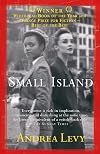
'Small Island' is set in dingy 1948 London, a time when landlords were allowed to deter undesirable tenants by putting up a sign that read, “No Irish, no coloureds, no dogs”, and frequently did so which was a shock to many Commonwealth immigrants who had helped Britain win the war and been brought up to believe that they would be welcomed into the 'Mother Country' by its grateful inhabitants.
The story is told by four people, two women and two men, two Jamaican and two English. Hortense show more Roberts, honey-skinned and impeccably white-gloved, has attended a private school that made her familiar with Wordsworth, Shakespeare and the baking of fairy cakes. Hortense is married to Gilbert, a man she doesn’t love but who was her means of getting to England. Gilbert had left Jamaica to serve as a member of the West Indian RAF volunteers in England during WWII but on to his return his homeland soon realised that he would now never be content there on his 'small island' and so joined the 'Windrush' exodus to Britain dreaming of a better life.
The reality however, was a filthy rented room in Queenie Bligh's decaying house in Earls Court. In peacetime, Gilbert soon comes to realise how much his uniform had shielded him from the worst excesses of racism. As a black civilian, all that is on offer to him are the worst, lowest-paid jobs and the meanest lodgings. When haughty Hortense joins him in London she is horrified by what she sees. She is baffled when Queenie, her white London landlady, says, “I’m not worried about what busybodies say. I don’t mind being seen in the street with you.” because it is Queenie not her who is badly educated and “dressed in a scruffy housecoat with no brooch or jewel, no glove or even a pleasant hat to lift the look a little”.
Queenie, like Hortense, married not out of love but a need to escape, in her case from her family’s farm in the Midlands. In her teens, she was rescued by an indulgent aunt and taken to live in London, but when her aunt died, she was faced with choice of the drudgery of her birthplace or marry Bernard, a staid bank clerk with some questionable personal habits. Her marriage is cold and dull so when Bernard joined up she wasn't exactly heartbroken. Bernard served in the RAF and was posted to India as groundcrew but didn't reappear immediately when the war was over. His eventual return home with his insecurities intact throws Queenie's new life into turmoil.
This novel could easily have become a tragic litany of ingrained prejudice and stupidity, but for Levy’s gentle, mocking humour, mainly at the expense of Gilbert and Bernard, who are constantly upstaged by their wilful wives. This humour makes this book immensely readable. The story is entrancing and disturbing at the same time because it's sadly loosely based on fact. I thoroughly enjoyed it and it deserves all the praise that it garnered. show less
The story is told by four people, two women and two men, two Jamaican and two English. Hortense show more Roberts, honey-skinned and impeccably white-gloved, has attended a private school that made her familiar with Wordsworth, Shakespeare and the baking of fairy cakes. Hortense is married to Gilbert, a man she doesn’t love but who was her means of getting to England. Gilbert had left Jamaica to serve as a member of the West Indian RAF volunteers in England during WWII but on to his return his homeland soon realised that he would now never be content there on his 'small island' and so joined the 'Windrush' exodus to Britain dreaming of a better life.
The reality however, was a filthy rented room in Queenie Bligh's decaying house in Earls Court. In peacetime, Gilbert soon comes to realise how much his uniform had shielded him from the worst excesses of racism. As a black civilian, all that is on offer to him are the worst, lowest-paid jobs and the meanest lodgings. When haughty Hortense joins him in London she is horrified by what she sees. She is baffled when Queenie, her white London landlady, says, “I’m not worried about what busybodies say. I don’t mind being seen in the street with you.” because it is Queenie not her who is badly educated and “dressed in a scruffy housecoat with no brooch or jewel, no glove or even a pleasant hat to lift the look a little”.
Queenie, like Hortense, married not out of love but a need to escape, in her case from her family’s farm in the Midlands. In her teens, she was rescued by an indulgent aunt and taken to live in London, but when her aunt died, she was faced with choice of the drudgery of her birthplace or marry Bernard, a staid bank clerk with some questionable personal habits. Her marriage is cold and dull so when Bernard joined up she wasn't exactly heartbroken. Bernard served in the RAF and was posted to India as groundcrew but didn't reappear immediately when the war was over. His eventual return home with his insecurities intact throws Queenie's new life into turmoil.
This novel could easily have become a tragic litany of ingrained prejudice and stupidity, but for Levy’s gentle, mocking humour, mainly at the expense of Gilbert and Bernard, who are constantly upstaged by their wilful wives. This humour makes this book immensely readable. The story is entrancing and disturbing at the same time because it's sadly loosely based on fact. I thoroughly enjoyed it and it deserves all the praise that it garnered. show less

"There are some words once spoken split the world in two. Before you say them and after.” (497)
So it is that the experience of WWII has split the world for the characters in Andrea Levy’s Small Island. Gilbert and Hortense Joseph, and Bernard and Queenie Bligh, alternately narrate the story by chapter. For them, there is only “Before” (the war) and 1948.
Jamaican Gilbert Joseph is an honest and ambitious young man who volunteers with the RAF during WWII to fight for his “Mother show more Country.” England, he knows, has opportunities to offer that his small island cannot; and in 1948, he dreams to emigrate. Hortense Roberts, a haughty, young school teacher also dreams of a better life in England. Gilbert becomes her ticket off of her native island, and they enter into a marriage of convenience. In England, Queenie Bligh, an compassionate and liberal-minded woman whose husband, Bernard, has not yet returned from war, agrees to board the Josephs. But the reality of their new life is far removed from their dream. Their one-room accommodation is a hovel; and England, far from a land of opportunity, is a nation struggling to recover from the ravages of war. But most humiliating for Gilbert and Hortense is the hateful prejudice which blindsides them, and the incomprehensible reality that they are not welcome in their esteemed “Mother Country.” When Bernard Bligh, a timid, bigoted bank clerk, returns home from the war, what had been an untenable situation becomes unlivable.
“And at that moment I longed to be once more in Jamaica. I yearned for home as a drunk man for whiskey. For only there could I be sure that someone looking on my face for the first time would regard it without reaction. No gapes, no gawps, no cussing, no looking quickly away as if seeing something unsavoury. Just a meeting as unremarkable as passing your mummy in the kitchen. What a thing was this to wish for. That a person regarding me should think nothing. What a forlorn desire to seek indifference.” (315)
Small Island is beautifully written and hauntingly real. Levy develops a cast of unforgettable characters who navigate empire, prejudice, war, and love in an unforgettable story. A must read! show less
So it is that the experience of WWII has split the world for the characters in Andrea Levy’s Small Island. Gilbert and Hortense Joseph, and Bernard and Queenie Bligh, alternately narrate the story by chapter. For them, there is only “Before” (the war) and 1948.
Jamaican Gilbert Joseph is an honest and ambitious young man who volunteers with the RAF during WWII to fight for his “Mother show more Country.” England, he knows, has opportunities to offer that his small island cannot; and in 1948, he dreams to emigrate. Hortense Roberts, a haughty, young school teacher also dreams of a better life in England. Gilbert becomes her ticket off of her native island, and they enter into a marriage of convenience. In England, Queenie Bligh, an compassionate and liberal-minded woman whose husband, Bernard, has not yet returned from war, agrees to board the Josephs. But the reality of their new life is far removed from their dream. Their one-room accommodation is a hovel; and England, far from a land of opportunity, is a nation struggling to recover from the ravages of war. But most humiliating for Gilbert and Hortense is the hateful prejudice which blindsides them, and the incomprehensible reality that they are not welcome in their esteemed “Mother Country.” When Bernard Bligh, a timid, bigoted bank clerk, returns home from the war, what had been an untenable situation becomes unlivable.
“And at that moment I longed to be once more in Jamaica. I yearned for home as a drunk man for whiskey. For only there could I be sure that someone looking on my face for the first time would regard it without reaction. No gapes, no gawps, no cussing, no looking quickly away as if seeing something unsavoury. Just a meeting as unremarkable as passing your mummy in the kitchen. What a thing was this to wish for. That a person regarding me should think nothing. What a forlorn desire to seek indifference.” (315)
Small Island is beautifully written and hauntingly real. Levy develops a cast of unforgettable characters who navigate empire, prejudice, war, and love in an unforgettable story. A must read! show less
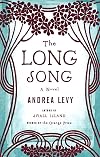
The best book I've read so far this year. Andrea Levy tells the story of the last years of Jamaican slavery and the first years of manumission with a piercing humor, sometimes gentle and humane and sometimes appropriately less so.
The story is framed by a successful Jamaican printer who encourages his mother, July, to write down the story of her life, largely because she is distracting him by constantly trying to tell it to him. Mostly she tells the story in the third person but periodically show more the novel returns to the first person, present tense -- the time she is writing it many years later. It begins with July's conception in the rape of her mother by the overseer. And the continuous narrative ends with an event even more cold hearted and brutal.
In between, it tells the story of July, a sly, witty slave who becomes a house slave and, after manumission, continues on as a house servant.
It is hard for me to capture just how compelling, well written, beautifully imagined, funny, and tragic the book is. So you should read it for yourself. show less
The story is framed by a successful Jamaican printer who encourages his mother, July, to write down the story of her life, largely because she is distracting him by constantly trying to tell it to him. Mostly she tells the story in the third person but periodically show more the novel returns to the first person, present tense -- the time she is writing it many years later. It begins with July's conception in the rape of her mother by the overseer. And the continuous narrative ends with an event even more cold hearted and brutal.
In between, it tells the story of July, a sly, witty slave who becomes a house slave and, after manumission, continues on as a house servant.
It is hard for me to capture just how compelling, well written, beautifully imagined, funny, and tragic the book is. So you should read it for yourself. show less

I read this book when it first came out and just reread it with my Seminar in Historical Fiction students. I'm really happy that I chose it to close out the course.
Levy tells her tale through as somewhat complex structure. She uses four narrators: Queenie, a white working class British woman; Bernard, her ultraconservative husband; Gilbert, a Jamaican who served in the RAF during World War II; and Hortense, Gilbert's wife, a proud woman who believes her education will get her anywhere. Added show more to this, Levy gives us two timeframes, 1948 (present day) and "Before," which ranges from 1924 to 1948. In addition, the characters move among many locations, including London, Jamaica, Hertfordshire, India, France, and Brighton. If this sounds confusing, well, surprisingly, it isn't.
All of these characters live on dreams--hopes to better their lives. In the prologue, a seven year-old Queenie visits the 1924 British Exhibition in Wembley and leaves convinced that she has been "in Africa." Queenie dreams of escaping her father's pig farm, of becoming a lady, of living a more comfortable life in London, of motherhood. But as it happens, the road to that dream takes her to marriage with a "solid" but dispassionate man--Bernard, a bank clerk. Hortense is convinced from an early age that she will go to England and live in a big house with doorbell that goes ding-a-ling--and that she will marry her handsome playboy cousin, Michael Roberts. All his life, Gilbert Joseph has been told that Jamaicans are British subjects, and he believes that if he can just get to England, opportunities will open wide. What better way than to fight for the Mother Country? And Bernard--poor Bernard. He doesn't really know how to dream, so his dream is the dream of the British Empire: British superiority, a stiff upper lip, living your life as others think you should. For him, the war is becomes a real game-changer.
The characters' lives become complicated and intertwined when Gilbert and Hortense marry, emigrate to England with high expectations (Gilbert first, Hortense several months later) and rent a room in Queenie's house. In time, they learn a lot about the way of the world--particularly the English world--and even more about themselves.
I don't want to give up any more particulars of plot, so let me just say that this is a lovely book, finely written and imagined, with more than one meaningful message for us all. show less
Levy tells her tale through as somewhat complex structure. She uses four narrators: Queenie, a white working class British woman; Bernard, her ultraconservative husband; Gilbert, a Jamaican who served in the RAF during World War II; and Hortense, Gilbert's wife, a proud woman who believes her education will get her anywhere. Added show more to this, Levy gives us two timeframes, 1948 (present day) and "Before," which ranges from 1924 to 1948. In addition, the characters move among many locations, including London, Jamaica, Hertfordshire, India, France, and Brighton. If this sounds confusing, well, surprisingly, it isn't.
All of these characters live on dreams--hopes to better their lives. In the prologue, a seven year-old Queenie visits the 1924 British Exhibition in Wembley and leaves convinced that she has been "in Africa." Queenie dreams of escaping her father's pig farm, of becoming a lady, of living a more comfortable life in London, of motherhood. But as it happens, the road to that dream takes her to marriage with a "solid" but dispassionate man--Bernard, a bank clerk. Hortense is convinced from an early age that she will go to England and live in a big house with doorbell that goes ding-a-ling--and that she will marry her handsome playboy cousin, Michael Roberts. All his life, Gilbert Joseph has been told that Jamaicans are British subjects, and he believes that if he can just get to England, opportunities will open wide. What better way than to fight for the Mother Country? And Bernard--poor Bernard. He doesn't really know how to dream, so his dream is the dream of the British Empire: British superiority, a stiff upper lip, living your life as others think you should. For him, the war is becomes a real game-changer.
The characters' lives become complicated and intertwined when Gilbert and Hortense marry, emigrate to England with high expectations (Gilbert first, Hortense several months later) and rent a room in Queenie's house. In time, they learn a lot about the way of the world--particularly the English world--and even more about themselves.
I don't want to give up any more particulars of plot, so let me just say that this is a lovely book, finely written and imagined, with more than one meaningful message for us all. show less
Lists
. (1)
Women in War (1)
Big Jubilee List (1)
Female Author (1)
Latin America (1)
Carole's List (1)
A Novel Cure (1)
Black Authors (1)
2000s decade (1)
Booker Prize (1)
To Read (1)
Awards


You May Also Like


Associated Authors
Statistics
- Works
- 13
- Also by
- 3
- Members
- 6,489
- Popularity
- #3,786
- Rating
- 3.8
- Reviews
- 250
- ISBNs
- 111
- Languages
- 13
- Favorited
- 16


