

Monica Ali
Author of Brick Lane
About the Author
Monica Ali was born October 20, 1967. She is a British writer of Bangladeshi origin. She is the author of Brick Lane, her debut novel, which was shortlisted for the Man Booker Prize for Fiction in 2003. (Bowker Author Biography)
Image credit: Monica Ali Photo: Robin Matthews
Works by Monica Ali
Associated Works
Tagged
Common Knowledge
- Birthdate
- 1967-10-20
- Gender
- female
- Education
- Bolton School
University of Oxford (Wadham College) - Occupations
- writer
novelist - Awards and honors
- British Book Award (2003 | Newcomer of the Year | Literary Fiction Award)
Guardian First Book Award (2003)
WH Smith People's Choice Award (2003)
Granta's Best of Young British Novelists (2003) - Agent
- Nicole Aragi
- Nationality
- Bangladesh
UK - Birthplace
- Dhaka, Bangladesh
- Places of residence
- Bolton, England, UK
London, England, UK - Map Location
- UK
Members
Discussions
British Author Challenge October 2023: Monica Ali & Dennis Wheatley in 75 Books Challenge for 2023 (November 2023)
Reviews

Remarkably good. Just when you thought that writers had wrung the last material out complicated-yet-somehow-tedious intercontinental, post-imperial emigration stories, you pick up something like "Brick Lane" and get reminded how vast and rich the space between cultures really is, and the near-heroic things that humans are capable of doing in order to reach across it. "Brick Lane" to its unending credit, seems to have been briefed on this sort of narrative's own clichés and doesn't hesitate show more to challenge them. Chamu, the educated-stupid patriarch of the family described here, can recite the traps and complexities of the emigrant's dilemma, but it doesn't help him one bit. In fact, many of this novel's characters, including the young, idealistic Karim, aren't shy about articulating the cultural pathologies that make their lives difficult, but, in the final analysis, "Brick Lane" is superbly written novel about doing, not speaking or writing. It's no coincidence, I think, that it's an English-language novel whose main character doesn't learn English until its last hundred pages or so. The author seems much more interested in the nuts-and-bolts of Nazneen's survival than any commentaries that might be made about it. Being set, variously, in the slums and sweatshops of Dhaka a rough-and-tumble London council estate, the novel presents a picture of cultural assimilation and at-all-costs survival at ground zero.
Which isn't to say that it's not a joy to read. Nazneen's memories of her Bangladeshi village are as cool and soothing as a wet cloth, and her descriptions of her new British neighbors are insightful and funny. In Chamu, insufferable, unseeing, hypocritical, and too proud, Ali's got something of a world-class villain, if she didn't take her time to make it clear to the reader that he's much more lost, confused and -- at times -- sympathetic than he would like to seem. The ill-fitting love that grows between Chamu and Nazneen toward the end of the novel might rank as one of the twenty-first centuries most realistic, and most painful, romances. Ali's writing is both spry and marvelously complex throughout, and, while its action takes place in settings that are tightly constrained by poverty and stifling tradition, it also feels wonderfully open and ambitious. The book addresses money and class and religion and contemporary politics fearlessly, and the author never seems to miss a step. Most importantly, perhaps, its characters are utterly indelible. Ali's descriptions of Chamu's pretensions at being open-minded, Nazneen's courage and her self-doubt, and both her daughters' willingness to please and their anger are as expertly described as the family's sociological predicaments, and, to be honest, much more difficult for a writer to portray effectively. Yet Ali doesn't seem to break a sweat. This one is absolutely marvelous, a novel that whose grand thematic arcs are executed flawlessly and whose tiny interactions rings true. In the author's hands, these unremarkable, if hard-fought lives, take on an epic significance, and their stories take on tremendous emotional resonance. Even if you think that you're done with this sort of book, this one is well worth your time. Just terrific. show less
Which isn't to say that it's not a joy to read. Nazneen's memories of her Bangladeshi village are as cool and soothing as a wet cloth, and her descriptions of her new British neighbors are insightful and funny. In Chamu, insufferable, unseeing, hypocritical, and too proud, Ali's got something of a world-class villain, if she didn't take her time to make it clear to the reader that he's much more lost, confused and -- at times -- sympathetic than he would like to seem. The ill-fitting love that grows between Chamu and Nazneen toward the end of the novel might rank as one of the twenty-first centuries most realistic, and most painful, romances. Ali's writing is both spry and marvelously complex throughout, and, while its action takes place in settings that are tightly constrained by poverty and stifling tradition, it also feels wonderfully open and ambitious. The book addresses money and class and religion and contemporary politics fearlessly, and the author never seems to miss a step. Most importantly, perhaps, its characters are utterly indelible. Ali's descriptions of Chamu's pretensions at being open-minded, Nazneen's courage and her self-doubt, and both her daughters' willingness to please and their anger are as expertly described as the family's sociological predicaments, and, to be honest, much more difficult for a writer to portray effectively. Yet Ali doesn't seem to break a sweat. This one is absolutely marvelous, a novel that whose grand thematic arcs are executed flawlessly and whose tiny interactions rings true. In the author's hands, these unremarkable, if hard-fought lives, take on an epic significance, and their stories take on tremendous emotional resonance. Even if you think that you're done with this sort of book, this one is well worth your time. Just terrific. show less
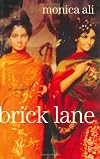
Brick Lane is not a novel about colonialism per se, but it the situation it portrays arises directly from the colonial rule of Great Britain over what would become the nation of Bangladesh.
Nazeen comes to London in 1985 as an eighteen year old bride, married to her father’s choice of husband. Chanu, her much older groom, has lived in London for many years. When he came to London he believed he would have every opportunity to be a success. Years of mediocrity wear on him and he becomes a show more disappointed man. It’s hard to tell if Chanu ever really had the potential to succeed even if Great Britain had welcomed Bangladeshis with open arms, which it did not.
Nazeen tries to be a good wife to the man her father chose. Isolated, with few friends and discouraged from learning English, she chafes in her role. Letters from her sister in Dhaka detail the horrors faced by women who diverge from established norm, contrast with Nazeen’s position of relative security. How can Nazaan rail against her benevolent oppressor, who is neither deliberately cruel, nor violent? Brick Lane is her story, the quite, slow tale of the changes that bring her to make choices, for herself and her children.
Brick Lane is a well written book, often engrossing, sometimes beautiful. It touches on many contemporary issues such as the immigrant experience, women’s rights and the perception of Islam with clarity and compassion. While this will never be one of my favorite books, I’m glad I read it. show less
Nazeen comes to London in 1985 as an eighteen year old bride, married to her father’s choice of husband. Chanu, her much older groom, has lived in London for many years. When he came to London he believed he would have every opportunity to be a success. Years of mediocrity wear on him and he becomes a show more disappointed man. It’s hard to tell if Chanu ever really had the potential to succeed even if Great Britain had welcomed Bangladeshis with open arms, which it did not.
Nazeen tries to be a good wife to the man her father chose. Isolated, with few friends and discouraged from learning English, she chafes in her role. Letters from her sister in Dhaka detail the horrors faced by women who diverge from established norm, contrast with Nazeen’s position of relative security. How can Nazaan rail against her benevolent oppressor, who is neither deliberately cruel, nor violent? Brick Lane is her story, the quite, slow tale of the changes that bring her to make choices, for herself and her children.
Brick Lane is a well written book, often engrossing, sometimes beautiful. It touches on many contemporary issues such as the immigrant experience, women’s rights and the perception of Islam with clarity and compassion. While this will never be one of my favorite books, I’m glad I read it. show less

This novel begins with a dinner to introduce Yasmin's family to the mother of Joe, her fiancé, then expands to look at the two families and Yasmin and Joe's relationship. Yasmin grew up with the story of her parents's love marriage, with her mother's family being wealthy and her father a menial worker who didn't graduate high school until his mid-twenties. He's now a respected doctor living in a quiet part of London, his wife occupies herself with cooking and bargain-hunting. But the show more details of their love match were never made clear and as Yasmin worries about her own love match, as her family begins to shatter, she wants the whole story. And Joe is seeing a therapist, who is pushing him in a direction he doesn't want to go; looking at his relationship with his (in)famous well-to-do mother. As family issues consume their thoughts and time, as their careers as doctors put another pressure on their emotions and their time, will Joe and Yasmin manage to get married?
Monica Ali is fantastic at pulling at the threads of family and seeing what emerges. Each character, from Yasmin's tense, regimented father to her unemployed and seemingly directionless younger brother, are given time and space to be full characters. Having each chapter follow a different character only works when each character is interesting and fully developed and their story ties in with the larger novel, things Ali pulls off effortlessly. This is an excellent novel and now I need to go back and read the books by this author that I've missed. show less
Monica Ali is fantastic at pulling at the threads of family and seeing what emerges. Each character, from Yasmin's tense, regimented father to her unemployed and seemingly directionless younger brother, are given time and space to be full characters. Having each chapter follow a different character only works when each character is interesting and fully developed and their story ties in with the larger novel, things Ali pulls off effortlessly. This is an excellent novel and now I need to go back and read the books by this author that I've missed. show less

Very well written and enjoyable novel; as uneducated Bangladeshi Nazneen arrives in London for an arranged marriage with an older man, the story meanders slowly forward, and with it, Nazneen's sense of self and ownership of her new life. From the early days, with nervous walks about the inner city estate, where exchanging a smile with a neighbour is an achievement, through to motherhood, starting work, making her own friends...
Ali does a brilliant job at portraying just why the flat feels show more like a temporary stop-off and not a home; from the overcrammed furniture to the impossible..and yet not bad...husband Chanu. Intelligent yet forever a failure, his grandiose plans ever turning to dust, always requiring his wife to trim his nasal hair and pare his corns...
Nazneen observes the Bangladeshi community about her, the squabbles and fractures, the increasing tensions with local right wing gangs, the westernization of the young people as they turn to drugs and music. And she begins to fall in love with the dashing (if limited) young man who delivers the piece work to her flat...
Meanwhile she continues to correspond with her sister back in Dhaka, where life is still more precarious, but where choices must still be made.
Keeps you reading up till the end, unsure of what is going to happen. Perhaps a rather too-perfect ending, but very good indeed (went straight off to check what other novels Ms Ali has written.) show less
Ali does a brilliant job at portraying just why the flat feels show more like a temporary stop-off and not a home; from the overcrammed furniture to the impossible..and yet not bad...husband Chanu. Intelligent yet forever a failure, his grandiose plans ever turning to dust, always requiring his wife to trim his nasal hair and pare his corns...
Nazneen observes the Bangladeshi community about her, the squabbles and fractures, the increasing tensions with local right wing gangs, the westernization of the young people as they turn to drugs and music. And she begins to fall in love with the dashing (if limited) young man who delivers the piece work to her flat...
Meanwhile she continues to correspond with her sister back in Dhaka, where life is still more precarious, but where choices must still be made.
Keeps you reading up till the end, unsure of what is going to happen. Perhaps a rather too-perfect ending, but very good indeed (went straight off to check what other novels Ms Ali has written.) show less
Lists
Awards


You May Also Like


Associated Authors
Statistics
- Works
- 5
- Also by
- 7
- Members
- 7,663
- Popularity
- #3,182
- Rating
- 3.7
- Reviews
- 233
- ISBNs
- 201
- Languages
- 21
- Favorited
- 6

