
Marina Lewycka (1946–2025)
Author of A Short History of Tractors in Ukrainian
About the Author
Marina Lewycka teaches at Sheffield Hallam University.
Disambiguation Notice:
Marina Lewycka writes both fiction and books about the carers of elderly people.
Image credit: Marina Lewycka, May 2016
Works by Marina Lewycka
The Importance of Warm Feet 1 copy
The Secrets 1 copy
Four Minute Warning 1 copy
The Dependant's Tale 1 copy
Associated Works
The Penguin Book of Migration Literature: Departures, Arrivals, Generations, Returns (2019) — Contributor — 96 copies
Freedom: Stories Celebrating the Universal Declaration of Human Rights (2009) — Contributor — 88 copies, 2 reviews
Better Than Fiction 2: True Adventures from 30 Great Fiction Writers (2015) — Contributor — 34 copies
Bard: The Short Story Collection: 6 Original Contemporary Fiction Short Stories (2018) — Contributor — 8 copies
Tagged
Common Knowledge
- Birthdate
- 1946-10-12
- Date of death
- 2025-11-13
- Gender
- female
- Education
- Keele University (B.A.) (English and Philosophy) (1968)
University of York (B.Phil.) (English Literature) (1969)
King's College, London (did not graduate) - Occupations
- Lecturer in Media Studies
author - Organizations
- Sheffield Hallam University
- Awards and honors
- Waterstones 25 Authors for the Future (2007)
- Agent
- Bill Hamilton (AM Heath)
- Cause of death
- multiple system atrophy
- Nationality
- Ukraine
UK (naturalised) - Birthplace
- Kiel, Germany
- Places of residence
- Sheffield, South Yorkshire, England, UK
- Map Location
- Sheffield, South Yorkshire, England, UK
- Disambiguation notice
- Marina Lewycka writes both fiction and books about the carers of elderly people.
Members
Discussions
Strawberry Fields, Marina Lewycka in World Reading Circle (August 2013)
Reviews

It is obvious that Lewycka decided to experiment with shifting formats, producing a unique blending of first and third person narration, including epistolary (Emmanuel’s narration takes the form of letters written to his sister) and the all caps grammar-deficient monologues of a stray dog. Part romance, part adventure, part social commentary, Lewycka attempts to tackle a number of serious social issues – illegal immigration, worker exploitation, environmental activism, factory farming, show more – from an almost tragicomic perspective. The migrant workers dreams of “freedom” and the ability to earn good money is quickly shown to be a thinly veiled illusion, which would have made for completely depressing reading except for the naïve innocence of some of the characters, with a focus on humour first, social commentary second.
Overall, as much as I enjoyed the growing romance between Irina and Andriy and the use of fractured English and the language barrier to produce comic moments, the manner in which Irina continues to encounter the sleazy Eastern European gangster/exploiter Vulk (in the most unlikely of places) is fanciful in the extreme. That and the fact that some of the story just comes across as rather ‘odd’. An okay read but IMO, not as good as Lewycka’s debut novel, A Short History of Tractors in Ukranian. show less
Overall, as much as I enjoyed the growing romance between Irina and Andriy and the use of fractured English and the language barrier to produce comic moments, the manner in which Irina continues to encounter the sleazy Eastern European gangster/exploiter Vulk (in the most unlikely of places) is fanciful in the extreme. That and the fact that some of the story just comes across as rather ‘odd’. An okay read but IMO, not as good as Lewycka’s debut novel, A Short History of Tractors in Ukranian. show less
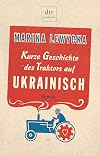
Den ersten Teil des Buches habe ich vermutlich wie viele andere Leserinnen und Leser auch mit wachsender Entrüstung gelesen: Gierige, materialistisch eingestellte Osteuropäerin nimmt armen alten Mann aus. Stellenweise recht komisch, manchmal auch beklemmend.
Doch dann mischen sich neue Töne ein: Ganz so einfach sind die Schuldzuweisungen doch nicht zu verteilen. Der Vater der Erzählerin ist schwierig, er braucht Hilfe beim Baden, es gibt Probleme mit Pipi, er hat sexuelle Wünsche an show more seine Ehefrau, hat ihr deshalb auch eine Brustvergrößerung gezahlt, ist zänkisch - Dinge, die die (erzählende) Tochter Nadja am liebsten verdrängen würde. Dagegen stehen die eigentlichen Gründe der neuen Stiefmutter Valentina für diese Heirat: Ihrem Sohn die Chance auf ein besseres Leben zu ermöglichen, selbst auch jetzt schon ein besseres Leben als in der Ukraine zu führen (Wer die Verhältnisse in manchen der ehemaligen Teile der früheren UdSSR kennt, kann dies verstehen) - Nadja fängt an sich zu fragen, was sie denn an Valentinas Stelle getan hätte.
Und so, wie sich in der zweiten Ehe ihres Vaters nicht alles als so eindeutig und klar darstellt wie man beim ersten Blick vielleicht denken würde, so entwickelt sich auch das Verhältnis der beiden Töchter. Es zeigt sich, dass die große Schwester nicht einfach nur ein eiskalter materialistischer Charakter ist, sondern das es auch hier noch eine andere, weitere Wahrheit gibt, die erst nach und nach zu Tage tritt.
Es ist ein guter Unterhaltungsroman, der einem an einem aktuellen Thema zudem klar vor Augen führt, dass nichts so einfach zu sein scheint, wie man beim ersten Lesen meint. Hinter der scheinbar klaren Schwarz-Weiß-Realität (da gut und da böse) stecken unzählige Grautöne. Mich hat dies Buch ziemlich nachdenklich gestimmt.. show less
Doch dann mischen sich neue Töne ein: Ganz so einfach sind die Schuldzuweisungen doch nicht zu verteilen. Der Vater der Erzählerin ist schwierig, er braucht Hilfe beim Baden, es gibt Probleme mit Pipi, er hat sexuelle Wünsche an show more seine Ehefrau, hat ihr deshalb auch eine Brustvergrößerung gezahlt, ist zänkisch - Dinge, die die (erzählende) Tochter Nadja am liebsten verdrängen würde. Dagegen stehen die eigentlichen Gründe der neuen Stiefmutter Valentina für diese Heirat: Ihrem Sohn die Chance auf ein besseres Leben zu ermöglichen, selbst auch jetzt schon ein besseres Leben als in der Ukraine zu führen (Wer die Verhältnisse in manchen der ehemaligen Teile der früheren UdSSR kennt, kann dies verstehen) - Nadja fängt an sich zu fragen, was sie denn an Valentinas Stelle getan hätte.
Und so, wie sich in der zweiten Ehe ihres Vaters nicht alles als so eindeutig und klar darstellt wie man beim ersten Blick vielleicht denken würde, so entwickelt sich auch das Verhältnis der beiden Töchter. Es zeigt sich, dass die große Schwester nicht einfach nur ein eiskalter materialistischer Charakter ist, sondern das es auch hier noch eine andere, weitere Wahrheit gibt, die erst nach und nach zu Tage tritt.
Es ist ein guter Unterhaltungsroman, der einem an einem aktuellen Thema zudem klar vor Augen führt, dass nichts so einfach zu sein scheint, wie man beim ersten Lesen meint. Hinter der scheinbar klaren Schwarz-Weiß-Realität (da gut und da böse) stecken unzählige Grautöne. Mich hat dies Buch ziemlich nachdenklich gestimmt.. show less
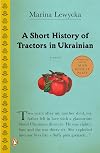
A book with the first lines as follows was sure to pull me in. “Two years after my mother died, my father fell in love with a glamorous blond Ukrainian divorcée. He was eighty-four and she was thirty-six.” What I found was an engaging, sometimes funny, other times horrifying, read.
The story begins with two sisters who have a faltering relationship trying to get a handle on why their father is importing a bride from the Ukraine. After the arrival of Valentina, the Ukrainian woman who show more exploded into their “lives like a fluffy pink grenade”, the sisters Nadia and Vera begin to suspect that all is not well in their father’s household. They attempt to help their father with what seem to be troubling developments, but, as often happens with elderly people, their father resists giving up control of his own situation to others even when it would be to his advantage.
What begins as a funny story soon tumbles into darker shades of difficulty faced by an elderly gentelman who, without his new bride, would be destined to live alone. Although the situations described in this novel are (hopefully) an exaggeration of what could occur in real life, they force readers to think about them as the two daughters discuss their dad’s problems in numerous and frequent telephone conversations.
Marina Lewycka’s novel was nominated for the Man Booker Prize and short-listed for the Orange Prize. I found this book enjoyable both for its unique, interesting story line as well as for its thought-provoking subject matter. . show less
The story begins with two sisters who have a faltering relationship trying to get a handle on why their father is importing a bride from the Ukraine. After the arrival of Valentina, the Ukrainian woman who show more exploded into their “lives like a fluffy pink grenade”, the sisters Nadia and Vera begin to suspect that all is not well in their father’s household. They attempt to help their father with what seem to be troubling developments, but, as often happens with elderly people, their father resists giving up control of his own situation to others even when it would be to his advantage.
What begins as a funny story soon tumbles into darker shades of difficulty faced by an elderly gentelman who, without his new bride, would be destined to live alone. Although the situations described in this novel are (hopefully) an exaggeration of what could occur in real life, they force readers to think about them as the two daughters discuss their dad’s problems in numerous and frequent telephone conversations.
Marina Lewycka’s novel was nominated for the Man Booker Prize and short-listed for the Orange Prize. I found this book enjoyable both for its unique, interesting story line as well as for its thought-provoking subject matter. . show less
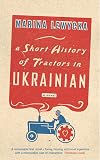
Because of recent events in the Ukraine, I found myself looking for Ukrainian fiction translated into English. My search uncovered this book by a British novelist of Ukrainian background. Its quirky title appealed, and I discovered it appeared on the 2005 Booker Prize longlist and Orange Prize shortlist.
The novel is narrated by Nadia whose 84-year-old widowed father Nikolai has fallen in love with Valentina, a 36-year-old Ukrainian divorcee. Nadia has been estranged from her older sister show more Vera but the two join forces to stop the marriage and, when that doesn’t work, to have Valentina deported. Nikolai is infatuated with the glamorous woman with “superior breasts,” but they believe Valentina has married Nikolai for the money she believes he has, so she can remain in Britain, and so her teenaged son can receive a good education. The sisters’ visits to their family home show Valentina physically and psychologically abusing Nikolai who finds comfort in writing his history of tractors, passages from which are interspersed throughout the narrative.
Many reviewers have commented on the humour in the book. There is humour: Nikolai describes his marriage to Valentina as a matter of balance, like finding the correct ratio between lift and drag in the design of an aircraft wing, and Nadia comments that Valentina “’has plenty of uplift but she’s a bit of a drag.’” But I didn’t find the book side-splittingly hilarious because of the serious overtones. There is some comedy in Nikolai’s being besotted with a much-younger woman, but Valentina’s treatment of Nikolai can only be called elder abuse. The arrival of Valentina also brings “to the surface a sludge of sloughed-off memories, giving the family ghosts a kick up the backside.” These memories of life in Ukraine in the first half of the 20th century are not in any way humourous. I think one of Nadia’s comments is apropos: “I had thought this story was going to be a knockabout farce, but now I see it is developing into a knockabout tragedy.”
Nikolai arrived in England after World War II as a refugee. His memories of life in Ukraine include several events in Ukraine’s history: Stalin’s purges, the Holodomor, Babi Yar, and Nazi occupation. There is not a great deal of detail but sufficient to convey the nature of each catastrophe and to inspire readers to seek further information in non-fiction sources. Certainly, one becomes aware of the complicated relationship between Ukraine and Russia. Through the course of the novel, Nadia learns more about her parents’ history and comes to understand how they were shaped by history and how Vera’s pessimistic views of people’s natures originated in her experiences as a War Baby.
What is impressive about the characterization is that though none of the main characters are likeable, they do arouse some sympathy. For instance, Vera describes Valentina as “’a tart. And a criminal. But still, I had to admire her.’” Nadia admits that Valentina is a complex person: “slaving long low-wage shifts in the nursing home, behind the bar at the Imperial Hotel, toiling in my father’s bedroom. Yes, she is greedy, predatory, outrageous, but she is a victim too. A source of cheap labour.” Valentina resorts to criminal activity to get comfort and security for her son but “’Women have always gone to extremes for their children. . . . Wouldn’t Mother have done the same for us, Vera? If we were desperate? If there was no other way?’”
Nikolai has not always behaved admirably in the past, but Nadia comes to realize that he did what was necessary to survive. Her father can be seen as a dirty old man, but it is impossible to ignore his loneliness and desire for happiness: “I had thought there was a happy story to tell about my parents’ life, a tale of triumph over tragedy, of love overcoming impossible odds, but now I see that there are only fleeting moments of happiness, to be seized and celebrated before they slip away.”
When newscasts bring only catastrophic news from Ukraine, there are elements in this book that resonated. I see Ukrainian refugees crossing into Poland at Przemysl where Nikolai and his family crossed as well. I see the Ukrainian flag everywhere: “two oblongs of colour, blue over yellow – yellow for the cornfields, blue for the sky.” Were Nikolai to add another chapter to his book, he’d undoubtedly write about ploughshares being turned into swords again as war refugees once again flee Ukraine. Please let there be more Peacetime Babies than War Babies.
Though it may be advertised as a comic book, this novel shows how history affects people.
Note: Please check out my reader's blog (https://schatjesshelves.blogspot.com/) and follow me on Twitter (@DCYakabuski). show less
The novel is narrated by Nadia whose 84-year-old widowed father Nikolai has fallen in love with Valentina, a 36-year-old Ukrainian divorcee. Nadia has been estranged from her older sister show more Vera but the two join forces to stop the marriage and, when that doesn’t work, to have Valentina deported. Nikolai is infatuated with the glamorous woman with “superior breasts,” but they believe Valentina has married Nikolai for the money she believes he has, so she can remain in Britain, and so her teenaged son can receive a good education. The sisters’ visits to their family home show Valentina physically and psychologically abusing Nikolai who finds comfort in writing his history of tractors, passages from which are interspersed throughout the narrative.
Many reviewers have commented on the humour in the book. There is humour: Nikolai describes his marriage to Valentina as a matter of balance, like finding the correct ratio between lift and drag in the design of an aircraft wing, and Nadia comments that Valentina “’has plenty of uplift but she’s a bit of a drag.’” But I didn’t find the book side-splittingly hilarious because of the serious overtones. There is some comedy in Nikolai’s being besotted with a much-younger woman, but Valentina’s treatment of Nikolai can only be called elder abuse. The arrival of Valentina also brings “to the surface a sludge of sloughed-off memories, giving the family ghosts a kick up the backside.” These memories of life in Ukraine in the first half of the 20th century are not in any way humourous. I think one of Nadia’s comments is apropos: “I had thought this story was going to be a knockabout farce, but now I see it is developing into a knockabout tragedy.”
Nikolai arrived in England after World War II as a refugee. His memories of life in Ukraine include several events in Ukraine’s history: Stalin’s purges, the Holodomor, Babi Yar, and Nazi occupation. There is not a great deal of detail but sufficient to convey the nature of each catastrophe and to inspire readers to seek further information in non-fiction sources. Certainly, one becomes aware of the complicated relationship between Ukraine and Russia. Through the course of the novel, Nadia learns more about her parents’ history and comes to understand how they were shaped by history and how Vera’s pessimistic views of people’s natures originated in her experiences as a War Baby.
What is impressive about the characterization is that though none of the main characters are likeable, they do arouse some sympathy. For instance, Vera describes Valentina as “’a tart. And a criminal. But still, I had to admire her.’” Nadia admits that Valentina is a complex person: “slaving long low-wage shifts in the nursing home, behind the bar at the Imperial Hotel, toiling in my father’s bedroom. Yes, she is greedy, predatory, outrageous, but she is a victim too. A source of cheap labour.” Valentina resorts to criminal activity to get comfort and security for her son but “’Women have always gone to extremes for their children. . . . Wouldn’t Mother have done the same for us, Vera? If we were desperate? If there was no other way?’”
Nikolai has not always behaved admirably in the past, but Nadia comes to realize that he did what was necessary to survive. Her father can be seen as a dirty old man, but it is impossible to ignore his loneliness and desire for happiness: “I had thought there was a happy story to tell about my parents’ life, a tale of triumph over tragedy, of love overcoming impossible odds, but now I see that there are only fleeting moments of happiness, to be seized and celebrated before they slip away.”
When newscasts bring only catastrophic news from Ukraine, there are elements in this book that resonated. I see Ukrainian refugees crossing into Poland at Przemysl where Nikolai and his family crossed as well. I see the Ukrainian flag everywhere: “two oblongs of colour, blue over yellow – yellow for the cornfields, blue for the sky.” Were Nikolai to add another chapter to his book, he’d undoubtedly write about ploughshares being turned into swords again as war refugees once again flee Ukraine. Please let there be more Peacetime Babies than War Babies.
Though it may be advertised as a comic book, this novel shows how history affects people.
Note: Please check out my reader's blog (https://schatjesshelves.blogspot.com/) and follow me on Twitter (@DCYakabuski). show less
Lists
Awards


You May Also Like


Associated Authors
Statistics
- Works
- 16
- Also by
- 8
- Members
- 8,729
- Popularity
- #2,739
- Rating
- 3.4
- Reviews
- 375
- ISBNs
- 218
- Languages
- 22
- Favorited
- 8


