
Paul Torday (1946–2013)
Author of Salmon Fishing in the Yemen
About the Author
Paul Torday was born in in Croxdale, County Durham, England on August 1, 1946. He received a degree in English literature from Pembroke College, Oxford. He spent years in the engineering business before turning to writing. His debut novel, Salmon Fishing in the Yemen, was published in 2007. The show more novel was adapted into a 2011 film starring Ewan McGregor and Emily Blunt. His other works include The Irresistible Inheritance of Wilberforce, The Girl on the Landing, and Light Shining in the Forest. He died on December 18, 2013 at the age of 67. (Bowker Author Biography) show less
Image credit: The Independent
Works by Paul Torday
Associated Works
Tagged
Common Knowledge
- Birthdate
- 1946-08-01
- Date of death
- 2013-12-18
- Gender
- male
- Education
- University of Oxford (Pembroke College)
- Occupations
- business executive
novelist - Nationality
- UK
- Birthplace
- Croxdale, County Durham, England, UK
- Place of death
- Northumberland, England, UK
- Map Location
- England, UK
Members
Reviews
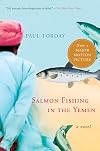
This is a light fast enjoyable read. A satire that targets: politicians, government departments, career men and women, Al-Queda and rich Sheiks. About the only thing it does not satirise are the salmon and the people who fish for them.
In a satire ; vices, foibles, abuses and short comings are held up to ridicule, ideally with the intent of shaming individuals and society itself into improvement. How effective or sharp this is depends on the nature of the satire. One that uses scorn, outrage show more and savage ridicule is more likely to grab our attention than one based on exaggeration, folly and irony. Torday's satire is of the latter variety, it is mild and gently humorous. As I was reading It became difficult at times to separate the satire from actuality, which certainly gave me pause to think.
Alfred Jones a scientist working in the Department of the Environment, Food and Rural Affairs is asked for a feasibility study on introducing salmon and salmon fishing into the Yemen. He correctly points out that such a project would be laughable; there are no suitable rivers, the climate is too hot for the fish and they would not be able to reach their breeding grounds in the North Atlantic. Poor Alfred is blissfully unaware that a powerful Sheikh will bankroll such a project and the British Government desperate for a good news story in the Middle East see it as a vote winner. Alfred is made to change his mind and his scientific pride leads him to involve himself fully in the impossible project. He is spurred on by the charismatic Sheik and his crush on Harriet who works for the company that represents the Sheik's interest. What happens when a crazy project is fueled by enough money and the political will? It succeeds of course.
The story is told in a series of diary entries, correspondence, e mails, interviews by a parliamentary subcommittee, an unpublished novel and extracts from Hansard. Torday is skillful enough to weave these disparate elements into a very readable narrative format. Torday has a lightness of touch about everything he writes here and never loses sight of his story or his need to make the reader smile.
The novel succeeds for me because there is very little exaggeration in the workings of a government department. I kept thinking I have seen these sorts of things happen or worse. Almost everything else has a ring of credibility about it. Tordays most savage satire is reserved for Peter Maxwell who is a Director of Communications (spin doctor) and works closely with the Prime Minister. This characteris probably based on Alastair Campbell and his work with Tony Blair. One scene stands out particularly for me. Maxwell desperate for a good news story to offset the casualties being reported from Iraq has an idea for a new TV game show. It will be set in one of the villages partially destroyed by rocket and mortar fire and will feature actual villagers as contestants, who will stand to win glamorous prizes. He presents this idea to the usual Friday evening get together of the PM and his cabinet cronies who are sipping wine. After the presentation one of the members remarks "Peter you ought to get out more". Maxwell is close to tears he can't believe that his brilliant idea has been given such short shrift. Torday I think has been cever hear, he finally presents a scenario that is ridiculous and has his characters reject it out of hand. This leads the reader to think that all the other stuff that has gone before could well happen in real life.
This is a funny humorous book, but the sting in the tail for me is that so much of it could and probably does happen and we all blithely have to accept it. This novel should be read by all government workers, lets just hope you don't see yourselves here show less
In a satire ; vices, foibles, abuses and short comings are held up to ridicule, ideally with the intent of shaming individuals and society itself into improvement. How effective or sharp this is depends on the nature of the satire. One that uses scorn, outrage show more and savage ridicule is more likely to grab our attention than one based on exaggeration, folly and irony. Torday's satire is of the latter variety, it is mild and gently humorous. As I was reading It became difficult at times to separate the satire from actuality, which certainly gave me pause to think.
Alfred Jones a scientist working in the Department of the Environment, Food and Rural Affairs is asked for a feasibility study on introducing salmon and salmon fishing into the Yemen. He correctly points out that such a project would be laughable; there are no suitable rivers, the climate is too hot for the fish and they would not be able to reach their breeding grounds in the North Atlantic. Poor Alfred is blissfully unaware that a powerful Sheikh will bankroll such a project and the British Government desperate for a good news story in the Middle East see it as a vote winner. Alfred is made to change his mind and his scientific pride leads him to involve himself fully in the impossible project. He is spurred on by the charismatic Sheik and his crush on Harriet who works for the company that represents the Sheik's interest. What happens when a crazy project is fueled by enough money and the political will? It succeeds of course.
The story is told in a series of diary entries, correspondence, e mails, interviews by a parliamentary subcommittee, an unpublished novel and extracts from Hansard. Torday is skillful enough to weave these disparate elements into a very readable narrative format. Torday has a lightness of touch about everything he writes here and never loses sight of his story or his need to make the reader smile.
The novel succeeds for me because there is very little exaggeration in the workings of a government department. I kept thinking I have seen these sorts of things happen or worse. Almost everything else has a ring of credibility about it. Tordays most savage satire is reserved for Peter Maxwell who is a Director of Communications (spin doctor) and works closely with the Prime Minister. This characteris probably based on Alastair Campbell and his work with Tony Blair. One scene stands out particularly for me. Maxwell desperate for a good news story to offset the casualties being reported from Iraq has an idea for a new TV game show. It will be set in one of the villages partially destroyed by rocket and mortar fire and will feature actual villagers as contestants, who will stand to win glamorous prizes. He presents this idea to the usual Friday evening get together of the PM and his cabinet cronies who are sipping wine. After the presentation one of the members remarks "Peter you ought to get out more". Maxwell is close to tears he can't believe that his brilliant idea has been given such short shrift. Torday I think has been cever hear, he finally presents a scenario that is ridiculous and has his characters reject it out of hand. This leads the reader to think that all the other stuff that has gone before could well happen in real life.
This is a funny humorous book, but the sting in the tail for me is that so much of it could and probably does happen and we all blithely have to accept it. This novel should be read by all government workers, lets just hope you don't see yourselves here show less
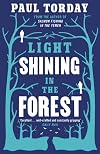
Review based on ARC.
This was my first Torday, and (1) I will definitely read more! and (2) I'm sad he's (apparently recently) deceased, so what's out there is what's out there!
So, as my first Torday, and having read a handful of other reviews on this book, I understand that this one is not "standard Torday" -- most of his novels are funny, I think.
This one is not remotely funny. I don't mean to say there are no moments of humor -- those definitely exist, particularly dark humor in his show more analysis of civil servants in Britain, but it's not a funny book. The book is not a satire.
Torday manages to work mystery, thriller, drama, a touch of romance, lite-horror, psychological thriller, and spiritual all into about 340 pages. And well. It is almost an everyman type of story, an analysis of faith and how most people these days respond to the potential for spiritual involvement in our lives. Torday has been criticized by some of his fans for delving into the spiritual, but he did SUCH a good job of evaluating the various perspectives his everyman characters can have to the potential of divine involvement that, really, it makes those reviews just sound defensive in nature. Torday definitely does not shove religion down everyone's throat and, in fact, his characters are such that there is an acknowledgement that *most* people ridicule those with strong faith. This is a truth that was well explored in Torday's novel.
And yeah, now that I'm writing all this out, it sounds kind of boring. It is NOT boring. It's a well-paced psychological thriller, mystery, evaluation of society and spirituality without being preachy... Just very well done.
So what's it about? Remembering that this is an everyman take, there's (and these are my descriptions -- he just named the characters :)): The Civil Servant (Norman), The Young Semi-Ambitious Lazy Investigative Journalist with Big Ideas (Willie), The Smart Cute Assistant Who's More than Meets the Eye (Pippa), and then there are a handful of equally important characters who I won't define because this book is *definitely* one of those books that is better to discover while being read.
Norman has spent a life in civil servantry, working his way into more and more powerful positions, and has finally been promoted to Children's Czar in a small'ish town. However, once he's appointed, the job comes to a standstill and Norman is left with a lot of time on his hands. Lo and behold, a few months into his stalled Czarship, young aggressive and annoying Willie, trying to make a journalistic career for himself so he can get out of said small'ish town, confronts Norman with the existence of two missing children, and just WHAT, Willie wants to know, is the Czar going to do about the missing children? The Czar position is not meant to be a hands-on type of job, and Norman is initially reluctant. However, events proceed, family members are met and conversations are had, and his pushy smart little assistant Pippa gets involved... HOW are we going to save the children? When a third child goes missing, there's no stopping the newly created team as they rush time to try to find the Children before they suffer any longer.
It's an interestingly paced novel... It starts off quite slow -- descriptive and scenic. It never becomes a rush from one adrenaline-packed scene to the next, but Torday writes a story and establishes characters that invest the reader in the story... And once you are invested in the story, well it's just hard to put it back down. It *moves* and you, the *reader* starts to rush... *You* must read more quickly... *you* must save the children! The physical undercurrent is palpable. There are so many elements involved (discussed above), and the characters, serving their everyman purpose, are engaging and well crafted.
It's hard to review this book because it was so good, so worth an involved review, but SO the kind of book that shouldn't be ruined by reviews. Definitely recommended to open-minded thinkers, to people looking for a smarter mystery, for those who consider the possibility of "Maybes".
And, despite the fact that this was an unusual-for-Torday novel, I look forward to reading more of his writing.
FOUR AND A HALF of five stars. show less
This was my first Torday, and (1) I will definitely read more! and (2) I'm sad he's (apparently recently) deceased, so what's out there is what's out there!
So, as my first Torday, and having read a handful of other reviews on this book, I understand that this one is not "standard Torday" -- most of his novels are funny, I think.
This one is not remotely funny. I don't mean to say there are no moments of humor -- those definitely exist, particularly dark humor in his show more analysis of civil servants in Britain, but it's not a funny book. The book is not a satire.
Torday manages to work mystery, thriller, drama, a touch of romance, lite-horror, psychological thriller, and spiritual all into about 340 pages. And well. It is almost an everyman type of story, an analysis of faith and how most people these days respond to the potential for spiritual involvement in our lives. Torday has been criticized by some of his fans for delving into the spiritual, but he did SUCH a good job of evaluating the various perspectives his everyman characters can have to the potential of divine involvement that, really, it makes those reviews just sound defensive in nature. Torday definitely does not shove religion down everyone's throat and, in fact, his characters are such that there is an acknowledgement that *most* people ridicule those with strong faith. This is a truth that was well explored in Torday's novel.
And yeah, now that I'm writing all this out, it sounds kind of boring. It is NOT boring. It's a well-paced psychological thriller, mystery, evaluation of society and spirituality without being preachy... Just very well done.
So what's it about? Remembering that this is an everyman take, there's (and these are my descriptions -- he just named the characters :)): The Civil Servant (Norman), The Young Semi-Ambitious Lazy Investigative Journalist with Big Ideas (Willie), The Smart Cute Assistant Who's More than Meets the Eye (Pippa), and then there are a handful of equally important characters who I won't define because this book is *definitely* one of those books that is better to discover while being read.
Norman has spent a life in civil servantry, working his way into more and more powerful positions, and has finally been promoted to Children's Czar in a small'ish town. However, once he's appointed, the job comes to a standstill and Norman is left with a lot of time on his hands. Lo and behold, a few months into his stalled Czarship, young aggressive and annoying Willie, trying to make a journalistic career for himself so he can get out of said small'ish town, confronts Norman with the existence of two missing children, and just WHAT, Willie wants to know, is the Czar going to do about the missing children? The Czar position is not meant to be a hands-on type of job, and Norman is initially reluctant. However, events proceed, family members are met and conversations are had, and his pushy smart little assistant Pippa gets involved... HOW are we going to save the children? When a third child goes missing, there's no stopping the newly created team as they rush time to try to find the Children before they suffer any longer.
It's an interestingly paced novel... It starts off quite slow -- descriptive and scenic. It never becomes a rush from one adrenaline-packed scene to the next, but Torday writes a story and establishes characters that invest the reader in the story... And once you are invested in the story, well it's just hard to put it back down. It *moves* and you, the *reader* starts to rush... *You* must read more quickly... *you* must save the children! The physical undercurrent is palpable. There are so many elements involved (discussed above), and the characters, serving their everyman purpose, are engaging and well crafted.
It's hard to review this book because it was so good, so worth an involved review, but SO the kind of book that shouldn't be ruined by reviews. Definitely recommended to open-minded thinkers, to people looking for a smarter mystery, for those who consider the possibility of "Maybes".
And, despite the fact that this was an unusual-for-Torday novel, I look forward to reading more of his writing.
FOUR AND A HALF of five stars. show less
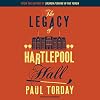
'The Legacy Of Hartlepool Hall' gave me more to think about than I'd expected. It rose above simple satire, declined to take sides in the class war and delivered instead a very human picture of what a legacy from previous generations can do to those born into wealth that is steadily declining. It is hard for me to summon empathy for the struggles of a middle-aged man born into wealth, who has never done anything with his life, not even gained an understanding of the sources and limits of show more his wealth.
Ed Hartlepool is too bland a man to be dislikable and too lazy a man to garner much sympathy but Paul Torday succeeds in making him a man who is free of malice and greed and who may, eventually, build a life for himself over which he exerts some agency.
I enjoyed the quiet humour of the book exposes absurdities without poking fun at everyone I admired the way it calmly lays out the lives of the rich and those who feed on them, like a butterfly pinned to a board.
The book has some darker moments. One of the main characters goes through a trauma that I initially thought stole her sanity from her. Later, it seemed to me that the trauma revealed who she really was and what she wanted.
I had wondered if this was going to be a sort of comic thriller, with Ed discovering his business acumen and coming up with a plan to make everything better. Paul Torday had something else in mind.
Although it uses gentle humour throughout the book, 'The Legacy Of Hartlepool Hall' sets out to deliver a reflection on inherited wealth and the unsustainable expectations and duties that the current generation faces.
Ed's struggle to deal with the accumulated debts of the Hartlepool estate shows how, in the course of the last three generations, his family has actively declined to acquire the skills and work ethic that generated the fortune in the first place. The Hall that was built as a vanity project providing concrete evidence of what the family had achieved has become an atavistic burden that binds the family so tightly to the past that they are unable to build a future.
The book also looks at how the expectation of inherited wealth tests the character of the people receiving it. Ed finally comes to the realisation that he might enjoy the freedom that comes from letting go of Inost) of his wealth and living a (financially secure, work-free) middle-class life. One of his friends, who is also waiting to inherit wealth is effectively enslaved by the wait and eventually cracks under the stain.
This is a gentle, well-observed book populated with characters that I recognised and believed in, that, in a low key often humorous way, questions the benefits of transmitting substantial weakth across generations. show less
Ed Hartlepool is too bland a man to be dislikable and too lazy a man to garner much sympathy but Paul Torday succeeds in making him a man who is free of malice and greed and who may, eventually, build a life for himself over which he exerts some agency.
I enjoyed the quiet humour of the book exposes absurdities without poking fun at everyone I admired the way it calmly lays out the lives of the rich and those who feed on them, like a butterfly pinned to a board.
The book has some darker moments. One of the main characters goes through a trauma that I initially thought stole her sanity from her. Later, it seemed to me that the trauma revealed who she really was and what she wanted.
I had wondered if this was going to be a sort of comic thriller, with Ed discovering his business acumen and coming up with a plan to make everything better. Paul Torday had something else in mind.
Although it uses gentle humour throughout the book, 'The Legacy Of Hartlepool Hall' sets out to deliver a reflection on inherited wealth and the unsustainable expectations and duties that the current generation faces.
Ed's struggle to deal with the accumulated debts of the Hartlepool estate shows how, in the course of the last three generations, his family has actively declined to acquire the skills and work ethic that generated the fortune in the first place. The Hall that was built as a vanity project providing concrete evidence of what the family had achieved has become an atavistic burden that binds the family so tightly to the past that they are unable to build a future.
The book also looks at how the expectation of inherited wealth tests the character of the people receiving it. Ed finally comes to the realisation that he might enjoy the freedom that comes from letting go of Inost) of his wealth and living a (financially secure, work-free) middle-class life. One of his friends, who is also waiting to inherit wealth is effectively enslaved by the wait and eventually cracks under the stain.
This is a gentle, well-observed book populated with characters that I recognised and believed in, that, in a low key often humorous way, questions the benefits of transmitting substantial weakth across generations. show less
Salmon fishing in Yemen? Impossible? One of the closing lines of this book is , "I believe in it because it is impossible." Paul Torday has written a lovely novel about transformation, faith, belief, and love. A Yemeni sheikh who loves salmon fishing proposes to bring the sport to his home country, and the relationship between himself and the fishery scientist whom he employs leads to transformation. The story unfolds as a collection of memos, letters, and e-mails and they reveal the role of show more politics, money, and personal ego in distorting and hiding the true meaning of the project. Torday is also able to make interesting observations about the nature of the differences between Yemenis and British society. I read this book during the course of a long, lovely day and hope that other readers will enjoy and appreciate it as I have. show less
Lists
Awards


You May Also Like


Associated Authors
Statistics
- Works
- 14
- Also by
- 1
- Members
- 2,891
- Popularity
- #8,867
- Rating
- 3.5
- Reviews
- 142
- ISBNs
- 154
- Languages
- 16
- Favorited
- 5