
Petina Gappah
Author of The Book of Memory
About the Author
Image credit: Photo by Sarah Lee
Works by Petina Gappah
Associated Works
Freedom: Stories Celebrating the Universal Declaration of Human Rights (2009) — Contributor — 85 copies, 2 reviews
Jungfrau and other short stories: The Caine Prize for African Writing 7th Annual Collection (2007) — Contributor — 19 copies
Tagged
Common Knowledge
- Legal name
- Gappah, Petina
- Birthdate
- 1971
- Gender
- female
- Education
- University of Cambridge (MA)
University of Graz (PhD)
University of Zimbabwe (JD) - Occupations
- lawyer (international trade)
writer - Awards and honors
- Guardian First Book Award (2009)
African Literary Person of the Year (Brittle Paper) - Agent
- Clare Paterson (Janklow and Nesbit, UK)
- Short biography
- Petina Gappah is a Zimbabwean writer with law degrees from Cambridge, Graz University, and the University of Zimbabwe. Her short fiction and essays have been published in eight countries. She lives with her son Kush in Geneva, where she works as counsel in an international organisation that provides legal aid on international trade law to developing countries.
- Nationality
- Zimbabwe
- Birthplace
- Copperbelt Province, Zambia
- Places of residence
- Geneva, Switzerland
Harare, Zimbabwe - Map Location
- Zimbabwe
Members
Reviews
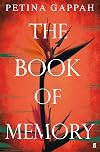
This is a great read. Memory is in prison for killing the man she believes bought her from her parents as a child. I was relieved this wasn't the kind of abuse narrative that might be expected from that brief introduction. Instead, Memory's account is the story of her imprisonment in a corrupt jail system, as she writes her life story for the lawyers trying to overturn her death sentence. As Memory herself says, there is unexpected amounts of laughter to be found in prison, despite the show more removal of books. And I liked how she acknowledges the debt to other prison narratives.
"Scheherazade told stories to keep her head where it rightfully belonged. I am writing to keep myself alive. But I am also laying out the threads that have pulled my life together, to see just where this one connects with that one or crosses with the other, to see how they form the tapestry from which I will stand back to get a better view." show less
"Scheherazade told stories to keep her head where it rightfully belonged. I am writing to keep myself alive. But I am also laying out the threads that have pulled my life together, to see just where this one connects with that one or crosses with the other, to see how they form the tapestry from which I will stand back to get a better view." show less
A complicated one to rate. A slow, meandering read that was never the less rich in detail and characterisation and beautifully written. It is ambiguous and not a recommend for anyone who likes their novels with clear narrative and concise outcomes.
Plot in a Nutshell
Mnemosyne, known as Memory is an Albino woman incarcerated in a Zimbabwean high security prison for the murder of her ‘adopted father’, a white man named Lloyd. The novel takes the form of a series of journals she is show more writing to a western journalist interested in her story. In her journal she covers her early life with her family in the township outside of Harare, how she came to live with Lloyd, some of her life there and a good deal of prison life. All of which is set against the backdrop of the significant social changes in Zimbabwe at the end of the twentieth and beginning of the twenty-first century
Thoughts
This is not a pace filled, action led novel. Much of the writing is Memory sifting through her thoughts and memories from early childhood and her immediate prison experiences. In so doing she explores race, disability, memory and family. All of this is however done in a non-linear way so the story jumps from her time with Lloyd, to early childhood and prison and back round again and again. This felt very realistic to the experience of an intelligent, educated woman who had been without writing materials for over two years but did make the reading and following of the plot a little disjointed.
Whilst Gappah writes in English she includes a fair amount of the Shona language which although adding authenticity did also break up the story a little – particularly in places where she did not include translations. A final point on slowing the story down; there is a large cast of prisoners and prison words introduced; few add to the story but did confuse initially whilst trying to keep them all straight in my head, especially without a cast list!
If I found the Shona hard going at times I really enjoyed the local mythology and folktales that Memory relates when reflecting on her earlier life and her mother’s beliefs and how they are balanced and sit alongside the pursuit of more organised religion. I also love that Memory is a vociferous reader and found the chapter that has her exploring Lloyd’s library and using it to settle herself in her new life charming.
The subtle backdrop to the complicated Colonial history of Rhodesia and the early history of Zimbabwe was fascinating and makes me want to read more on this topic as there was an expectation of some pre knowledge in the writing.
Overall I enjoyed this one but would have liked to have seen slightly less on prison life and more of Memory’s experiences with Lloyd who seemed like an interesting character or her time outside of Zimbabwe and how that shaped her experiences further. show less
Plot in a Nutshell
Mnemosyne, known as Memory is an Albino woman incarcerated in a Zimbabwean high security prison for the murder of her ‘adopted father’, a white man named Lloyd. The novel takes the form of a series of journals she is show more writing to a western journalist interested in her story. In her journal she covers her early life with her family in the township outside of Harare, how she came to live with Lloyd, some of her life there and a good deal of prison life. All of which is set against the backdrop of the significant social changes in Zimbabwe at the end of the twentieth and beginning of the twenty-first century
Thoughts
This is not a pace filled, action led novel. Much of the writing is Memory sifting through her thoughts and memories from early childhood and her immediate prison experiences. In so doing she explores race, disability, memory and family. All of this is however done in a non-linear way so the story jumps from her time with Lloyd, to early childhood and prison and back round again and again. This felt very realistic to the experience of an intelligent, educated woman who had been without writing materials for over two years but did make the reading and following of the plot a little disjointed.
Whilst Gappah writes in English she includes a fair amount of the Shona language which although adding authenticity did also break up the story a little – particularly in places where she did not include translations. A final point on slowing the story down; there is a large cast of prisoners and prison words introduced; few add to the story but did confuse initially whilst trying to keep them all straight in my head, especially without a cast list!
If I found the Shona hard going at times I really enjoyed the local mythology and folktales that Memory relates when reflecting on her earlier life and her mother’s beliefs and how they are balanced and sit alongside the pursuit of more organised religion. I also love that Memory is a vociferous reader and found the chapter that has her exploring Lloyd’s library and using it to settle herself in her new life charming.
The subtle backdrop to the complicated Colonial history of Rhodesia and the early history of Zimbabwe was fascinating and makes me want to read more on this topic as there was an expectation of some pre knowledge in the writing.
Overall I enjoyed this one but would have liked to have seen slightly less on prison life and more of Memory’s experiences with Lloyd who seemed like an interesting character or her time outside of Zimbabwe and how that shaped her experiences further. show less

Petina Gappah's writing is so masterly that it is hard to believe that this is her debut collection of stories. Her writing has an elegance which reminded this reader of Katherine Mansfield, which is especially true in the things that Gappah does not say. The characters in these stories are very real and whilst they seem very rooted to their geography and situation they are also universal, we all know people like 'My Cousin-Sister Rambanai' and the people who live 'In the Heart of the Golden show more Triangle' and people's whose marriages are similar to the one in 'The Negotiated Settlement'. 'Midnight at the Hotel California' made me laugh out loud, but Gappah never lets you forget that behind the laughter there are tears. Superb. show less
 This review was written for LibraryThing Early Reviewers.
This debut short-story collection by Zimbabwean writer Petina Gappah is a wonderful read. The tone of each one is perfect: the language is consistently beautiful but also completely natural. You get to know the characters very quickly, through small details artfully described, and are left at just the right moment to move on to the next tale.
The title gives a clue to what's in store. "Elegy" is defined by the Oxford English Dictionary as "A song of lamentation, esp. a funeral song or lament show more for the dead". This book feels like Petina Gappah's lament for the Zimbabwe she grew up in, a Zimbabwe that has been scarred by political corruption, economic chaos and the scourge of AIDS. I can't say whether she means to say that the Zimbabwe she knew is dead. Of course the country endures, the people endure, and that's what these stories are about. Perhaps the lament is not so much for the country itself as for the people who have suffered so much. In any case, there's a deep sadness underlying all these stories, and there's a death or a funeral in most of the stories.
Yet the strange thing is that there's also a lot of humour, and the humour often goes hand-in-hand with the sadness. There's the old carpenter who is cheated out of his pension and wins a dancing contest, the diplomat who is new to email and loses thousands of euros to the old lottery scam, and the bizarre goings-on at the Hotel California. In many of the stories, the humour is very real and genuinely funny, and yet it feels like a thin veneer which Gappah deliberately lets slip every now and then, exposing the horror underneath.
My favourite story, though, has no real humour. It's called 'Something Nice from London' and tells of a family waiting at the airport for the twice-weekly flight from London. The title refers to the hope that relatives in the UK will either return or send back money or gifts for their families. With the collapse of the economy, a few UK pounds is millions of Zimbabwe dollars, and can help a family to survive. But it gradually becomes clear that what this particular family is waiting for is the coffin of their son, Peter. And what follows is a tragic, drawn-out description of the anxious waiting for weeks and weeks, interspersed with explanations of what brought Peter and the family to this point, all the sacrifices and mistakes and disappointments. It's important that the body returns because the whole extended family is staying at their house awaiting the funeral, and they literally can't afford to feed them much longer.
It's probably not a representative story to pick - the others, as I said, had more humour mixed in with the tragedy, and I think it's that mixture that makes the book successful. But this particular story really got to me more than all the others. There's just a real power to that image of the family waiting at the airport, surrounded by all the other people waiting for 'Something nice from London' while they are waiting for the coffin of their son.
Which brings me back to the tone. When describing suffering, and especially when interspersing it with humour, there are a lot of pitfalls to avoid: melodrama, tastelessness, didacticism and exploitation to name but a few. Gappah skips effortlessly through the minefield, achieving just the right tone in every story. It's a tremendous achievement, and I look forward to reading more from her. show less
The title gives a clue to what's in store. "Elegy" is defined by the Oxford English Dictionary as "A song of lamentation, esp. a funeral song or lament show more for the dead". This book feels like Petina Gappah's lament for the Zimbabwe she grew up in, a Zimbabwe that has been scarred by political corruption, economic chaos and the scourge of AIDS. I can't say whether she means to say that the Zimbabwe she knew is dead. Of course the country endures, the people endure, and that's what these stories are about. Perhaps the lament is not so much for the country itself as for the people who have suffered so much. In any case, there's a deep sadness underlying all these stories, and there's a death or a funeral in most of the stories.
Yet the strange thing is that there's also a lot of humour, and the humour often goes hand-in-hand with the sadness. There's the old carpenter who is cheated out of his pension and wins a dancing contest, the diplomat who is new to email and loses thousands of euros to the old lottery scam, and the bizarre goings-on at the Hotel California. In many of the stories, the humour is very real and genuinely funny, and yet it feels like a thin veneer which Gappah deliberately lets slip every now and then, exposing the horror underneath.
My favourite story, though, has no real humour. It's called 'Something Nice from London' and tells of a family waiting at the airport for the twice-weekly flight from London. The title refers to the hope that relatives in the UK will either return or send back money or gifts for their families. With the collapse of the economy, a few UK pounds is millions of Zimbabwe dollars, and can help a family to survive. But it gradually becomes clear that what this particular family is waiting for is the coffin of their son, Peter. And what follows is a tragic, drawn-out description of the anxious waiting for weeks and weeks, interspersed with explanations of what brought Peter and the family to this point, all the sacrifices and mistakes and disappointments. It's important that the body returns because the whole extended family is staying at their house awaiting the funeral, and they literally can't afford to feed them much longer.
It's probably not a representative story to pick - the others, as I said, had more humour mixed in with the tragedy, and I think it's that mixture that makes the book successful. But this particular story really got to me more than all the others. There's just a real power to that image of the family waiting at the airport, surrounded by all the other people waiting for 'Something nice from London' while they are waiting for the coffin of their son.
Which brings me back to the tone. When describing suffering, and especially when interspersing it with humour, there are a lot of pitfalls to avoid: melodrama, tastelessness, didacticism and exploitation to name but a few. Gappah skips effortlessly through the minefield, achieving just the right tone in every story. It's a tremendous achievement, and I look forward to reading more from her. show less
This review was written for LibraryThing Early Reviewers.Lists
Facebook list (1)
Black Authors (1)
Awards


You May Also Like


Associated Authors
Statistics
- Works
- 6
- Also by
- 5
- Members
- 1,020
- Popularity
- #25,252
- Rating
- 3.7
- Reviews
- 70
- ISBNs
- 62
- Languages
- 7
- Favorited
- 1
