
Tsitsi Dangarembga
Author of Nervous Conditions
About the Author
Image credit: Photo taken in November 2006 during a UK tour, by David Clarke, Ayebia Clarke Publishing Ltd.
Series
Works by Tsitsi Dangarembga
Associated Works
Tagged
Common Knowledge
- Birthdate
- 1959
- Gender
- female
- Education
- University of Cambridge (Medicine)
University of Zimbabwe (Psychology)
Deutsche Film und Fernseh Akademie (Film Direction) - Occupations
- copywriter
novelist
filmwriter
film director - Organizations
- Zambuko (member)
- Awards and honors
- PEN Pinter Prize (2021)
Friedenspreis des Deutschen Buchhandels (2021)
Windham-Campbell Prize for Fiction (2022) - Nationality
- Zimbabwe
- Birthplace
- Mutoko, Rhodesia
- Places of residence
- Mutare, Rhodesia
England, UK
Harare, Zimbabwe
Members
Reviews
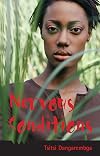
This novel has a fantastic opening that immediately captured my interest:
“I was not sorry when my brother died. Nor am I apologising for my callousness, as you may define it, my lack of feeling…I shall not apologise but begin by recalling the facts as I remember them that led up to my brother’s death, the events that put me in a position to write this account. For though the event of my brother’s passing and the events of my story cannot be separated, my story is not after all about show more death, but about my escape.”
Set in Southern Rhodesia (Zimbabwe) in the 1960s-1970s, protagonist Tambu looks back on her life. As a teen, she yearned for education, but “the needs and sensibilities of the women in my family were not considered a priority, or even legitimate.” Through a confluence of circumstances, she gets the chance to attend a Protestant mission school. She is beholden to Babamukuru, her uncle and the head of the school. She wants to stand up for herself but finds it difficult. Her friend, Nyasha, daughter of Babamukuru, who has studied in England, has much less trouble rebelling against traditions.
“You had to admit that Nyasha had no tact. You had to admit she was altogether too volatile and strong-willed. You couldn’t ignore the fact that she had no respect for Babamukuru when she ought to have had lots of it. But what I didn’t like was the way all the conflicts came back to this question of femaleness. Femaleness as opposed and inferior to maleness.”
This story examines post-colonialism, race, class, gender, education, traditions, and the patriarchal society. It is a lot to pack into a 250-page novel, but these factors are all integrated beautifully into the storyline. The ending sets up the next book in this trilogy. show less
“I was not sorry when my brother died. Nor am I apologising for my callousness, as you may define it, my lack of feeling…I shall not apologise but begin by recalling the facts as I remember them that led up to my brother’s death, the events that put me in a position to write this account. For though the event of my brother’s passing and the events of my story cannot be separated, my story is not after all about show more death, but about my escape.”
Set in Southern Rhodesia (Zimbabwe) in the 1960s-1970s, protagonist Tambu looks back on her life. As a teen, she yearned for education, but “the needs and sensibilities of the women in my family were not considered a priority, or even legitimate.” Through a confluence of circumstances, she gets the chance to attend a Protestant mission school. She is beholden to Babamukuru, her uncle and the head of the school. She wants to stand up for herself but finds it difficult. Her friend, Nyasha, daughter of Babamukuru, who has studied in England, has much less trouble rebelling against traditions.
“You had to admit that Nyasha had no tact. You had to admit she was altogether too volatile and strong-willed. You couldn’t ignore the fact that she had no respect for Babamukuru when she ought to have had lots of it. But what I didn’t like was the way all the conflicts came back to this question of femaleness. Femaleness as opposed and inferior to maleness.”
This story examines post-colonialism, race, class, gender, education, traditions, and the patriarchal society. It is a lot to pack into a 250-page novel, but these factors are all integrated beautifully into the storyline. The ending sets up the next book in this trilogy. show less

Back in the 1960s, when Zimbabwe was still called Rhodesia, a girl dreamed of a better life than ceaseless manual labor she sees her mother doing. She gets a few years in school, thanks to her uncle, a man with a degree who studied in the UK and who now supports an extended family. Her older brother is the one who gets to continue with school, until a tragedy gives her an opportunity she is determined to make work for her.
This is the first book in a trilogy by Zimbabwean author Tsitsi show more Dangarembga and I'll certainly be continuing my journey with Tambu as she fights for the opportunities an education might bring her. This was a well-crafted book that did not feel like a debut. Dangarembga plays off of the difference between Tambu and her cousin, a girl her age who went with her family to England and grew up there, only to be brought back as a teenager and expected to fit back into a deeply patriarchal and hierarchical society, which she finds impossible to do. The novel gives a glimpse of what life was like then for an ordinary Rhodesian, the enormous gap between the Black population and the colonists, and the enormous resiliency and tenacity of one girl. show less
This is the first book in a trilogy by Zimbabwean author Tsitsi show more Dangarembga and I'll certainly be continuing my journey with Tambu as she fights for the opportunities an education might bring her. This was a well-crafted book that did not feel like a debut. Dangarembga plays off of the difference between Tambu and her cousin, a girl her age who went with her family to England and grew up there, only to be brought back as a teenager and expected to fit back into a deeply patriarchal and hierarchical society, which she finds impossible to do. The novel gives a glimpse of what life was like then for an ordinary Rhodesian, the enormous gap between the Black population and the colonists, and the enormous resiliency and tenacity of one girl. show less
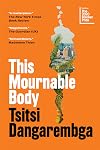
I think it was the American literary critic Harold Bloom who once stated that the ultimate criterion for great literature was characters evolving throughout the novel, poem, or play: at the end they have to be no longer the same as at the beginning. If that's right, then this novel by the Zimbabwean writer Tsiti Dangarembga (° 1959) is an absolute success.
We get to know main character Tambudzai Sigauke (Tambu) when she is looking for work and permanent shelter in the capital Harare. At this show more point she already has quite a background: relieved that she was able to escape her rural village through successful studies, she worked for a while in a flashy advertising agency, but left that office after apparent racial and gender-related discrimination; and now she is in a desperate condition while her family back home counts on her support. Her experiences have made Tambu a fragile, very insecure personality, while at the same time still cherishing the ambition to prove herself. Throughout this novel, we will see Tambu's star rising and falling, as a result of both unexpectedly prosperous and predictably dramatic events, eventually ending in a form of resignation.
Dangarembga aptly describes the difficult living and working conditions in Zimbabwe, which still is marked by the war of independence (veterans play a rather nasty role in this novel), by remnants of the colonial regime (in practice whites remain in the lead), and due to the rotting corruption of the current regime ('the old crocodile' is mentioned once, needless to say who this refers to). But above all, this novel shows how a fragile personality can be crushed by a particular culture, such as the ubiquitous macho-sexism, by structures that aim for cheap money, and by old family traditions that impose obligations, etc. It is one of the great achievements of this novel that it offers a complex cocktail of these elements, within many intermingling layers.
It’s the prudent resilience of Tambu that makes this novel stand out: she constantly ends up into trouble, regularly collapses under the pressure, but she also manages to surpass this, or at least adapt to her difficulties. It's a great example of female empowerment. And the great merit of Dangaremgba is that she did not turn this into a cheap feel-good story (along the lines of for instance The Color Purple): even in the end, Tambu remains vulnerable and insecure, albeit to some extent purified.
From a literary point of view, this novel is a bit precarious: there’s a succession of brilliant and slightly dragging passages, and especially at the end the story unwinds a bit too quickly. But it's mainly through the narrative point of view, - the author constantly addressing Tambu in the you-form (very unusual in literature) -, that Dangarembga succeeds in arousing our involvement as a reader and our sympathy with the fragile Tambu. I think this novel was rightly placed on the Short List of the Booker Prize. show less
We get to know main character Tambudzai Sigauke (Tambu) when she is looking for work and permanent shelter in the capital Harare. At this show more point she already has quite a background: relieved that she was able to escape her rural village through successful studies, she worked for a while in a flashy advertising agency, but left that office after apparent racial and gender-related discrimination; and now she is in a desperate condition while her family back home counts on her support. Her experiences have made Tambu a fragile, very insecure personality, while at the same time still cherishing the ambition to prove herself. Throughout this novel, we will see Tambu's star rising and falling, as a result of both unexpectedly prosperous and predictably dramatic events, eventually ending in a form of resignation.
Dangarembga aptly describes the difficult living and working conditions in Zimbabwe, which still is marked by the war of independence (veterans play a rather nasty role in this novel), by remnants of the colonial regime (in practice whites remain in the lead), and due to the rotting corruption of the current regime ('the old crocodile' is mentioned once, needless to say who this refers to). But above all, this novel shows how a fragile personality can be crushed by a particular culture, such as the ubiquitous macho-sexism, by structures that aim for cheap money, and by old family traditions that impose obligations, etc. It is one of the great achievements of this novel that it offers a complex cocktail of these elements, within many intermingling layers.
It’s the prudent resilience of Tambu that makes this novel stand out: she constantly ends up into trouble, regularly collapses under the pressure, but she also manages to surpass this, or at least adapt to her difficulties. It's a great example of female empowerment. And the great merit of Dangaremgba is that she did not turn this into a cheap feel-good story (along the lines of for instance The Color Purple): even in the end, Tambu remains vulnerable and insecure, albeit to some extent purified.
From a literary point of view, this novel is a bit precarious: there’s a succession of brilliant and slightly dragging passages, and especially at the end the story unwinds a bit too quickly. But it's mainly through the narrative point of view, - the author constantly addressing Tambu in the you-form (very unusual in literature) -, that Dangarembga succeeds in arousing our involvement as a reader and our sympathy with the fragile Tambu. I think this novel was rightly placed on the Short List of the Booker Prize. show less

Tambu is eleven or twelve when she sees her sister's leg blown off by a land mine. The war for Independence in Southern Rhodesia (now Zimbabwe) is well underway, and Tambu is stuck between her family, living in a rural area and supporting the guerrillas, and her life at the Young Ladies' College of the Sacred Heart, where she is a scholarship student, there because of help from her uncle. The school graciously allows one Black student per year, and has the six of them live in a room designed show more for four students and with an inadequate bathroom. Tambu is determined to excel, to win the prize for best student, but a nice ladies' college in Rhodesia is not going to let that happen and, when she wants to study science subjects, she is not allowed to attend the upper level classes at a nearby school. So where does Tambu put her anger and unhappiness as she strives to succeed in a system designed for her failure?
Middle books in trilogies are often the weak link. Nervous Conditions, where Tambu's story begins, was a revelation, introducing the reader to a girl who wasn't always nice or good, but was so hopeful and determined. And the final book was nominated for the Booker Prize. I was expecting to read this book in order to get to the next one, but I was astonished by how good it was. Tambu here lives through her teenage years, believing what she is told by the teachers at the school, determined to be the top student, working to exhibit unhu, that is, working to do everything to make things better for everyone. She spends her time studying and memorizing and never allows herself to just relax and have friends. It's a terrible way to live and one that is futile in a time and place where she will never be allowed success or acknowledgement. As Tambu's strives and works hard to continue to believe that she can succeed a war rages in the background, a war where her presence at a white ladies' college puts her on a different side from her own family. There's so much nuance and much is unspoken in this quietly powerful novel. show less
Middle books in trilogies are often the weak link. Nervous Conditions, where Tambu's story begins, was a revelation, introducing the reader to a girl who wasn't always nice or good, but was so hopeful and determined. And the final book was nominated for the Booker Prize. I was expecting to read this book in order to get to the next one, but I was astonished by how good it was. Tambu here lives through her teenage years, believing what she is told by the teachers at the school, determined to be the top student, working to exhibit unhu, that is, working to do everything to make things better for everyone. She spends her time studying and memorizing and never allows herself to just relax and have friends. It's a terrible way to live and one that is futile in a time and place where she will never be allowed success or acknowledgement. As Tambu's strives and works hard to continue to believe that she can succeed a war rages in the background, a war where her presence at a white ladies' college puts her on a different side from her own family. There's so much nuance and much is unspoken in this quietly powerful novel. show less
Lists
Black Authors (2)
My TBR (1)
Reading Globally (1)
Female Author (1)
Africa (1)
Read These Too (1)
Awards


You May Also Like


Associated Authors
Statistics
- Works
- 9
- Also by
- 3
- Members
- 3,152
- Popularity
- #8,106
- Rating
- 3.9
- Reviews
- 78
- ISBNs
- 78
- Languages
- 10
- Favorited
- 3