
Bessie Head (1937–1986)
Author of A Question of Power
About the Author
Bessie Head was born on July 6, 1937 in a mental hospital in South Africa. She was the child of a white mother and a black father. Head's mother had been judged insane for fraternizing with a colored man and committed to the mental hospital while pregnant. After her birth, Head was adopted by a show more coloured woman and raised in the mixed-raced community of Natal, South Africa. Head's birth mother died in the asylum in 1943. After receiving her teaching certificate, Head taught for a short while before taking a job as a newspaper reporter. In 1964, Head migrated to Botswana and began her career as a novelist. When Rain Clouds Gather, Head's first novel, was published in 1968. In the book, Head focuses on the racial hatred and political corruption of her time. Head's other novels include Maru, A Question of Power, and Serowe: Village of the Rain Wind, a story set in the village where Head lived. Head also wrote the collections Tales of Tenderness and Power, A Collection of Treasures, and A Woman Alone: Autobiographical Writings. Bessie Head died on April 17, 1986, at the age of 49. (Bowker Author Biography) show less
Works by Bessie Head
The Collector of Treasures and Other Botswana Village Tales: Short Stories (1977) 195 copies, 4 reviews
Woman from America 1 copy
Associated Works
The Story and Its Writer: An Introduction to Short Fiction (1976) — Contributor — 1,217 copies, 3 reviews
Wayward Girls and Wicked Women: An Anthology of Subversive Stories (1986) — Contributor — 581 copies, 9 reviews
Other Voices, Other Vistas: Short Stories from Africa, China, India, Japan, and Latin America (1992) — Contributor — 213 copies, 2 reviews
Daughters of Africa: An International Anthology of Words and Writings by Women of African Descent from the Ancient Egyptian to the Present (1992) — Contributor — 186 copies
Tagged
Common Knowledge
- Canonical name
- Head, Bessie
- Legal name
- Emery, Bessie Amelia (birth)
- Birthdate
- 1937-07-06
- Date of death
- 1986-04-17
- Gender
- female
- Occupations
- novelist
short story writer - Organizations
- Drum
Pan Africanist Congress
The New African - Awards and honors
- The Order of Ikhamanga in Gold
- Cause of death
- hepatitis
- Nationality
- South Africa
Botswana (from 1979) - Birthplace
- Pietermaritzburg, Natal, South Africa
- Places of residence
- Pietermaritzburg, South Africa
Cape Town, South Africa
Serowe, Botswana
Durban, South Africa - Place of death
- Serowe, Botswana
- Map Location
- Botswana
Members
Discussions
Group Read, August 2023: A Question of Power in 1001 Books to read before you die (August 2023)
Reviews

I’m embarrassed to have taken so long to read her. I have long known her enormous reputation but have somehow unaccountably never read her work. It won’t be long until I pick up another: she richly deserves her reputation. This collection of stories takes place in Botswana, the country that Head (born in South Africa) used most often for her settings. Head’s own biography is fascinating; I urge you to investigate it. But these stories: it is tempting to say that they all deal with the show more position of women in society, with the abuses and the injustices they suffer. And there is much of that. But the stories are much richer, more rounded, and fuller. They relate in simple straightforward prose the lives of rural women (and men) as they live under the cumulative oppressions of patriarchy, poverty and colonialism. Her protagonists can seem surprisingly meek and yet underestimating their power is always foolish; their belief in themselves is little short of awe-inspiring. These stories address issues prompted by colonialism, by traditional and Christian spirituality, and deal with the tension inevitable between group and individual identity. She is a powerful writer and most of her protagonists are nothing less than a primal force. show less
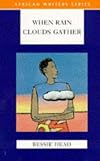
The Publisher Says: The poverty-stricken village of Golema Mmidi, in the heart of rural Botswana, offers a haven to the exiles gathered there. Makhaya, a political refugee from South Africa, becomes involved with an English agricultural expert and the villagers as they struggle to upgrade their traditional farming methods with modern techniques. The pressures of tradition, the opposition of the local chief, and, above all, the harsh climate threaten to bring tragedy to the community, but show more strangely, there remains a hope for the future.
My Review: I read this in the middle 1970s. It came into the Old Quarry branch of the Austin Public Library one fine afternoon and I pounced upon it with glee. I was really interested in how white people who resisted apartheid rebuilt their lives elsewhere...I disliked my sister's recommended book, [book:The Grass Is Singing|130115], because it was tediously self-satisfied. This book focused on what the author's mouthpiece was going to do, not how her itty-pweshus "oh motherhood's a bore and men are only good for one thing and not all that good at it to boot and I'm so so Over It All" self felt.
I really dislike Doris Lessing. I really liked Bessie Head, though. I realize now that I'm *hack*ty-three I never read another book by her. Permaybehaps time to do so. show less
My Review: I read this in the middle 1970s. It came into the Old Quarry branch of the Austin Public Library one fine afternoon and I pounced upon it with glee. I was really interested in how white people who resisted apartheid rebuilt their lives elsewhere...I disliked my sister's recommended book, [book:The Grass Is Singing|130115], because it was tediously self-satisfied. This book focused on what the author's mouthpiece was going to do, not how her itty-pweshus "oh motherhood's a bore and men are only good for one thing and not all that good at it to boot and I'm so so Over It All" self felt.
I really dislike Doris Lessing. I really liked Bessie Head, though. I realize now that I'm *hack*ty-three I never read another book by her. Permaybehaps time to do so. show less

For some reason I had the idea when I ordered this book that it would be another short story collection, but it turns out to be something rather more unusual: Head expresses her gratitude to the Botswana village that has taken her in by documenting as much as she can of its history and culture through a set of about a hundred interviews with people who live there, especially older people. In so many ways, this seems to be a very African way of working, so it's a little bit of a shock to show more learn that her direct inspiration for the format of this project was Ronald Blythe's sixties classic, Akenfield — the 2008 AWS edition comes with a preface from Dr Blythe, who is obviously as surprised as we are, and very flattered.
Head shows us what makes Serowe such a special part of Southern Africa, focussing in particular on the influence of Khama III, chief of the Bamangwato around the end of the nineteenth century, his son Tshekedi Khama, who ruled in the mid-20th century, and the exiled South African Patrick van Rensburg, who came to Serowe in the 1950s and established various pioneering educational projects.
Khama — who became famous internationally in the 1890s because of a diplomatic mission to London to keep "Bechuanaland" out of the hands of Cecil Rhodes — was an authoritarian who imposed Christianity on his people and banned alcohol, but he was also a firm believer in development through self-help. His standing gave him the opportunity to push through some big changes in traditional custom, and in particular he abolished initiation rituals for young men and diverted the energies of the age regiments (initiation fraternities) into community service projects like building dams and schools, and kept a firm hand on the activities of foreign missionaries and traders within his territories. Tshekedi continued and expanded the community service idea, and van Rensburg added further refinements, such as producers' and consumers' cooperatives and self-financing vocational training programmes. (I've worked with a foundation that gives financial support to community self-help projects: it's astonishing to see how many of the initiatives Head describes are things I've seen people re-inventing quite independently in other parts of the world half a century later...)
Head introduces her interviewees and puts them in context, but then she lets them speak for themselves, even when they are expressing opinions she presumably doesn't share herself. Many of the older people, understandably enough, consider that Bamangwato culture is collapsing around them, and that the centralised democracy of post-independence Botswana gives them less influence over their own lives than the old regional autocracy of the chiefs, controlled as it was by the local forum of the kgotla, in which everyone (i.e. all the older males) got the chance to express an opinion.
A big topic is the shift in family structure that has resulted from Khama's abolition of polygamy and bride-prices, which obviously helped to remove some major inequalities between rich and poor and between men and women, but also indirectly led to a situation in which defaulting husbands could not easily be held to account by their in-laws, and marriage itself eventually went out of style. At the time Head was writing, 95% of children in the village were born to unmarried women. Head interviews a number of older and younger women to hear what they have to say about this (she doesn't seem to have managed to find any young men prepared to talk about it, though...).
There are some very interesting interviews with craftspeople, especially the old tanners (men), hut-builders and potters (women) who explain the traditional way their craft worked; these are set against interviews with younger people, many of them from the boiteko cooperative, who explain how they are mixing traditional ideas with technology from elsewhere. The funniest one is the elderly wood-carver, though, who clearly finds it impossible to understand how anyone could fail to find the spoon that's waiting to be discovered in a tree-branch or the stool hidden in a stump. (Or perhaps couldn't resist pulling the leg of this young South African woman who's come to ask him silly questions.)
Although it talks about a community facing a lot of very big problems (plus AIDS, which they didn't know about yet), this comes across as a very warm, positive book, really expressing Head's love for Serowe and its people, and demonstrating the way a community exists as the collective experiences of its members. And it's also a quiet challenge to Western readers with fixed ideas about "primitive" rural African societies and the things holding them back. All the speakers in this book are sophisticated, articulate people who've clearly thought deeply about their community and its needs. show less
Head shows us what makes Serowe such a special part of Southern Africa, focussing in particular on the influence of Khama III, chief of the Bamangwato around the end of the nineteenth century, his son Tshekedi Khama, who ruled in the mid-20th century, and the exiled South African Patrick van Rensburg, who came to Serowe in the 1950s and established various pioneering educational projects.
Khama — who became famous internationally in the 1890s because of a diplomatic mission to London to keep "Bechuanaland" out of the hands of Cecil Rhodes — was an authoritarian who imposed Christianity on his people and banned alcohol, but he was also a firm believer in development through self-help. His standing gave him the opportunity to push through some big changes in traditional custom, and in particular he abolished initiation rituals for young men and diverted the energies of the age regiments (initiation fraternities) into community service projects like building dams and schools, and kept a firm hand on the activities of foreign missionaries and traders within his territories. Tshekedi continued and expanded the community service idea, and van Rensburg added further refinements, such as producers' and consumers' cooperatives and self-financing vocational training programmes. (I've worked with a foundation that gives financial support to community self-help projects: it's astonishing to see how many of the initiatives Head describes are things I've seen people re-inventing quite independently in other parts of the world half a century later...)
Head introduces her interviewees and puts them in context, but then she lets them speak for themselves, even when they are expressing opinions she presumably doesn't share herself. Many of the older people, understandably enough, consider that Bamangwato culture is collapsing around them, and that the centralised democracy of post-independence Botswana gives them less influence over their own lives than the old regional autocracy of the chiefs, controlled as it was by the local forum of the kgotla, in which everyone (i.e. all the older males) got the chance to express an opinion.
A big topic is the shift in family structure that has resulted from Khama's abolition of polygamy and bride-prices, which obviously helped to remove some major inequalities between rich and poor and between men and women, but also indirectly led to a situation in which defaulting husbands could not easily be held to account by their in-laws, and marriage itself eventually went out of style. At the time Head was writing, 95% of children in the village were born to unmarried women. Head interviews a number of older and younger women to hear what they have to say about this (she doesn't seem to have managed to find any young men prepared to talk about it, though...).
There are some very interesting interviews with craftspeople, especially the old tanners (men), hut-builders and potters (women) who explain the traditional way their craft worked; these are set against interviews with younger people, many of them from the boiteko cooperative, who explain how they are mixing traditional ideas with technology from elsewhere. The funniest one is the elderly wood-carver, though, who clearly finds it impossible to understand how anyone could fail to find the spoon that's waiting to be discovered in a tree-branch or the stool hidden in a stump. (Or perhaps couldn't resist pulling the leg of this young South African woman who's come to ask him silly questions.)
Although it talks about a community facing a lot of very big problems (plus AIDS, which they didn't know about yet), this comes across as a very warm, positive book, really expressing Head's love for Serowe and its people, and demonstrating the way a community exists as the collective experiences of its members. And it's also a quiet challenge to Western readers with fixed ideas about "primitive" rural African societies and the things holding them back. All the speakers in this book are sophisticated, articulate people who've clearly thought deeply about their community and its needs. show less

When rain clouds gather was Head's first published novel. Makhaya, a political refugee from South Africa, arrives in a village in Botswana and finds a job assisting the Englishman Gilbert, who is running an experimental farm and helping the villagers to try out new, more sustainable farming techniques. He has to overcome suspicion and a certain amount of xenophobia (according to the South African papers he's a dangerous terrorist) and he soon realises that the farming reforms have as much to show more do with circumventing the vested interests of the local chief as they do with overcoming the traditional prejudices of the conservative villagers. With the help of a couple of wise and subtle elders and the love of two dynamic, practical young women, he and Gilbert soon have most of the village behind them, and a showdown with the corrupt chief Matenge becomes inevitable.
The novella Maru is a kind of romantic comedy, dealing with the tricky topic of the racist treatment of indigenous San people by the Bantu Batswana. A newly-qualified primary school teacher comes to the village, a poised and stylish young woman called Margaret who is soon being pursued by Maru and Moleka, the two most distinguished young bachelors in town. Except that Margaret doesn't allow anyone to make the convenient assumption that she is mixed-race: she stands up proudly and says "I am a Masarwa" (Head deliberately makes her use the same offensive term that the villagers would use of her). Maru and Moleka both have San slaves working in their households and herding their cattle, so this leads to a certain amount of social awkwardness...
Both of these books sometimes feel a little bit didactic: characters have a tendency to pause in the middle of the action and give us little lectures on politics, history or agriculture. But there's also plenty of humour, some interesting offbeat characters, and couple of splendid goats who upstage everyone else whenever they appear. And a message that ordinary people can and must fight back against prejudice, privilege and conservatism, and that love, human decency and a sense of humour will get us a long way on that road. show less
The novella Maru is a kind of romantic comedy, dealing with the tricky topic of the racist treatment of indigenous San people by the Bantu Batswana. A newly-qualified primary school teacher comes to the village, a poised and stylish young woman called Margaret who is soon being pursued by Maru and Moleka, the two most distinguished young bachelors in town. Except that Margaret doesn't allow anyone to make the convenient assumption that she is mixed-race: she stands up proudly and says "I am a Masarwa" (Head deliberately makes her use the same offensive term that the villagers would use of her). Maru and Moleka both have San slaves working in their households and herding their cattle, so this leads to a certain amount of social awkwardness...
Both of these books sometimes feel a little bit didactic: characters have a tendency to pause in the middle of the action and give us little lectures on politics, history or agriculture. But there's also plenty of humour, some interesting offbeat characters, and couple of splendid goats who upstage everyone else whenever they appear. And a message that ordinary people can and must fight back against prejudice, privilege and conservatism, and that love, human decency and a sense of humour will get us a long way on that road. show less
Lists
Awards


You May Also Like


Associated Authors
Statistics
- Works
- 17
- Also by
- 19
- Members
- 1,612
- Popularity
- #15,986
- Rating
- 3.7
- Reviews
- 37
- ISBNs
- 82
- Languages
- 9
- Favorited
- 4