
Buchi Emecheta (1944–2017)
Author of The Joys of Motherhood
About the Author
Buchi Emecheta was born in Lagos, Nigeria on July 21, 1944. She emigrated to London, England in 1960. She received a sociology degree at the University of London. She worked as a social worker for a number of years and contributed a column to the New Statesman about black British life. She wrote 20 show more novels during her lifetime including The Joys of Motherhood, The Rape of Shavi, Second Class Citizen, Into the Ditch, The Bride Price, and The New Tribe. Her first play, A Kind of Marriage, was screened on BBC TV in 1976 and was adapted into a novel in 1986. Her autobiography was entitled Head Above Water. In 2005, she was made an OBE for services to literature. She died on January 25, 2017 at the age of 72. (Bowker Author Biography) show less
Series
Works by Buchi Emecheta
Emecheta, Buchi Archive 1 copy
Carta del milenio 1999 1 copy
Associated Works
Daughters of Africa: An International Anthology of Words and Writings by Women of African Descent from the Ancient Egyptian to the Present (1992) — Contributor — 186 copies
The Pleasure of Reading: 43 Writers on the Discovery of Reading and the Books That Inspired Them (2015) — Contributor — 104 copies, 2 reviews
Tagged
Common Knowledge
- Canonical name
- Emecheta, Buchi
- Legal name
- Emecheta, Florence Onye Buchi
- Birthdate
- 1944-07-21
- Date of death
- 2017-01-25
- Gender
- female
- Education
- University of London (Sociology)
- Occupations
- sociologist
poet
playwright
novelist - Organizations
- Ogwugwu Afor Publishing Company
- Awards and honors
- Granta's Best of Young British Novelists (1983)
Officer of the Order of the British Empire - Cause of death
- dementia
- Nationality
- Nigeria (birth)
UK - Birthplace
- Lagos, Nigeria
- Places of residence
- Yaba, Nigeria
London, England, UK
Calabar, Nigeria - Place of death
- London, Middlesex, England, UK
- Associated Place (for map)
- London, Middlesex, England, UK
Members
Reviews
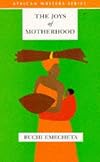
This is a fine novel. I wouldn't be surprised if it popped up on a school syllabus at some point.
It's just packed full of themes, especially feminism, and she's such a sensitive and subtle writer, nothing's laboured, she just gives you enough to get you thinking. I loved the wry humour and the scene where one character cheerfully declares she's going to be a prostitute had me laughing with shock. I think it's worth pointing out that the title is sarcastic. I wonder what Emecheta's children show more thought when they read it. show less
It's just packed full of themes, especially feminism, and she's such a sensitive and subtle writer, nothing's laboured, she just gives you enough to get you thinking. I loved the wry humour and the scene where one character cheerfully declares she's going to be a prostitute had me laughing with shock. I think it's worth pointing out that the title is sarcastic. I wonder what Emecheta's children show more thought when they read it. show less

Nnu Ego is the daughter of an Ibo chief and his favorite mistress, a headstrong woman who refuses to marry him or live in his compound. On the night that Nnu Ego is conceived, a horrible incident occurs which will overshadow Nnu Ego's life, for an angry spirit becomes her chi, a spiritual force that influences her life for good or ill.
Nnu Ego is raised lovingly and is married to a kind man whom she loves. Unfortunately, she is unable to conceive, even though many sacrifices are made to try show more and appease her chi. She returns home in disgrace when her husband takes another wife. Her father makes another match for her, sight unseen, with the son of a local family, although he lives in Lagos. When she shows up at the white man's compound where her new husband lives, she is dismayed to find that he is nothing as advertised.
Life with Nnaife is difficult from the beginning, but the one bright spot is that she soon becomes pregnant. This is the goal that she has been taught to strive for: motherhood. Her self-worth, societal standing, position in the family, everything, depends on her having children, especially boy children. Boys will grow up to take care of the family, the younger siblings, and her when she is old. Girls are helpful around the house, cheap because they don't need much education, and bring a handsome bride price at a young age. But the joy of motherhood is short-lived. Child mortality is high, poverty and malnutrition are constants, and her husband is neither supportive nor a good provider.
World War II brings great changes, none of them good. Throughout everything, however, Nnu Ego struggles to keep the boys in school. They are the future of the family and her social security. But as the years pass, traditional customs become alien to children raised in the city, and Nnu Ego finds herself struggling to understand how her life has turned out as it has.
The Joy of Motherhood is a most ironic title, both in the personal and societal sense. Nigeria undergoes tremendous change between the 1930s and 1950s, and traditional supports are undermined before new societal structures have been built. Nnu Ego is stuck between her traditional rural upbringing and the modern city in which she finds herself. While some women are able to navigate the changes, she is left behind. The novel is focused both on the micro, the life of one woman, and the macro, the place of women in Nigerian society. This is a book that I will be thinking about for a while. show less
Nnu Ego is raised lovingly and is married to a kind man whom she loves. Unfortunately, she is unable to conceive, even though many sacrifices are made to try show more and appease her chi. She returns home in disgrace when her husband takes another wife. Her father makes another match for her, sight unseen, with the son of a local family, although he lives in Lagos. When she shows up at the white man's compound where her new husband lives, she is dismayed to find that he is nothing as advertised.
Life with Nnaife is difficult from the beginning, but the one bright spot is that she soon becomes pregnant. This is the goal that she has been taught to strive for: motherhood. Her self-worth, societal standing, position in the family, everything, depends on her having children, especially boy children. Boys will grow up to take care of the family, the younger siblings, and her when she is old. Girls are helpful around the house, cheap because they don't need much education, and bring a handsome bride price at a young age. But the joy of motherhood is short-lived. Child mortality is high, poverty and malnutrition are constants, and her husband is neither supportive nor a good provider.
World War II brings great changes, none of them good. Throughout everything, however, Nnu Ego struggles to keep the boys in school. They are the future of the family and her social security. But as the years pass, traditional customs become alien to children raised in the city, and Nnu Ego finds herself struggling to understand how her life has turned out as it has.
The Joy of Motherhood is a most ironic title, both in the personal and societal sense. Nigeria undergoes tremendous change between the 1930s and 1950s, and traditional supports are undermined before new societal structures have been built. Nnu Ego is stuck between her traditional rural upbringing and the modern city in which she finds herself. While some women are able to navigate the changes, she is left behind. The novel is focused both on the micro, the life of one woman, and the macro, the place of women in Nigerian society. This is a book that I will be thinking about for a while. show less

Há tantos motivos para se gostar desse livro que nem sei por onde começar...
A primeira coisa que nos salta aos olhos é a qualidade da prosa da autora, ao mesmo tempo que ela envolve o leitor, o seu conteúdo de uma cultura extremamente diferente da nossa tanto no tempo quanto no espaço, é um abrir de olhos incomensurável.
Apesar da cultura nigeriana de meados do século XX ser extremamente distinta da nossa brasileira do século XXI, esse livro tem uma qualidade universal a respeito da show more maternidade que nos faz relacionar também às nossas avós e o motivo do porque elas terem tido tantos filhos e assim como elas, a protagonista deste livro no fim da vida aprendeu a ironia da expressão que nos induz ao título "alegrias da maternidade", quando na realidade se aplica a uma vida de sofrimentos e pouca alegria, para ser esquecida no final com o brilhante e amargo desenrolar descrito pela a autora. show less
A primeira coisa que nos salta aos olhos é a qualidade da prosa da autora, ao mesmo tempo que ela envolve o leitor, o seu conteúdo de uma cultura extremamente diferente da nossa tanto no tempo quanto no espaço, é um abrir de olhos incomensurável.
Apesar da cultura nigeriana de meados do século XX ser extremamente distinta da nossa brasileira do século XXI, esse livro tem uma qualidade universal a respeito da show more maternidade que nos faz relacionar também às nossas avós e o motivo do porque elas terem tido tantos filhos e assim como elas, a protagonista deste livro no fim da vida aprendeu a ironia da expressão que nos induz ao título "alegrias da maternidade", quando na realidade se aplica a uma vida de sofrimentos e pouca alegria, para ser esquecida no final com o brilhante e amargo desenrolar descrito pela a autora. show less
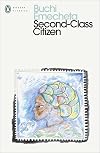
Second-Class Citizen is one of two semi-autobiographical novels telling the story of Adah, a young Nigerian woman in 1970s north London. Although it was her second published novel in 1974, chronologically this story comes before that told in Buchi Emecheta's first book, In the Ditch. Penguin have brought out new editions of Second-Class Citizen, In the Ditch and a third novel, The Joys of Motherhood, set in Nigeria, but I think Emecheta's work deserves to be better known.
Adah's life has been show more a challenge from the beginning, fighting to stay at school and enter for scholarship exams. She comes to England with two very young children, joining her husband who is studying law there and soon finds herself struggling to work, study and find childcare for herself, 5 children and her husband.
This book is sometimes sad and upsetting but also has some wonderful wit and humour, as Adah finds her own way of battling through sexism and racism as a black African girl and woman in Nigeria and then in 1970s London. Landlords often don't want black tenants with lots of children. But eventually she gets help from social workers to find childcare, and lands a library job with a colleague who recommends black writers, male and female, and also studies part time. Her reading eventually inspires her to start writing herself, but she also faces jealousy from her husband. I loved Adah as a character and I appreciated the social history in this novel and In the Ditch. I also liked the setting in an an area of London I know a little bit (in/near Kentish Town, I think).
I read and enjoyed the two books in publication order but wonder whether they would have been even better the other way round. show less
Adah's life has been show more a challenge from the beginning, fighting to stay at school and enter for scholarship exams. She comes to England with two very young children, joining her husband who is studying law there and soon finds herself struggling to work, study and find childcare for herself, 5 children and her husband.
This book is sometimes sad and upsetting but also has some wonderful wit and humour, as Adah finds her own way of battling through sexism and racism as a black African girl and woman in Nigeria and then in 1970s London. Landlords often don't want black tenants with lots of children. But eventually she gets help from social workers to find childcare, and lands a library job with a colleague who recommends black writers, male and female, and also studies part time. Her reading eventually inspires her to start writing herself, but she also faces jealousy from her husband. I loved Adah as a character and I appreciated the social history in this novel and In the Ditch. I also liked the setting in an an area of London I know a little bit (in/near Kentish Town, I think).
I read and enjoyed the two books in publication order but wonder whether they would have been even better the other way round. show less
Lists
AP Lit (1)
Read These Too (1)
Awards


You May Also Like


Associated Authors
Statistics
- Works
- 22
- Also by
- 9
- Members
- 2,727
- Popularity
- #9,415
- Rating
- 3.7
- Reviews
- 58
- ISBNs
- 191
- Languages
- 14
- Favorited
- 6