
Wole Soyinka
Author of Aké: The Years of Childhood
About the Author
Wole Soyinka was born in Abeokuta, Ogun State of Nigeria on July 13, 1934. He attended Government College and University College in Ibadan before receiving a degree in English from the University of Leeds in England in 1958. He has held research and teaching appointments at several universities show more including the University of Ibadan, the University of Ife, Cornell University, Emory University, the University of Nevada, Las Vegas, and Loyola Marymount. He is a distinguished playwright, poet, novelist, essayist, social critic, political activist, and literary scholar. His plays include The Swamp Dwellers, The Lion and the Jewel, A Dance of the Forests, The Bacchae of Euripides, A Play for Giants, Death and the King's Horsemen, From Zia with Love, The Beatification of Area Boy, and King Baabu. His collections of poetry include Idanre and Other Poems, A Shuttle in the Crypt, and Mandela's Earth and Other Poems. His novels include The Interpreters, which won the 1968 Jock Campbell Literary Award, and Season of Anomy. His autobiographical works include Ake: The Years of Childhood, Isara: A Voyage Around Essay, The Open Sore of a Continent: A Personal Memoir of the Nigerian Crisis, and You Must Set Forth at Dawn. His literary essays collections include Myth, Literature and the African World and Art, Dialogue and Outrage. During the civil war in Nigeria, he appealed for cease-fire in an article. Accused of treason, he was held in solitary confinement for 22 months. Two of his works, The Man Died: Prison Notes of Wole Soyinka and Poems from Prison, were secretly written on toilet paper and smuggled out of prison. He won the Nobel Prize for Literature in 1986. (Bowker Author Biography) show less
Image credit: Photo by Chidi Anthony Opara / Flickr
Series
Works by Wole Soyinka
The Open Sore of a Continent: A Personal Narrative of the Nigerian Crisis (1996) 113 copies, 1 review
Three Short Plays: The Swamp Dwellers / The Trials of Brother Jero / The Strong Breed (1969) 25 copies
Five Plays: A dance of the forests / The lion and the jewel / The swamp dwellers / The trials of Brother Jero / The strong breed (1964) 8 copies, 1 review
Plays: Play of Giants; From Zia with Love; A Source of Hyacinths; The Beatification of Area Boy v. 2 (Contemporary Dramatists) (1999) 7 copies
Before our very eyes: Tribute to Wole Soyinka, winner of the Nobel Prize for Literature (1987) 4 copies
The Strong Breed 3 copies
The Blackman and the Veil: A Century On (W.E.B. Du Bois-Padmore-Nkrumah Pan-African Lectures Series) (1993) 3 copies
INTERVENTION VOL I 2 copies
INTERVENTIONS VOL II 2 copies
Wole Soyinka: Collected Plays 2 2 copies
Outsiders 2 copies
Denne fortid må tale til sin nutid : nobelprisforelæsning, Stockholm 1986 : tilegnet Nelson Mandela (1987) 1 copy
Le lion et la perle 1 copy
Teatro africano 1 copy
The World As It Is: In the Eyes of Margaret Atwood, Wọlé Sóyinká, Ai Weiwei (1986) — Contributor — 1 copy
Tumači 1 copy
Os Intérpretes 1 copy
Three plays 1 copy
Tumaci 1 copy
Man And Nature 1 copy
Poems from Prison 1 copy
Etiki Revu Wetin 1 copy
Jero's Metamorphosis 1 copy
Before the Blackout 1 copy
La mmorphose de Fr J 1 copy
Outsiders 1 copy
Wole Soyinka Ki Kavitayen 1 copy
“Telephone Conversation” 1 copy
Associated Works
The Palm-Wine Drinkard and his Dead Palm-Wine Tapster in the Deads' Town (1952) — Introduction, some editions — 585 copies, 18 reviews
World Poetry: An Anthology of Verse from Antiquity to Our Time (1998) — Contributor — 499 copies, 2 reviews
Against Forgetting: Twentieth-Century Poetry of Witness (1993) — Contributor — 377 copies, 2 reviews
Choice Cuts: A Savory Selection of Food Writing from Around the World and Throughout History (2002) — Contributor — 368 copies, 2 reviews
Forest of a Thousand Daemons: A Hunter’s Saga (1939) — Translator, some editions — 121 copies, 5 reviews
Tagged
Common Knowledge
- Canonical name
- Soyinka, Wole
- Legal name
- S̩óyíinká, Akínwándé Olúwo̩lé Babátúndé
- Other names
- Sóyinká, Wọlé
- Birthdate
- 1934-07-13
- Gender
- male
- Education
- University of Leeds (BA|1958)
St. Peter's Primary School, Abeokuta, Nigeria
Abeokuta Grammar School
Government College, Ibadan, Nigeria
University College, Ibadan, Nigeria - Occupations
- playwright
poet
novelist
critic - Organizations
- Royal Court Theatre
University of Ifẹ̀
Cornell University - Awards and honors
- Honorary Fellow, Royal Society of Literature (1983)
Nobel Prize (Literature ∙ 1986)
Foreign Honorary Member, American Academy of Arts and Letters (1986)
Commander, Order of the Federal Republic (1986)
Benson Medal (1990)
BBC Reith Lecturer (2004) (show all 10)
Golden Plate Award (2009)
Anisfield-Wolf Book Award (Lifetime Achievement, 2013)
International Humanist Award (2014)
Premio Europa per il Teatro (2017) - Short biography
- fonda il gruppo teatrale "Le maschere 1960"
crea la compagnia "Teatro Orisun" - Nationality
- Nigeria
- Birthplace
- Abeokuta, Nigeria
- Places of residence
- Abeokuta, Nigeria
Ibadan, Nigeria
Leeds, Yorkshire, England, UK - Associated Place (for map)
- Nigeria
Members
Discussions
Wole Soyinka returns to Biafra in All Books Africa (October 2007)
Reviews

Soyinka has never believed in making life easy for the reader, and this — his first novel since 1972 — is no exception: the action of the plot keeps getting interrupted by long satirical asides that may or may not have something to do with the story. It's almost more of an extended essay with narrative interludes. But it's powerful stuff: Soyinka treats Nigeria with all the kid-glove delicacy of a 21st century Jonathan Swift.
His slightly fictionalised Nigeria is a kleptocracy where show more there is no longer any meaningful distinction to be made between politics, religion and organised crime. They are all just ways of getting to power and wealth whilst trampling on the faces of the ordinary people and bamboozling them with meaningless spectacle. In earlier times he might have held out some hope for the postcolonial world from African spirituality, but by now — or at least for the purposes of this satirical attack — he's clear that "tradition" and "religious law", whether they are indigenous or come from one of the two great imperialist religions, are just mechanisms the strong use to impose their will on the weak and satisfy their own desires and ambitions, whether at the level of the family or the state.
A bleak picture, and Soyinka doesn't show us any handy way to escape from it. The honest, upright characters in the story are never more than a pinprick annoyance for his arch-villains. But I'm sure he did cheer up innumerable readers by giving the most evil of the evil organisations in the book the name "Human Resources". We always knew... I'm sure a lot of evil HR managers will be getting this in their Christmas stocking. show less
His slightly fictionalised Nigeria is a kleptocracy where show more there is no longer any meaningful distinction to be made between politics, religion and organised crime. They are all just ways of getting to power and wealth whilst trampling on the faces of the ordinary people and bamboozling them with meaningless spectacle. In earlier times he might have held out some hope for the postcolonial world from African spirituality, but by now — or at least for the purposes of this satirical attack — he's clear that "tradition" and "religious law", whether they are indigenous or come from one of the two great imperialist religions, are just mechanisms the strong use to impose their will on the weak and satisfy their own desires and ambitions, whether at the level of the family or the state.
A bleak picture, and Soyinka doesn't show us any handy way to escape from it. The honest, upright characters in the story are never more than a pinprick annoyance for his arch-villains. But I'm sure he did cheer up innumerable readers by giving the most evil of the evil organisations in the book the name "Human Resources". We always knew... I'm sure a lot of evil HR managers will be getting this in their Christmas stocking. show less

This could well be classed as one of those books with a wilfully misleading title - unless you happen to remember from reading Aké that Soyinka's father was known by the nickname "Essay". It's actually an imaginative memoir about his father's life as a young headmaster in the colonial Nigeria of the thirties and forties, reconstructed from various documents that Soyinka found in a tin box after his father's death (the title is an allusion to John Mortimer's play about his own father, of show more course).
I didn't plan it that way, but it turned out to be very interesting to read it soon after The Interpreters, because there are a lot of parallels between the two - both focus on a group of clever, ambitious young professionals keen to better themselves and their country, but of course they are set a generation apart, one during the colonial period, the other soon after independence. The young men are all alumni of St Simeon's Training College, Ilesa (they call themselves the "Ex-Ilés", although the - British - college principal prefers the term "Simians").
The author's father - who is bafflingly never called "Essay" here, but appears as Akinyode Soditan or Yode - loyally teaches a curriculum full of pro-imperial propaganda, but isn't taken in by it himself, and doesn't really expect his students to be. Together with the other Ex-Ilés, he believes in a future in which educated Nigerians will take advantage of the skills they've learnt from the colonial powers to take over the running of their own, progressive and thoroughly modernised country. But they find that it's not as easy as all that - there are still strong forces in play that want to get rid of the poison of European ideas and take the country back to an - illusory - ideal of the African past. This ideological conflict is brought into a tangible form when the traditional ruler of Yode's home-town, Ìsarà, dies, and there are two obvious candidates for the succession, one a conservative and the other an Ex-Ilé with a civil-service job in Lagos.
On the whole, this is a lighter, funnier book than The Interpreters - the mood is closer to Aké - but it has its moments of dark violence and sinister magical influences as well.
I was amused to see that Soyinka manages to bring in a sub-plot in which a foreign conman is practicing an advance-fee scam on innocent Nigerians. Especially since the perpetrator is a Trinidadian-Asian based in London. Surely Soyinka wouldn't be using this as a way to tease a future fellow-Nobelist...? show less
I didn't plan it that way, but it turned out to be very interesting to read it soon after The Interpreters, because there are a lot of parallels between the two - both focus on a group of clever, ambitious young professionals keen to better themselves and their country, but of course they are set a generation apart, one during the colonial period, the other soon after independence. The young men are all alumni of St Simeon's Training College, Ilesa (they call themselves the "Ex-Ilés", although the - British - college principal prefers the term "Simians").
The author's father - who is bafflingly never called "Essay" here, but appears as Akinyode Soditan or Yode - loyally teaches a curriculum full of pro-imperial propaganda, but isn't taken in by it himself, and doesn't really expect his students to be. Together with the other Ex-Ilés, he believes in a future in which educated Nigerians will take advantage of the skills they've learnt from the colonial powers to take over the running of their own, progressive and thoroughly modernised country. But they find that it's not as easy as all that - there are still strong forces in play that want to get rid of the poison of European ideas and take the country back to an - illusory - ideal of the African past. This ideological conflict is brought into a tangible form when the traditional ruler of Yode's home-town, Ìsarà, dies, and there are two obvious candidates for the succession, one a conservative and the other an Ex-Ilé with a civil-service job in Lagos.
On the whole, this is a lighter, funnier book than The Interpreters - the mood is closer to Aké - but it has its moments of dark violence and sinister magical influences as well.
I was amused to see that Soyinka manages to bring in a sub-plot in which a foreign conman is practicing an advance-fee scam on innocent Nigerians. Especially since the perpetrator is a Trinidadian-Asian based in London. Surely Soyinka wouldn't be using this as a way to tease a future fellow-Nobelist...? show less

The Interpreters probably came over as a very African novel when it first appeared, but the first thing that strikes you reading it now is what a very 1960s novel it is. A group of intelligent young men (and their girlfriends) are struggling against the dull, conventional and corruptly self-interested way of life of the older generation, a struggle that mostly takes the form of long, earnest discussions about politics, philosophy and religion, all punctuated by drink, sex and subversive show more music and undermined by a series of absurd accidents and social embarrassments that leave them more-or-less back where they started.
But it is African as well, of course: the young characters are caught between the temptations of aspiring to one of the competing value-systems of western capitalism (most of them have studied abroad) and "old Africa" - where the tribal gods are competing with Christianity and Islam. At the same time, they are confronted with the unholy compromises that the current postcolonial ruling classes have made to protect their own interests.
Soyinka knows very well that adopting the form of the novel means that he's committing himself to the metropolitan mechanisms of production and distribution that go with that - he has to get it published in London, and he knows that the audience he can deliver it to is restricted by language, the written medium, access to books, and the leisure to read. Unlike plays and poems - accessible to everyone because they can be delivered orally over the radio, or live wherever actors can find a space to perform - novels are read only by people-who-read-novels, which for Soyinka in 1965 means students, foreigners, and the wealthy middle classes. That's presumably why he's only written one other novel. And why this is such a complicated, literary novel, full of direct and implied references to other books of the time, mostly at least slightly mocking: One of the characters keeps talking flippantly about cultivating his negritude (by going out in the sun); another has mapped out a pastiche existentialist philosophical system based on the pleasures of defecation; there's an American refugee from a James Baldwin novel who also happens to be a James Baldwin fan; there is a faculty party given by a pompous professor and subverted by one of the drunken characters, who is gatecrashing - to make sure we don't miss the Lucky Jim allusions there, we keep overhearing someone in the background talking about the Madrigal Group. And so on.
The nasty portrayal of the gay Baldwin-fan, Joe Golder, was probably offensive at the time, and of course feels doubly so now, when we know about the ways that the notion of homosexuality as an "unafrican" import has been used to whip up anger against LGBT people in so many African countries. We keep expecting Soyinka as narrator to step back from his characters' disgust with the fact of Golder's homosexuality and put it in perspective, but he never does, and it's difficult to avoid the conclusion that (at least when he wrote this) he shared their views.
Soyinka is a magnificent writer with a great feel for surprising and devastating images (often in very unexpected places, e.g. Like two halves of a broad bean, the pachydermous radiogram and the Managing Director.). He is also a dramatist who knows exactly how to place a major speech or a deflating incident where it can have the most impact, so this is never a dull book. But it is a complicated book, with a very heavy load of symbolism that never quite gets resolved, and many people who read it seem to feel afterwards that they aren't much further on. Given that it was published on the eve of a terrible civil war, it's perhaps not surprising that there is no neat ending with a vision for the future of Nigeria. show less
But it is African as well, of course: the young characters are caught between the temptations of aspiring to one of the competing value-systems of western capitalism (most of them have studied abroad) and "old Africa" - where the tribal gods are competing with Christianity and Islam. At the same time, they are confronted with the unholy compromises that the current postcolonial ruling classes have made to protect their own interests.
Soyinka knows very well that adopting the form of the novel means that he's committing himself to the metropolitan mechanisms of production and distribution that go with that - he has to get it published in London, and he knows that the audience he can deliver it to is restricted by language, the written medium, access to books, and the leisure to read. Unlike plays and poems - accessible to everyone because they can be delivered orally over the radio, or live wherever actors can find a space to perform - novels are read only by people-who-read-novels, which for Soyinka in 1965 means students, foreigners, and the wealthy middle classes. That's presumably why he's only written one other novel. And why this is such a complicated, literary novel, full of direct and implied references to other books of the time, mostly at least slightly mocking: One of the characters keeps talking flippantly about cultivating his negritude (by going out in the sun); another has mapped out a pastiche existentialist philosophical system based on the pleasures of defecation; there's an American refugee from a James Baldwin novel who also happens to be a James Baldwin fan; there is a faculty party given by a pompous professor and subverted by one of the drunken characters, who is gatecrashing - to make sure we don't miss the Lucky Jim allusions there, we keep overhearing someone in the background talking about the Madrigal Group. And so on.
The nasty portrayal of the gay Baldwin-fan, Joe Golder, was probably offensive at the time, and of course feels doubly so now, when we know about the ways that the notion of homosexuality as an "unafrican" import has been used to whip up anger against LGBT people in so many African countries. We keep expecting Soyinka as narrator to step back from his characters' disgust with the fact of Golder's homosexuality and put it in perspective, but he never does, and it's difficult to avoid the conclusion that (at least when he wrote this) he shared their views.
Soyinka is a magnificent writer with a great feel for surprising and devastating images (often in very unexpected places, e.g. Like two halves of a broad bean, the pachydermous radiogram and the Managing Director.). He is also a dramatist who knows exactly how to place a major speech or a deflating incident where it can have the most impact, so this is never a dull book. But it is a complicated book, with a very heavy load of symbolism that never quite gets resolved, and many people who read it seem to feel afterwards that they aren't much further on. Given that it was published on the eve of a terrible civil war, it's perhaps not surprising that there is no neat ending with a vision for the future of Nigeria. show less
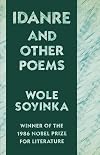
This immersive collection of Soyinka's early poetry is powerful and engrossing, densely packed with an appreciation for Nigerian culture and history, the natural world, and the difficulties inherent in a long-established culture suddenly being pulled all at once into the twentieth century and all that came with it. Soyinka's language is, as ever, tense and demanding, but full of such images and moments as make any collection shine.
This isn't an easy collection, but I was glad to immerse show more myself in it, and plan to revisit it at length. I'd recommend it for those interested in Soyinka's early work or African poetry. Soyinka was the first African writer to ever be awarded the Nobel Prize for Literature, and it's clear why. show less
This isn't an easy collection, but I was glad to immerse show more myself in it, and plan to revisit it at length. I'd recommend it for those interested in Soyinka's early work or African poetry. Soyinka was the first African writer to ever be awarded the Nobel Prize for Literature, and it's clear why. show less
Lists
Writers at Risk (1)
Awards


You May Also Like


Associated Authors
Statistics
- Works
- 139
- Also by
- 26
- Members
- 5,080
- Popularity
- #4,921
- Rating
- 3.8
- Reviews
- 49
- ISBNs
- 339
- Languages
- 19
- Favorited
- 8