
Maaza Mengiste
Author of The Shadow King
About the Author
Image credit: Maaza Mengiste at BookExpo at the Javits Center in New York City, May 2019. By Rhododendrites - Own work, CC BY-SA 4.0, https://commons.wikimedia.org/w/index.php?curid=79387571
Works by Maaza Mengiste
Of Interest to the General Public 2 copies
Through the Rear Window 1 copy
Associated Works
New Daughters of Africa: An International Anthology of Writing by Women of African Descent (2019) — Contributor — 116 copies, 1 review
Tagged
Common Knowledge
- Canonical name
- Mengiste, Maaza
- Birthdate
- 1974
- Gender
- female
- Education
- New York University
- Occupations
- novelist
essayist - Nationality
- Ethiopia
USA - Birthplace
- Addis Ababa, Ethiopia
- Places of residence
- Brooklyn, New York, USA
Members
Reviews

Reading the fourteen original stories in Addis Ababa Noir took me to a place I know little about and allowed me to experience different parts of the city through the imaginations of the authors. The book is published in the Akashic Noir series, and betrayal, violence, and death are everywhere. The specter of the Ethiopian Red Terror looms large as well.
The book is divided into four sections: Past Hauntings, Translations of Grief, Madness Descends, and Police and Thieves. While I enjoyed all show more of the stories, four in particular will stay with me. "A Double Edged Inheritance" by Hannah Giorgis and "Ostrich" by Rebecca Fisseha tell the stories of women living abroad who return to Ethiopia with questions whose answers entangle their own histories with that of their country. Dread sidles up to the reader at the beginning of Solomon Hailemariam's "None of Your Business" and lingers beyond the final words. And the characters in editor Maaza Mengiste's own contribution, "Dust, Ash, Flight," put themselves through a hell that rips the scabs off of their emotional wounds while even as it lets them hold onto the hope of resolution and maybe even redemption.
My enjoyment of Addis Ababa Noir is a great incentive to read more of many of these authors. Thanks to LibraryThing for the advanced reading copy. show less
The book is divided into four sections: Past Hauntings, Translations of Grief, Madness Descends, and Police and Thieves. While I enjoyed all show more of the stories, four in particular will stay with me. "A Double Edged Inheritance" by Hannah Giorgis and "Ostrich" by Rebecca Fisseha tell the stories of women living abroad who return to Ethiopia with questions whose answers entangle their own histories with that of their country. Dread sidles up to the reader at the beginning of Solomon Hailemariam's "None of Your Business" and lingers beyond the final words. And the characters in editor Maaza Mengiste's own contribution, "Dust, Ash, Flight," put themselves through a hell that rips the scabs off of their emotional wounds while even as it lets them hold onto the hope of resolution and maybe even redemption.
My enjoyment of Addis Ababa Noir is a great incentive to read more of many of these authors. Thanks to LibraryThing for the advanced reading copy. show less
 This review was written for LibraryThing Early Reviewers.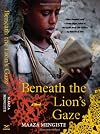
This is a well-written and gripping book if read as historical FICTION; it's a well-written and frightening book when read as HISTORICAL fiction. It is amazing how quickly the machinery of fascism and totalitarianism can get set up by people ostensibly working in the interest of the "people". Africa usually shakes free of the shackles of colonial powers only to fall prey to dictators backed by those powers. But Ethiopia was a sovereign nation ruled by an emperor whose lineage extended back show more into antiquity, so one could hope for so much more. Alas, like many kings and emperors, his neglect of the common people while living a life of luxury led to the coup that the cold war powers were only to glad to help make even more rapacious and violent.
Against this backdrop we get the gripping story of a family and country torn apart by the brutality of the Derg. Mengiste does a brilliant job of showing the different paths even members of the same family can take through a crisis of this magnitude and how there are many different types of courage and of resistance. When I read books like this, I always wonder, what would I do? How would that change based on when in my life it occurred? How did something like this happen without my knowledge? I was 13 when the Derg took power in the '70s. As an American, I remember Vietnam from that era, of course. I remember the Iranian Revolution. I remember Idi Amin and Apartheid. But why do I have this blank spot in my knowledge? Is it because no Americans or American interests were threatened? No cute elephants killed? Glad to fill in this missing knowledge even though it is sobering and gruesome to do so, and makes me grieve even more for Africa. I'll continue to fill in the holes of my knowledge of Africa as I find literature from each country and culture. I would heartily recommend Megiste for Ethiopia. show less
Against this backdrop we get the gripping story of a family and country torn apart by the brutality of the Derg. Mengiste does a brilliant job of showing the different paths even members of the same family can take through a crisis of this magnitude and how there are many different types of courage and of resistance. When I read books like this, I always wonder, what would I do? How would that change based on when in my life it occurred? How did something like this happen without my knowledge? I was 13 when the Derg took power in the '70s. As an American, I remember Vietnam from that era, of course. I remember the Iranian Revolution. I remember Idi Amin and Apartheid. But why do I have this blank spot in my knowledge? Is it because no Americans or American interests were threatened? No cute elephants killed? Glad to fill in this missing knowledge even though it is sobering and gruesome to do so, and makes me grieve even more for Africa. I'll continue to fill in the holes of my knowledge of Africa as I find literature from each country and culture. I would heartily recommend Megiste for Ethiopia. show less

This book wove together so many interests of mine that I found it mesmerizing to read. It takes place in Ethiopia from the 1930s on. I count among friends many people from Ethiopia so anytime I can learn more about their country I am interested. In the 1930s Italy, under Mussolini, attempted to conquer Ethiopia. So the subjects of fascism and colonial ambition form a large part of the story. One of the Italian soldiers who comes to Ethiopia brings a camera with him and he is often tasked show more with taking photographs of the captured Ethiopians. Although I'm not a great photographer I am always interested in what a good photographer can capture. That soldier happened to be Jewish so there is the whole question of the treatment of Jews by the Nazis that raises its ugly head. The most intriguing facet of the story and the whole reason Mengiste wrote the book is the integral part the Ethiopian women took in the resistance.
There are four women who play major roles in this book. Hirut was still a young girl when the Italians invaded. She was a servant in the household of Aster and Kidane, having been taken in by Kidane when her parents died. Also in the household is a woman known only as "the cook" who, rather shockingly, was a slave. Aster, Kidane's wife, did not want to be married. She and the cook tried to run away together just before the wedding ceremony but were caught and brought back. Aster bore a son to Kidane but he died in childhood which tragedy has deeply scarred both parents. The other main woman has many names: Fifi, Ferres, etc and she has many personas to go with those names. She has been a prostitute and she comes to the Italian camp to be the mistress of the commander. But she is also a spy who passes on much valuable information to the resistance fighters. Each of these women play an important role in the Ethiopian army.
It is Hirut who comes up with the observation that a musician who has joined the resistance looks just like Haile Selassie. Minim becomes the Shadow King and rallies the Ethiopians when the real Selassie has fled the country. Inspired by the faux Selassie the Ethiopians fight on against the Italians who eventually leave Ethiopia to return to the war in Europe.
The book is written with many interruptions to the narrative. There are descriptions of photographs, short biographies of tangential characters, interludes about what Selassie is doing and thinking, and a sort of Greek chorus to give overviews. With a less skilled writer this might make the book choppy but each time one of these sequences occurred I read them avidly. show less
There are four women who play major roles in this book. Hirut was still a young girl when the Italians invaded. She was a servant in the household of Aster and Kidane, having been taken in by Kidane when her parents died. Also in the household is a woman known only as "the cook" who, rather shockingly, was a slave. Aster, Kidane's wife, did not want to be married. She and the cook tried to run away together just before the wedding ceremony but were caught and brought back. Aster bore a son to Kidane but he died in childhood which tragedy has deeply scarred both parents. The other main woman has many names: Fifi, Ferres, etc and she has many personas to go with those names. She has been a prostitute and she comes to the Italian camp to be the mistress of the commander. But she is also a spy who passes on much valuable information to the resistance fighters. Each of these women play an important role in the Ethiopian army.
It is Hirut who comes up with the observation that a musician who has joined the resistance looks just like Haile Selassie. Minim becomes the Shadow King and rallies the Ethiopians when the real Selassie has fled the country. Inspired by the faux Selassie the Ethiopians fight on against the Italians who eventually leave Ethiopia to return to the war in Europe.
The book is written with many interruptions to the narrative. There are descriptions of photographs, short biographies of tangential characters, interludes about what Selassie is doing and thinking, and a sort of Greek chorus to give overviews. With a less skilled writer this might make the book choppy but each time one of these sequences occurred I read them avidly. show less
This review was first written for Author Exposure:
http://www.authorexposure.com/2011/01/book-review-beneath-lions-gaze-by-maaza.ht...
Beneath the Lion’s Gaze disturbingly, vividly, and passionately reminds us that only those willing to be fearless in their quest for knowledge of our world community’s history will recognize what an indomitable spirit we though scattered, demonstrate as inhabitants of a global community. With an unwavering hand, Maaza Mengiste pens an extraordinarily show more gripping debut narrative during the turbulent events that transpired not only in Addis Ababa, its capital and her birthplace, but also throughout the outlying regions of Ethiopia during one of its most inhumane periods in modern history.
In 1974, despite Emperor Haile Selassie’s exalted military status coupled with his humanitarian reign, the Rastafarian spirited winds of the “Horn of Africa” quietly whisper that the hour has come to depose our “King of Kings,” whose renowned leonine strength stealthily diminishes as age weakens and inflicts its inevitable miseries upon the mind and the body. Flickering triumphant memories become his daily reality. Incognizant or reluctant to address the current famine’s devastation, he silently ignores the increasing rumble of discontent and unremitting complaints among his subjects.
Meanwhile, rebellious university students take to the streets, clash with intractable soldiers secretly influenced by the sadistic military leader General Guddu, as other high-ranking officers subtly infiltrate the Emperor’s militia to swiftly depose the reigning monarch, thus marking the end of an ancient dynasty with a carefully planned coup d’état as a Marxist/Socialist Derg which promised positive change, initiates a reign of terror that effectively decimates a nation through atrocious torture, imprisonment of innocents (Selassie and members of his family, men, women, and children), assassinations and executions.
Neither palpable acrimony nor unreasonable judgment corrupts Mengiste’s scrupulous research. Her brilliant vessel to craft this unrelenting, brutal, yet effusive tale of her heritage centers on an ordinary family caught between the crossfire of a brutal military junta that eventually leads to civil war, and the intimate human connection that prevails despite its minute idiosyncrasies.
Grief-stricken, Hailu, the brilliant Addis Ababa doctor and patriarch stubbornly refuses to keep his promise to peacefully release his beloved wife Selam from her inevitable agonizing death. Yonas, his elder university professor son’s character mirrors his father. With his wife Sara and daughter Tizita, he lives within the family home. Dawit, the younger son, a university student initially committed to overthrow Selassie, recoils in horror when he views the Derg’s atrocities toward the Ethiopian people. Now united with the counterrevolutionaries, he is branded a traitor, unable to return home.
The peaceful compassion Hailu is unable to grant Salem, he ultimately provides to a young woman, tortured, brutalized, near death, but transported to the hospital and to him personally by soldiers with the Derg Colonel’s orders to tend to her wounds, and return her healed to him. Subsequently, Hailu is ordered to report to the newly constructed prison.
“…I have no need for bones and cartilage, blood and
breath. I can forget…I know now that time sinks to
the bottom of the sea and rises again in curves. My
reflection is only an illusion, only flesh and water
manifest in a drop of moonlight that shudders at what
it sees on this dead land I once called home…” (Page 207)
As I attempt to envision myself as an inhabitant of a global community, Beneath the Lion’s Gaze enhanced my knowledge by transporting me to another time in a country’s history, and this journey deeply affected me. Maaza Mengiste’s debut is an unforgettable tribute to the enormous strength, courage and pride of the Ethiopian people amid unspeakable adversity. Her eloquent prose exudes authenticity and glistens with poetic and spiritual nuances.
“Books are the carriers of civilization. Without books, history is silent, literature dumb…thought and speculation at a standstill.”
- Barbara Tuchman show less
http://www.authorexposure.com/2011/01/book-review-beneath-lions-gaze-by-maaza.ht...
Beneath the Lion’s Gaze disturbingly, vividly, and passionately reminds us that only those willing to be fearless in their quest for knowledge of our world community’s history will recognize what an indomitable spirit we though scattered, demonstrate as inhabitants of a global community. With an unwavering hand, Maaza Mengiste pens an extraordinarily show more gripping debut narrative during the turbulent events that transpired not only in Addis Ababa, its capital and her birthplace, but also throughout the outlying regions of Ethiopia during one of its most inhumane periods in modern history.
In 1974, despite Emperor Haile Selassie’s exalted military status coupled with his humanitarian reign, the Rastafarian spirited winds of the “Horn of Africa” quietly whisper that the hour has come to depose our “King of Kings,” whose renowned leonine strength stealthily diminishes as age weakens and inflicts its inevitable miseries upon the mind and the body. Flickering triumphant memories become his daily reality. Incognizant or reluctant to address the current famine’s devastation, he silently ignores the increasing rumble of discontent and unremitting complaints among his subjects.
Meanwhile, rebellious university students take to the streets, clash with intractable soldiers secretly influenced by the sadistic military leader General Guddu, as other high-ranking officers subtly infiltrate the Emperor’s militia to swiftly depose the reigning monarch, thus marking the end of an ancient dynasty with a carefully planned coup d’état as a Marxist/Socialist Derg which promised positive change, initiates a reign of terror that effectively decimates a nation through atrocious torture, imprisonment of innocents (Selassie and members of his family, men, women, and children), assassinations and executions.
Neither palpable acrimony nor unreasonable judgment corrupts Mengiste’s scrupulous research. Her brilliant vessel to craft this unrelenting, brutal, yet effusive tale of her heritage centers on an ordinary family caught between the crossfire of a brutal military junta that eventually leads to civil war, and the intimate human connection that prevails despite its minute idiosyncrasies.
Grief-stricken, Hailu, the brilliant Addis Ababa doctor and patriarch stubbornly refuses to keep his promise to peacefully release his beloved wife Selam from her inevitable agonizing death. Yonas, his elder university professor son’s character mirrors his father. With his wife Sara and daughter Tizita, he lives within the family home. Dawit, the younger son, a university student initially committed to overthrow Selassie, recoils in horror when he views the Derg’s atrocities toward the Ethiopian people. Now united with the counterrevolutionaries, he is branded a traitor, unable to return home.
The peaceful compassion Hailu is unable to grant Salem, he ultimately provides to a young woman, tortured, brutalized, near death, but transported to the hospital and to him personally by soldiers with the Derg Colonel’s orders to tend to her wounds, and return her healed to him. Subsequently, Hailu is ordered to report to the newly constructed prison.
“…I have no need for bones and cartilage, blood and
breath. I can forget…I know now that time sinks to
the bottom of the sea and rises again in curves. My
reflection is only an illusion, only flesh and water
manifest in a drop of moonlight that shudders at what
it sees on this dead land I once called home…” (Page 207)
As I attempt to envision myself as an inhabitant of a global community, Beneath the Lion’s Gaze enhanced my knowledge by transporting me to another time in a country’s history, and this journey deeply affected me. Maaza Mengiste’s debut is an unforgettable tribute to the enormous strength, courage and pride of the Ethiopian people amid unspeakable adversity. Her eloquent prose exudes authenticity and glistens with poetic and spiritual nuances.
“Books are the carriers of civilization. Without books, history is silent, literature dumb…thought and speculation at a standstill.”
- Barbara Tuchman show less
Lists
Awards


You May Also Like


Associated Authors
Statistics
- Works
- 6
- Also by
- 4
- Members
- 1,477
- Popularity
- #17,386
- Rating
- 3.8
- Reviews
- 85
- ISBNs
- 56
- Languages
- 8

