
Abdulrazak Gurnah
Author of Paradise
About the Author
Abdulrazak Gurnah teaches at the University of Kent in England.
Image credit: © Mark Pringle
Series
Works by Abdulrazak Gurnah
Associated Works
The Art of the Story: An International Anthology of Contemporary Short Stories (1999) — Contributor — 395 copies, 5 reviews
African Rhapsody: Short Stories of the Contemporary African Experience (1994) — Contributor — 23 copies
Tagged
Common Knowledge
- Legal name
- Gurnah, Abdulrazak
- Birthdate
- 1948-12-20
- Gender
- male
- Occupations
- professor (University of Kent)
novelist - Awards and honors
- Nobel Prize (Literature, 2021)
- Agent
- Deborah Rogers (Rogers, Coleridge & White)
- Nationality
- Tanzania (birth)
UK - Birthplace
- Zanzibar, Tanzania
- Places of residence
- Brighton, Sussex, England, UK
Tanzania
Nigeria
Canterbury, Kent, England, UK - Map Location
- Tanzania
Members
Reviews

At first glance, this is the ubiquitous autobiographical first novel every young postcolonial writer carries around in his suitcase, the story of a naive but clever boy from a modest background who has the good fortune to be sent to study abroad and made to question his assumptions about who he is and where he comes from, so that he can return home and come to terms with the unexplored rift in his relationship with his family. The sort of thing V S Naipaul could knock off before breakfast. show more
But of course this is Gurnah, and nothing is ever quite so straightforward. There's the obvious incongruity that the first-person narrator, Salim, is actually a generation younger than the author, growing up in Zanzibar in the 1970s and 80s. And of course it turns out that the real story is not about him, but about the catastrophic incident in his parents' lives that took place when he was too young to know about it. The Shakespearean title is already a broad hint at what is going on (and if you don't happen to know the play in question, don't worry, it's all explained later), but it takes Salim a while to work out what it's all about and what that means for him.
Gurnah brilliantly pulls off the deception of mixing his experience as a refugee and overseas student with what he's obviously learnt from the more recent experiences of his own students, and I don't think you'd ever spot that there was anything odd about it unless you happened to have an idea of how old he really is. You unquestioningly take Salim as a child of the mid-seventies. In the process, there's a lot of cunning laying of groundwork to prepare us for the narrative of Salim's father in the final chapters and teach us about what Tanzanian history in the years after the revolution did to human relationships. Enjoyable to read, and moving at the same time. show less
But of course this is Gurnah, and nothing is ever quite so straightforward. There's the obvious incongruity that the first-person narrator, Salim, is actually a generation younger than the author, growing up in Zanzibar in the 1970s and 80s. And of course it turns out that the real story is not about him, but about the catastrophic incident in his parents' lives that took place when he was too young to know about it. The Shakespearean title is already a broad hint at what is going on (and if you don't happen to know the play in question, don't worry, it's all explained later), but it takes Salim a while to work out what it's all about and what that means for him.
Gurnah brilliantly pulls off the deception of mixing his experience as a refugee and overseas student with what he's obviously learnt from the more recent experiences of his own students, and I don't think you'd ever spot that there was anything odd about it unless you happened to have an idea of how old he really is. You unquestioningly take Salim as a child of the mid-seventies. In the process, there's a lot of cunning laying of groundwork to prepare us for the narrative of Salim's father in the final chapters and teach us about what Tanzanian history in the years after the revolution did to human relationships. Enjoyable to read, and moving at the same time. show less
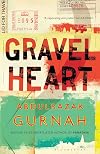
Continuing my quest to read meaningful books that are outside the swamp of grim MiseryLit, I collected Gravel Heart from the library. Gurnah's Nobel citation is "for his uncompromising and compassionate penetration of the effects of colonialism and the fate of the refugee in the gulf between cultures" but he's also ruthlessly honest about the post-colonial debacle in Africa, linking it not just to colonialism, but also to the vagaries of human nature. I like his interrogation of what it show more means to belong, and who takes responsibility for the loneliness of the migrant experience, and I like his sly humour too.
In Gravel Heart, Salim escapes from difficult domestic circumstances to London, his exodus funded by Uncle Amir who has made good in the uncertain post-colonial terrain of Tanzania. Salim is a bookish boy, but submits to Uncle Amir's assumption of control over his life, and so begins Business Studies in London, only to fail his exams because his heart is in literature, not in numbers. Amir, by then a senior diplomat, washes his hands of 'ungrateful' Salim, and so begins Salim's long, lonely, guilt-ridden and impecunious struggle to qualify in the subject that he loves. He lives in grimy overcrowded share houses; he sleeps with a girl who in a moment of intimacy says she'd marry him if he weren't black; and he writes home to his mother Saida in desultory letters that obscure his poverty, his thoughts and his feelings. She writes back in letters that obscure her health problems. Gurnah's technique for showing this mutual duplicity is to include the draft letters that Salim writes but doesn't send, followed by the ones that he does post, coupled with her evasive replies.
The catalyst for the rupture with Amir was his impulsive admission to Salim that his generosity was in repayment for something owed to Salim's mother. At home in Tanzania, Salim had never been able to find out why his parents lived separately, why his father Masud was a broken man, and why his mother still sent meals to him every day. Somewhere in the background, there had been another man—of powerful but enigmatic status, and there was a half-sister called Marina who was only a toddler at the time of Salim's departure. But the silence that cloaks this entire situation is impenetrable — until, still unsettled about how to live his life, he returns to Tanzania after his mother dies.
His father is by then, an old man. And in a slow, generous reconciliation, over many nights and in the consoling darkness, he tells his son the story of corruption and betrayal that destroyed their family.
To read the rest of my review please visit https://anzlitlovers.com/2022/03/27/gravel-heart-by-abdulrazak-gurnah/ show less
In Gravel Heart, Salim escapes from difficult domestic circumstances to London, his exodus funded by Uncle Amir who has made good in the uncertain post-colonial terrain of Tanzania. Salim is a bookish boy, but submits to Uncle Amir's assumption of control over his life, and so begins Business Studies in London, only to fail his exams because his heart is in literature, not in numbers. Amir, by then a senior diplomat, washes his hands of 'ungrateful' Salim, and so begins Salim's long, lonely, guilt-ridden and impecunious struggle to qualify in the subject that he loves. He lives in grimy overcrowded share houses; he sleeps with a girl who in a moment of intimacy says she'd marry him if he weren't black; and he writes home to his mother Saida in desultory letters that obscure his poverty, his thoughts and his feelings. She writes back in letters that obscure her health problems. Gurnah's technique for showing this mutual duplicity is to include the draft letters that Salim writes but doesn't send, followed by the ones that he does post, coupled with her evasive replies.
The catalyst for the rupture with Amir was his impulsive admission to Salim that his generosity was in repayment for something owed to Salim's mother. At home in Tanzania, Salim had never been able to find out why his parents lived separately, why his father Masud was a broken man, and why his mother still sent meals to him every day. Somewhere in the background, there had been another man—of powerful but enigmatic status, and there was a half-sister called Marina who was only a toddler at the time of Salim's departure. But the silence that cloaks this entire situation is impenetrable — until, still unsettled about how to live his life, he returns to Tanzania after his mother dies.
His father is by then, an old man. And in a slow, generous reconciliation, over many nights and in the consoling darkness, he tells his son the story of corruption and betrayal that destroyed their family.
To read the rest of my review please visit https://anzlitlovers.com/2022/03/27/gravel-heart-by-abdulrazak-gurnah/ show less
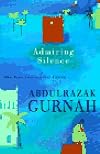
There is very little that happens in this Nobel Prize-winning novel, and yet, it's one of the most impactful books I've read this year. I'm married to an immigrant who came to the West, seeking opportunity and security. I've witnessed firsthand the emotional and psychological challenges that befall anyone who undertakes a cultural transition, the myriad, minor conflicts that play out in every aspect of daily life and relationships. It is a hard life, and Abdulrazak Gurnah captures it show more beautifully in this understated novel.
The main character, a fatherless man in his forties who immigrated from Zanzibar to England for an education, remains nameless. After moving to Great Britain in the 1960s, he meets a beautiful (and rebellious) white girl named Emma from a conservative family, and settles into a common law marriage with her. He lives almost wholly cut off from his family in Zanzibar, brushing off Emma's questions and concerns about why they have no contact, especially after the birth of their daughter. Still, it's not enough to rock the boat, and they live seemingly happily with our main character enjoying his typical western lifestyle - cocktails in the evening, a rebellious teenage daughter, and social obligations with Emma's family.
Things go smoothly until our protagonist returns to Zanzibar after twenty years (and much political upheaval), taking the reader with him. Gurnah does a masterful job of immersing us in another culture, using numerous small interactions with his people to illustrate just how differently the world appears from Zanzibar. From the colonizer to the colonized, from white to Black, from a secular environment to one that is decidedly Islamic, infused into every moment of his day.
His family wants him to come home to Zanzibar. He's got his education, and the country, having been ravaged by war and colonialism, needs him. They entice him with a fabulous government job and attempt to arrange an engagement to a beautiful young woman. Throughout, we hear his internal monologue pining for Emma, missing England, and criticizing the corruption and poor management of his home country. And yet. When he returns to England, he is confronted with the stark truth that he is not wholly of that place, and never will be.
The characters in this book feel real and vital. The main character is complicated, confused, but also cynical. He's got a great sense of humor, and many of his observations are pretty funny in a snarky, sarcastic way.
Throughout the entire time I was reading, I kept waiting for some huge, tragic event to unfold. In the end, however, the mundane reality of this man's life and experiences, representative of millions of other people who have found their way across the globe, is a powerful story without fireworks and contrivances. We are left only with his truth, which can fit nowhere but within himself, and for which there is no alternative. show less
The main character, a fatherless man in his forties who immigrated from Zanzibar to England for an education, remains nameless. After moving to Great Britain in the 1960s, he meets a beautiful (and rebellious) white girl named Emma from a conservative family, and settles into a common law marriage with her. He lives almost wholly cut off from his family in Zanzibar, brushing off Emma's questions and concerns about why they have no contact, especially after the birth of their daughter. Still, it's not enough to rock the boat, and they live seemingly happily with our main character enjoying his typical western lifestyle - cocktails in the evening, a rebellious teenage daughter, and social obligations with Emma's family.
Things go smoothly until our protagonist returns to Zanzibar after twenty years (and much political upheaval), taking the reader with him. Gurnah does a masterful job of immersing us in another culture, using numerous small interactions with his people to illustrate just how differently the world appears from Zanzibar. From the colonizer to the colonized, from white to Black, from a secular environment to one that is decidedly Islamic, infused into every moment of his day.
His family wants him to come home to Zanzibar. He's got his education, and the country, having been ravaged by war and colonialism, needs him. They entice him with a fabulous government job and attempt to arrange an engagement to a beautiful young woman. Throughout, we hear his internal monologue pining for Emma, missing England, and criticizing the corruption and poor management of his home country. And yet. When he returns to England, he is confronted with the stark truth that he is not wholly of that place, and never will be.
The characters in this book feel real and vital. The main character is complicated, confused, but also cynical. He's got a great sense of humor, and many of his observations are pretty funny in a snarky, sarcastic way.
Throughout the entire time I was reading, I kept waiting for some huge, tragic event to unfold. In the end, however, the mundane reality of this man's life and experiences, representative of millions of other people who have found their way across the globe, is a powerful story without fireworks and contrivances. We are left only with his truth, which can fit nowhere but within himself, and for which there is no alternative. show less

A man flees his home country to escape persecution. Another one fled years earlier. And then Fate puts them together - twice - once back home on Zanzibar, and now in England. That's the main premise of this short novel - but behind the almost mundane story of refugees and finding one's home, Gurnah manages to tell a story of Zanzibar and a story about the power of memories and perceptions.
Zanzibar is not a locality most people will be familiar with - I suspect the name will be familiar but show more other from that, it is usually just one of those places that you never think about. The part of this novel which take place there paint a picture which will stay with me for a long time (and which made me wonder again what were the Omanis doing there at all) and which may be better than almost any history text you can find about these times. But it is also a personal story - we see the island through the eyes of the two men - both of which fled the island, each for their own reason and yet, they both made the decision to do it. And if it is not enough to remind you about the power of telling a story, the dependence of a narrator when you are told a story, Gurnah reinforces us by having the two men remember the same times and places... and remember them differently. Even if you add them up, you still seem to miss pieces of the puzzle - and that's what this is all about - every story has a lot of sides and when we live through a time, we get one side only.
And that duality and difference is there in everything - in how the two men became refugees, in how they adapted to the changes, in how they keep their memories for home (and what they actually want to keep), even in who they meet when they went away from Zanzibar. It is like one of those carnival mirrors - it seems like it is the same story but in reality, it is 2 different stories - in a sea of separate stories. Being a refugee is not a story in itself; it is part of one's story, changing with the particulars of the individual. And yes, there are the mundane parts of the stories of both men - the stolen box, the German pen-friend, the room in the squalid house - the mundane is as much part of being human as is the exotic and interesting after all.
There had been a lot of books in the last years about refugees and memories of home and finding your place in a new country. This is one of the more memorable ones I've read - even if being a refugee is at the front of the story, it is just part of it, almost getting lost behind the story about what a person tells themselves about their own life.
That is the first novel by Gurnah which I read and I probably would not have picked it up if he had not won the Nobel prize - there are a lot of authors out there and he was not exactly popular (the day the Nobel was announced, my local library had a single copy of a single book by him (this one, the copy I read after waiting for it since the announcement - quite a lot of people beat me to requesting it that day...; the library had added quite a few more since then). I plan to explore what else he had written now - because regardless of how I got to read this novel, I really liked his way of writing. show less
Zanzibar is not a locality most people will be familiar with - I suspect the name will be familiar but show more other from that, it is usually just one of those places that you never think about. The part of this novel which take place there paint a picture which will stay with me for a long time (and which made me wonder again what were the Omanis doing there at all) and which may be better than almost any history text you can find about these times. But it is also a personal story - we see the island through the eyes of the two men - both of which fled the island, each for their own reason and yet, they both made the decision to do it. And if it is not enough to remind you about the power of telling a story, the dependence of a narrator when you are told a story, Gurnah reinforces us by having the two men remember the same times and places... and remember them differently. Even if you add them up, you still seem to miss pieces of the puzzle - and that's what this is all about - every story has a lot of sides and when we live through a time, we get one side only.
And that duality and difference is there in everything - in how the two men became refugees, in how they adapted to the changes, in how they keep their memories for home (and what they actually want to keep), even in who they meet when they went away from Zanzibar. It is like one of those carnival mirrors - it seems like it is the same story but in reality, it is 2 different stories - in a sea of separate stories. Being a refugee is not a story in itself; it is part of one's story, changing with the particulars of the individual. And yes, there are the mundane parts of the stories of both men - the stolen box, the German pen-friend, the room in the squalid house - the mundane is as much part of being human as is the exotic and interesting after all.
There had been a lot of books in the last years about refugees and memories of home and finding your place in a new country. This is one of the more memorable ones I've read - even if being a refugee is at the front of the story, it is just part of it, almost getting lost behind the story about what a person tells themselves about their own life.
That is the first novel by Gurnah which I read and I probably would not have picked it up if he had not won the Nobel prize - there are a lot of authors out there and he was not exactly popular (the day the Nobel was announced, my local library had a single copy of a single book by him (this one, the copy I read after waiting for it since the announcement - quite a lot of people beat me to requesting it that day...; the library had added quite a few more since then). I plan to explore what else he had written now - because regardless of how I got to read this novel, I really liked his way of writing. show less
Lists
Awards


You May Also Like


Associated Authors
Statistics
- Works
- 18
- Also by
- 11
- Members
- 3,388
- Popularity
- #7,526
- Rating
- 3.8
- Reviews
- 136
- ISBNs
- 234
- Languages
- 19
- Favorited
- 11