
Damon Galgut
Author of The Promise
About the Author
Image credit: Damon Galgut, credit Riyaz Mir
Works by Damon Galgut
The Promise, How Emotions Are Made, Heaven Is for Real, Normal People 4 Book Collection Set (2022) 1 copy
Arctic summer 1 copy
Az ígéret 1 copy
Associated Works
Queer: A Collection of LGBTQ Writing from Ancient Times to Yesterday (2021) — Contributor, some editions — 66 copies
Tagged
Common Knowledge
- Canonical name
- Galgut, Damon
- Birthdate
- 1963-11-12
- Gender
- male
- Education
- University of Cape Town
- Occupations
- playwright
novelist - Agent
- Caroline Wood (Felicity Bryan Associates)
- Short biography
- His debut novel, A Sinless Season, was published when he was 17.
- Nationality
- South Africa
- Birthplace
- Pretoria, South Africa
- Places of residence
- Pretoria, South Africa
Cape Town, South Africa - Associated Place (for map)
- South Africa
Members
Discussions
2021 Booker Prize Longlist: The Promise by Damon Galgut in Booker Prize (October 2021)
Reviews
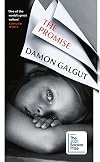
What an extraordinary novel. Using the story of a disfunctional Africaner family, Galgut traces the history of South Africa from apartheid to full democracy. The story opens with the death of Rachel, mother of three, and a promise she has extracted from her husband that her youngest, Amor, age 13, is witness to. Each decade, this promise is raised at the funeral of one of the family, coincident with major events in the country itself. At the end, we are left to realize that time has show more destroyed the value of the promise, the family, and in some ways, the dream of South Africa. Each member of the family is in a way contaminated by the promise, apartheid and the subsequent changes.
Galgut uses what we might call an omniscient narrator, but the voice is very close to us, practically whispering the stories in our ears. Each family member's history, character and trauma is revealed through an ironic South African Afrikaner lens. The writing is wonderful, lush, pointed - it brings you in close to this story and situation.
This novel certainly deserves its Booker award. show less
Galgut uses what we might call an omniscient narrator, but the voice is very close to us, practically whispering the stories in our ears. Each family member's history, character and trauma is revealed through an ironic South African Afrikaner lens. The writing is wonderful, lush, pointed - it brings you in close to this story and situation.
This novel certainly deserves its Booker award. show less
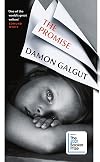
★★★★★ — well deserving of the 2021 Booker Prize
I found The Promise quietly unsettling and deeply poignant. On the surface it’s about a single promise made and repeatedly broken within one white South African family, but it’s impossible to separate that story from the larger backdrop of apartheid and its aftermath. The personal and the political are constantly bleeding into each other.
One of the most striking aspects of the novel is the narrator, omnipresent and drifting, show more sometimes slipping inside a character’s thoughts, sometimes hovering above the story altogether, even commenting on itself. It gives the book a strange, dreamlike quality. You never feel fully settled, and that unease feels deliberate.
None of the characters feel whole. The family itself is deeply dysfunctional: between parents and children, and even among the siblings, there is little sense of genuine closeness. Astrid is brittle and insecure, obsessed with appearances. Anton is angry and self-destructive, permanently at odds with his father and the world. Amor carries the moral weight of the novel, but even she feels powerless, burdened by guilt over a promise she remembers clearly yet struggles to act on. Everyone seems damaged in small, ordinary ways, which somehow makes it worse.
What stayed with me most was the ending. When the promise is finally fulfilled, I didn’t feel relieved or moved — just hollow. There’s a lingering sense of what’s the point now? Justice arrives, but so late and so drained of meaning that it barely registers as justice at all. It made me think about how often promises — personal or political — are used to postpone responsibility, until they become indistinguishable from lies.
Salome, the woman to whom the promise is made, is kept mostly at the edges of the novel. She appears only in brief moments, rarely given any real interior life. At first this feels frustrating, even wrong, but over time it begins to feel intentional. She is the reason for everything, yet she remains peripheral — talked about, argued over, but never truly centred. That absence feels like part of the book’s moral argument. Even when injustice is acknowledged, those most affected are often denied a voice.
By the end, The Promise offers no comfort or closure. It leaves you sitting with discomfort, with the sense that doing the right thing too late doesn’t undo what’s already been lost. It’s a cold book in some ways, but that coldness feels honest. It doesn’t try to redeem its characters or the history they’re part of — it simply shows how damage lingers, even after the promise is finally kept.
P/S: After finishing the last page, I found myself unable to linger on the book’s cover for long. That, in itself, felt telling. show less
I found The Promise quietly unsettling and deeply poignant. On the surface it’s about a single promise made and repeatedly broken within one white South African family, but it’s impossible to separate that story from the larger backdrop of apartheid and its aftermath. The personal and the political are constantly bleeding into each other.
One of the most striking aspects of the novel is the narrator, omnipresent and drifting, show more sometimes slipping inside a character’s thoughts, sometimes hovering above the story altogether, even commenting on itself. It gives the book a strange, dreamlike quality. You never feel fully settled, and that unease feels deliberate.
None of the characters feel whole. The family itself is deeply dysfunctional: between parents and children, and even among the siblings, there is little sense of genuine closeness. Astrid is brittle and insecure, obsessed with appearances. Anton is angry and self-destructive, permanently at odds with his father and the world. Amor carries the moral weight of the novel, but even she feels powerless, burdened by guilt over a promise she remembers clearly yet struggles to act on. Everyone seems damaged in small, ordinary ways, which somehow makes it worse.
Salome, the woman to whom the promise is made, is kept mostly at the edges of the novel. She appears only in brief moments, rarely given any real interior life. At first this feels frustrating, even wrong, but over time it begins to feel intentional. She is the reason for everything, yet she remains peripheral — talked about, argued over, but never truly centred. That absence feels like part of the book’s moral argument. Even when injustice is acknowledged, those most affected are often denied a voice.
By the end, The Promise offers no comfort or closure. It leaves you sitting with discomfort, with the sense that doing the right thing too late doesn’t undo what’s already been lost. It’s a cold book in some ways, but that coldness feels honest. It doesn’t try to redeem its characters or the history they’re part of — it simply shows how damage lingers, even after the promise is finally kept.
P/S: After finishing the last page, I found myself unable to linger on the book’s cover for long. That, in itself, felt telling. show less

The Promise is not only a very engaging story penned by a master storyteller, it also offers great riches for readers who are alert to passing allusions. Even the surname of the white family that is central to the story has meaning: 'Swart' is an Afrikaans surname meaning 'black', and the word 'swart' is also an archaic form of 'swarthy', so for a story that begins in South Africa under apartheid where skin colour determined every aspect of life, Galgut has employed ironic naming for these show more racist characters. Also, the origin of the surname in England comes from a family seat as Lords of the Manor of Sward in Cornwall, and the Swart family of The Promise certainly regard themselves as lords of their estate in Pretoria, as did landowners throughout South Africa in the apartheid era.
A graven image who is unseen.
Ironies abound in The Promise.
The Promise traces the fate of five main characters, linked by a sequence of funerals. The story begins with the death of Rachel Swart from cancer in 1986. 13-year-old Amor, sent away for the last phase of her mother's illness, is recalled for the funeral, and collected by her aunt Marina who is hungry for drama and gossip and cheap spectacle. Tannie Marina is outraged that Ma has betrayed the whole family by changing her religion, to going back to her old religion. To being a Jew!
Religion has never been a force for good in South Africa. Believers have cherry-picked the Bible for scripture to support apartheid, and post-apartheid, false traditional beliefs have hindered efforts to contain HIV. These beliefs and other forms of denialism — notably by President Thabo Mbeki— have led to South Africa having 7.5 million people living with HIV, the highest in the world. A tsunami of suffering that Amor cannot hope to ease in her work as a palliative care nurse.
Unconscious of the fact that apartheid routinely separates Black South Africans in death, Manie Swart is distraught that his wife's decision about religion means that they will not be buried together in the same family plot. At the funeral service we see the divisions in society laid bare. Salome, the servant who nursed Ma in her last days, did all the jobs that people in her own family didn't want to do, too dirty or too intimate, is not present. It doesn't occur to anyone that she should be there, so she offers up a prayer for Rachel in the privacy of the shack she lives in. Whatever god Salome and her disenfranchised fellow-Blacks have been praying to over the long years of thankless servitude, he hasn't been listening.
To read the rest of my review please visit https://anzlitlovers.com/2021/09/18/the-promise-by-damon-galgut/ show less
...the person in the room isn't Ma. It's Salome, of course, who has been here on the farm forever, or that's how it feels. My grandfather always talked about her like that, Oh, Salome, I got her along with the land.
Pause a moment to observe, as she takes the sheets off the bed. A stout, solid woman, wearing a second-hand dress, given to her by Ma years ago. A headscarf tied over her hair. She is barefoot, and the soles of her feet are cracked and dirty. Her hands have marks on them too, the scuffs and scars of innumerable collisions. Same age as Ma supposedly, forty, though she looks much older. Hard to put an exact number on her. Not much shows in her face, she wears her life like a mask, like a graven image. (p.18)
A graven image who is unseen.
She was with Ma when she died, right there next to the bed, though nobody seems to see her, she is apparently invisible. And whatever Salome feels is invisible too. (p.19)
Ironies abound in The Promise.
The Promise traces the fate of five main characters, linked by a sequence of funerals. The story begins with the death of Rachel Swart from cancer in 1986. 13-year-old Amor, sent away for the last phase of her mother's illness, is recalled for the funeral, and collected by her aunt Marina who is hungry for drama and gossip and cheap spectacle. Tannie Marina is outraged that Ma has betrayed the whole family by changing her religion, to going back to her old religion. To being a Jew!
Religion has never been a force for good in South Africa. Believers have cherry-picked the Bible for scripture to support apartheid, and post-apartheid, false traditional beliefs have hindered efforts to contain HIV. These beliefs and other forms of denialism — notably by President Thabo Mbeki— have led to South Africa having 7.5 million people living with HIV, the highest in the world. A tsunami of suffering that Amor cannot hope to ease in her work as a palliative care nurse.
Unconscious of the fact that apartheid routinely separates Black South Africans in death, Manie Swart is distraught that his wife's decision about religion means that they will not be buried together in the same family plot. At the funeral service we see the divisions in society laid bare. Salome, the servant who nursed Ma in her last days, did all the jobs that people in her own family didn't want to do, too dirty or too intimate, is not present. It doesn't occur to anyone that she should be there, so she offers up a prayer for Rachel in the privacy of the shack she lives in. Whatever god Salome and her disenfranchised fellow-Blacks have been praying to over the long years of thankless servitude, he hasn't been listening.
To read the rest of my review please visit https://anzlitlovers.com/2021/09/18/the-promise-by-damon-galgut/ show less

Damon Galgut is my new discovery. I've been reading two of his books in a row and liked them a lot. I like his style of writing, which is clean, and pure; no unnecessary adjectives or metaphors, no wannabe poetry, just a straightforward story that has plenty of deepness just by itself.
The impostor has a thrillerlike tension which kept me quite hooked. (I won't disclose too much of the story though, for this reason) Yet, despite some elements that remind of a thriller, this definitely isn't show more one. It is very much a story of the new South Africa, of the way people survive in a fast changing environment. The book poses questions about morality in such an environment. How to keep up with politically correct liberalminded standards if the easy way is to just let go and choose the most profitable way for yourself?
The main character of this book, Adam Napier seems a rather sympathetic guy, who has just lost his job and his home and now wants to write poetry. But after a while I realized that this was not a very sympathetic person at all. And worse, that I could have been him, had I been born elsewhere. It is easy to have high moral standards when you are not challenged by life. It really made me think. show less
The impostor has a thrillerlike tension which kept me quite hooked. (I won't disclose too much of the story though, for this reason) Yet, despite some elements that remind of a thriller, this definitely isn't show more one. It is very much a story of the new South Africa, of the way people survive in a fast changing environment. The book poses questions about morality in such an environment. How to keep up with politically correct liberalminded standards if the easy way is to just let go and choose the most profitable way for yourself?
The main character of this book, Adam Napier seems a rather sympathetic guy, who has just lost his job and his home and now wants to write poetry. But after a while I realized that this was not a very sympathetic person at all. And worse, that I could have been him, had I been born elsewhere. It is easy to have high moral standards when you are not challenged by life. It really made me think. show less
Lists
Booker Prize (3)
Big Jubilee List (1)
Awards


You May Also Like


Associated Authors
Statistics
- Works
- 14
- Also by
- 6
- Members
- 3,855
- Popularity
- #6,577
- Rating
- 3.8
- Reviews
- 188
- ISBNs
- 194
- Languages
- 13
- Favorited
- 7


