
Achmat Dangor (1948–2020)
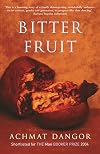
Author of Bitter Fruit
About the Author
Image credit: Zimbio
Works by Achmat Dangor
Een kerstverhaal 3 copies
Associated Works
Tagged
Common Knowledge
- Canonical name
- Dangor, Achmat
- Birthdate
- 1948-10-02
- Date of death
- 2020-09-06
- Gender
- male
- Awards and honors
- South African Literary Award Lifetime Achievement (2015)
- Nationality
- South Africa
- Birthplace
- Johannesburg, South Africa
- Places of residence
- Johannesburg, Zuid-Afrika
- Place of death
- Johannesburg, South Africa
- Associated Place (for map)
- Johannesburg, South Africa
Members
Reviews
A disappointment.
This novel deals with the personal and the political dimensions of post-Apartheid South Africa. One of the main characters, Silas, was involved in the anti-Apartheid struggle and is now part of the new political elite that tries to build a new society. Can the Truth and Reconciliation Committee (TRC) heal the wounds of years of oppression, can it make people forgive and forget? As a politician, Silas would agree, yet in his personal life he experiences that it doesn't.
In show more the years of the struggle, Lydia, Silas' wife, has been raped by a white police officer, while Silas was beaten up in a policevan. Lydia and Silas never talked about what happened, however, the story of this novel is set into motion as Silas accidentally runs into this (former) police officer. He goes home and tells Lydia. This brings back to Lydia the memories and the pain of the actual event and of the years of silence in the relationship between Silas and her. She wounds herself by walking in glass and ends up in hospital. Still, the couple can't find ways to discuss what happened. Silas flees into work, thereby estranging himself from Lydia for ever.
So far, a moving story of the longlasting effects of the years of Apartheid and oppression, and an interesting insight in South African society.
What happens next however is a series of events, that involve alot of sexual fantasies, sexual relationships between people of very different age groups, incestuous feelings and relationships even, that made me think that this society is very sick. As if, by using sexual oppression as a means of racial oppression, the oppressors caused a trauma that runs much much deeper than the wounds that the TRC could ever heal.
Then there is also the rather unbelievable storyline of Mickey, Lydia's son, who turns to his Muslim non-family to seek help for revenge on the man who raped his mother. It seemed a bit too easy and clichéed to me, to use Muslims to help Mickey get weapons and get away with crime. To once again create an almost logical connection between a person starting to study the Koran and violence.
The subject of this book is interesting enough, however I got more and more fed up with all the sexual events, that seemed rather self repeating after awhile, and as said, the clichéed use of Muslims as terrorists. So, no, I would not recommend this book to anyone. Which is a shame really, with such an interesting topic. show less
This novel deals with the personal and the political dimensions of post-Apartheid South Africa. One of the main characters, Silas, was involved in the anti-Apartheid struggle and is now part of the new political elite that tries to build a new society. Can the Truth and Reconciliation Committee (TRC) heal the wounds of years of oppression, can it make people forgive and forget? As a politician, Silas would agree, yet in his personal life he experiences that it doesn't.
In show more the years of the struggle, Lydia, Silas' wife, has been raped by a white police officer, while Silas was beaten up in a policevan. Lydia and Silas never talked about what happened, however, the story of this novel is set into motion as Silas accidentally runs into this (former) police officer. He goes home and tells Lydia. This brings back to Lydia the memories and the pain of the actual event and of the years of silence in the relationship between Silas and her. She wounds herself by walking in glass and ends up in hospital. Still, the couple can't find ways to discuss what happened. Silas flees into work, thereby estranging himself from Lydia for ever.
So far, a moving story of the longlasting effects of the years of Apartheid and oppression, and an interesting insight in South African society.
What happens next however is a series of events, that involve alot of sexual fantasies, sexual relationships between people of very different age groups, incestuous feelings and relationships even, that made me think that this society is very sick. As if, by using sexual oppression as a means of racial oppression, the oppressors caused a trauma that runs much much deeper than the wounds that the TRC could ever heal.
Then there is also the rather unbelievable storyline of Mickey, Lydia's son, who turns to his Muslim non-family to seek help for revenge on the man who raped his mother. It seemed a bit too easy and clichéed to me, to use Muslims to help Mickey get weapons and get away with crime. To once again create an almost logical connection between a person starting to study the Koran and violence.
The subject of this book is interesting enough, however I got more and more fed up with all the sexual events, that seemed rather self repeating after awhile, and as said, the clichéed use of Muslims as terrorists. So, no, I would not recommend this book to anyone. Which is a shame really, with such an interesting topic. show less

I thought it would be interesting to read a novel set in post apartheid South Africa, but unfortunately, this one failed to hit the spot as an enjoyable read.
As others have said, the novel is obsessed with bodily functions, sweating, sex, bad breath etc and is full of highly intuitive characters who seem to just know things. Was the author trying to show that South Africa is still a country rooted in superstition and survival instincts?
Silas started out as a character I had some sympathy for show more and the early scene where Lydia cuts her feet is very moving, but then it is down hill from there.
There is so much inappropriate sex and desire for sex between mother and son, father and daughter, lecturer and pupil etc it just got silly. show less
As others have said, the novel is obsessed with bodily functions, sweating, sex, bad breath etc and is full of highly intuitive characters who seem to just know things. Was the author trying to show that South Africa is still a country rooted in superstition and survival instincts?
Silas started out as a character I had some sympathy for show more and the early scene where Lydia cuts her feet is very moving, but then it is down hill from there.
There is so much inappropriate sex and desire for sex between mother and son, father and daughter, lecturer and pupil etc it just got silly. show less
Apartheid is over and Silas and Lydia have moved out of the township to a suburb of Johannesburg. Silas works as a lawyer for the Department for Justice and his wife Lydia is a nurse. The pair are haunted by a past cruelty towards Lydia and they seem trapped in a loveless marriage, staying together because that’s easier than parting. Living with them is their 18-year-old son Mickey who is studying literature at university. He and his parents have problems communicating with each other.
One show more day whilst out, Silas recognises a man called François du Boise, an Afrikaner policeman and the man who caused so much misery to Silas and Lydia 20 years ago when he raped Lydia whilst Silas was forced to listen. Silas makes the mistake of telling Lydia of the encounter and she reacts by dancing on broken glass, leading to her being hospitalised.
Mickey goes off the rails and his parents discover that he has had an affair with two older women – a colleague of Silas’ and with one of his university lecturers. Mickey decides to track down his estranged paternal grandparents, who are Muslim and as he spends increasing amounts of time with them he becomes even more withdrawn from his mother and father as their relationships crumble.
Overall I found this rather an unsatisfactory book. I did not warm to the characters at all, which made it hard to have any empathy with them. Had South Africa not been a country I needed to do for my World Challenge then I wouldn’t have continued with it. show less
One show more day whilst out, Silas recognises a man called François du Boise, an Afrikaner policeman and the man who caused so much misery to Silas and Lydia 20 years ago when he raped Lydia whilst Silas was forced to listen. Silas makes the mistake of telling Lydia of the encounter and she reacts by dancing on broken glass, leading to her being hospitalised.
Mickey goes off the rails and his parents discover that he has had an affair with two older women – a colleague of Silas’ and with one of his university lecturers. Mickey decides to track down his estranged paternal grandparents, who are Muslim and as he spends increasing amounts of time with them he becomes even more withdrawn from his mother and father as their relationships crumble.
Overall I found this rather an unsatisfactory book. I did not warm to the characters at all, which made it hard to have any empathy with them. Had South Africa not been a country I needed to do for my World Challenge then I wouldn’t have continued with it. show less

Bitter Fruit was a finalist for the Booker for 2004 and also for that new Irish prize. It was first published in South Africa in 2001. Like his better-known countryman and two-time Booker winner, J.M. Coetzee, Dangor deals with post-Apartheid South Africa, but Dangor’s novel presents some barriers for the reader who doesn’t know South Africa. Conversations are sprinkled with Afrikaans words that are not always understandable from context and the reader may be perplexed by political show more references. The geography is strange too—I had to look up on a map to see exactly where Johannesburg is compared to Cape Town and the sea for instance. However, I only care about the map with books that give me an acute sense of place—and this one did.
The novel’s main characters are Silas Ali, his wife Lydia and their son Mikey (or Michael). Silas (son of a Muslim of Indian origin and a white mother) had been a member of the underground during the last years of Apartheid and now has a significant position as lawyer in the Justice Department, focusing on the Truth and Reconciliation Committee’s (TRC) report. Lydia comes from a family with strong ties from the black middle class. Mikey, now 19 and a university student, is the child of rape. Lydia was raped by a white police officer while Silas was arrested and beaten in a nearby van. At the beginning of the novel, Silas sees the man who raped Lydia in a local grocery store and when he tells her about the encounter, she drops a glass and walks on it—causing her to be rushed to the hospital where she stays for a considerable time, unable to walk. While she is there, Mikey, whose cousin had been sent to live in Canada after the two were caught “playing Gandhi” (lying together naked without touching) in his room, sleeps with the bisexual white colleague of Silas who volunteers to stay with him (since Lydia worries about him alone while she's in the hospital).
Silas telling Lydia of his sighting of the rapist DuBoise opens up cracks in the family that cannot be papered over. He becomes more depressed and discouraged, with the political situation as well as with his personal life. Lydia quits her job as a nurse to work in an AIDS awareness program, buys a car, becomes sexually active for the first time in years (on a billiard table at a party in the presence of her husband and son). Mikey reads his mother’s diary while she is in the hospital and learns of the rape. Ironically, it triggers his interest in Silas’ late grandfather, a well-known IMAM at a local mosque. He gets involved with “cousins” who are undoubtedly part of radical organizations who help him get weapons and encourage him to live underground.
The novel blends the racial, the sexual and the political or maybe when politics involves race it then automatically involves sex as well. There’s a character who tells Mikey that conquerors win ultimately by bastardizing the children. There are suggestions that the blending of the races produces beauty and sexual attractiveness as well as diverse sexual practices. Mikey is described a beautiful in a particularly sexual way and he learns his power over women early, attracting older women particularly, including his university professors and even his mother. A girlfriend who’s half Afrikaans and half Indian, confesses she’s had sex with her father since she was 14, and is angry with her father only because he’s found someone else. Lydia’s beautiful young man on the billiard table is also of mixed race. Silas on the other hand seems cut off totally from sex and the same time as he’s being cut out of government (as a new President prepares to take office). All his former underground associates, a mix of races and colors, seem to have missed the promised land in spite of their success. I haven’t quit worked out how all this adds up –possibly an inversion of TRC’s goals? Possibly though it just isn’t all connected—Mikey’s involvement with terrorists is believable enough but seems to be taking the novel is an entirely extraneous direction. show less
The novel’s main characters are Silas Ali, his wife Lydia and their son Mikey (or Michael). Silas (son of a Muslim of Indian origin and a white mother) had been a member of the underground during the last years of Apartheid and now has a significant position as lawyer in the Justice Department, focusing on the Truth and Reconciliation Committee’s (TRC) report. Lydia comes from a family with strong ties from the black middle class. Mikey, now 19 and a university student, is the child of rape. Lydia was raped by a white police officer while Silas was arrested and beaten in a nearby van. At the beginning of the novel, Silas sees the man who raped Lydia in a local grocery store and when he tells her about the encounter, she drops a glass and walks on it—causing her to be rushed to the hospital where she stays for a considerable time, unable to walk. While she is there, Mikey, whose cousin had been sent to live in Canada after the two were caught “playing Gandhi” (lying together naked without touching) in his room, sleeps with the bisexual white colleague of Silas who volunteers to stay with him (since Lydia worries about him alone while she's in the hospital).
Silas telling Lydia of his sighting of the rapist DuBoise opens up cracks in the family that cannot be papered over. He becomes more depressed and discouraged, with the political situation as well as with his personal life. Lydia quits her job as a nurse to work in an AIDS awareness program, buys a car, becomes sexually active for the first time in years (on a billiard table at a party in the presence of her husband and son). Mikey reads his mother’s diary while she is in the hospital and learns of the rape. Ironically, it triggers his interest in Silas’ late grandfather, a well-known IMAM at a local mosque. He gets involved with “cousins” who are undoubtedly part of radical organizations who help him get weapons and encourage him to live underground.
The novel blends the racial, the sexual and the political or maybe when politics involves race it then automatically involves sex as well. There’s a character who tells Mikey that conquerors win ultimately by bastardizing the children. There are suggestions that the blending of the races produces beauty and sexual attractiveness as well as diverse sexual practices. Mikey is described a beautiful in a particularly sexual way and he learns his power over women early, attracting older women particularly, including his university professors and even his mother. A girlfriend who’s half Afrikaans and half Indian, confesses she’s had sex with her father since she was 14, and is angry with her father only because he’s found someone else. Lydia’s beautiful young man on the billiard table is also of mixed race. Silas on the other hand seems cut off totally from sex and the same time as he’s being cut out of government (as a new President prepares to take office). All his former underground associates, a mix of races and colors, seem to have missed the promised land in spite of their success. I haven’t quit worked out how all this adds up –possibly an inversion of TRC’s goals? Possibly though it just isn’t all connected—Mikey’s involvement with terrorists is believable enough but seems to be taking the novel is an entirely extraneous direction. show less
Lists
Awards


You May Also Like


Associated Authors
Statistics
- Works
- 10
- Also by
- 1
- Members
- 503
- Popularity
- #49,234
- Rating
- 3.2
- Reviews
- 8
- ISBNs
- 32
- Languages
- 9