
Sarah Hall (1) (1974–)
Author of The Electric Michelangelo
For other authors named Sarah Hall, see the disambiguation page.
About the Author
Image credit: Allen and Unwin Media Centre
Works by Sarah Hall
Associated Works
The O. Henry Prize Stories 2019: 100th Anniversary Edition (2019) — Contributor — 62 copies, 2 reviews
These Our Monsters: The English Heritage Collection of Short Stories (2019) — Contributor — 26 copies, 1 review
Bard: The Short Story Collection: 6 Original Contemporary Fiction Short Stories (2018) — Contributor — 8 copies
Tagged
Common Knowledge
- Birthdate
- 1974
- Gender
- female
- Education
- Aberystwyth University (BA|English and Art History)
St Andrew's University (MLitt|Creative Writing) - Occupations
- novelist
poet - Awards and honors
- Granta's Best of Young British Novelists (2013)
- Nationality
- UK
- Birthplace
- Carlisle, Cumbria, England, UK
- Places of residence
- North Carolina, USA
Norwich, Norfolk, England, UK - Map Location
- England, UK
Members
Reviews

''On spring days the tall windows let in an ambiance of sunlight and the single classroom of the school swims with brightness, trapped shafts of sun warming the back of her neck as she sits bent over the day's text, the illuminated writing. On rainy days she will gaze out of the smeared window panes to the fields and the fells beyond the school gates. The sky a deep saturated yellow, dark, greyish blue to the west where the weather comes in from rocks with layers of water. The drenched show more bracken and foliage on the banks of the hill find their own patterns in the wind, and at this distance look alike wet brown velvet. There is mist low in the valley over the river, then mountains, the spine of High Street, and finally mist again, dissolving into nothing.''
As unbelievable as it may seem, it took me more than a year to finish this novel. I started it last November and within a month I decided to put it aside for the time being. Not because I didn't like it. On the contrary. Its power was literally all-consuming and my mental disposition couldn't cope with such emotional tension. This December was the right time to revisit it, finish it and characterize it as the modern-age Wuthering Heights.
''This is a warm night towards the end of the summer in 1936. The stars are brilliant above the fells, many still unmapped, unnamed, though the solar system is being completed. She uncovers her shoulders and waits, hopeful of his insomnia., A new tenderness has led her here, coming from their short separation. During the long days of haying she missed hum, sorry for her demands that he keep away.''
I couldn't help but view Sarah Hall as a contemporary Emily Bronte while reading this masterpiece. We follow a pair of lovers and the community that have to come to terms with life-changing decisions. A man who arrives from Manchester to serve a dubious cause, the destruction of land on the altar of industrialization and profit, is entranced with a young woman, a new Cathy, a wild wraith of the moors...
What follows is an all-consuming brave obsession. An unafraid Cathy to a virtuous Heathcliff, an exquisitely visceral, sensual journey. Sarah Hall is an astonishing writer. She hops from some fo the most electrifying, poetic and realistic erotic scenes to beautiful descriptions of the Lake District and its influence on Jack, the son of the city, a land that has given birth to Jannet's unwavering spirit.
''The season was turning bitter, the short, hot summer had all but bled out. There was a fresh, woody smell in the air and the red bracken was wild over the sheep paths, twisting its stems together in firm, mature knots so that his boots had to rip through as he walked. Warm rain from the summer was gone.''
And then we are given cozy, heart-warming scenes of traditional British Christmas, of mincepies and liquor, carols, lamps on the windows, Nativity figures, evergreen and stories in the dark nights of winter.
But she can tear your heart out with seven lines:
''Still she cried blood. The sight haunted the workers, marched widely through the sub-region of their minds. It was supernatural, they told each other. She was possessed by a spirit, her blood was still living, still being made in the body. It was necromancy, they said, black art. And the rumours became seamed with sorcery. Thunder broke the sky, added to the tension, to the mood of the crowd.''
The final pages contain some of the most haunting, eerie scenes. Paragraphs echoing the last page of Wuthering Heights and the novel is merciless up to its last lines.
This book was Sarah Hall's debut. For me, it is the best work of a unique writer.
''On this night of gathering storm there is no regret. There is only the energy of the half-hidden moon that reaches her, dying over her hands on the detonator, and even the air, littered with the last breath of the dan's god does not move. She is at the edge of a vast universe, where old elements are fused. Like an old wound.''
My reviews can also be found on https://theopinionatedreaderblog.wordpress.com/ show less
As unbelievable as it may seem, it took me more than a year to finish this novel. I started it last November and within a month I decided to put it aside for the time being. Not because I didn't like it. On the contrary. Its power was literally all-consuming and my mental disposition couldn't cope with such emotional tension. This December was the right time to revisit it, finish it and characterize it as the modern-age Wuthering Heights.
''This is a warm night towards the end of the summer in 1936. The stars are brilliant above the fells, many still unmapped, unnamed, though the solar system is being completed. She uncovers her shoulders and waits, hopeful of his insomnia., A new tenderness has led her here, coming from their short separation. During the long days of haying she missed hum, sorry for her demands that he keep away.''
I couldn't help but view Sarah Hall as a contemporary Emily Bronte while reading this masterpiece. We follow a pair of lovers and the community that have to come to terms with life-changing decisions. A man who arrives from Manchester to serve a dubious cause, the destruction of land on the altar of industrialization and profit, is entranced with a young woman, a new Cathy, a wild wraith of the moors...
What follows is an all-consuming brave obsession. An unafraid Cathy to a virtuous Heathcliff, an exquisitely visceral, sensual journey. Sarah Hall is an astonishing writer. She hops from some fo the most electrifying, poetic and realistic erotic scenes to beautiful descriptions of the Lake District and its influence on Jack, the son of the city, a land that has given birth to Jannet's unwavering spirit.
''The season was turning bitter, the short, hot summer had all but bled out. There was a fresh, woody smell in the air and the red bracken was wild over the sheep paths, twisting its stems together in firm, mature knots so that his boots had to rip through as he walked. Warm rain from the summer was gone.''
And then we are given cozy, heart-warming scenes of traditional British Christmas, of mincepies and liquor, carols, lamps on the windows, Nativity figures, evergreen and stories in the dark nights of winter.
But she can tear your heart out with seven lines:
''Still she cried blood. The sight haunted the workers, marched widely through the sub-region of their minds. It was supernatural, they told each other. She was possessed by a spirit, her blood was still living, still being made in the body. It was necromancy, they said, black art. And the rumours became seamed with sorcery. Thunder broke the sky, added to the tension, to the mood of the crowd.''
The final pages contain some of the most haunting, eerie scenes. Paragraphs echoing the last page of Wuthering Heights and the novel is merciless up to its last lines.
This book was Sarah Hall's debut. For me, it is the best work of a unique writer.
''On this night of gathering storm there is no regret. There is only the energy of the half-hidden moon that reaches her, dying over her hands on the detonator, and even the air, littered with the last breath of the dan's god does not move. She is at the edge of a vast universe, where old elements are fused. Like an old wound.''
My reviews can also be found on https://theopinionatedreaderblog.wordpress.com/ show less
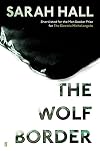
Alex Clark - the Guardian
Thu 2 Apr 2015 02.00 AEDT
Share
5
The skills that Sarah Hall demonstrates in her highly anticipated fifth novel are significant and profound; they nourish her larger creative and intellectual vision, rather than existing simply as admirable accomplishments. So it is that the descriptions of altered or threatened landscapes for which she is celebrated – and which feature most prominently in her first novel, Haweswater – are precisely observed but distinctly show more non-hyperbolic; they convey beauty but resist the picturesque, instead posing questions about it. Arguments about how the land is mediated by its human inhabitants are discreetly introduced. At Christmas time, characters “go hollying, taking with them a hemp sack, like old-timers”, a moment of ironised nostalgia immediately followed by a description that is more straightforward but nonetheless appeals to an idealised sense of the countryside in winter: “It is cold, cold enough to snow – the eaves of soil between the tree roots are whitening. The trees ring glassily with birdcalls. In the bare upper branches, the black rooks look almost like spawn.”
In an entirely different season comes an episode of river-swimming that sounds like something from a brochure – “The slate bottom electrifies the water, renders it exotically blue, like something from a rainforest or a lagoon. Further up are waterfalls, in deep, shadowed gulleys, the miasma of their spray jewelled by sunlight. Everything smells of minerals: green and reedy” – but is then undercut when the swimmers are pictured as “lidoists”.
Chief among them is Rachel Caine, from whose point of view the entire novel is narrated; other characters are refracted through her quasi-scientific, determinedly dispassionate subjectivity. Rachel has spent a decade studying the wolves that live on an Idaho reservation, living in semi-seclusion and balancing dry-sounding stuff such as lupine serotonin levels with the more vivid business of tracking the pack, negotiating the area’s management with its indigenous human population, and maintaining vigilance in the face of occasional saboteurs.
Now, though, a succession of ostensibly unrelated events returns her to her native Cumbria. There is the invitation to manage the reintroduction of wolves – 500-odd years after their extinction in Britain – to a vast estate owned by an ecologically ambitious earl with Willy Wonka-style tendencies; the death of her mother, somehow liberating her to return; and, finally, Rachel’s unwanted, unpredicted pregnancy, the result of a brief lapse in her normal regime of efficient, anonymous, consequence-free sexual encounters.
The wolves are the novel’s most obvious distinguishing feature, which makes Hall’s achievement in writing about elusive creatures whose “vanishing acts have been perfected” even more remarkable. Their occasional appearances, once they have been imported from Romania with paramilitary logistical control, are supplemented by the reactions they provoke: the hostility and anxiety from local farmers and parents, who remain immune to the earl’s reassurance that you could safely leave a baby in its pram in their enclosure (and who, to be fair, would try that?); the zealous enthusiasm for rewilding that glosses over its necessarily contrived nature; and the more nebulous hold wolves have on our collective imagination, their changing place in Britain’s island mythology, its “iconography of wilderness”.
For Rachel, they represent both a potential for the return of wilderness and grounds for pragmatism about its limits in contemporary society. “She would like to believe there will be a place, again, where the streetlights end and wilderness begins. The wolf border. And if this is where it has to begin in England, she thinks, this rich, disqualifying plot, with its private sponsorship and antiquated hierarchy, so be it. The ends justify the means.” But as the novel progresses, it becomes clear that England is not the only player in the story. Across the border, Scotland is gearing up for an independence vote in which, in a moment of alternative history that sits oddly but not unworkably in the realist narrative, its people vote to dissolve the union. It is a decision inextricably tied to the physical environment; before too long, “great swaths of foreign-owned land are being recovered, taxes levied on the distilleries, the salmon farms”. When England becomes snowbound, “Scotland is equipped and faring well. The ploughs are out; the roads are gritted. Glasgow airport is open for business, flights to Heathrow are being redirected there.”
If, as Rachel observes, England’s countryside is mainly regarded as a series of gardens for its cities, then Scotland’s independence gives it the opportunity to revert to something more primal, more authentically unmanaged. Ideas of what that means flow through the novel, seeping into its explorations of motherhood, of family and sexual relationships, of duty.
But perhaps it is this schematism that slightly hobbles the novel, too; throughout, something feels off. Despite the obstacles carefully stacked up for Rachel to deal with at the outset, there is a marked absence of jeopardy. Plot complications come and go with a problematic lack of incident. The demonstrators that greet the wolves disperse, either satisfied or bored; the tension over whether the wolf pair will breed vanishes when they do, easily; Rachel’s ambivalence over her pregnancy resolves with little soul-searching, and she subsequently stops having disturbing dreams about her mother. She gets a boyfriend; he’s pretty nice. Each of these elements is a little more complicated than precis suggests, but not a lot more.
This seemed to me an insurmountable problem, a fatal flaw, and I puzzled for days between readings over how so clearly committed and careful a writer could have allowed it to happen. But the novel’s ending – a breach of some sort, a rupture of the peace – provided one solution: Rachel, in her neat cottage on a meticulously maintained estate in which nothing “is allowed to moulder and rot”, her bed and board paid for, her food delivered to her just as the estate’s deer are served up to the hunting wolves, has herself been tamed. Harm comes only in fantasy, such as when she imagines one of the wolves being abducted, to be pitted against “some trained brute of a dog in a gore-smeared ring”. This, of course, is not really wilderness and, both at the end of the narrative and, by implication, in the world beyond the book, there must be a more brutal reckoning. It’s debatable whether a novel should embed its own message so deeply as to create a sheen of implausibility, but it is suggestive and provocative enough to survive the attempt, just about.
https://www.theguardian.com/books/2015/apr/01/the-wolf-border-by-sarah-hall-revi... show less
Thu 2 Apr 2015 02.00 AEDT
Share
5
The skills that Sarah Hall demonstrates in her highly anticipated fifth novel are significant and profound; they nourish her larger creative and intellectual vision, rather than existing simply as admirable accomplishments. So it is that the descriptions of altered or threatened landscapes for which she is celebrated – and which feature most prominently in her first novel, Haweswater – are precisely observed but distinctly show more non-hyperbolic; they convey beauty but resist the picturesque, instead posing questions about it. Arguments about how the land is mediated by its human inhabitants are discreetly introduced. At Christmas time, characters “go hollying, taking with them a hemp sack, like old-timers”, a moment of ironised nostalgia immediately followed by a description that is more straightforward but nonetheless appeals to an idealised sense of the countryside in winter: “It is cold, cold enough to snow – the eaves of soil between the tree roots are whitening. The trees ring glassily with birdcalls. In the bare upper branches, the black rooks look almost like spawn.”
In an entirely different season comes an episode of river-swimming that sounds like something from a brochure – “The slate bottom electrifies the water, renders it exotically blue, like something from a rainforest or a lagoon. Further up are waterfalls, in deep, shadowed gulleys, the miasma of their spray jewelled by sunlight. Everything smells of minerals: green and reedy” – but is then undercut when the swimmers are pictured as “lidoists”.
Chief among them is Rachel Caine, from whose point of view the entire novel is narrated; other characters are refracted through her quasi-scientific, determinedly dispassionate subjectivity. Rachel has spent a decade studying the wolves that live on an Idaho reservation, living in semi-seclusion and balancing dry-sounding stuff such as lupine serotonin levels with the more vivid business of tracking the pack, negotiating the area’s management with its indigenous human population, and maintaining vigilance in the face of occasional saboteurs.
Now, though, a succession of ostensibly unrelated events returns her to her native Cumbria. There is the invitation to manage the reintroduction of wolves – 500-odd years after their extinction in Britain – to a vast estate owned by an ecologically ambitious earl with Willy Wonka-style tendencies; the death of her mother, somehow liberating her to return; and, finally, Rachel’s unwanted, unpredicted pregnancy, the result of a brief lapse in her normal regime of efficient, anonymous, consequence-free sexual encounters.
The wolves are the novel’s most obvious distinguishing feature, which makes Hall’s achievement in writing about elusive creatures whose “vanishing acts have been perfected” even more remarkable. Their occasional appearances, once they have been imported from Romania with paramilitary logistical control, are supplemented by the reactions they provoke: the hostility and anxiety from local farmers and parents, who remain immune to the earl’s reassurance that you could safely leave a baby in its pram in their enclosure (and who, to be fair, would try that?); the zealous enthusiasm for rewilding that glosses over its necessarily contrived nature; and the more nebulous hold wolves have on our collective imagination, their changing place in Britain’s island mythology, its “iconography of wilderness”.
For Rachel, they represent both a potential for the return of wilderness and grounds for pragmatism about its limits in contemporary society. “She would like to believe there will be a place, again, where the streetlights end and wilderness begins. The wolf border. And if this is where it has to begin in England, she thinks, this rich, disqualifying plot, with its private sponsorship and antiquated hierarchy, so be it. The ends justify the means.” But as the novel progresses, it becomes clear that England is not the only player in the story. Across the border, Scotland is gearing up for an independence vote in which, in a moment of alternative history that sits oddly but not unworkably in the realist narrative, its people vote to dissolve the union. It is a decision inextricably tied to the physical environment; before too long, “great swaths of foreign-owned land are being recovered, taxes levied on the distilleries, the salmon farms”. When England becomes snowbound, “Scotland is equipped and faring well. The ploughs are out; the roads are gritted. Glasgow airport is open for business, flights to Heathrow are being redirected there.”
If, as Rachel observes, England’s countryside is mainly regarded as a series of gardens for its cities, then Scotland’s independence gives it the opportunity to revert to something more primal, more authentically unmanaged. Ideas of what that means flow through the novel, seeping into its explorations of motherhood, of family and sexual relationships, of duty.
But perhaps it is this schematism that slightly hobbles the novel, too; throughout, something feels off. Despite the obstacles carefully stacked up for Rachel to deal with at the outset, there is a marked absence of jeopardy. Plot complications come and go with a problematic lack of incident. The demonstrators that greet the wolves disperse, either satisfied or bored; the tension over whether the wolf pair will breed vanishes when they do, easily; Rachel’s ambivalence over her pregnancy resolves with little soul-searching, and she subsequently stops having disturbing dreams about her mother. She gets a boyfriend; he’s pretty nice. Each of these elements is a little more complicated than precis suggests, but not a lot more.
This seemed to me an insurmountable problem, a fatal flaw, and I puzzled for days between readings over how so clearly committed and careful a writer could have allowed it to happen. But the novel’s ending – a breach of some sort, a rupture of the peace – provided one solution: Rachel, in her neat cottage on a meticulously maintained estate in which nothing “is allowed to moulder and rot”, her bed and board paid for, her food delivered to her just as the estate’s deer are served up to the hunting wolves, has herself been tamed. Harm comes only in fantasy, such as when she imagines one of the wolves being abducted, to be pitted against “some trained brute of a dog in a gore-smeared ring”. This, of course, is not really wilderness and, both at the end of the narrative and, by implication, in the world beyond the book, there must be a more brutal reckoning. It’s debatable whether a novel should embed its own message so deeply as to create a sheen of implausibility, but it is suggestive and provocative enough to survive the attempt, just about.
https://www.theguardian.com/books/2015/apr/01/the-wolf-border-by-sarah-hall-revi... show less
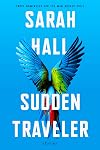
Sarah Hall's prose is heady and intelligent. These dense stories feel restless, always in motion, internal or external. The opening story, "M," is a standout - inexorably drawing the reader deeper into its uncomfortable darkness, without one wasted word. This collection burns with a fierce, persistent light of righteous anger and uncompromising empathy for its characters.
 This review was written for LibraryThing Early Reviewers.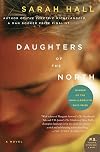
This novel can be summed up more or less accurately as a portrayal of what second wave feminism would look like if it were not a movement of theory, but a paramilitary insurgency. The plot revolves around an unnamed protagonist in a dystopian England who finds herself confined by the rules and regulations and dreary life under the hand of the Authority. Humiliated and ashamed of a contraceptive coil she is forced to have implanted within her, she finds her resentment growing, until she flees show more to a commune of sorts in the northern area. Here she finds a group of women who subsist in a libertarian system, though led by the founder, a charismatic woman named Jackie Nixon.
And here is where many reviewers seem to be torn. The first two-thirds of the book clearly revolve more around feminist theory: the women are portrayed as being more comfortable with themselves, eager to work and speak up and be heard; Hall specifically condemns those who think "cattiness" is somehow innate to feminine nature and that women have to have a masculine influence around or somehow we'll wither and die. The book also dips more into second wave feminism at this point, as it celebrates lesbian relationships and criticizes the handful of men who live on a neighboring farm.
The final third, however, becomes much more bloody and real.
Hall writes Jackie Nixon convincingly. Too often, leaders are portrayed as being perfect, which feels fake, but Nixon is clearly a flawed character. She is stubborn, willful, and not a little bloodthirsty; as is so often the case, however, these eccentricities do not detract from her charisma, but give it a sense of realism. Often the most beloved leaders, the ones most celebrated, are just a little off.
Nixon hears news that the Authority is planning on invading the farm and rousting its inhabitants, forcing them to live under the same oppressive rule they fled from, and here Hall forces the reader to make a choice: do we believe Nixon? The reader's opinion influences how they feel about the rest of the book. Other women back Nixon's story up, but they are all part of her elite group, and it is continually shown that she is somewhat revered, a leader of women, someone who makes them feel like more than they are, that they are part of something. The unnamed protagonist, who has idolized Nixon since she was a little girl, feels the same way. Nixon proposes striking first, in a moving speech about the responsibilities of liberty. Others feel that they should continue as they have been and hope they are left alone. Again, who you agree with hinges more than a little on whether you believe Nixon is telling the truth, and for every clue that she is (concurring reports), there is also evidence that she may not (several times her bloodthirsty and restless nature is mentioned, as well as implications she may not be entirely stable).
The protagonist, known only as Sister, joins in Nixon's cause, and we see that these are the true Daughters of the North, not the commune itself. These daughters seem wild, unearthly, sprung up from the ground itself instead of born from fathers and mothers. They are hard, ruthless, and single-minded.
The central question is whether or not the cause is just, not the leader. Nixon is changeable and often cruel: she conducts midnight raids on the women, tortures them in a tiny chamber, and even kills two who try to escape. One woman protests that Sister has been groomed since she arrived for this purpose and Nixon is manipulating them - which may very well be true. Early on in the book, and quite tellingly, Sister relays a conversation she had with her father where he says, "It doesn't do to rely on those in charge completely." Just because Jackie's system is not as overtly oppressive as the Authority does not mean that she is not in charge. Nixon is portrayed as the perfect rebellion leader: she gives moving speeches about liberty, she reads profusely and has experience, she exudes a charisma which bespells those who follow her quite willingly. But whether or not she is on the right side of it is quite a different matter.
The book is compelling, not shying away from complexities or ambiguities - no one is completely in the right. The Authority is abusing human rights, Nixon is clearly spoiling for a war. Are they both meant to be wrong? Is there a point when we have to accept that nonviolent resistance is not feasible in every conflict?
Whether or not you agree with the methods used, or even some of the more radical aspects of the feminist theory lying underneath, Hall has beautiful prose that somehow ties beautiful descriptions with thematic intensity. One of the most gorgeous examples of this is when Sister is training. She comments: "My whole life I had loved the upland terrain, deriving simple pleasure from it as a child - the views, the changing colours of the slopes, the brackish rivers - and though for years I had seen it at only a distance, I had often thought of the landscape as I stood beside the conveyor at the factory; it was a place of beauty and escape. Now I stumbled across its gills and over its marshland, bending to meet the wind when it roared against me, and dragging myself up by the scars by handfuls of heather and thorn bushes, by any firm hold. And still, I could not say it wasn't beautiful. Despite its austerity, its vast and cowing expanse, and the agony of its traverse, it seemed more beautiful than ever."
Here, again, we see that these women are from the Earth itself, from the North that gave them birth.
If you are at all interested in feminism, dystopian worlds, complex and subtle stories of power, this is a wonderful book to read. show less
And here is where many reviewers seem to be torn. The first two-thirds of the book clearly revolve more around feminist theory: the women are portrayed as being more comfortable with themselves, eager to work and speak up and be heard; Hall specifically condemns those who think "cattiness" is somehow innate to feminine nature and that women have to have a masculine influence around or somehow we'll wither and die. The book also dips more into second wave feminism at this point, as it celebrates lesbian relationships and criticizes the handful of men who live on a neighboring farm.
The final third, however, becomes much more bloody and real.
Hall writes Jackie Nixon convincingly. Too often, leaders are portrayed as being perfect, which feels fake, but Nixon is clearly a flawed character. She is stubborn, willful, and not a little bloodthirsty; as is so often the case, however, these eccentricities do not detract from her charisma, but give it a sense of realism. Often the most beloved leaders, the ones most celebrated, are just a little off.
Nixon hears news that the Authority is planning on invading the farm and rousting its inhabitants, forcing them to live under the same oppressive rule they fled from, and here Hall forces the reader to make a choice: do we believe Nixon? The reader's opinion influences how they feel about the rest of the book. Other women back Nixon's story up, but they are all part of her elite group, and it is continually shown that she is somewhat revered, a leader of women, someone who makes them feel like more than they are, that they are part of something. The unnamed protagonist, who has idolized Nixon since she was a little girl, feels the same way. Nixon proposes striking first, in a moving speech about the responsibilities of liberty. Others feel that they should continue as they have been and hope they are left alone. Again, who you agree with hinges more than a little on whether you believe Nixon is telling the truth, and for every clue that she is (concurring reports), there is also evidence that she may not (several times her bloodthirsty and restless nature is mentioned, as well as implications she may not be entirely stable).
The protagonist, known only as Sister, joins in Nixon's cause, and we see that these are the true Daughters of the North, not the commune itself. These daughters seem wild, unearthly, sprung up from the ground itself instead of born from fathers and mothers. They are hard, ruthless, and single-minded.
The central question is whether or not the cause is just, not the leader. Nixon is changeable and often cruel: she conducts midnight raids on the women, tortures them in a tiny chamber, and even kills two who try to escape. One woman protests that Sister has been groomed since she arrived for this purpose and Nixon is manipulating them - which may very well be true. Early on in the book, and quite tellingly, Sister relays a conversation she had with her father where he says, "It doesn't do to rely on those in charge completely." Just because Jackie's system is not as overtly oppressive as the Authority does not mean that she is not in charge. Nixon is portrayed as the perfect rebellion leader: she gives moving speeches about liberty, she reads profusely and has experience, she exudes a charisma which bespells those who follow her quite willingly. But whether or not she is on the right side of it is quite a different matter.
The book is compelling, not shying away from complexities or ambiguities - no one is completely in the right. The Authority is abusing human rights, Nixon is clearly spoiling for a war. Are they both meant to be wrong? Is there a point when we have to accept that nonviolent resistance is not feasible in every conflict?
Whether or not you agree with the methods used, or even some of the more radical aspects of the feminist theory lying underneath, Hall has beautiful prose that somehow ties beautiful descriptions with thematic intensity. One of the most gorgeous examples of this is when Sister is training. She comments: "My whole life I had loved the upland terrain, deriving simple pleasure from it as a child - the views, the changing colours of the slopes, the brackish rivers - and though for years I had seen it at only a distance, I had often thought of the landscape as I stood beside the conveyor at the factory; it was a place of beauty and escape. Now I stumbled across its gills and over its marshland, bending to meet the wind when it roared against me, and dragging myself up by the scars by handfuls of heather and thorn bushes, by any firm hold. And still, I could not say it wasn't beautiful. Despite its austerity, its vast and cowing expanse, and the agony of its traverse, it seemed more beautiful than ever."
Here, again, we see that these women are from the Earth itself, from the North that gave them birth.
If you are at all interested in feminism, dystopian worlds, complex and subtle stories of power, this is a wonderful book to read. show less
Lists
5 Best 5 Years (1)
LRB 40(11) (1)
Take Four Books (1)
Awards


You May Also Like


Associated Authors
Statistics
- Works
- 19
- Also by
- 10
- Members
- 3,798
- Popularity
- #6,675
- Rating
- 3.5
- Reviews
- 227
- ISBNs
- 162
- Languages
- 9
- Favorited
- 10

