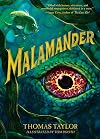
Malamander is the intriguing, whimsical story of Eerie-on-the-Sea, a seaside town that turns a bit dark and strange during the winter months, when a sea mist rises up and obscures the truth; where old women can spy on others through a mysterious device that runs on moonlight; where you can consult a mechanical monkey for the book you need most; and, most importantly, where a mysterious creature may be lurking.
Taylor is a newer writer, if I understand the blurb correctly, and there are definitely a few points where his writing wasn't quite as polished as it could be, but Malamander still manages to intrigue and delight. The story is tightly plotted and full of odd little details that paint a beautiful picture of a deserted seaside town. The characters are lively and quirky, though not so much to be annoying, and there's a pervasive atmosphere of the best kind: part dread and part curiosity.
Most of all, Taylor has a rare gift for writing in such a way that conjures up atmosphere. There's something about his descriptions of the sea-fog coating the town or the cold wind racing through the streets that adds up to a hauntingly beautiful town. I've never been to a seaside town the likes of which apparently Englanders enjoy on holiday, but I felt like I could have been, through his writing.
My copy was an advanced one, and for once, I almost regret beating publication to the punch, as it was missing several illustrations. The ones that did appear are more childish than I think show more fits the mood, but are still charming and sure to delight.
Eerie-on-the-Sea is a sort of curiosity shop in itself. There are so many places to dart down, so many things to see, and just enough hints to make you want to explore. I hope Taylor continues the series, because I'd love to revisit this charming town.
Disclaimer: I received a free ARC of this book from the publisher in exchange for an honest review, through LibraryThing Early Review program. show less
Taylor is a newer writer, if I understand the blurb correctly, and there are definitely a few points where his writing wasn't quite as polished as it could be, but Malamander still manages to intrigue and delight. The story is tightly plotted and full of odd little details that paint a beautiful picture of a deserted seaside town. The characters are lively and quirky, though not so much to be annoying, and there's a pervasive atmosphere of the best kind: part dread and part curiosity.
Most of all, Taylor has a rare gift for writing in such a way that conjures up atmosphere. There's something about his descriptions of the sea-fog coating the town or the cold wind racing through the streets that adds up to a hauntingly beautiful town. I've never been to a seaside town the likes of which apparently Englanders enjoy on holiday, but I felt like I could have been, through his writing.
My copy was an advanced one, and for once, I almost regret beating publication to the punch, as it was missing several illustrations. The ones that did appear are more childish than I think show more fits the mood, but are still charming and sure to delight.
Eerie-on-the-Sea is a sort of curiosity shop in itself. There are so many places to dart down, so many things to see, and just enough hints to make you want to explore. I hope Taylor continues the series, because I'd love to revisit this charming town.
Disclaimer: I received a free ARC of this book from the publisher in exchange for an honest review, through LibraryThing Early Review program. show less
 This review was written for LibraryThing Early Reviewers.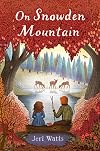
Ellen is a precocious child left in the care of her depressed mother when her father leaves to fight in WWII. She contacts her Aunt Pearl for help, and together she and her mother move in with Aunt Pearl in a bucolic small town at the foot of the mountains. As Ellen adjusts to the small town life (very different from the cosmopolitan Baltimore she's familiar with), she makes a new friend, learns more about her family, and thinks about her future.
I was interested in this one, because depression didn't suddenly start happening post-1980s. I thought it would be a fascinating historical look at the disease. Unfortunately, this one didn't rock my world. The tone was very uneven - the first few pages seemed stiff and awkward, but it loosened up, only to regress near the end. I can't quite put my finger on what it was (not enough description?), but the writing didn't flow like it should.
The middle part did pick up considerably, and readers are treated to some wonderful description of the scenery, and an interesting character in the form of Ellen's new friend, Russ, who traps skunks for a living and lives under the thumb of his abusive father. Ellen, though, never quite meshed. Her inward thoughts seemed very surface-level, and I never quite felt like she was real. In some cases, this was due to inconsistencies (she regularly describes things in terms like "patina" and "odious", but then refers to her mother's illness as "the sad"), but in others, it just felt like she was show more thinking of fear, but not really feeling it. One thing in particular drew me up sharp, which was Moselle's fascinating with Ellen. While I understand that Moselle is meant to be a vapid woman who dreams of moving to a big city, it still felt completely unrealistic that she would befriend Ellen, who is much younger than she is.
That said, I did love the characterization of Ellen's parents. Unlike the mindless brutes or oh-so-loving parents in most YA novels, Ellen's parents are surprisingly nuanced. Her father is characterized as loving, but shallow and short-sighted; her mother is likewise shown to be a little bit more vain and prone to fripperies than most. They're flawed, human characters, and not ones you usually see in YA novels.
All in all, worth reading, but needed some polishing to be really great.
NB: A copy of this book was provided by the publisher for free through LibraryThing's Early Reviewer program in exchange for an honest review. show less
I was interested in this one, because depression didn't suddenly start happening post-1980s. I thought it would be a fascinating historical look at the disease. Unfortunately, this one didn't rock my world. The tone was very uneven - the first few pages seemed stiff and awkward, but it loosened up, only to regress near the end. I can't quite put my finger on what it was (not enough description?), but the writing didn't flow like it should.
The middle part did pick up considerably, and readers are treated to some wonderful description of the scenery, and an interesting character in the form of Ellen's new friend, Russ, who traps skunks for a living and lives under the thumb of his abusive father. Ellen, though, never quite meshed. Her inward thoughts seemed very surface-level, and I never quite felt like she was real. In some cases, this was due to inconsistencies (she regularly describes things in terms like "patina" and "odious", but then refers to her mother's illness as "the sad"), but in others, it just felt like she was show more thinking of fear, but not really feeling it. One thing in particular drew me up sharp, which was Moselle's fascinating with Ellen. While I understand that Moselle is meant to be a vapid woman who dreams of moving to a big city, it still felt completely unrealistic that she would befriend Ellen, who is much younger than she is.
That said, I did love the characterization of Ellen's parents. Unlike the mindless brutes or oh-so-loving parents in most YA novels, Ellen's parents are surprisingly nuanced. Her father is characterized as loving, but shallow and short-sighted; her mother is likewise shown to be a little bit more vain and prone to fripperies than most. They're flawed, human characters, and not ones you usually see in YA novels.
All in all, worth reading, but needed some polishing to be really great.
NB: A copy of this book was provided by the publisher for free through LibraryThing's Early Reviewer program in exchange for an honest review. show less
This review was written for LibraryThing Early Reviewers.
The book begins with our protagonist, Edie, being raped by a man she has been dating. From there, the story follows Edie as she confesses to her friends what happened, starts going to therapy, and, in a fit of bad timing, meets the man of her dreams. As she comes to terms with what happened, she also has to navigate a new, fraught relationship, and deal with the fall-out from an incident at work. The back cover also promises readers that Edie faces all of this with humor and takes a realistic look at the consequences of date rape.
I really wanted to like this novel. Rape Jokes has a refreshingly realistic take on the subject. Edie's life doesn't go on hold because of her experience; like most women, she is expected to continue going to work, buy food for her cat, and even go on dates. Lena's story especially rang very true, particularly when she tells Edie how her experience wasn't the worst thing that happened to her, and how she still felt rage when thinking that her rapist got away with it.
Unfortunately, the book on the whole had some problems. Some were minor editing issues, like Edie complaining that Dominic liked to beat her to the office in the beginning of the novel, then sensing something was wrong because Dominic was there before her at the end. But there were three major problems that hindered the book.
The first is the title. It's provocative enough that an author should have been sure she could back it up with the promised humor; unfortunately, there wasn't show more really enough humor in this book, and so the title ended up feeling awkward and flat. When the back flap promises that Edie approaches her trauma with humor, I expected her to specifically use humor to deal with her experience. Instead, she pretty much copes with her experience by doing... what any woman might do. She cries, she feels angry, she sees a therapist. I hoped to see a more unique arc to justify the title, but Edie doesn't particularly seem funny or even unique.
The second problem is that the whole book feels sort of flat. Edie is the main character and I realized by the end of the book, I still had no mental picture of her; I didn't even know what color her hair was. There was almost no description to the city, which led to a weird, unanchored feeling throughout the novel. It felt like the characters were floating in a void the entire time. There was just nothing to make it pop. There were no lines that stuck out, no mental pictures... it just felt very two-dimensional.
The final problem was harder to quantify. Edie deals with not only the date rapist, but with a colleague (or boss? It was very unclear) who sexually harasses her, a gropist at a night club, and a self-involved narcissist of a date. She even hangs two lightshades on this, the first when she complains that nearly every woman not only tolerates, but expects these incidents in her life, and the second when she worries people will not believe her that she was both raped and sexually harassed by her colleague/boss a few weeks later. The problem with this is that while intellectually, I actually know that this happens, and have had it happen to me, something in me balked at it. There's a book I read periodically called How Not to Write a Novel which explains that authors have a harder job than God, because while no one's belief is strained when something actually happens in real life, it has to seem believable when it happens in a novel. I absolutely hate having to say it didn't feel believable, because hey, women not being believed is a big problem! But I don't know of any other way to talk about this in a novel. It just felt engineered, a little too strawman-like to feel real for a novel. Everyone in the novel seemed engineered along "good" or "bad" lines: the friends and new boyfriend are "good", everyone else is "bad". I'm not saying that the rapist should be sympathetic, but there was no nuance, no three-dimensionality to the characters that made me feel like it was really happening. It felt like every woman's experience in life condensed into the space of a few months and one woman.
I appreciate the publisher for not only sending me a copy to review, but also for taking a chance on a novel that highlights women's experiences in a realistic, empathetic way that I normally don't see in novels; I also appreciate the author for writing about these experiences and showing them to the light. It just felt like something was missing, which was disappointing, because stories like this deserve to be heard and read.
NB: This book was given to me for free by the publisher in return for an honest review. show less
I really wanted to like this novel. Rape Jokes has a refreshingly realistic take on the subject. Edie's life doesn't go on hold because of her experience; like most women, she is expected to continue going to work, buy food for her cat, and even go on dates. Lena's story especially rang very true, particularly when she tells Edie how her experience wasn't the worst thing that happened to her, and how she still felt rage when thinking that her rapist got away with it.
Unfortunately, the book on the whole had some problems. Some were minor editing issues, like Edie complaining that Dominic liked to beat her to the office in the beginning of the novel, then sensing something was wrong because Dominic was there before her at the end. But there were three major problems that hindered the book.
The first is the title. It's provocative enough that an author should have been sure she could back it up with the promised humor; unfortunately, there wasn't show more really enough humor in this book, and so the title ended up feeling awkward and flat. When the back flap promises that Edie approaches her trauma with humor, I expected her to specifically use humor to deal with her experience. Instead, she pretty much copes with her experience by doing... what any woman might do. She cries, she feels angry, she sees a therapist. I hoped to see a more unique arc to justify the title, but Edie doesn't particularly seem funny or even unique.
The second problem is that the whole book feels sort of flat. Edie is the main character and I realized by the end of the book, I still had no mental picture of her; I didn't even know what color her hair was. There was almost no description to the city, which led to a weird, unanchored feeling throughout the novel. It felt like the characters were floating in a void the entire time. There was just nothing to make it pop. There were no lines that stuck out, no mental pictures... it just felt very two-dimensional.
The final problem was harder to quantify. Edie deals with not only the date rapist, but with a colleague (or boss? It was very unclear) who sexually harasses her, a gropist at a night club, and a self-involved narcissist of a date. She even hangs two lightshades on this, the first when she complains that nearly every woman not only tolerates, but expects these incidents in her life, and the second when she worries people will not believe her that she was both raped and sexually harassed by her colleague/boss a few weeks later. The problem with this is that while intellectually, I actually know that this happens, and have had it happen to me, something in me balked at it. There's a book I read periodically called How Not to Write a Novel which explains that authors have a harder job than God, because while no one's belief is strained when something actually happens in real life, it has to seem believable when it happens in a novel. I absolutely hate having to say it didn't feel believable, because hey, women not being believed is a big problem! But I don't know of any other way to talk about this in a novel. It just felt engineered, a little too strawman-like to feel real for a novel. Everyone in the novel seemed engineered along "good" or "bad" lines: the friends and new boyfriend are "good", everyone else is "bad". I'm not saying that the rapist should be sympathetic, but there was no nuance, no three-dimensionality to the characters that made me feel like it was really happening. It felt like every woman's experience in life condensed into the space of a few months and one woman.
I appreciate the publisher for not only sending me a copy to review, but also for taking a chance on a novel that highlights women's experiences in a realistic, empathetic way that I normally don't see in novels; I also appreciate the author for writing about these experiences and showing them to the light. It just felt like something was missing, which was disappointing, because stories like this deserve to be heard and read.
NB: This book was given to me for free by the publisher in return for an honest review. show less
This review was written for LibraryThing Early Reviewers.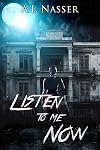
John Krik, a romance author with a few successes under his belt, finds himself stuck in writing his newest novel. Under the direction of his editor, he retires to the small town of Cafeville into an old Victorian house with a dark secret. As he writes his newest novel, the lines of fiction and reality start to blur, and he finds himself falling under the insidious grasp of the house's history.
The first half of this one failed to really grab my attention. The horror was mostly rote, with flickering lights, banging doors, etc. If bloody writing had appeared on the walls, it would have been a perfect cliche trifecta. Additionally, I found myself getting annoyed with John's internal dialogue, and found myself even more annoyed when it was revealed that it was actually necessary to the plot. I was about ready to write it off when the second half suddenly picked up the pace.
The second half of the book isn't without its dramatic moments, and a lot more action-packed than the first half. John's novel and the reality he's in start to blur, and I found myself more interested in what happened than I was before.
There are still some major issues with the book: for one, the bonus chapters are more confusing than anything, and the use of Dean and Green for the town founding families gets really confusing (why make them rhyme?) as I tried to follow along.
Secondly, while the second half was enough to nudge this one up to three stars for me, the horror ambiance never really worked for show more me. Most of this was pretty stereotypical, something that would probably work well for a movie, but not so much for a novel; the atmosphere just never felt particularly scary, and nothing happened that was really surprising.
All in all, a decent read, and I enjoyed it well enough, but it wasn't quite the spine-tingling horror book that I was expecting.
Note: This was received in an Early Reviewers program through LibraryThing. show less
The first half of this one failed to really grab my attention. The horror was mostly rote, with flickering lights, banging doors, etc. If bloody writing had appeared on the walls, it would have been a perfect cliche trifecta. Additionally, I found myself getting annoyed with John's internal dialogue, and found myself even more annoyed when it was revealed that it was actually necessary to the plot. I was about ready to write it off when the second half suddenly picked up the pace.
The second half of the book isn't without its dramatic moments, and a lot more action-packed than the first half. John's novel and the reality he's in start to blur, and I found myself more interested in what happened than I was before.
There are still some major issues with the book: for one, the bonus chapters are more confusing than anything, and the use of Dean and Green for the town founding families gets really confusing (why make them rhyme?) as I tried to follow along.
Secondly, while the second half was enough to nudge this one up to three stars for me, the horror ambiance never really worked for show more me. Most of this was pretty stereotypical, something that would probably work well for a movie, but not so much for a novel; the atmosphere just never felt particularly scary, and nothing happened that was really surprising.
All in all, a decent read, and I enjoyed it well enough, but it wasn't quite the spine-tingling horror book that I was expecting.
Note: This was received in an Early Reviewers program through LibraryThing. show less
This review was written for LibraryThing Early Reviewers.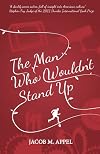
The Man Who Wouldn't Stand Up is a satirical look at post-9/11 America. The hero, Arnold, is an unassuming, upper-middle-class botanist who spends his time with his wife and his friends, Gilbert and Bonnie Card, and above all, his plants. His world is turned upside down, however, when he refuses to stand up for a rendition of God Bless America at a baseball team, and is subsequently forced into more absurd situations by his actions, including becoming the target of a black preacher who has set his sights on painting Arnold as his next publicity grab, a young woman writing for a leftist magazine who wants an interview, and the mysterious "Bare-Ass Bandit" who has been terrorizing the citizens of New York with his bizarre requests.
First, because it is so important to me nowadays: the formatting! Bless it! I'm growing very tired of squinting to make out the tiny, tiny print that books insist on using these days, and blissfully, I didn't have to strain my eyes once on this. This may seem insignificant to mention to those with perfect vision, but just wait a few years and you'll find yourself rejoicing too.
Second, the plot. I agree with other reviews that the book starts off great, but then seems to fall apart in the last act. The ending, particularly, feels overly simplistic given the great snarl of events that occurred before it, and was unsatisfying for what the book started to say. Additionally, I found myself rolling my eyes nearly out of my skull when, once again, we show more have a comfortably middle-aged (55 or so) protagonist with no extraordinary personality of his own who finds himself with a young, attractive, ambitious college-age girl throwing herself at him because... reasons. That storyline can go and die, thank you very much. There was no motivation on her part other than that it served to make the plot go forward, which spoiled her character quite a bit for me.
The characters are well-written and engaging. Arnold, particularly, is perfectly portrayed as a man who finds himself entering more and more unreasonable circumstances, and finds himself becoming more and more unreasonable himself, ala Cary Grant in any number of screwball comedies. Particularly well-written was his initial confrontation with the preacher; it's easy to imagine where a rational person would completely lose his cool toward a man bent on destroying his life for his own publicity and odious politics and remaining unflappable in the face of reason.
Bonnie Card is another who may seem familiar to anyone who attended a more liberal college. There's always that one person who plays devil's advocate for no reason other than to debate the philosophy of a stance, even one that is morally untenable; in this case, Bonnie argues for, among other abhorrent views, child molesters and drowning disabled children. Of course, the book brings up an interesting point in here: like Arnold, the reader is supposed to also be against the aptly referred to "knee-jerk patriotism", so Bonnie plays the devil's advocate in the story: is there anything that it is reasonable to have a "knee-jerk" reaction against? Arnold mentions, numerous times, that he does not care for children, and yet he instinctively is against harming them. Even when he has fully spiraled into a deep chasm of unreasonableness, which he justifies by his having been put into an unreasonable situation, he argues that he would never harm a child or the elderly. And so we seem to have an answer to Bonnie.
Less convincing were - again - his encounters with Cassandra, the journalist for The Daily Vanguard. Though it's entirely within the realm of Arnold's characterization to pull a 180 on his feelings when he learns of Cassandra's actions (no spoilers), it's less plausible his reaction to it, and even more so the way this is brushed aside as part of his descent into chaos, when previously he had some moral compass guiding him even when he sank even further into that descent. To be blunt, none of the women fare well in this story: Bonnie is clearly a frustrating, irritating character, much like that One Guy in college who took one philosophy class and won't shut up; Cassandra starts off sympathetically enough, but a throw-away line at the end of the book by Judith discounts her character and she comes off rather uncharitably (and, I imagine, will rankle others much more in the midst of the #MeToo movement); and finally, even Judith herself suddenly wants a kid because... all women want kids? Judith is the most sympathetic, but I still find myself baffled by the about-turn she takes.
All in all, this book had the makings of a superb satire, but needed some polishing and possibly an entirely different ending to bring it all together.
Note: This book was given to me in a LibraryThing giveaway by the author in exchange for an honest review. show less
First, because it is so important to me nowadays: the formatting! Bless it! I'm growing very tired of squinting to make out the tiny, tiny print that books insist on using these days, and blissfully, I didn't have to strain my eyes once on this. This may seem insignificant to mention to those with perfect vision, but just wait a few years and you'll find yourself rejoicing too.
Second, the plot. I agree with other reviews that the book starts off great, but then seems to fall apart in the last act. The ending, particularly, feels overly simplistic given the great snarl of events that occurred before it, and was unsatisfying for what the book started to say. Additionally, I found myself rolling my eyes nearly out of my skull when, once again, we show more have a comfortably middle-aged (55 or so) protagonist with no extraordinary personality of his own who finds himself with a young, attractive, ambitious college-age girl throwing herself at him because... reasons. That storyline can go and die, thank you very much. There was no motivation on her part other than that it served to make the plot go forward, which spoiled her character quite a bit for me.
The characters are well-written and engaging. Arnold, particularly, is perfectly portrayed as a man who finds himself entering more and more unreasonable circumstances, and finds himself becoming more and more unreasonable himself, ala Cary Grant in any number of screwball comedies. Particularly well-written was his initial confrontation with the preacher; it's easy to imagine where a rational person would completely lose his cool toward a man bent on destroying his life for his own publicity and odious politics and remaining unflappable in the face of reason.
Bonnie Card is another who may seem familiar to anyone who attended a more liberal college. There's always that one person who plays devil's advocate for no reason other than to debate the philosophy of a stance, even one that is morally untenable; in this case, Bonnie argues for, among other abhorrent views, child molesters and drowning disabled children. Of course, the book brings up an interesting point in here: like Arnold, the reader is supposed to also be against the aptly referred to "knee-jerk patriotism", so Bonnie plays the devil's advocate in the story: is there anything that it is reasonable to have a "knee-jerk" reaction against? Arnold mentions, numerous times, that he does not care for children, and yet he instinctively is against harming them. Even when he has fully spiraled into a deep chasm of unreasonableness, which he justifies by his having been put into an unreasonable situation, he argues that he would never harm a child or the elderly. And so we seem to have an answer to Bonnie.
Less convincing were - again - his encounters with Cassandra, the journalist for The Daily Vanguard. Though it's entirely within the realm of Arnold's characterization to pull a 180 on his feelings when he learns of Cassandra's actions (no spoilers), it's less plausible his reaction to it, and even more so the way this is brushed aside as part of his descent into chaos, when previously he had some moral compass guiding him even when he sank even further into that descent. To be blunt, none of the women fare well in this story: Bonnie is clearly a frustrating, irritating character, much like that One Guy in college who took one philosophy class and won't shut up; Cassandra starts off sympathetically enough, but a throw-away line at the end of the book by Judith discounts her character and she comes off rather uncharitably (and, I imagine, will rankle others much more in the midst of the #MeToo movement); and finally, even Judith herself suddenly wants a kid because... all women want kids? Judith is the most sympathetic, but I still find myself baffled by the about-turn she takes.
All in all, this book had the makings of a superb satire, but needed some polishing and possibly an entirely different ending to bring it all together.
Note: This book was given to me in a LibraryThing giveaway by the author in exchange for an honest review. show less
This review was written for LibraryThing Member Giveaways.

The estimable Stephen Fry tours the 50 states, offering his unique views as he meets with famous people and everyday folk, learns the culture of each state, and takes in the sights. With typical wit and poshness, Mr. Fry documents his experiences and gives a taste of each state's particular culture.
I will admit upfront that this book may have played to my ego a bit; Americans are often regarded as being uncivil, crass, rude, materialistic, and unintelligent, which is a bit of an annoyance to those of us who consider themselves to not be unintelligent at all. Mr. Fry actually directly contradicts this idea - or at least says that it is softened by the good qualities of America - and this becomes a running theme in his work. He finds the good in everyone, or at least most everyone. New Jersey, I'm afraid, was the only one which he did not have a positive thing to say about, so it is destined to remain the butt of jokes for years to come. Others, like Ohio, he only briefly mentions before moving on, which may have been a disservice and quite a disappointment to any Ohioans who picked up the book eager to find out what Mr. Fry had to say about their state.
The good, however, is overwhelming. Even to someone as widely traveled within my country as I am, I was surprised and delighted to learn new things - beyond the state bird and state neckwear or other such nonsense - and felt my feet itching to visit the same sights he did. He seems to find something favorable to say about show more nearly everything, and though others have accused it as coming across as treacly and sentimental, I must disagree. Being cynical and relentlessly negative is not a sign of intelligence, it's a sign of a tiresome personality. If you want to read that, I would recommend you check out The Last Continent: Travels in Small-Town America by Bill Bryson, which serves as a photonegative (literanegative?) of Stephen Fry in America. Bill Bryson is a native Iowan who moves to England who comes back and tours America and finds absolutely nothing good to say about anything and spends even less time anywhere he stays than Mr. Fry does. And I say this as someone who adores Mr. Bryson's other writings. Sometimes it takes an outside perspective to see things as beautiful and good; natives see only what could be better and bemoan what has changed.
That said, some of the critiques are valid, I will admit. He sometimes shows an ignorance of the inner depths of certain relationships, racial especially, but I will say that it is hard to pick these things up without being intimately familiar with the culture, which time constraints would not allow. I do not agree, however, that he dismisses bigotry and racism completely and implies that it does not exist - if anything, he actually specifically comments on the fact that he isn't aware of the nuances and so is not able to say anything more.
He does make several disparaging comments toward religion which were a bit much, even after reminding myself that everyone has a right to their own opinion, but these did not overshadow my enjoyment of the book.
I will also say that I bought the Kindle edition. I prefer "real" books, but I needed something to read on my phone while attending a mind-numbing assembly at work. I would highly recommend getting the physical copy of this one; the layout was odd and unpleasant - cutting off anecdotes in the middle for the "state facts" before resuming them and other jarring issues - and the pictures were impossible to see. I switched to reading it on my computer and it was better, but I'm sure nothing like a book with photographs in full glossy spread glory.
Overall, the book had its flaws, but was still engaging, witty, and pleasant, much like Mr. Fry himself. The people he talks to are always interesting (a WWII veteran who served with Jimmy Stewart, an old money socialite who attended the wedding of Jackie Kennedy, scientists, social activists, and more). On a personal note, I decided to resist my selfish impulse to flip straight to my state. As a consequence, I had ample time to speculate on which city he would visit - Dallas? Austin? El Paso? I didn't even dream that he would visit Houston, as it's almost universally forgettable. To my surprise and delight, he actually went to the Galleria (which was somewhat funny, considering that as a native of Houston, I have yet to go) and hobnobbed with the Houston society class. He wasn't exactly overwhelmingly flattering to them, but I'm happy just to see Houston - for once! - not overlooked.
If you enjoy Mr. Fry in shows or movies or books and are interested in taking a small taste of the fifty states, this is your book.
N.B. Popsugar 2016: A book about a road trip show less
I will admit upfront that this book may have played to my ego a bit; Americans are often regarded as being uncivil, crass, rude, materialistic, and unintelligent, which is a bit of an annoyance to those of us who consider themselves to not be unintelligent at all. Mr. Fry actually directly contradicts this idea - or at least says that it is softened by the good qualities of America - and this becomes a running theme in his work. He finds the good in everyone, or at least most everyone. New Jersey, I'm afraid, was the only one which he did not have a positive thing to say about, so it is destined to remain the butt of jokes for years to come. Others, like Ohio, he only briefly mentions before moving on, which may have been a disservice and quite a disappointment to any Ohioans who picked up the book eager to find out what Mr. Fry had to say about their state.
The good, however, is overwhelming. Even to someone as widely traveled within my country as I am, I was surprised and delighted to learn new things - beyond the state bird and state neckwear or other such nonsense - and felt my feet itching to visit the same sights he did. He seems to find something favorable to say about show more nearly everything, and though others have accused it as coming across as treacly and sentimental, I must disagree. Being cynical and relentlessly negative is not a sign of intelligence, it's a sign of a tiresome personality. If you want to read that, I would recommend you check out The Last Continent: Travels in Small-Town America by Bill Bryson, which serves as a photonegative (literanegative?) of Stephen Fry in America. Bill Bryson is a native Iowan who moves to England who comes back and tours America and finds absolutely nothing good to say about anything and spends even less time anywhere he stays than Mr. Fry does. And I say this as someone who adores Mr. Bryson's other writings. Sometimes it takes an outside perspective to see things as beautiful and good; natives see only what could be better and bemoan what has changed.
That said, some of the critiques are valid, I will admit. He sometimes shows an ignorance of the inner depths of certain relationships, racial especially, but I will say that it is hard to pick these things up without being intimately familiar with the culture, which time constraints would not allow. I do not agree, however, that he dismisses bigotry and racism completely and implies that it does not exist - if anything, he actually specifically comments on the fact that he isn't aware of the nuances and so is not able to say anything more.
He does make several disparaging comments toward religion which were a bit much, even after reminding myself that everyone has a right to their own opinion, but these did not overshadow my enjoyment of the book.
I will also say that I bought the Kindle edition. I prefer "real" books, but I needed something to read on my phone while attending a mind-numbing assembly at work. I would highly recommend getting the physical copy of this one; the layout was odd and unpleasant - cutting off anecdotes in the middle for the "state facts" before resuming them and other jarring issues - and the pictures were impossible to see. I switched to reading it on my computer and it was better, but I'm sure nothing like a book with photographs in full glossy spread glory.
Overall, the book had its flaws, but was still engaging, witty, and pleasant, much like Mr. Fry himself. The people he talks to are always interesting (a WWII veteran who served with Jimmy Stewart, an old money socialite who attended the wedding of Jackie Kennedy, scientists, social activists, and more). On a personal note, I decided to resist my selfish impulse to flip straight to my state. As a consequence, I had ample time to speculate on which city he would visit - Dallas? Austin? El Paso? I didn't even dream that he would visit Houston, as it's almost universally forgettable. To my surprise and delight, he actually went to the Galleria (which was somewhat funny, considering that as a native of Houston, I have yet to go) and hobnobbed with the Houston society class. He wasn't exactly overwhelmingly flattering to them, but I'm happy just to see Houston - for once! - not overlooked.
If you enjoy Mr. Fry in shows or movies or books and are interested in taking a small taste of the fifty states, this is your book.
N.B. Popsugar 2016: A book about a road trip show less

Too short, too general
It seems that all of these types of books begin with a long introduction on the nigh-salvation that awaits you when you declutter, which seems odd to me. If someone is reading a book on decluttering, presumably they know the benefits. No one picks up a dieting book to find out why they need to lose weight.
Still, there are some times when these introductions can be motivational, painting a picture of what your life will miraculously turn into once you embrace our lord Minimalism.
In this case, however, the books boils down to: needless introduction, overview of the rooms in your home, and a tip to do a 20-minute clean every day.
For a .99 cent book, I don't expect much, which makes it doubly sad that this book managed to disappoint me.
It seems that all of these types of books begin with a long introduction on the nigh-salvation that awaits you when you declutter, which seems odd to me. If someone is reading a book on decluttering, presumably they know the benefits. No one picks up a dieting book to find out why they need to lose weight.
Still, there are some times when these introductions can be motivational, painting a picture of what your life will miraculously turn into once you embrace our lord Minimalism.
In this case, however, the books boils down to: needless introduction, overview of the rooms in your home, and a tip to do a 20-minute clean every day.
For a .99 cent book, I don't expect much, which makes it doubly sad that this book managed to disappoint me.
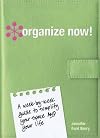
In Organize Now!, Jennifer Berry breaks up the year into weeks and gives you a new area or event to tackle every different week. I was more engaged when I read that, beyond the obvious physical spaces, Berry also tackled how to organize your schedule - something that most books of this ilk overlook, much to their detriment. Anyone who has had a busy week knows how easy it is to get behind on basic house maintenance or chores, or just feels too tired to tackle it. And in that one week, things can build up faster than you can deal with them.
So I was primed to like this book, but ultimately found it disappointing. Since I have started reading these types of books, I have instinctively been judging them on a few criteria - Is this new? Does it inspire me? How realistic are these goals?
This one failed on almost all counts. The book I read immediately before this one used the exact same quotes throughout - that "must be useful or beautiful" one is a popular one, but even the Einstein quote was reused. Fair enough, though, these all sound rather repetitive after going through them, and maybe this one was written before the other. That said, if you are an avid reader of these decluttering/organize/minimalist guides, you probably aren't going to stumble across any hidden gems.
Is it inspiring? Well, not really, no. With some books, I immediately want to declutter after I finish reading. Some of them, I actually pause and put the book down to go through that cup of old, broken pens show more on the bookshelf, or pull some records I never listen to out and put them in the give-away box. In this case, however, it was just... boring. It was more of a cleaning guide than an organizing guide. It also didn't address when you can do this - she proposes taking everything out of a room and putting only back in what (a) serves the room's purpose and (b) you like. Most of these books make at least a half-hearted effort to address the fact that people have lives and jobs and obligations and maybe don't have time to play hurricane with their kitchen if they still want to make supper that night.
Finally, is it realistic? Not a chance. For an organizing book, this book is ... poorly organized. Along with the "big project" of initial decluttering, the book offers maintenance for every week, every month, every 3-6 months, and every year. The problem is that it offers those in small chunks (as in, the car section advises you to clean out your car once per month; the purse section advises cleaning out your receipts once a month). The problem is that if life were so discrete, everyone would know how to do this. After all, she only offers three or four things to do for each section. But when you add up all the sections, it becomes unmanageable. In other words: it's life. And though it's very nice for authors to be able to divide them into three or four easy-to-do things, for people trying to figure out how to juggle all of those things at one time, that's when the problems start.
Overall, not worth it. There are much better books out there which offer a new take or at least have a fresh voice, inspire you to tackle that garage or attic or bedroom closet, and are still based somewhere in the realm of realism. show less
So I was primed to like this book, but ultimately found it disappointing. Since I have started reading these types of books, I have instinctively been judging them on a few criteria - Is this new? Does it inspire me? How realistic are these goals?
This one failed on almost all counts. The book I read immediately before this one used the exact same quotes throughout - that "must be useful or beautiful" one is a popular one, but even the Einstein quote was reused. Fair enough, though, these all sound rather repetitive after going through them, and maybe this one was written before the other. That said, if you are an avid reader of these decluttering/organize/minimalist guides, you probably aren't going to stumble across any hidden gems.
Is it inspiring? Well, not really, no. With some books, I immediately want to declutter after I finish reading. Some of them, I actually pause and put the book down to go through that cup of old, broken pens show more on the bookshelf, or pull some records I never listen to out and put them in the give-away box. In this case, however, it was just... boring. It was more of a cleaning guide than an organizing guide. It also didn't address when you can do this - she proposes taking everything out of a room and putting only back in what (a) serves the room's purpose and (b) you like. Most of these books make at least a half-hearted effort to address the fact that people have lives and jobs and obligations and maybe don't have time to play hurricane with their kitchen if they still want to make supper that night.
Finally, is it realistic? Not a chance. For an organizing book, this book is ... poorly organized. Along with the "big project" of initial decluttering, the book offers maintenance for every week, every month, every 3-6 months, and every year. The problem is that it offers those in small chunks (as in, the car section advises you to clean out your car once per month; the purse section advises cleaning out your receipts once a month). The problem is that if life were so discrete, everyone would know how to do this. After all, she only offers three or four things to do for each section. But when you add up all the sections, it becomes unmanageable. In other words: it's life. And though it's very nice for authors to be able to divide them into three or four easy-to-do things, for people trying to figure out how to juggle all of those things at one time, that's when the problems start.
Overall, not worth it. There are much better books out there which offer a new take or at least have a fresh voice, inspire you to tackle that garage or attic or bedroom closet, and are still based somewhere in the realm of realism. show less
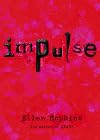
Impulse by Ellen Hopkins follows three teenagers who are patients at a mental institution for troubled teens. Tony is a gay, charming young teenager who has done time in juvie and has abusive secrets in his past. Vanessa has inherited her mother's mental instability and does her best to forget her deepest secrets. Conner is an outgoing, popular, wealthy boy with a penchant for older women and a secret he tries to deny. All of them are in their current position after failed suicide attempts.
The first problem with this book should be fairly obvious from the summary. Each of the characters has a Tragic Past (TM) that must be unlocked throughout the novel, and it gets tiresome. It feels like the best hits of a series of teenage after-school specials. Abortions, HIV, molestation, abuse... Now That's What I Call Trauma Vol. 30!
While it's a good thing to talk about these, and there are people who may have all of this in their past, the sheer preponderance of Tragic Pasts (TM) is a little too much of a strain on reality. Vanessa had an abortion, her mother was bipolar (or schizophrenic?), and her father is away all the time in the military. Tony is gay (or not?), was homeless, was in juvie, was abused and raped by his mother's boyfriend, his mother is an addict of some kind, and he lost his mentor and friend to HIV. (Wow). Conner is the closest to a realistic portrait: wealthy, popular, and smart, but pushed by his over-achieving parents. He has an affair with his teacher, Emily. show more Aaaand of course we find out it's because he was secretly molested by his nanny when he was 12.
It strains credibility, to put it lightly.
I would be more interested if Hopkins had explored a perfectly normal teenager, without a Tragic Past (TM), who is suffering from depression and tries to commit suicide. If even one of the characters had been like that, it would have allowed a deeper look into what it feels like to be suicidally depressed and getting constant reminders that But you don't have it that bad! Instead, we get ... this.
Additionally, I found my lip curling when I opened the novel and found it to be free-verse poetry. I'm not normally a fan, but I did read a decent novel written in that form before, and figured I'd give it a shot. The problem is that I have not so far read an example that satisfactorily justifies the form. Instead, I just kept thinking, "This could have been prose." There was never a moment, or a line, that struck me as, "Of course this would need to be told in free-verse!". You end up just reading the entire thing like a novel, except with excessive spacing, and as someone who frequently skips chapter titles, I had to scan back again to understand the first line because the real first line was the title of the poem. I say this as someone who frequently enjoys poetry; Hopkins simply isn't talented enough for me to feel that this needed to be told in poem-form.
Finally, the length. 666 pages of teenage drama - and I use this term because, as I mentioned, the Tragic Pasts (TM) feel more soap operatic than real - is excessive, at best. By page 350, I had the sneaking suspicion I disliked the book. By 550, I was more than ready to be done, and Tony and Vanessa staring deeply into one another's eyes and discussing love in that trite way that teenagers do was enough to have me desperately paging on for more.
The only actually surprising part of this book was the end. This is HEAVY spoilers: Conner commits suicide. (And even that, I had to suspend my belief, because who would release a psychiatric suicidal patient to an outdoors camping trip that has a strong possibility of danger and death?). It was a bold move, and one that I appreciated for its delicate look at the bleakness of the situation the characters were in.
That said, it wasn't enough to save this book. The only good thing to come out of it is that I now know to get rid of the other books by this author on my to-read list. show less
The first problem with this book should be fairly obvious from the summary. Each of the characters has a Tragic Past (TM) that must be unlocked throughout the novel, and it gets tiresome. It feels like the best hits of a series of teenage after-school specials. Abortions, HIV, molestation, abuse... Now That's What I Call Trauma Vol. 30!
While it's a good thing to talk about these, and there are people who may have all of this in their past, the sheer preponderance of Tragic Pasts (TM) is a little too much of a strain on reality. Vanessa had an abortion, her mother was bipolar (or schizophrenic?), and her father is away all the time in the military. Tony is gay (or not?), was homeless, was in juvie, was abused and raped by his mother's boyfriend, his mother is an addict of some kind, and he lost his mentor and friend to HIV. (Wow). Conner is the closest to a realistic portrait: wealthy, popular, and smart, but pushed by his over-achieving parents. He has an affair with his teacher, Emily. show more Aaaand of course we find out it's because he was secretly molested by his nanny when he was 12.
It strains credibility, to put it lightly.
I would be more interested if Hopkins had explored a perfectly normal teenager, without a Tragic Past (TM), who is suffering from depression and tries to commit suicide. If even one of the characters had been like that, it would have allowed a deeper look into what it feels like to be suicidally depressed and getting constant reminders that But you don't have it that bad! Instead, we get ... this.
Additionally, I found my lip curling when I opened the novel and found it to be free-verse poetry. I'm not normally a fan, but I did read a decent novel written in that form before, and figured I'd give it a shot. The problem is that I have not so far read an example that satisfactorily justifies the form. Instead, I just kept thinking, "This could have been prose." There was never a moment, or a line, that struck me as, "Of course this would need to be told in free-verse!". You end up just reading the entire thing like a novel, except with excessive spacing, and as someone who frequently skips chapter titles, I had to scan back again to understand the first line because the real first line was the title of the poem. I say this as someone who frequently enjoys poetry; Hopkins simply isn't talented enough for me to feel that this needed to be told in poem-form.
Finally, the length. 666 pages of teenage drama - and I use this term because, as I mentioned, the Tragic Pasts (TM) feel more soap operatic than real - is excessive, at best. By page 350, I had the sneaking suspicion I disliked the book. By 550, I was more than ready to be done, and Tony and Vanessa staring deeply into one another's eyes and discussing love in that trite way that teenagers do was enough to have me desperately paging on for more.
The only actually surprising part of this book was the end. This is HEAVY spoilers: Conner commits suicide. (And even that, I had to suspend my belief, because who would release a psychiatric suicidal patient to an outdoors camping trip that has a strong possibility of danger and death?). It was a bold move, and one that I appreciated for its delicate look at the bleakness of the situation the characters were in.
That said, it wasn't enough to save this book. The only good thing to come out of it is that I now know to get rid of the other books by this author on my to-read list. show less
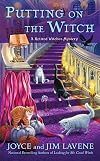
Molly, Elsie, Dorothy, Brian, and Olivia are back at it in Putting on the Witch. Dorothy's evil father, Drago, shows up and claims he just wants to spend time with his little girl, much to Olivia's protests. Brian's birthday is coming up and his parents are holding a fancy ball at the castle and the coven is invited.
But when they get there, they discover that a prominent member of the Council has been murdered. With the help of a terrifying 1500's witchhunter and Molly's own sleuthing skills, they must figure out Drago's motives for reappearing in Dorothy's life while trying to solve the murder before time is up.
Another fun read, Putting on the Witch has a lot more going on and a lot more fun. The pacing seems to be better in this one, as compared to the first, but there are still some areas that are rough - for instance, they start out doing CSI type investigations to find the fingerprints of the murderer, but end up dropping that to solve the murder a completely different way, which sort of made me wonder what the point was other than a gag that took up 1/3 of the book. Then there's the reactions.
One of my big peeves in books is when there's a big hint and the characters just never follow up on it. For instance, a character will be knocked out because she discovered something in a book, but the other characters conveniently forget to, you know, read the book to find out what it was. It feels a little forced. Any normal person would be sprinting to read that damn book show more and figure out what the character had learned that was so dangerous.
But overall, it was a fun read, with a lot of big changes at the end. I can't wait for the next one! show less
But when they get there, they discover that a prominent member of the Council has been murdered. With the help of a terrifying 1500's witchhunter and Molly's own sleuthing skills, they must figure out Drago's motives for reappearing in Dorothy's life while trying to solve the murder before time is up.
Another fun read, Putting on the Witch has a lot more going on and a lot more fun. The pacing seems to be better in this one, as compared to the first, but there are still some areas that are rough - for instance, they start out doing CSI type investigations to find the fingerprints of the murderer, but end up dropping that to solve the murder a completely different way, which sort of made me wonder what the point was other than a gag that took up 1/3 of the book. Then there's the reactions.
One of my big peeves in books is when there's a big hint and the characters just never follow up on it. For instance, a character will be knocked out because she discovered something in a book, but the other characters conveniently forget to, you know, read the book to find out what it was. It feels a little forced. Any normal person would be sprinting to read that damn book show more and figure out what the character had learned that was so dangerous.
But overall, it was a fun read, with a lot of big changes at the end. I can't wait for the next one! show less
Another enjoyable installation
Another good installment in The Librarians books - a solid mystery, full of fun literary references, and an enjoyable read in all.
Another good installment in The Librarians books - a solid mystery, full of fun literary references, and an enjoyable read in all.
Pretty much just like the show
If you like The Librarians show, give it a try. Fun, quirky, and a good story. Could use some work on characters - novelized series always skimp on that - but overall, a very enjoyable read.
If you like The Librarians show, give it a try. Fun, quirky, and a good story. Could use some work on characters - novelized series always skimp on that - but overall, a very enjoyable read.
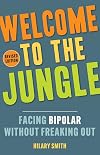
I read the first edition of this book when I was first diagnosed in my early twenties. Unlike many, I had an accurate diagnosis almost immediately; nearly being hospitalized due to intense mania with psychotic features tends to have that effect. Go figure.
Smith's book came at exactly the right time and with exactly the right words. Especially when you're in your twenties, you try on new identities, and being diagnosed as bipolar hands you a brand new one to try on. It's a little like a hideous sweater from your Aunt Thelma that you have to wear to Thanksgiving to be polite; you don't necessarily want it, but you have to wear it anyway, so you might as well own it.
One of the best things I could have read was her advice about not over-identifying yourself with your diagnosis, and I'm not talking about the whole "you are more than your diagnosis" (which is good advice, but still touchy-feely and paradoxically, makes you identify more with your diagnosis); Smith is the opposite of touchy-feely. She tells you, "Dude, knock it off, or you're going to be That Guy with the one schtick he's defined by. Don't be That Guy."
At a time when I might have run with being That Guy whose whole schtick was wearing ugly sweaters, I needed that. (Like, really needed that. There's always that insufferable douche who manages to mention their ugly sweater in every conversation, and I could have been that douchecanoe.)
I do wish she talked about the opposite problem, as she briefly addressed in show more her first edition, which was under-identifying. Sometimes I go long spells without any episodes and think, "It was a misdiagnosis! I'm fine!" until, oh, right. During particularly uneventful long spells, I really start to get paranoid - "Am I making this up? I'm fine. I was just angsty" and I wish someone had told me that's (a) completely normal, and (b) no, don't do that, because you end up doing stupid stuff later on.
Also, Smith doesn't ignore Bipolar I. People, and authors, act weird about Bipolar I. Books give you hints and tricks and tools for living your best life with bipolar II, then give this dry, clinical account of Bipolar I diagnostics and basically tell you to take medication, like, "Yup! No way to have a normal life with Bipolar I. You're fucked." Well, thanks? Or they don't mention it at all, which is sort of worse and sends the same message. (I have a sneaking suspicion that this is because it's easier to destigmatize bipolar II because it's not as overtly scary, and we still don't know how to handle people who hear voices or think government agencies are following them, but that's just a suspicion).
Hers was the first book I read about bipolar that mentions bipolar I and II equally and doesn't get freaked by psychosis. "You think you're the Queen of Egypt? Cool! Maybe don't tell people that, but it happens." She doesn't ignore it or give the message that you will Never Have a Normal Life and should be Locked Away Forever, You Crazy Person. She doesn't make it this Big, Scary Thing. It's just another part that could happen, and that's okay. Here's how to not let it screw up your life. And honestly? I really needed that. I still do. People love making lists of successful, famous people who have/had bipolar... II. It can give a girl a complex, you know? But it doesn't have to! It can just be a different kind of hurdle.
I love her tone, as well. Some books are dry and just kind of repeat the DSM definitions; others act like you need to be ~soothed~ because you're so traumatized. What I wanted back then - and now - is practical, matter-of-fact advice that acknowledges you have a life and responsibilities and do not have the money or time to develop a comprehensive, thirty-year plan to handle your disorder, and Welcome to the Jungle delivers in spades. She strikes just the right balance between brutally honest, funny, and compassionate.
Oh, and by practical, I really mean it. Most books stop short at "Keep a mood chart!" and "Keep a routine!", which is great, but hey, I'm bipolar. I suck at routines. Bipolar is like, the anti-routine. Chapter 6 actually has some techniques for how to keep from going into a full-blown episode when you feel it creeping in, which is what I need.
She can get a little hippie-dippie, but she's upfront and completely okay with the fact that not everyone is into meditating and herbal teas; it's presented as another option that you can try, not, "These magic crystals will cure you!". The lack of information on medication can inadvertently lead to the assumption that she's anti-medicine, but she throws in just enough, "Maybe take your meds, that's a good thing", that I don't think it's that bad of advice. Mainly, she focuses on a holistic approach: treat your mind with meds, treat your body with stress techniques, and don't forget that one affects the other.
Finally, if you've read the first edition and are worried this is a rerun with a new theme song, fret not. About 80% of this edition is new material, with a more mature, though no less funny, take. show less
Smith's book came at exactly the right time and with exactly the right words. Especially when you're in your twenties, you try on new identities, and being diagnosed as bipolar hands you a brand new one to try on. It's a little like a hideous sweater from your Aunt Thelma that you have to wear to Thanksgiving to be polite; you don't necessarily want it, but you have to wear it anyway, so you might as well own it.
One of the best things I could have read was her advice about not over-identifying yourself with your diagnosis, and I'm not talking about the whole "you are more than your diagnosis" (which is good advice, but still touchy-feely and paradoxically, makes you identify more with your diagnosis); Smith is the opposite of touchy-feely. She tells you, "Dude, knock it off, or you're going to be That Guy with the one schtick he's defined by. Don't be That Guy."
At a time when I might have run with being That Guy whose whole schtick was wearing ugly sweaters, I needed that. (Like, really needed that. There's always that insufferable douche who manages to mention their ugly sweater in every conversation, and I could have been that douchecanoe.)
I do wish she talked about the opposite problem, as she briefly addressed in show more her first edition, which was under-identifying. Sometimes I go long spells without any episodes and think, "It was a misdiagnosis! I'm fine!" until, oh, right. During particularly uneventful long spells, I really start to get paranoid - "Am I making this up? I'm fine. I was just angsty" and I wish someone had told me that's (a) completely normal, and (b) no, don't do that, because you end up doing stupid stuff later on.
Also, Smith doesn't ignore Bipolar I. People, and authors, act weird about Bipolar I. Books give you hints and tricks and tools for living your best life with bipolar II, then give this dry, clinical account of Bipolar I diagnostics and basically tell you to take medication, like, "Yup! No way to have a normal life with Bipolar I. You're fucked." Well, thanks? Or they don't mention it at all, which is sort of worse and sends the same message. (I have a sneaking suspicion that this is because it's easier to destigmatize bipolar II because it's not as overtly scary, and we still don't know how to handle people who hear voices or think government agencies are following them, but that's just a suspicion).
Hers was the first book I read about bipolar that mentions bipolar I and II equally and doesn't get freaked by psychosis. "You think you're the Queen of Egypt? Cool! Maybe don't tell people that, but it happens." She doesn't ignore it or give the message that you will Never Have a Normal Life and should be Locked Away Forever, You Crazy Person. She doesn't make it this Big, Scary Thing. It's just another part that could happen, and that's okay. Here's how to not let it screw up your life. And honestly? I really needed that. I still do. People love making lists of successful, famous people who have/had bipolar... II. It can give a girl a complex, you know? But it doesn't have to! It can just be a different kind of hurdle.
I love her tone, as well. Some books are dry and just kind of repeat the DSM definitions; others act like you need to be ~soothed~ because you're so traumatized. What I wanted back then - and now - is practical, matter-of-fact advice that acknowledges you have a life and responsibilities and do not have the money or time to develop a comprehensive, thirty-year plan to handle your disorder, and Welcome to the Jungle delivers in spades. She strikes just the right balance between brutally honest, funny, and compassionate.
Oh, and by practical, I really mean it. Most books stop short at "Keep a mood chart!" and "Keep a routine!", which is great, but hey, I'm bipolar. I suck at routines. Bipolar is like, the anti-routine. Chapter 6 actually has some techniques for how to keep from going into a full-blown episode when you feel it creeping in, which is what I need.
She can get a little hippie-dippie, but she's upfront and completely okay with the fact that not everyone is into meditating and herbal teas; it's presented as another option that you can try, not, "These magic crystals will cure you!". The lack of information on medication can inadvertently lead to the assumption that she's anti-medicine, but she throws in just enough, "Maybe take your meds, that's a good thing", that I don't think it's that bad of advice. Mainly, she focuses on a holistic approach: treat your mind with meds, treat your body with stress techniques, and don't forget that one affects the other.
Finally, if you've read the first edition and are worried this is a rerun with a new theme song, fret not. About 80% of this edition is new material, with a more mature, though no less funny, take. show less
How ADHD Affects Home Organization: Understanding the Role of the 8 Key Executive Functions of the Mind. by Lisa K Woodruff
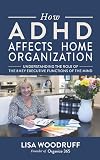
Not a lot new here
So-so. Some interesting information, but mostly kept referring back to her podcast. Not a whole lot of tips beyond the Sunday basket idea.
So-so. Some interesting information, but mostly kept referring back to her podcast. Not a whole lot of tips beyond the Sunday basket idea.
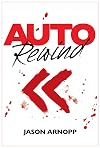
Meh
An okay story, but the "twist" was muddled and the writing felt amateurish at more than a few parts. The main character was too "tell, not show", and the story never was scary or even moderately creepy. Worth it if you can get it free on Kindle Unlimited, like I did.
An okay story, but the "twist" was muddled and the writing felt amateurish at more than a few parts. The main character was too "tell, not show", and the story never was scary or even moderately creepy. Worth it if you can get it free on Kindle Unlimited, like I did.

Chilling!
I admit, after reading Auto-Rewind by the same author, I was skeptical, but I am glad to know I was wrong. This novella starts off strong and just kept getting better. Arnopp really nailed the tension building in this one. There were a few parts where the pacing felt off, but those were more than offset by the genuinely creepy moments. Great short novella!
I admit, after reading Auto-Rewind by the same author, I was skeptical, but I am glad to know I was wrong. This novella starts off strong and just kept getting better. Arnopp really nailed the tension building in this one. There were a few parts where the pacing felt off, but those were more than offset by the genuinely creepy moments. Great short novella!
In the midst of my last semester at grad school, my brain feels like mush. I was desperate for something to read that was light-hearted, fun, and - most importantly - that I did not have to cite. Browsing Amazon Prime Reading, I found Dog Eat Doug, a comic I had never heard of, but which promised a "Calvin and Hobbes" type of humor. Intrigued, I settled in and read the first collection... then the next... then the next... until pretty soon, I had devoured every one available through Prime and was looking at buying any intervening ones that weren't.
Brian Anderson is a gifted humorist and artist, with bright, expressive artwork. While I appreciate the recent output of amateur comics cropping up, Anderson's style is polished and professional, which is betrayed in the impressive line-art and study of form. The panels are dynamic and colorful.
But of course, the real question is: is it funny?
To which I can say: YES. Several times I snagged passing roommates to have them read this panel, or this page, or just quote a one-liner. My favorite was Sophie, the titular dog comforting the crying Doug, the baby, by putting her front paws on the crib and reassuring him, "It's okay. Crate training doesn't last forever."
This was a hidden gem, one that I'm glad to have discovered. I'm eager to see what else Anderson has written now!
Brian Anderson is a gifted humorist and artist, with bright, expressive artwork. While I appreciate the recent output of amateur comics cropping up, Anderson's style is polished and professional, which is betrayed in the impressive line-art and study of form. The panels are dynamic and colorful.
But of course, the real question is: is it funny?
To which I can say: YES. Several times I snagged passing roommates to have them read this panel, or this page, or just quote a one-liner. My favorite was Sophie, the titular dog comforting the crying Doug, the baby, by putting her front paws on the crib and reassuring him, "It's okay. Crate training doesn't last forever."
This was a hidden gem, one that I'm glad to have discovered. I'm eager to see what else Anderson has written now!
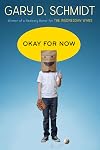
In 1968, Doug Swieteck already has to face an abusive father, a bullying older brother, and another brother who is off fighting in Vietnam, so when his father loses his job and moves the family to Marysville, New York in search of work, Doug is suddenly also the new kid. But Marysville gives Doug the chance to become something more than a skinny thug like his older brother and his deadbeat dad. A chance meeting with a girl gives him a delivery route, where he meets the eccentric Mrs. Windemere, and trips to the library to see the Audubon paintings introduces him to the kind librarian Mr. Powell, who teaches Doug how to draw, and the start of a new school year introduces him to Mr. Ferris, a science teacher, who figures out Doug's big secret. And when Doug's brother, Lucas, comes home from Vietnam, Doug finds that he is no longer the same kid as when Lucas left - and that's not always a bad thing.
The Audubon connection is an odd one, but refreshing in its oddity. Each chapter is prefaced by a depiction of the painting which becomes the theme for that chapter. The sharp, minimalist drawings of Audubon match perfectly well to Doug's own sharp edges and outwardly simple character, and it is easy to see where the urge to replicate the beautiful plates comes from. The only complaint to be made about the bird theme is the way that Schmidt sometimes is a bit too "on the nose" with his symbols. One chapter begins with the Red-Throated Divers, and Mrs. Windemere a little too show more shrewdly comments that the mother is not aching to fly away, as Doug originally suggests, but protecting her smallest child. The analogy is a little too clear. Schmidt seems to be one of those writers who cannot bear to trust the reader to make the connection, and so must constantly nudge them until he is content they have gotten the point. This mistrust of the readers' abilities can also extend to the characterization. In one scene, Doug stands up to his father, but is later confronted by his brother, who delivers an impassioned speech that is a little too self-aware to be honestly moving. Particularly in young adult novels, authors sometimes feel reluctant to allow things to go unspoken, worried that their audience will miss it, but having faith in younger readers to pick up on the underlying themes and characters without the author expressly saying it can lead to a richer story. Schmidt's eagerness to spell things out also comes to play when balancing the realism of the novel.
Doug is a member of a poor family and his father is abusive, but the severity is mostly hinted around aside from one, major incident. Doug's reaction to it underscores its regularity - he knows how to avoid it, knows what will trigger it, and mostly acts like it is part of his life, which it is. Schmidt never falls into the trap of an afterschool special, but focuses on Doug, not just as a child abuse victim, but a fully-realized character with traits completely separated from the abuse. His smart-aleck comments are genuinely funny, his narration feels real, and his character arc is superb.
Unfortunately, Schmidt cannot quite hold onto this realism. About three-quarters into the book, the story rushes to reassure the reader that it will all work out in the end: the teachers and librarian who previously ostracized and tormented Doug for his shady brother all have secrets that excuse their bad behavior, or they experience a miraculous change of heart; Mrs. Windemere coincidentally happens to have a first-edition book of Aaron Copland's music that Doug uses to barter for the puffins plate; Mr. Gregory, a Broadway producer, happens to need an actress to play a part which happens to be perfect for Lil Spicer; Professor Peattie, who previously told Doug that all of the teachers had given up on him and he would amount to nothing, suddenly tells Doug that he will go wherever he wants to go in life; Lucas comes back from the war and finds a job when he most needs it; and, most damning, the father who forced a "Mama's Baby" tattoo on his twelve-year-old son and regularly beat his sons so as not to show bruises suddenly recants his ways and shares a sentimental moment with his wife.
There is a line of suspended disbelief that readers and authors agree upon; readers will happily approach the line, willing to take a great many far-fetched coincidences and quirky characters and miraculous events on faith, but the author must carefully know exactly where the line is to avoid crossing it completely. Schmidt, in this at least, has missed the mark. There is something to be said for a young boy realizing that the two-dimensional jerks he has previously assumed people to be are more than that, with their own rich inner lives, but when every single one turns out to be secretly a good person, it strains belief, and readers quite rightly balk. To put it simply, some people are jerks because they are jerks. They are not the bully in a 1980s film, who only bullies others because of the abuse he faces at home; they are jerks. In some ways, this is an even more important lesson to learn than that people have their own rich inner lives and may be secretly good, simply because it is a much harder one to learn. And in the case of a child abuser, his inner life must be very rich indeed to make up for such a heinous sin. Schmidt comes very close to pulling these unlikely turns of events off, but crosses one coincidence too many for the ending to feel genuine.
Additionally, the setting is in 1968, but aside from some obligatory references to space missions, a few ironic comments from oddly prescient teachers that were old when Back to the Future made them (An actor as a president? How absurd!), peppered slang from the sixties, and Lucas's return, the historical part of this historical fiction is never fully realized. Lucas returns from the Vietnam War, but could have just as easily returned from World War II, or Desert Storm, or the Iraq War. Though the connection of the possibility of space travel and all it represents with the way Doug blooms is a good one, there is never a moment of solidity that confirms that 1968 is the only time that this story could have taken place. In some ways, that speaks to the universality of the story, but in others, it makes the "history" part feel lacking. Historical novels are difficult to pull off, because while references to the time period and period-appropriate slang are essential to pulling off an atmosphere, they are not enough by themselves.
And yet, there is something here that deserves to be noticed. When Doug's mother meets Lucas at the bus station and does not hesitate over the bandages over his eyes or the space where his legs used to be, but just holds his face in her hands and kisses him while her blue coat spreads like wings over them, or when Doug finds a drawing of dead bodies with a simple note at the bottom saying, "My Lai. I was there", it's hard not to get a chill. It is in the small moments that Schmidt excels. There are too many neat ends, but where Schmidt allows them to be frayed and ragged, the prose shines. It is not in the neat and happy endings that Schmidt finds his place, but in the ones that are uncertain and bitter and angry. Giving his villains backstories and characterization and making them three-dimensional works, but only if he allows them to stay villains.
As a story, Okay for Now is compelling enough, though the plot threads are all a little too neatly tied up at the end to be believable; as historical fiction, it feels oddly lacking. Historical fiction should, ideally, capture the spirit and atmosphere of a time. Novels set during the Great Depression should hint at the desperation of the times, underscored by uncertainty; novels set during WWI should reflect the betrayal and horror and existential crisis that marked the time; and novels set in the 1960s should do more than parrot old jokes and bring in constant references to the space race and the Vietnam War, or at least have something more meaningful to say about them. Doug is a likable enough character, with real problems and real people in his life; had the story kept with that, Okay for Now could have made up for its lack of historical atmosphere. The too-tidy ending and urge to shield the reader from any possibility of bad things, particularly in a novel that deals with both child abuse and the Vietnam War, leaves this novel feeling a little flat. show less
The Audubon connection is an odd one, but refreshing in its oddity. Each chapter is prefaced by a depiction of the painting which becomes the theme for that chapter. The sharp, minimalist drawings of Audubon match perfectly well to Doug's own sharp edges and outwardly simple character, and it is easy to see where the urge to replicate the beautiful plates comes from. The only complaint to be made about the bird theme is the way that Schmidt sometimes is a bit too "on the nose" with his symbols. One chapter begins with the Red-Throated Divers, and Mrs. Windemere a little too show more shrewdly comments that the mother is not aching to fly away, as Doug originally suggests, but protecting her smallest child. The analogy is a little too clear. Schmidt seems to be one of those writers who cannot bear to trust the reader to make the connection, and so must constantly nudge them until he is content they have gotten the point. This mistrust of the readers' abilities can also extend to the characterization. In one scene, Doug stands up to his father, but is later confronted by his brother, who delivers an impassioned speech that is a little too self-aware to be honestly moving. Particularly in young adult novels, authors sometimes feel reluctant to allow things to go unspoken, worried that their audience will miss it, but having faith in younger readers to pick up on the underlying themes and characters without the author expressly saying it can lead to a richer story. Schmidt's eagerness to spell things out also comes to play when balancing the realism of the novel.
Doug is a member of a poor family and his father is abusive, but the severity is mostly hinted around aside from one, major incident. Doug's reaction to it underscores its regularity - he knows how to avoid it, knows what will trigger it, and mostly acts like it is part of his life, which it is. Schmidt never falls into the trap of an afterschool special, but focuses on Doug, not just as a child abuse victim, but a fully-realized character with traits completely separated from the abuse. His smart-aleck comments are genuinely funny, his narration feels real, and his character arc is superb.
Unfortunately, Schmidt cannot quite hold onto this realism. About three-quarters into the book, the story rushes to reassure the reader that it will all work out in the end: the teachers and librarian who previously ostracized and tormented Doug for his shady brother all have secrets that excuse their bad behavior, or they experience a miraculous change of heart; Mrs. Windemere coincidentally happens to have a first-edition book of Aaron Copland's music that Doug uses to barter for the puffins plate; Mr. Gregory, a Broadway producer, happens to need an actress to play a part which happens to be perfect for Lil Spicer; Professor Peattie, who previously told Doug that all of the teachers had given up on him and he would amount to nothing, suddenly tells Doug that he will go wherever he wants to go in life; Lucas comes back from the war and finds a job when he most needs it; and, most damning, the father who forced a "Mama's Baby" tattoo on his twelve-year-old son and regularly beat his sons so as not to show bruises suddenly recants his ways and shares a sentimental moment with his wife.
There is a line of suspended disbelief that readers and authors agree upon; readers will happily approach the line, willing to take a great many far-fetched coincidences and quirky characters and miraculous events on faith, but the author must carefully know exactly where the line is to avoid crossing it completely. Schmidt, in this at least, has missed the mark. There is something to be said for a young boy realizing that the two-dimensional jerks he has previously assumed people to be are more than that, with their own rich inner lives, but when every single one turns out to be secretly a good person, it strains belief, and readers quite rightly balk. To put it simply, some people are jerks because they are jerks. They are not the bully in a 1980s film, who only bullies others because of the abuse he faces at home; they are jerks. In some ways, this is an even more important lesson to learn than that people have their own rich inner lives and may be secretly good, simply because it is a much harder one to learn. And in the case of a child abuser, his inner life must be very rich indeed to make up for such a heinous sin. Schmidt comes very close to pulling these unlikely turns of events off, but crosses one coincidence too many for the ending to feel genuine.
Additionally, the setting is in 1968, but aside from some obligatory references to space missions, a few ironic comments from oddly prescient teachers that were old when Back to the Future made them (An actor as a president? How absurd!), peppered slang from the sixties, and Lucas's return, the historical part of this historical fiction is never fully realized. Lucas returns from the Vietnam War, but could have just as easily returned from World War II, or Desert Storm, or the Iraq War. Though the connection of the possibility of space travel and all it represents with the way Doug blooms is a good one, there is never a moment of solidity that confirms that 1968 is the only time that this story could have taken place. In some ways, that speaks to the universality of the story, but in others, it makes the "history" part feel lacking. Historical novels are difficult to pull off, because while references to the time period and period-appropriate slang are essential to pulling off an atmosphere, they are not enough by themselves.
And yet, there is something here that deserves to be noticed. When Doug's mother meets Lucas at the bus station and does not hesitate over the bandages over his eyes or the space where his legs used to be, but just holds his face in her hands and kisses him while her blue coat spreads like wings over them, or when Doug finds a drawing of dead bodies with a simple note at the bottom saying, "My Lai. I was there", it's hard not to get a chill. It is in the small moments that Schmidt excels. There are too many neat ends, but where Schmidt allows them to be frayed and ragged, the prose shines. It is not in the neat and happy endings that Schmidt finds his place, but in the ones that are uncertain and bitter and angry. Giving his villains backstories and characterization and making them three-dimensional works, but only if he allows them to stay villains.
As a story, Okay for Now is compelling enough, though the plot threads are all a little too neatly tied up at the end to be believable; as historical fiction, it feels oddly lacking. Historical fiction should, ideally, capture the spirit and atmosphere of a time. Novels set during the Great Depression should hint at the desperation of the times, underscored by uncertainty; novels set during WWI should reflect the betrayal and horror and existential crisis that marked the time; and novels set in the 1960s should do more than parrot old jokes and bring in constant references to the space race and the Vietnam War, or at least have something more meaningful to say about them. Doug is a likable enough character, with real problems and real people in his life; had the story kept with that, Okay for Now could have made up for its lack of historical atmosphere. The too-tidy ending and urge to shield the reader from any possibility of bad things, particularly in a novel that deals with both child abuse and the Vietnam War, leaves this novel feeling a little flat. show less
Jayna lives with her older brother, Rob, during the last years of WWII. After Rob is drafted to serve on the destroyer Muldoon, Jayna is sent to live with her landlady, Celine. However, a mysterious voice tells Jayna that she needs to go find a possible grandmother who runs a bakery in Brooklyn. Jayna runs away to Brooklyn with her turtle, Theresa, and finds that though the owner of the bakery may not be her grandmother, she can find her family after all. The text is interspersed with Jayna's soup recipes, with whimsical names like "Waiting" soup and "Hope" soup.
Gingersnap is an odd book; its primary problem is that there is really no conflict to drive the plot forward. There are many attempts at conflict: will her brother, Rob, return? Is Elise her actual grandmother? Who is the mysterious ghost girl giving her advice?
Unfortunately, none of these ever go anywhere. The reader is told almost immediately that Elise is not Jayna's grandmother, and the mysterious ghost is never really explained. Even the question of Rob returning never feels urgent or real. The comforting placidity of the plot assures readers that everything will work out happily, robbing the story of any real tension.
The characters feel two-dimensional - including one boy whose sole defining characteristic seems to be that he can mimic voices, which plays even less well in a novel - and though there is a lot of heart behind the novel, it just never coalesces into something real. Even within the characters show more themselves, there is no conflict. Rob is the perfect older brother, who adores his little sister and makes up fun in-jokes with her; Jayna feels as developed as film from a 1990s disposable camera; and the side characters exist solely to fill a niche in the story. The characters never fight or have serious issues they have to face. The children that Jayna befriends miss their father, but he returns safely and immediately becomes part of the jolly, happy family. The only spark of interest is when Andrew and Millie introduce Jayna to their mother, who has a few quips that are the only piece of life in a story that feels as alive as the paleontology wing of a museum. Jayna, the main character, has almost no characteristics other than a few half-hearted traits that are told to the reader, like that she is clumsy and likes school, but never shown or demonstrated in the story.
Even the ghost - arguably the most intriguing part of the plot - is underused and seemingly completely pointless. As New York Times reviewer Jerry Griswold points out, the ghost's sole purpose seems to be an external representation of Jayna's self-consciousness, though why Giff chose to do this instead of showing readers Jayna herself is never explained. The ghost simply stops coming at the end, to no apparent detriment to the story. The reader is forced wondering why the ghost was even included at all, other than as a convenient plot device for a trite, maudlin ending.
The constant references to how the war is going, radio serials, and food shortages do well to establish the period, but are either dramatically overwrought with paragraphs of Janyna constantly going back and forth with questions over whether Rob is alive or not, or oddly underwhelming, as when a character casually mentions the war in Germany is over. For such an important moment in the historical period in which the book is set, the feeling is oddly subdued and quickly passed over.
The interspersed recipes, which could have been a cute gimmick, are also under-realized. A few "joke" recipes, such as the stone soup, might have gone over better had the actual recipes been written so that readers could actually make them, but they lack measurements or realistic cooking times (no boiled potatoes are ready in twenty minutes). Even that gimmick feels as pointless as the ghost subplot.
The book in general feels rushed; conflict is quickly resolved, defining moments are half-hearted and overly restrained, and the characters never feel fully realized. Young adults, and even children, are able to handle much more than authors give them credit for: abused children, brothers who do not return home from war, characters who are tested and tried by real trials, and more can be drawn without offending children's sensibilities. Young adults can also handle a realistic, bittersweet ending. If the story had ended with Rob never returning home, but Jayna experiencing grief and making peace with her newfound family, Gingersnap may have risen beyond a mediocre, bland story about bland characters, but sadly, it never rises to that level.
Gingersnap is a rushed story with no real plot conflict, paper doll characters, and nothing to anchor it to a reader's memory once it ends. The author's lack of faith in the reader manifests in the happy endings for everybody with no moments of genuine uncertainty. The only thing to be said for it is the brushstrokes of the time period paint a convincing portrait, though they are often overdone and as rushed as the rest of the novel. Gingersnap is a miss in nearly every way. show less
Gingersnap is an odd book; its primary problem is that there is really no conflict to drive the plot forward. There are many attempts at conflict: will her brother, Rob, return? Is Elise her actual grandmother? Who is the mysterious ghost girl giving her advice?
Unfortunately, none of these ever go anywhere. The reader is told almost immediately that Elise is not Jayna's grandmother, and the mysterious ghost is never really explained. Even the question of Rob returning never feels urgent or real. The comforting placidity of the plot assures readers that everything will work out happily, robbing the story of any real tension.
The characters feel two-dimensional - including one boy whose sole defining characteristic seems to be that he can mimic voices, which plays even less well in a novel - and though there is a lot of heart behind the novel, it just never coalesces into something real. Even within the characters show more themselves, there is no conflict. Rob is the perfect older brother, who adores his little sister and makes up fun in-jokes with her; Jayna feels as developed as film from a 1990s disposable camera; and the side characters exist solely to fill a niche in the story. The characters never fight or have serious issues they have to face. The children that Jayna befriends miss their father, but he returns safely and immediately becomes part of the jolly, happy family. The only spark of interest is when Andrew and Millie introduce Jayna to their mother, who has a few quips that are the only piece of life in a story that feels as alive as the paleontology wing of a museum. Jayna, the main character, has almost no characteristics other than a few half-hearted traits that are told to the reader, like that she is clumsy and likes school, but never shown or demonstrated in the story.
Even the ghost - arguably the most intriguing part of the plot - is underused and seemingly completely pointless. As New York Times reviewer Jerry Griswold points out, the ghost's sole purpose seems to be an external representation of Jayna's self-consciousness, though why Giff chose to do this instead of showing readers Jayna herself is never explained. The ghost simply stops coming at the end, to no apparent detriment to the story. The reader is forced wondering why the ghost was even included at all, other than as a convenient plot device for a trite, maudlin ending.
The constant references to how the war is going, radio serials, and food shortages do well to establish the period, but are either dramatically overwrought with paragraphs of Janyna constantly going back and forth with questions over whether Rob is alive or not, or oddly underwhelming, as when a character casually mentions the war in Germany is over. For such an important moment in the historical period in which the book is set, the feeling is oddly subdued and quickly passed over.
The interspersed recipes, which could have been a cute gimmick, are also under-realized. A few "joke" recipes, such as the stone soup, might have gone over better had the actual recipes been written so that readers could actually make them, but they lack measurements or realistic cooking times (no boiled potatoes are ready in twenty minutes). Even that gimmick feels as pointless as the ghost subplot.
The book in general feels rushed; conflict is quickly resolved, defining moments are half-hearted and overly restrained, and the characters never feel fully realized. Young adults, and even children, are able to handle much more than authors give them credit for: abused children, brothers who do not return home from war, characters who are tested and tried by real trials, and more can be drawn without offending children's sensibilities. Young adults can also handle a realistic, bittersweet ending. If the story had ended with Rob never returning home, but Jayna experiencing grief and making peace with her newfound family, Gingersnap may have risen beyond a mediocre, bland story about bland characters, but sadly, it never rises to that level.
Gingersnap is a rushed story with no real plot conflict, paper doll characters, and nothing to anchor it to a reader's memory once it ends. The author's lack of faith in the reader manifests in the happy endings for everybody with no moments of genuine uncertainty. The only thing to be said for it is the brushstrokes of the time period paint a convincing portrait, though they are often overdone and as rushed as the rest of the novel. Gingersnap is a miss in nearly every way. show less
Delightful
Clearly influenced by Calvin & Hobbes and Peanuts, Brian Anderson has a charming, cute classic in this one. Definitely worth a read!
Clearly influenced by Calvin & Hobbes and Peanuts, Brian Anderson has a charming, cute classic in this one. Definitely worth a read!
Clive Cussler meets Michael Crichton
Cheesy fun, with lots of action, exclamation points, and paper-thin characters. Alten's writing is, at times, very amateurish, but he makes up for it in unbridled enthusiasm.
Cheesy fun, with lots of action, exclamation points, and paper-thin characters. Alten's writing is, at times, very amateurish, but he makes up for it in unbridled enthusiasm.
Cozy mystery a bit much
Lady Hardcastle, a wealthy widow with a flair for detection, along with her trusty maid Flo Armstrong, finds herself embroiled in a staged suicide, a missing jewel, and a dead musician in her first weeks in the quiet countryside.
While charming enough, the constant references to their adventures threw me off - was this the first novel? I checked repeatedly - and the lack of some semblance of historical accuracy chafed. The story was alright enough, though convoluted, but all in all, a cute romp through the English countryside.
Lady Hardcastle, a wealthy widow with a flair for detection, along with her trusty maid Flo Armstrong, finds herself embroiled in a staged suicide, a missing jewel, and a dead musician in her first weeks in the quiet countryside.
While charming enough, the constant references to their adventures threw me off - was this the first novel? I checked repeatedly - and the lack of some semblance of historical accuracy chafed. The story was alright enough, though convoluted, but all in all, a cute romp through the English countryside.
Jennifer Pozner in Reality Bites Back: The Troubling Truth about Guilty Pleasure TV builds a case against the "mindless" entertainment of reality TV and points out how dangerous it can be, as it promotes sexism, racism, and advertises directly to its viewers while bypassing the normal restrictions placed on advertising.
While the book was comprehensive and Pozner did an excellent job building her case, there didn't seem to be anything new in this. Even Pozner admitted that most people are consciously aware of these pitfalls in reality television, but points out that subconsciously, we tend to accept these messages and incorporate them into our worldview. While I have no doubts that this is the case, it does make for a read that can best be summed up as, "Well, yeah."
In some respects, I am not the ideal reader for this book; I do not watch reality TV, nor do I follow it even a little bit. Pozner clearly didn't expect this, because she rarely gives even a brief summary of what a show is, which led me to have to google several shows to find out what on earth Pozner was talking about. While I realize I am not the target audience, it was still a tad annoying to have to pause the book in order to look things up, especially when other times she defines things that most people should know: if you're reading a book of this critical thought and this long, I would assume that you know what Stockholm syndrome or schadenfreude is.
Still, Pozner redeems herself with a genuinely show more interesting chapter about advertising in reality TV. While most people are aware of the conspicuous drinks of Coke by the American Idol judges or the apparently absolutely appallingly obvious shills for Cover Girl in America's Next Top Model, few are aware that several of these shows have almost complete creative control over the actual show itself, or have even completely sponsored a show to the point that it is little more than a vehicle for advertisements, which allow them to skirt FCC regulations and restrictions on advertising. In one worrisome prediction, Pozner posits that antidepressants or other medications could be next to be shilled on these shows, which is a troubling vision of the future.
Unfortunately, that chapter was the only one that contained something truly new. There was nothing particularly new or enlightening about the book, nor even things we already knew told in a way that made it seem new ala Neil Postman; all in all, a solid book, but not one likely to impart anything you didn't already know before. show less
While the book was comprehensive and Pozner did an excellent job building her case, there didn't seem to be anything new in this. Even Pozner admitted that most people are consciously aware of these pitfalls in reality television, but points out that subconsciously, we tend to accept these messages and incorporate them into our worldview. While I have no doubts that this is the case, it does make for a read that can best be summed up as, "Well, yeah."
In some respects, I am not the ideal reader for this book; I do not watch reality TV, nor do I follow it even a little bit. Pozner clearly didn't expect this, because she rarely gives even a brief summary of what a show is, which led me to have to google several shows to find out what on earth Pozner was talking about. While I realize I am not the target audience, it was still a tad annoying to have to pause the book in order to look things up, especially when other times she defines things that most people should know: if you're reading a book of this critical thought and this long, I would assume that you know what Stockholm syndrome or schadenfreude is.
Still, Pozner redeems herself with a genuinely show more interesting chapter about advertising in reality TV. While most people are aware of the conspicuous drinks of Coke by the American Idol judges or the apparently absolutely appallingly obvious shills for Cover Girl in America's Next Top Model, few are aware that several of these shows have almost complete creative control over the actual show itself, or have even completely sponsored a show to the point that it is little more than a vehicle for advertisements, which allow them to skirt FCC regulations and restrictions on advertising. In one worrisome prediction, Pozner posits that antidepressants or other medications could be next to be shilled on these shows, which is a troubling vision of the future.
Unfortunately, that chapter was the only one that contained something truly new. There was nothing particularly new or enlightening about the book, nor even things we already knew told in a way that made it seem new ala Neil Postman; all in all, a solid book, but not one likely to impart anything you didn't already know before. show less
After watching the new(ish) Goosebumps movie with Jack Black playing R.L. Stine, I felt an overwhelming wave of nostalgia crash over me. I remember avidly reading the Goosebumps series before eventually moving on to Fear Street, then Christopher Pike, who was at the cutting edge of middle-school terror. But Goosebumps always held a special place in my heart.
With an ounce of misgiving - what if it didn't stand the test of time? - I opened the classic Night of the Living Dummy. It's been so long since I've read any Goosebumps that I didn't remember anything, aside from a vague knowledge that Slappy was the main bad.
How. Could. I. Have. Forgotten.
The puking scene! The fact Slappy was the secondary character!
But I get ahead of myself. Night of the Living Dummy features a pair of twins who are a trial to their parents, who are oddly supportive of their pre-teen daughters taking up ventriloquism. I recognize that this is an actual talent, but I have to say, I'd be worried if I were a parent. Anyway, one of our twins finds a dummy in a dumpster and decides to become the queen of ventriloquism. The other twin gets jealous enough to coax her father into buying another dummy for her.
Then strange things begin happening, because this isn't Night of the Very Much Dead and Not at All Interesting Dummy. The dummies begin to seemingly move on their own and wind up in weird positions; the twins find themselves spurting awful, hateful things when they hold the dummies.
At the end, a show more conveniently placed steamroller manages to kill one of the dummies, but it's not quite over for the twins.
Is it cheesy? Oh yeah. Is it clearly written for pre-teens? Yup. Is it still crazy enjoyable if you have deep nostalgic feelings for this series? You betcha.
Despite the simplistic writing - which, again, written for pre-teens! - Goosebumps holds up. It's got just enough bite to still hold up after all these years, and a wicked sense of humor running underneath. show less
With an ounce of misgiving - what if it didn't stand the test of time? - I opened the classic Night of the Living Dummy. It's been so long since I've read any Goosebumps that I didn't remember anything, aside from a vague knowledge that Slappy was the main bad.
How. Could. I. Have. Forgotten.
The puking scene! The fact Slappy was the secondary character!
But I get ahead of myself. Night of the Living Dummy features a pair of twins who are a trial to their parents, who are oddly supportive of their pre-teen daughters taking up ventriloquism. I recognize that this is an actual talent, but I have to say, I'd be worried if I were a parent. Anyway, one of our twins finds a dummy in a dumpster and decides to become the queen of ventriloquism. The other twin gets jealous enough to coax her father into buying another dummy for her.
Then strange things begin happening, because this isn't Night of the Very Much Dead and Not at All Interesting Dummy. The dummies begin to seemingly move on their own and wind up in weird positions; the twins find themselves spurting awful, hateful things when they hold the dummies.
At the end, a show more conveniently placed steamroller manages to kill one of the dummies, but it's not quite over for the twins.
Is it cheesy? Oh yeah. Is it clearly written for pre-teens? Yup. Is it still crazy enjoyable if you have deep nostalgic feelings for this series? You betcha.
Despite the simplistic writing - which, again, written for pre-teens! - Goosebumps holds up. It's got just enough bite to still hold up after all these years, and a wicked sense of humor running underneath. show less
Giant Days is the story of three women attending university and sorting out their love lives, their academics, and themselves. Daisy is a sheltered, sweet young woman who moderates between the dramatic and beautiful Esther de Groot and the cynical, smoking Susan Ptolemy. Giant Days takes place through a series of vignettes - one dealing with the unfortunate arrival of Susan's arch-enemy, who both Daisy and Esther think is cute; Esther being featured on a misogynistic website, and Daisy's flirtation with a friend on her 18th birthday.
A perfect slice-of-life comic about university, this will take almost everyone back to their college days. The characters are hilarious and realistic - the beautiful drama queen, the sheltered naif, and the caustic, down-to-earth one.
Additionally, the art style is bright, funky, and dynamic. Each panel was a delight to pore over. The people are very well done and the colors pop from the page.
A very good read!
A perfect slice-of-life comic about university, this will take almost everyone back to their college days. The characters are hilarious and realistic - the beautiful drama queen, the sheltered naif, and the caustic, down-to-earth one.
Additionally, the art style is bright, funky, and dynamic. Each panel was a delight to pore over. The people are very well done and the colors pop from the page.
A very good read!
Way Too Short
Feels very half-hearted. Skimpy on clear instructions and areas. For instance, it covers clothing, home decor, and photos. Nothing on individual rooms or other types of clutter. I finished it in about 30 minutes and was underwhelmed.
Feels very half-hearted. Skimpy on clear instructions and areas. For instance, it covers clothing, home decor, and photos. Nothing on individual rooms or other types of clutter. I finished it in about 30 minutes and was underwhelmed.
The Gentle Art of Swedish Death Cleaning: How to Free Yourself and Your Family from a Lifetime of Clutter by Margareta Magnusson
If you're looking for a how-to manual on decluttering your house in preparation of your own eventual demise, this is not that book.
If you want a book that has a strong impression of being a cozy chat with a grandmother who offers you tea and says semi-scandalous things while you chortle over a biscuit, this is that book.
With a wry, sometimes delightfully passive-aggressive tone, Margareta shares her life wisdom with a gentle and often funny meandering book. The whole book was like wrapping yourself in a warm quilt and spending time with a loved one.
If you want a book that has a strong impression of being a cozy chat with a grandmother who offers you tea and says semi-scandalous things while you chortle over a biscuit, this is that book.
With a wry, sometimes delightfully passive-aggressive tone, Margareta shares her life wisdom with a gentle and often funny meandering book. The whole book was like wrapping yourself in a warm quilt and spending time with a loved one.
Cluttered Mess to Organized Success: A Real Life Approach to Decluttering and Tidying-up your Home: Includes over 100 charts, graphs, sheets and lists to help you manage your household by Cassandra Aarssen
Interesting system
Interesting system that is imminently practical (mostly) written by an engaging author. The ideas are simple, but motivating, and the accompanying print-outs are gorgeous.
Interesting system that is imminently practical (mostly) written by an engaging author. The ideas are simple, but motivating, and the accompanying print-outs are gorgeous.
Inconsistencies, hateful people
When Toni, a disliked member of a book club, turns up murdered, it's up to the police to solve the crime. When a second book club member turns up dead, however, the police are as baffled as the rest of the frightened remaining book club members.
Unfortunately, this book failed to do it for me. I struggled remembering the characters or even determining who the main characters were half the time. Maggie seemed minor, but suddenly became the focus at the end, while Barbara was given a brief scene that ultimately went nowhere. Others were virtually indistinguishable from one another and their personalities seemed to shift. At one point, Amy is saying vicious things to the other women, then suddenly becomes an almost pleasant person.
There were also some parts that - despite being written by a woman - felt really sexist. At one point, this is coded into the detective's character, which is fine; characters can, and should be, flawed. But other times it was embedded within the narrative.
All in all, a miss for me.
When Toni, a disliked member of a book club, turns up murdered, it's up to the police to solve the crime. When a second book club member turns up dead, however, the police are as baffled as the rest of the frightened remaining book club members.
Unfortunately, this book failed to do it for me. I struggled remembering the characters or even determining who the main characters were half the time. Maggie seemed minor, but suddenly became the focus at the end, while Barbara was given a brief scene that ultimately went nowhere. Others were virtually indistinguishable from one another and their personalities seemed to shift. At one point, Amy is saying vicious things to the other women, then suddenly becomes an almost pleasant person.
There were also some parts that - despite being written by a woman - felt really sexist. At one point, this is coded into the detective's character, which is fine; characters can, and should be, flawed. But other times it was embedded within the narrative.
All in all, a miss for me.